This article contains affiliate links. We may earn a commission from qualifying purchases.
Some content on this site is AI-assisted and reviewed by our editorial team.
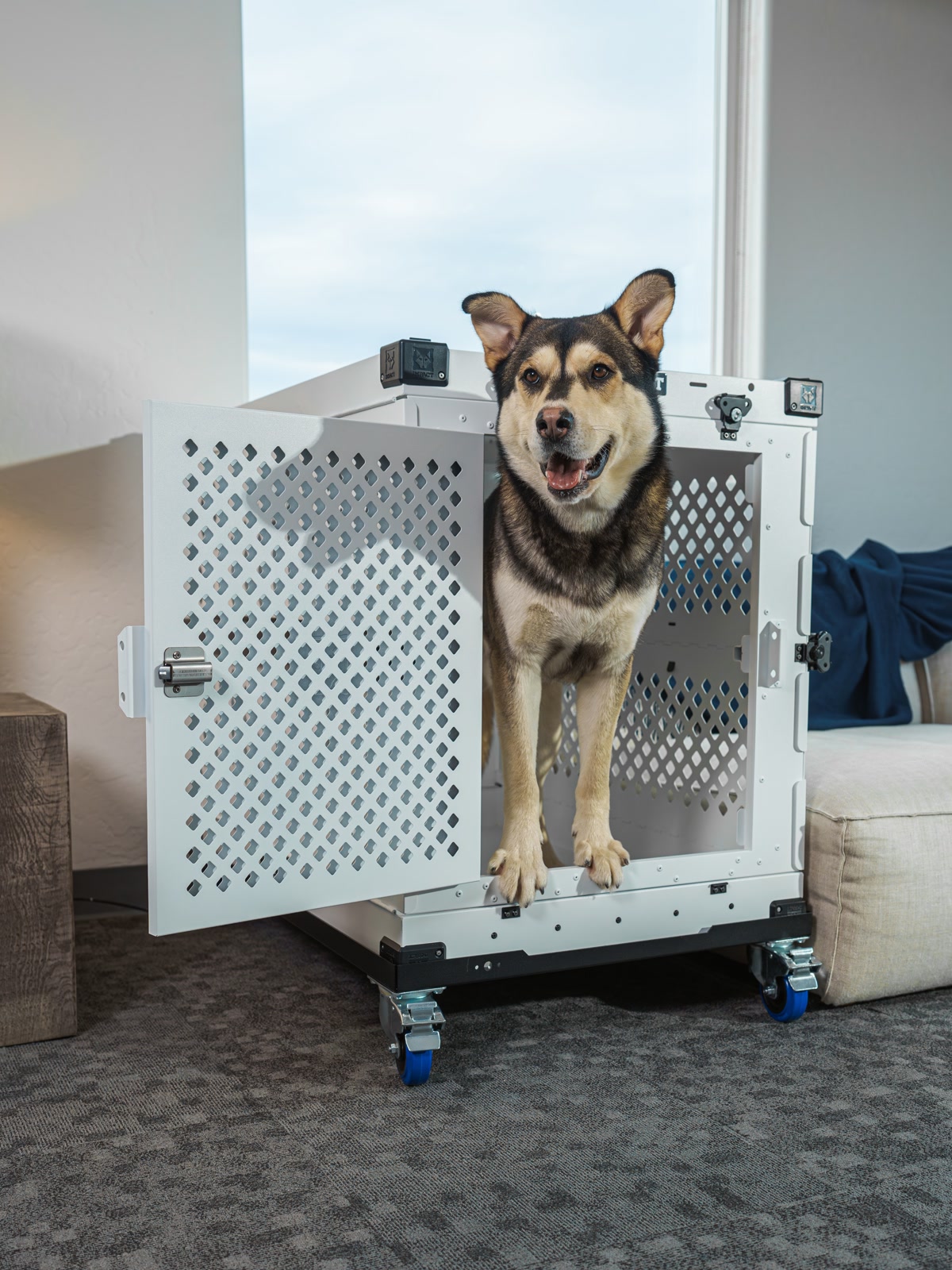
Crate training costs under 60 dollars total, takes 7 days of gradual introduction, and gives your dog a lifelong safe space — dogs are den animals and choose their crate voluntarily when introduced properly.
Why Crate Training Is Not Cruel
Dogs are den animals that instinctively seek enclosed spaces — a crate taps into this instinct, and a properly trained dog enters voluntarily rather than being forced.
Wild canines seek out small, enclosed spaces to sleep and raise young. It is instinctive — a den provides safety from predators and shelter from weather. A crate taps into this instinct. When introduced properly, a dog chooses to go into their crate voluntarily.
What IS cruel is forcing a dog into a crate with no training, closing the door, and leaving for 8 hours. That is not crate training — that is imprisonment. Proper crate training takes 1-2 weeks and results in a dog who happily enters their crate on their own.
The Crate (Under 50 Dollars)
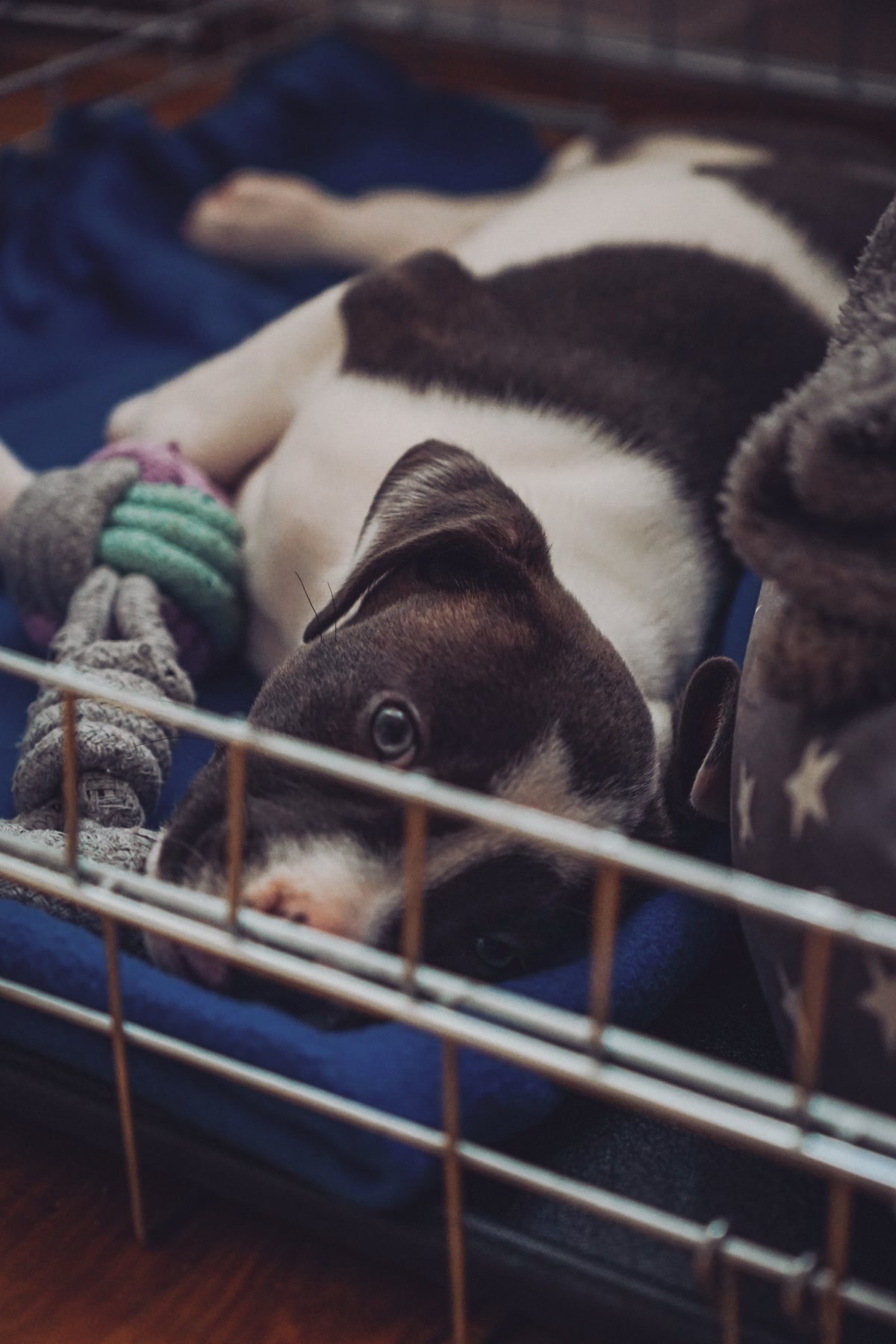
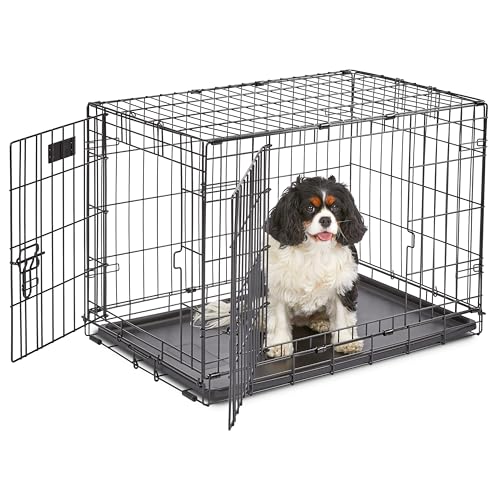
A wire crate costs 30-80 dollars depending on dog size — choose one large enough for your dog to stand, turn around, and lie down stretched out, but not larger.
Choosing the Right Crate
The crate must allow your dog to stand, turn, and lie stretched — too large encourages soiling in one corner, which undermines housetraining.
The crate must be large enough for your dog to stand, turn around, and lie down stretched out. Not larger — a crate that is too big encourages peeing in one corner and sleeping in another, which undermines housetraining.
| Dog Weight | Crate Size | Budget Option |
|---|---|---|
| Up to 25 lbs | 24 inches | 30-40 dollars |
| 25-40 lbs | 30 inches | 35-45 dollars |
| 40-70 lbs | 36 inches | 40-50 dollars |
| 70-90 lbs | 42 inches | 50-65 dollars |
| 90+ lbs | 48 inches | 60-80 dollars |
For puppies, buy a crate for their adult size and use a divider (most crates include one) to reduce the space. Move the divider back as the puppy grows.
Wire vs Plastic
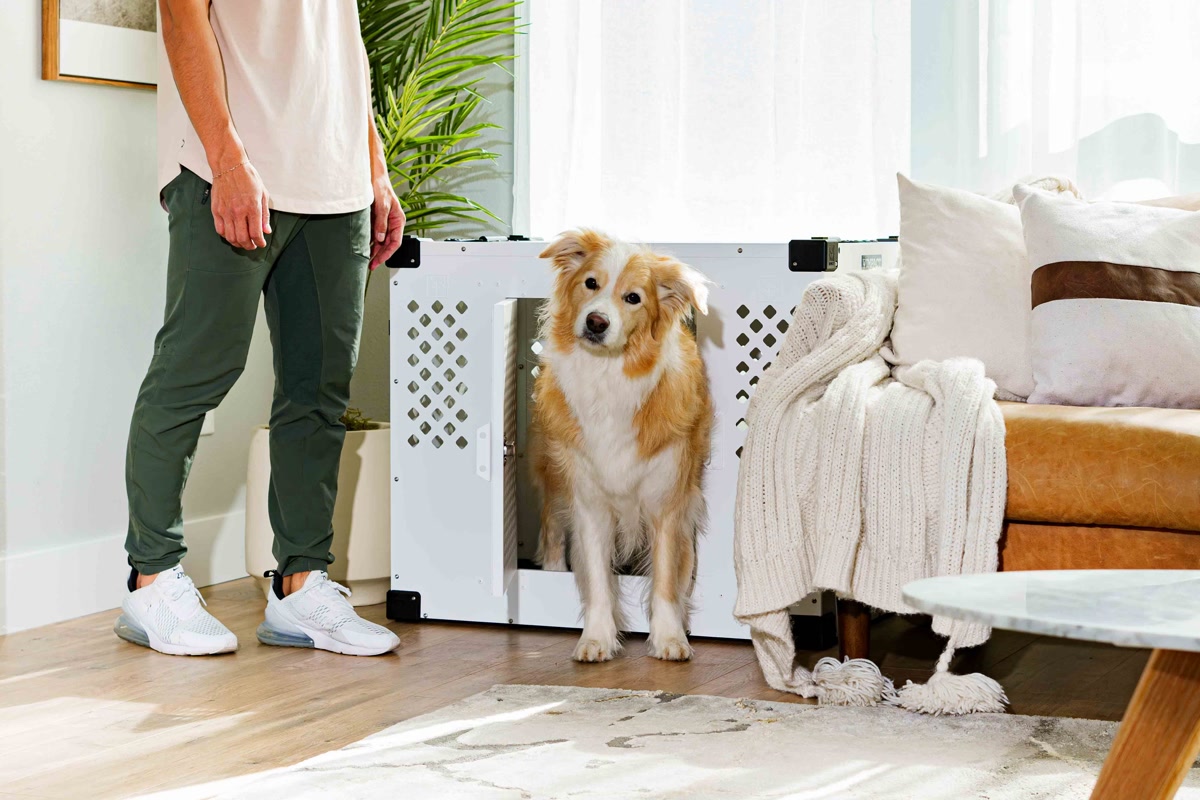
Wire crates are cheaper, fold flat, and offer more ventilation — plastic crates are more den-like and required for airline travel.
- Wire crate — more ventilation, folds flat for storage, dog can see out. Better for warm climates and dogs who like to watch their surroundings.
- Plastic crate — more enclosed (den-like), required for airline travel, darker interior. Better for anxious dogs who prefer enclosed spaces.
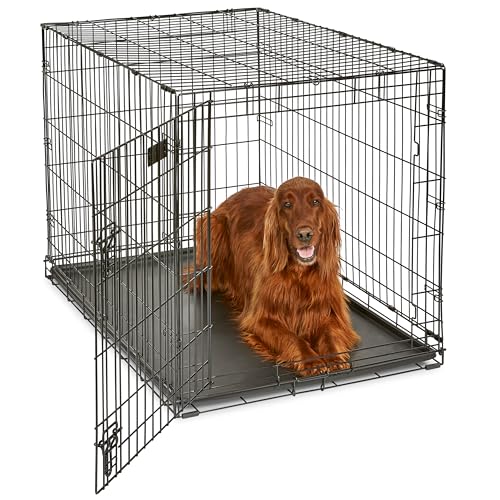
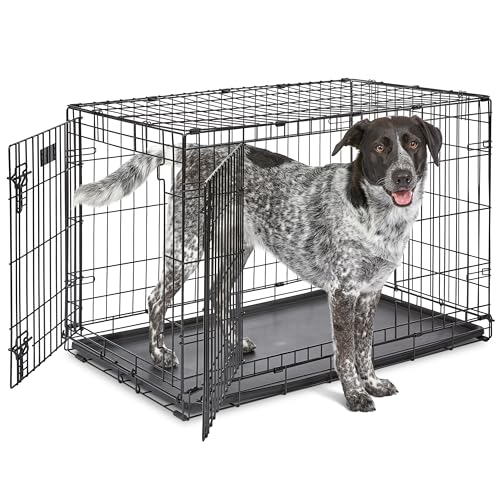
For budget purposes, wire crates are cheaper and more versatile. A wire crate with a divider panel handles a puppy from 8 weeks to adulthood. For a medium dog (25-40 lbs), the MidWest 30-Inch iCrate runs about 35 dollars. For larger dogs (40-70 lbs), the MidWest 36-Inch iCrate is around 40 dollars, and the MidWest 42-Inch iCrate for big Breeds (70-90 lbs) is about 50 dollars.
The 7-Day Crate Training Plan
Crate training takes 7 days: days 1-2 let the dog enter voluntarily for treats, days 3-4 close the door briefly, days 5-6 leave the room, day 7 build to 30 minutes.
Day 1-2: Make the Crate a Good Place
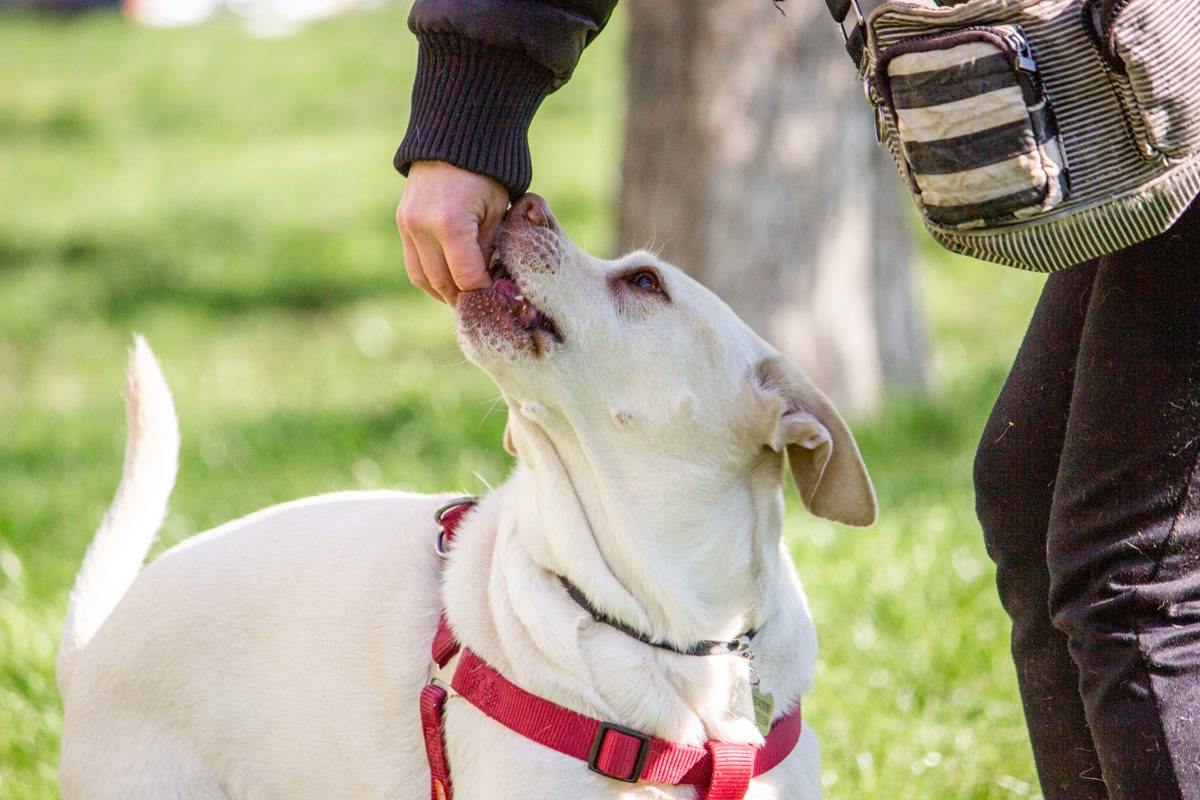
Toss treats inside the open crate and feed meals there — never close the door yet, let your dog enter and leave freely to build positive association.
Do not close the door yet. The goal is for your dog to enter the crate voluntarily.
- Place the crate in a family area (living room, kitchen) — not in an isolated room
- Put a soft blanket or bed inside
- Toss treats inside. Let your dog walk in, eat the treats, and walk back out. Do not close the door.
- Feed meals inside the crate. Put the bowl at the back. Dog enters to eat, leaves when done.
- If your dog will not enter, put treats near the entrance, then gradually further inside over several sessions.
Day 3-4: Close the Door Briefly
Close the crate door for 10 seconds with a treat inside, then gradually increase to 2 minutes — always open before your dog whines or paws at the door.
- Toss a high-value treat (cheese, hot dog piece) into the crate
- When your dog enters, close the door for 10 seconds
- Open the door before they whine or paw at it
- Gradually increase to 30 seconds, 1 minute, 2 minutes
- Stay in the room — do not leave yet
- Give a stuffed Kong or chew toy to keep them occupied
Day 5-6: Short Absences
Give a frozen Kong and leave the room for 1 minute, then return — wait for 10 seconds of calm before opening the door, gradually building to 15 minutes.
- Put your dog in the crate with a frozen Kong stuffed with peanut butter (check for xylitol)
- Close the door and walk to another room for 1 minute
- Return, but do not open the door immediately — wait for 10 seconds of calm
- Gradually increase to 5 minutes, 10 minutes, 15 minutes
Day 7: Build to 30 Minutes
Your dog should enter on command and handle 30-minute sessions in another room — never open the door while whining, wait for silence first.
- Your dog should now enter the crate on command (“kennel” or “crate”)
- Practice 30-minute sessions while you are in another room
- If your dog whines, wait for 5 seconds of silence before opening the door
- Never open the door while your dog is whining — this teaches whining works
Common Mistakes That Ruin Crate Training
Using the crate as punishment, leaving the dog too long, responding to whining, and skipping gradual introduction are the four mistakes that create crate phobia.
1. Using the Crate as Punishment
Never use the crate for punishment — if your dog associates it with being bad, they will refuse to enter it voluntarily.
If you put your dog in the crate when they are bad, the crate becomes a prison. Your dog will refuse to enter it voluntarily. The crate must always be a positive space.
2. Leaving the Dog Too Long
Puppies under 6 months can hold it 3-4 hours maximum, adults 6-8 hours — anything longer is neglect, not training.
A puppy under 6 months can hold it for 3-4 hours maximum. An adult dog can do 6-8 hours. Leaving a dog crated longer than this is not training — it is neglect. If you work full days, arrange a midday potty break (dog walker, neighbor, or come home at lunch).
3. Responding to Whining
Ignore attention-seeking whining completely — opening the door while your dog whines teaches them that whining works, extending the problem for weeks.
The first few nights, your puppy will whine. If you respond by letting them out, you have taught them that whining opens the door. Instead:
- Wait for a pause in whining (even 3 seconds of silence) before acknowledging
- If they are having a genuine potty emergency (puppies under 12 weeks), take them out silently, no play, straight back to crate
- For attention-seeking whining, ignore it completely. It stops within 3 nights if you do not reward it
4. Skipping the Gradual Introduction
Locking a dog in a crate on day 1 creates a phobia that takes months to undo — always follow the 7-day gradual plan.
Locking a dog in a crate on day 1 and hoping they get used to it does not work. It creates a phobia that takes months to undo. Follow the 7-day plan.
Crate Training for Specific Situations
Crate training helps with nighttime sleeping, workday crating, car travel, and post-surgery recovery — each situation has a specific approach.
Nighttime
Place the crate next to your bed for 2 weeks, then gradually move it to its permanent location a few feet per night.
Place the crate next to your bed for the first 2 weeks. Your puppy can smell you and hear you breathe, which is comforting. After 2 weeks, gradually move the crate to its permanent location — a few feet per night.
While at Work
Puppies need a midday potty break at 3-hour intervals; adults can handle a full workday with exercise before and after crating.
For puppies: crate for 3 hours, midday potty break, crate for 3 hours. For adults: crate for the full workday is acceptable if they get exercise before and after. Leave a stuffed Kong and a piece of your worn clothing (your scent is calming).
Travel
Use a plastic airline crate for car travel secured with a seatbelt — it is safer than a wire crate in an accident.
A crate-trained dog travels easily. Use a plastic airline crate for car travel — it is safer than a wire crate in an accident. Secure the crate with a seatbelt through the handle.
Vet Visits and Recovery
Crate-trained dogs recover faster after surgery because the crate is familiar, while dogs never crated panic post-surgery and slow healing.
Vets use crates for recovery. A dog who is already crate-trained recovers faster because the crate is familiar, not stressful. Dogs who have never been crated panic post-surgery, which slows healing.
The Budget Crate Setup (Under 60 Dollars Total)
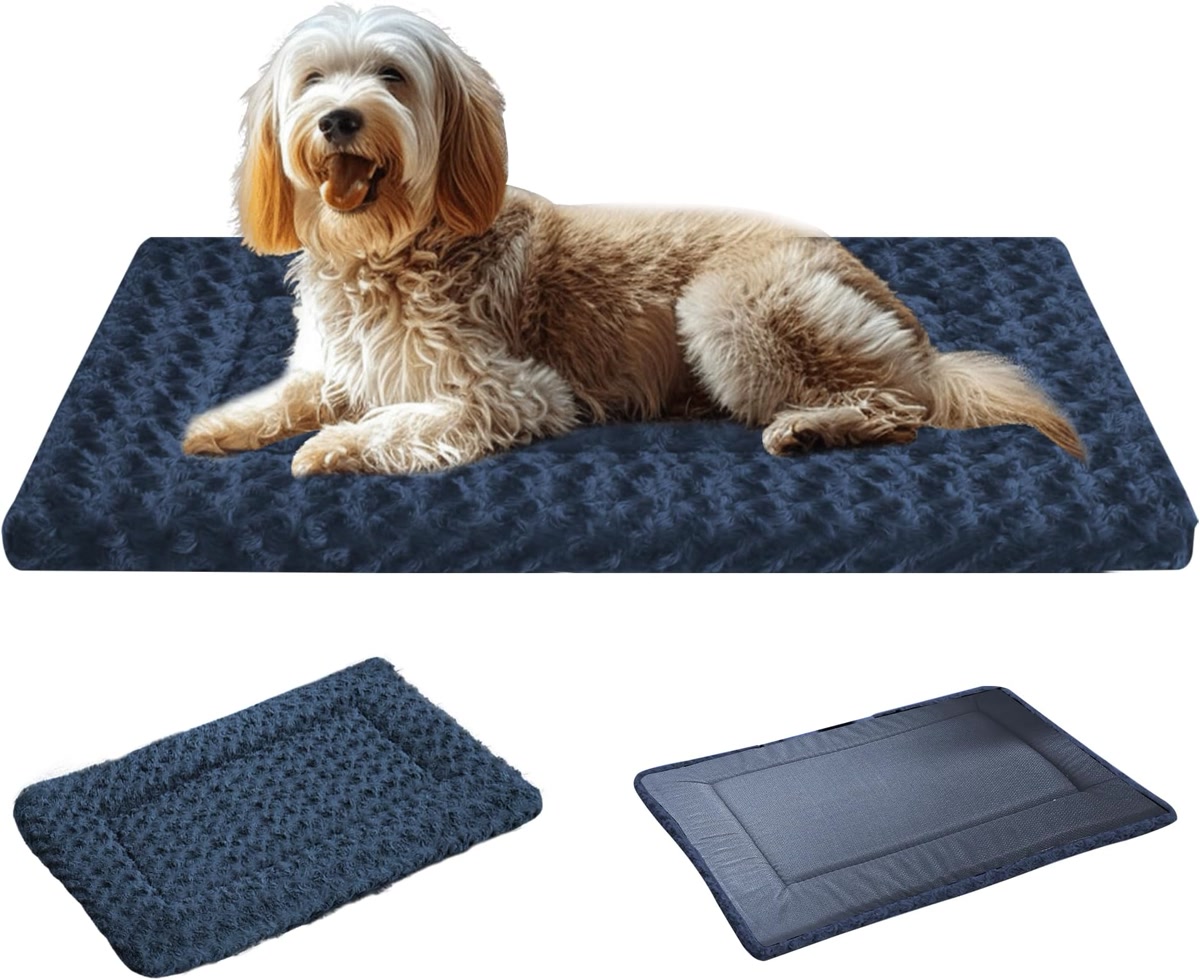
A Complete crate setup costs under 60 dollars: a 45-dollar wire crate, 10-dollar pad, 5-dollar Kong, and a free blanket as a cover.
| Item | Cost | Why You Need It |
|---|---|---|
| Wire crate (medium dog) | 45 dollars | The crate itself |
| Crate pad or blanket | 10 dollars | Comfort |
| Divider panel (included) | 0 dollars | For growing puppies |
| Kong toy | 5 dollars | Occupies dog during crating |
| Crate cover (blanket) | 0 dollars | Creates den feeling |
| Total | 60 dollars |
A crate cover (any blanket draped over the top and three sides) creates a den-like environment that most dogs prefer. It reduces visual stimuli and creates a darker, more enclosed space.
When Not to Crate
Do not crate dogs with severe separation anxiety, diarrhea, vomiting, or in hot unventilated spaces — and never exceed 8 hours for adults or 4 hours for puppies.
- Severe separation anxiety — dogs with clinical anxiety may injure themselves trying to escape. See a vet before crating.
- Diarrhea or vomiting — do not crate a sick dog except for transport.
- Heat — never crate a dog in a hot car or unventilated space.
- Extended periods — more than 8 hours for adults, 4 hours for puppies, is too long.
The Bottom Line
A 45-dollar wire crate and 5-dollar Kong plus 7 days of patience gives your dog a lifelong safe space that helps with housetraining, travel, vet visits, and emergencies.
Crate training is the single most useful skill you can teach your dog. It helps with housetraining, travel, vet visits, and emergencies. A 45-dollar wire crate and a 5-dollar Kong is all the equipment you need. The real investment is 7 days of patience during the introduction. Once trained, your dog will choose their crate as a safe space for the rest of their life — and you will have a tool that makes every other aspect of dog ownership easier.
Last updated: July 2026 | By ThriftyPaw | Prices and availability subject to change
ThriftyPaw is reader-supported. As an Amazon Associate, we earn from qualifying purchases. This means we may earn a small commission when you buy through links on this site at no additional cost to you. We only recommend products we genuinely believe in. Thank you for supporting ThriftyPaw.
My take: The 7-day plan plus a $45 wire crate and a $5 Kong is a complete system — patience is the actual product being purchased, and it costs nothing. Sized right (stand-turn-lie down, not bigger) and introduced gradually, the crate becomes the dog’s chosen den rather than a fight.
Related guides
- Budget Cat Trees and Scratching Posts: Complete Guide Under 50 Dollars
- 15 Budget Dog Toys That Will Outlast the Expensive Ones (Under 10 Dollars Each)
- Dog Travel Carriers, Priced by Airline Rules. The 75 Dollar Kennel Files the Paperwork.
- Budget Puppy Potty Training: The Complete Two-Week Method Under 30 Dollars
- My Dog Was Borderline Dehydrated Until I Bought a Water Fountain. These 4 Were Worth Every Penny.
🐾 Get Your Free Big Dog First Aid Kit Checklist
Join our newsletter and get this free printable plus weekly tips.
Frequently Asked Questions
Is crate training cruel?
No — dogs are den animals that instinctively seek enclosed spaces, and a properly introduced crate becomes a place they choose. The cruelty question answers itself in week one: a dog trained with the gradual 7-day method enters voluntarily and naps there on their own; a dog forced in day one is the training failure, not the concept.
How much does crate training cost?
Under $60 total: the wire crate ($30-80 by dog size — the MidWest 30-inch at about $35 covers a 25-40 lb dog), a $10 pad, a $5 Kong, and a free blanket as cover. That's the entire equipment list for a lifelong housetraining, travel, and emergency tool.
How long does crate training take?
Seven days on the gradual plan: days 1-2 feeding meals in the open crate, days 3-4 brief door-closures, days 5-6 short absences, day 7 building to 30 minutes. The common mistake that ruins it is skipping ahead — pushing duration before the dog accepts the space.
Liked this guide? Get the next one in your inbox — the pet budget checklist is free too.
✓ You're in — check your inbox.
No spam. Unsubscribe anytime. We never share your email.
Price Check
Prices verified via our product tracker. Updated Sep 27.
| Midwest 30-Inch Double Door iCrate, for Medium Breeds, 21- | $67.00 | 4.7★ (70,169) |
| Midwest 36-Inch Double Door iCrate, for Medium-Large Breed | $65.99 | 4.7★ (70,169) |
As an Amazon Associate we earn from qualifying purchases.