This article contains affiliate links. We may earn a commission from qualifying purchases.
Some content on this site is AI-assisted and reviewed by our editorial team.
Two years ago I brought home an eight-week-old kitten and stood in the pet store’s “new cat” aisle doing math on my phone for forty minutes. I knew better and still walked out about $230 lighter. By spring, a third of that cart was in the donation bin: a plush cave she slept in once, a treat launcher that was fun exactly twice, decorative bowls that tipped at the first headbutt. This year we added kitten number two, and I set the rule before walking in: about $130 for the first month of gear, cute junk deleted. The endcap lost. The kitten never noticed.
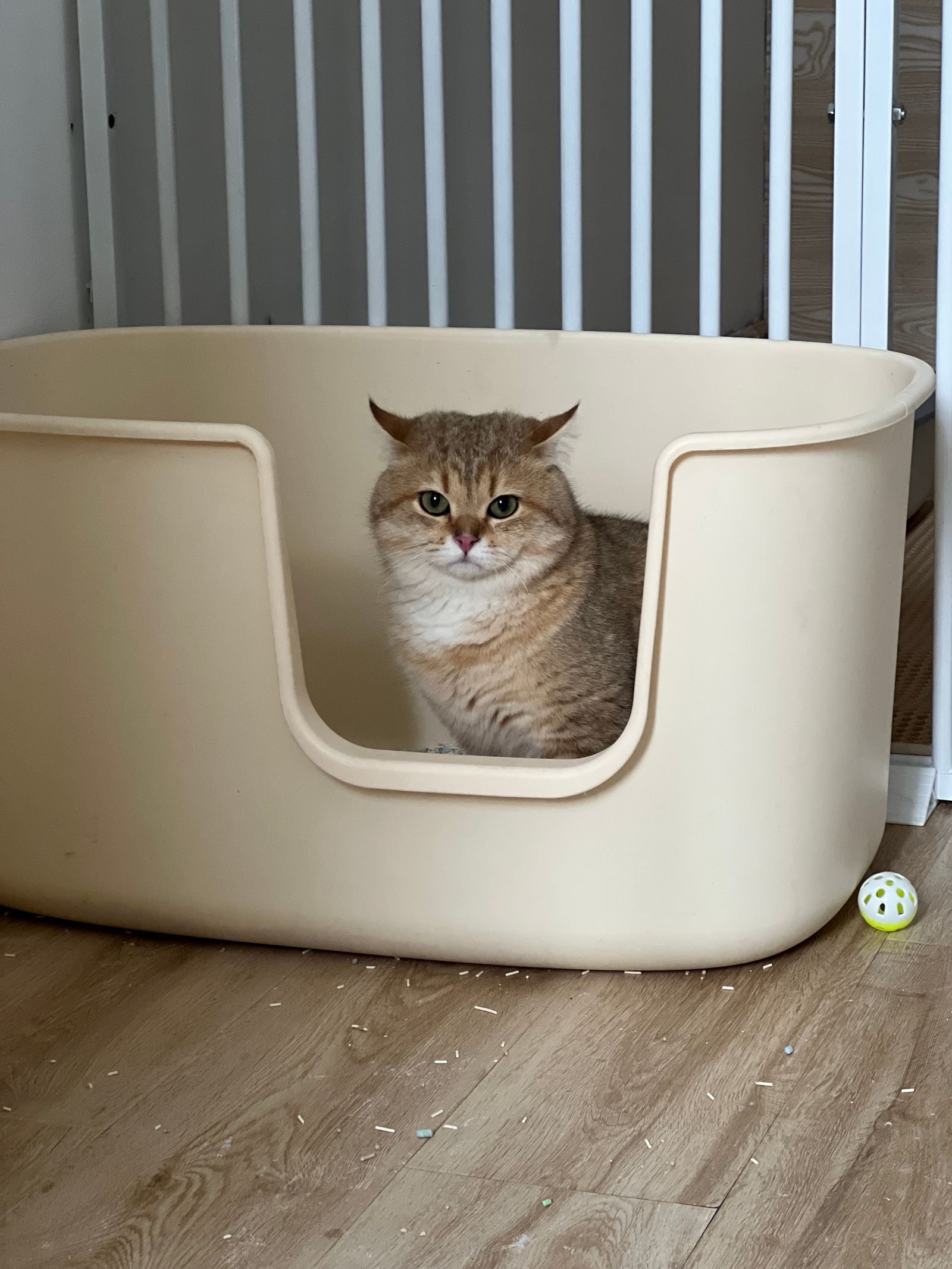
I tracked the real costs and tested the options. Here’s what actually matters.
What the Cute Aisle Actually Costs You
A kitten needs six jobs done: somewhere to sleep, a way to the vet, a place to pee, water, food, and something to hunt. Bought separately at pet-store stickers, those jobs blow the budget before you reach the fun aisle — and then you buy the fun aisle anyway.
My panic cart ran about $230, and roughly $75 of it was decoration — broken or donated inside a year. That’s the endcap’s real price: paying twice for everything that matters because the first purchase was cute. This time I flipped the order: buy the boring twenty pieces in one box, spend the difference on the litter box and the water, and skip anything with a novelty tag. The list below lands around $110-115, leaving about $15 of the $130 cap for the small stuff.
Kitten Starter Kit, 20-Piece — The All-in-One Shortcut
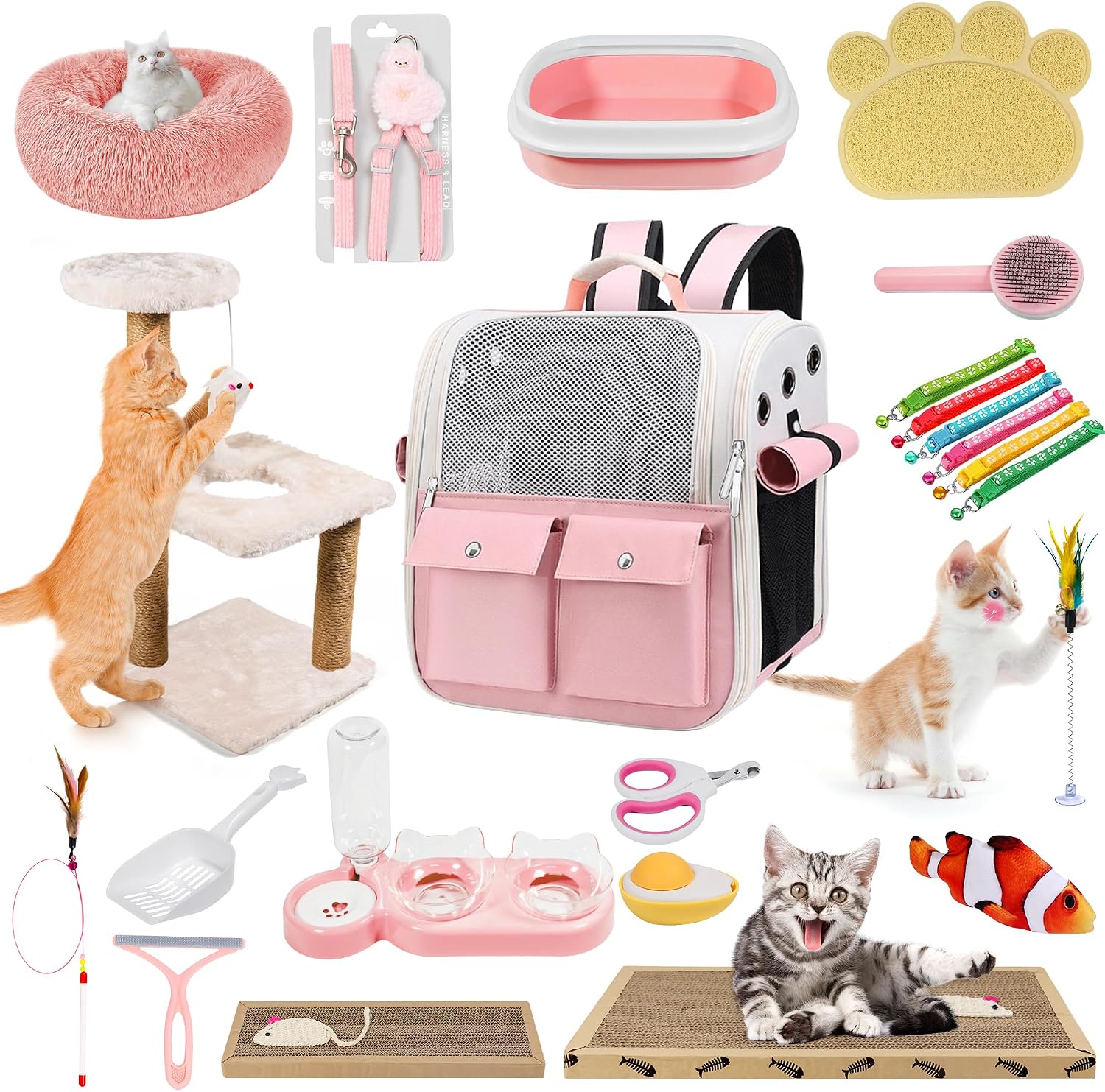
The Kitten Starter Kit, 20-Piece is the shortcut: bed, carrier, litter box, bowls, and a pile of toys in one box for about $50 — about $2.50 per piece. Bought separately two years ago, the same items cleared double the kit’s price, and the quality was no better.
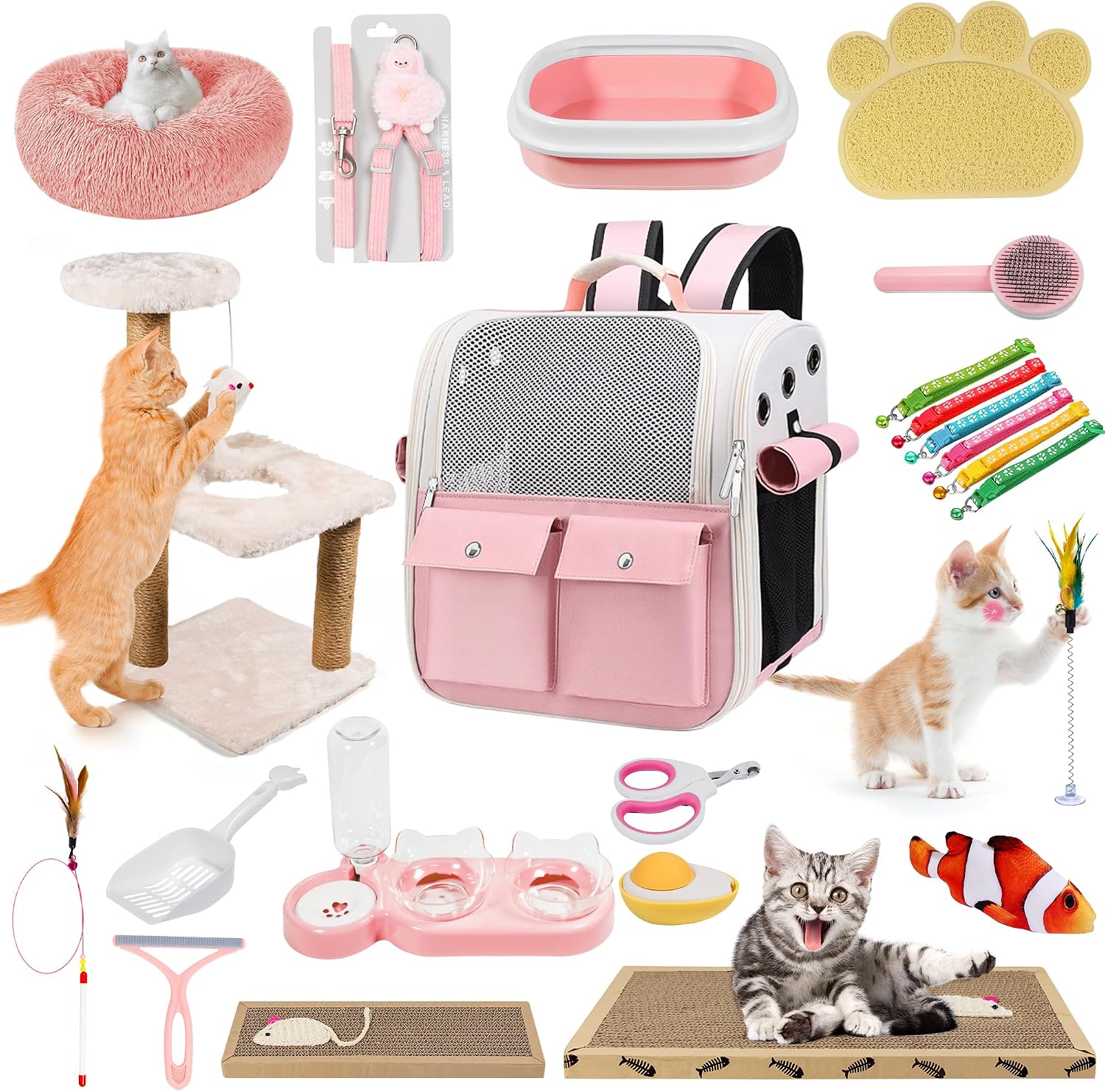
Be honest about what you’re buying, though: per-piece quality is entry-level, not heirloom. The bed flattens inside a month. The carrier is kitten-sized, not grown-cat-sized. The included litter box is a basic open tray — perfect for a young kitten, useless as a forever box. The toys die fast under determined teeth.
My take: the best dollar-per-use purchase of month one. This isn’t the place to splurge — it’s the place to be done.
IRIS USA Top-Entry Litter Box — The Odor Controller
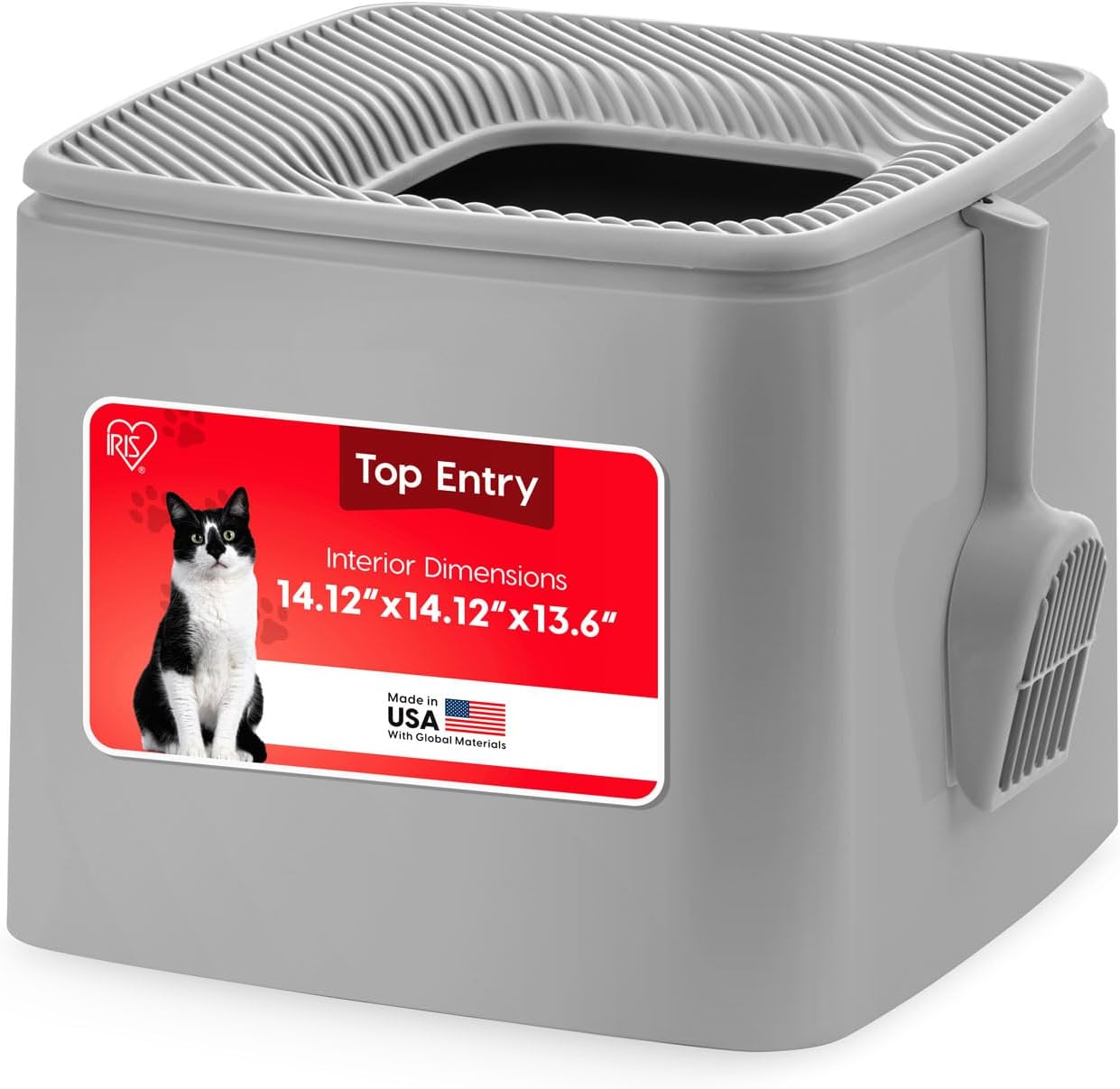
The IRIS USA Top-Entry Litter Box runs about $30-35, which is under ten cents a day across year one. Its 38,000 ratings are there for a reason: the covered top-entry design keeps odor and scatter inside the box instead of across your floor. Litter clinging to paws lands on the hood, not my hallway, and between scoops the smell stays under the lid.
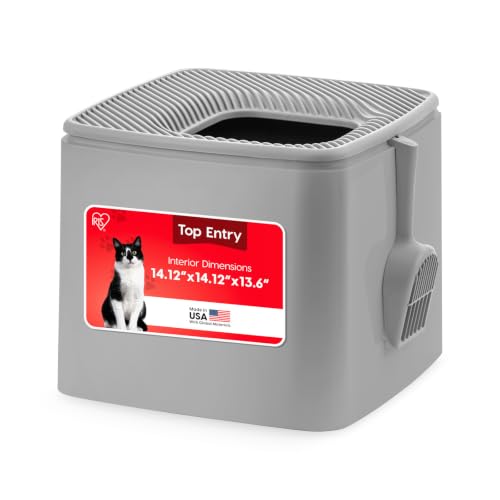
The catch: kittens under 8 weeks can’t do the climb. Start them in the kit’s open tray, then graduate at two to three months once the hop is easy. Second con — a covered box hides your sins. Skip a day of scooping and it goes rank faster than any open pan.
My take: for a one-box apartment, the biggest quality-of-life upgrade on this list. I wrote a whole post about how a top-entry box ended the litter-in-every-corner era in my apartment — same story, no regrets.
Veken 95oz Pet Water Fountain — The Hydration Nudge
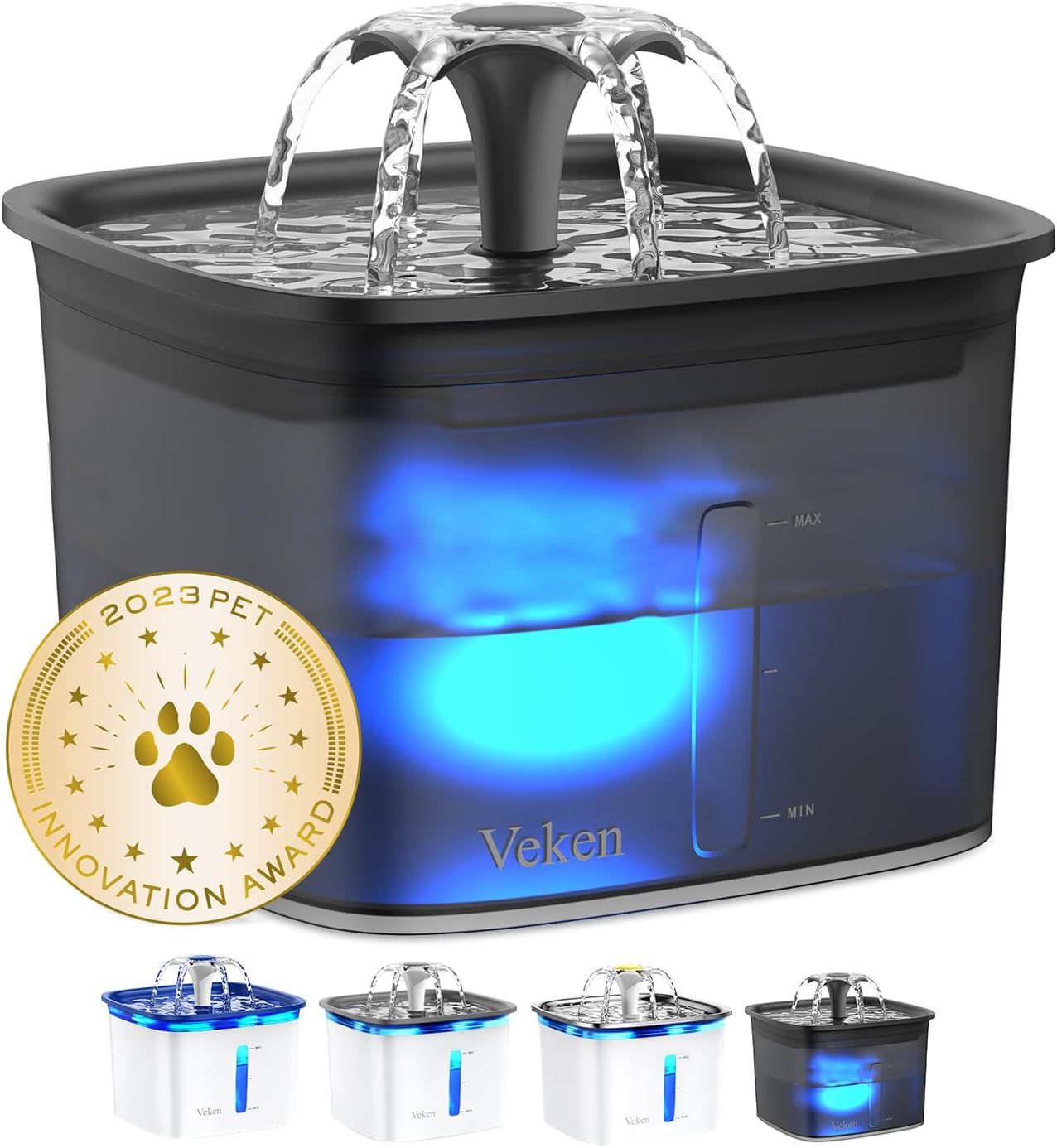
The Veken 95oz Pet Water Fountain costs about $30 — call it $2.50 a month spread over year one. A plain bowl costs nothing, so that’s the bar this has to clear. But cats drink measurably more from moving water, and a kitten on dry food who won’t drink is a vet problem waiting for a date. The flower spout is the trick — mine paws at the stream like a toy, then drinks.
Honest cons: it needs a wall outlet, the pump gets chatty when the water runs low, and the filters are a recurring cost to budget — a subscription hiding inside a one-time price. It also wants a weekly teardown and scrub, or the plastic goes slimy.
My take: the cheapest health insurance on this list, if you accept ten minutes of weekly cleaning.
Feliway Optimum Calming Diffuser Starter Kit — The First-Week Soother
The Feliway Optimum Calming Diffuser Starter Kit is the first cut if the budget forced it — but the adjustment week is rough, and a pheromone diffuser takes the edge off the hiding-under-the-bed phase. One plug covers one room — put it where the kitten actually spends week one.
Two honest cons: response varies by cat, and some show no visible difference at all. And if you run refills year-round, they quietly outspend the starter kit within twelve months.
My take: run it for month one, then stop and watch. If she’s calm without it, you just saved a year of refills.
Before you order: the 20-piece kit is the bulky one, and bulky is where shipping fees bite. If you’re not a Prime member yet, start the free trial before checkout and the whole list ships free — start with the starter kit, then keep or cancel the trial once the boxes land.
Features That Actually Matter (And Ones That Don’t)
What matters: a covered or top-entry box for scatter and odor control; a fountain that fully disassembles for cleaning; a carrier with a rigid base, because flimsy ones sag under a panicking cat; stainless or ceramic bowls instead of plastic, which can irritate a kitten’s chin; and a litter mat that holds what tracks out — the honeycomb kind that dumps its catch in five seconds is the one I use.
What doesn’t: plush caves (a folded blanket works), treat launchers, heated beds in a heated apartment, decorative tip-proof bowls that aren’t, and premium toys bought before you know what your cat actually plays with. Skip subscription boxes too — the kit’s toy pile is the cheap experiment.
The Annual Cost Comparison
- Before — the panic cart: about $230 in first-month gear, roughly $75 of it broken, ignored, or donated inside a year.
- After — this list: about $130 all-in, with bed, carrier, tray, bowls, and toys covered by one $50 box — and every piece still in use at twelve months.
- First-year gear savings: about $100, which is a season of litter and food that used to go to the donation bag.
- Recurring costs either way: litter and food always; fountain filters if you run one; Feliway refills only if the month-one test proves your cat needs them.
Frequently Asked Questions
How much does a kitten cost the first month?
Gear is the cheap part — the list above covers it for about $130. The number that stings in month one is the first vet visit, and no amount of endcap frugality fixes that. Save the discipline for the shopping aisle, not the exam room.
Do kittens need a top-entry litter box or a low one?
Both, in sequence. Kittens under 8 weeks can’t manage the climb, so start them in a low, open tray — the kit’s tray is exactly that. At two to three months, once the vertical hop is easy, move to the top entry for odor and scatter control. The old tray becomes a second-room backup.
What kitten supplies are a waste of money?
Anything whose pitch is cuteness instead of a job: plush caves, treat launchers, costumes, decorative bowl sets, and premium toys bought before you know what your cat plays with. Never cheap out on the two categories that touch health: water, and anything the kitten puts in her mouth.
ThriftyPaw is reader-supported. As an Amazon Associate, I earn from qualifying purchases. That means if you buy through one of the links above, I get a small commission at no extra cost to you. I only recommend products I’ve actually used with my own dog.
🐾 Get Your Free Big Dog First Aid Kit Checklist
Join our newsletter and get this free printable plus weekly tips.
Frequently Asked Questions
How much does a kitten cost the first month?
Gear is the cheap part. The list above covers it for about $130. The number that stings in month one is the first vet visit, and no amount of endcap frugality fixes that. Save the discipline for the shopping aisle, not the exam room.
Do kittens need a top-entry litter box or a low one?
Both, in sequence. Kittens under 8 weeks cannot manage the climb, so start them in a low, open tray. At two to three months, once the vertical hop is easy, move to the top entry for odor and scatter control. The old tray becomes a second-room backup.
What kitten supplies are a waste of money?
Anything whose pitch is cuteness instead of a job: plush caves, treat launchers, costumes, decorative bowl sets, and premium toys bought before you know what your cat plays with. Never cheap out on the two categories that touch health: water, and anything the kitten puts in her mouth.
Liked this guide? Get the next one in your inbox — the pet budget checklist is free too.
✓ You're in — check your inbox.
No spam. Unsubscribe anytime. We never share your email.