This article contains affiliate links. We may earn a commission from qualifying purchases.
Some content on this site is AI-assisted and reviewed by our editorial team.
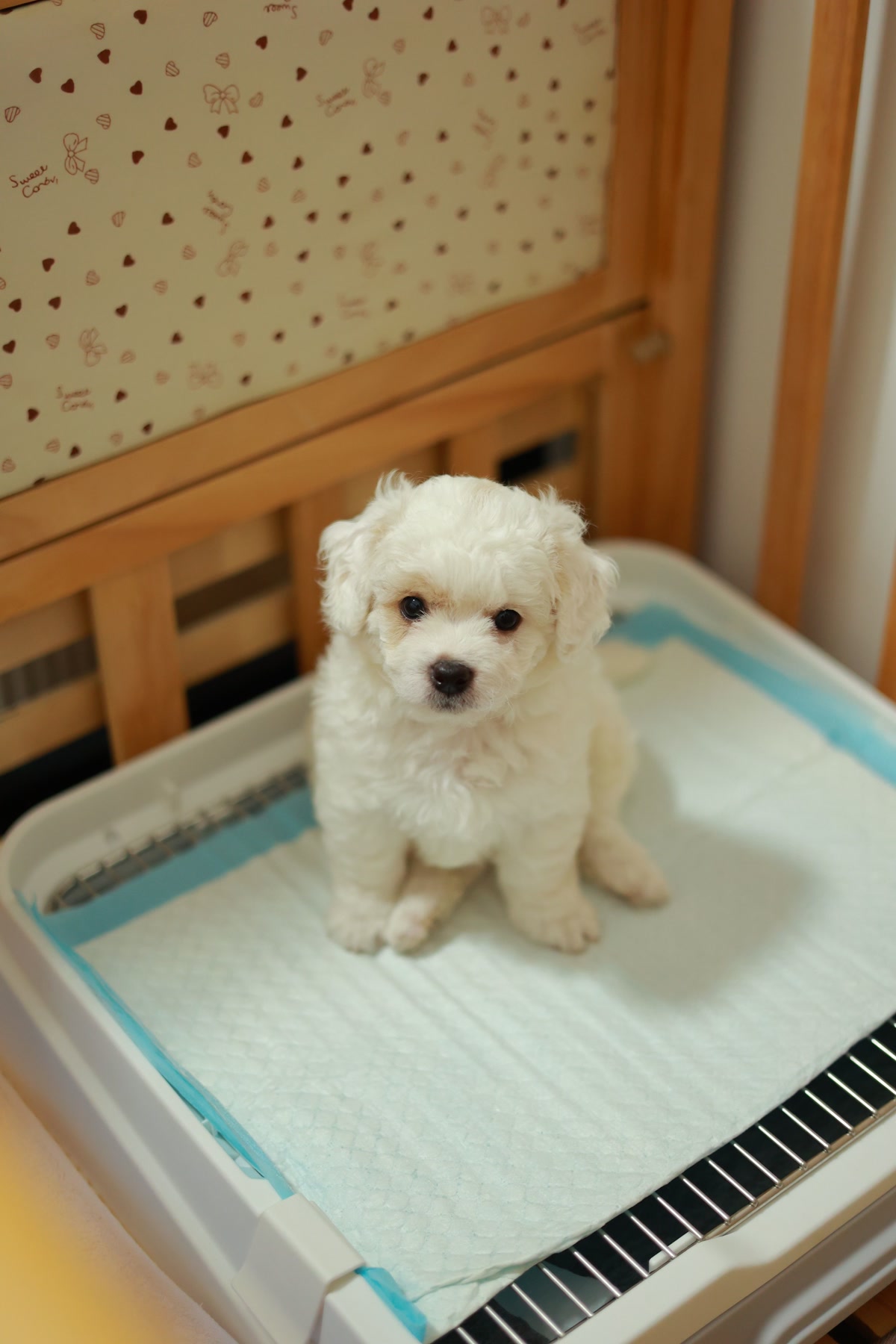
Potty training a puppy takes 2 weeks with 20 Dollars of supplies — enzyme cleaner, training treats, and a leash — plus a consistent schedule of 8-10 outdoor outings per day during week one.
The 20-Dollar Potty Training Kit
Potty training requires just 20 dollars of supplies: enzyme cleaner (12 dollars), training treats (8 dollars), and a leash (10 dollars) — skip pee pads and expensive indoor grass systems.
1. Enzyme Cleaner (Essential — Under 12 Dollars)
Enzyme cleaner is the one non-negotiable purchase — it breaks down uric acid crystals that make dogs return to accident spots, unlike regular cleaners which leave residue dogs can still smell.
Regular cleaners do not work. Dogs can smell urine residue even after you mop it up, and they return to the same spot. An enzyme-based cleaner like Rocco and Roxie Stain and Odor Eliminator breaks down the uric acid crystals that make dogs return to accident spots. One bottle under 12 dollars lasts through the entire potty training process.
Skip the Budget cleaners — if it does not contain enzymes, it does not work. This is the one item worth spending real money on.
2. Treats for Rewards (Under 8 Dollars)
Use a separate high-value treat type for potty rewards only — this teaches your puppy that going outside triggers something special.
Pupford Freeze-Dried Training Treats are ideal — small, smelly, and high-value. Use a separate treat type for potty rewards only, so your puppy learns that going outside means something special happens. Under 15 dollars for a bag that lasts months.
3. A Leash (Under 10 Dollars)
A leash is essential even with a fenced yard — walking to the same potty spot on leash creates routine and prevents distraction.
You need a leash for potty training even if you have a fenced yard. Walking your puppy to the same spot on a leash creates a routine and prevents them from getting distracted and playing instead of doing their business.
The Two-Week Method
Week 1 establishes the schedule with 8-10 daily outings; week 2 builds bladder control by extending intervals and adding bell training for communication.
Week 1: The Schedule
Take your puppy out 8-10 times per day — first thing in morning, after meals, after play, after naps, before bed, and every 1-2 hours in between.
The secret to potty training is taking your puppy out before they have an accident, not after. Puppies need to go out:
- First thing in the morning — carry them outside, do not let them walk (they will pee on the way)
- Within 10 minutes of eating — food triggers the gastrocolic reflex
- After every play session — excitement stimulates the bladder
- After every nap — the bladder fills during sleep
- Right before bed — last chance for the night
- Every 1-2 hours in between — set a timer on your phone
That means 8-10 outings per day during week 1. Yes, it is a lot. This is why potty training fails — people do not take them out often enough.
The Potty Routine (Same Every Time)
Carry your puppy to the same spot, say your cue word, stand still and wait, reward immediately after they go — the treat must come within seconds, not after going back inside.
- Carry your puppy to the designated potty spot (same spot every time)
- Put them down and say your cue word (“go potty” or “do your business”)
- Stand still and wait. Do not play, do not talk, do not distract
- When they go, immediately reward with a treat and calm praise
- Wait 30 more seconds — puppies often pee twice
- Walk them back inside
The key is that the treat comes immediately after the act, not after you go back inside. The puppy must connect “I peed outside” with “I got a treat” with zero delay.
Week 2: Building Bladder Control
In week 2, extend outings to every 2-3 hours, watch for sniffing and circing signs, and start bell training so your puppy can signal when they need to go out.
By week 2, your puppy starts developing bladder sphincter control. Extend the time between outings:
- Every 2-3 hours instead of every 1-2 hours
- Start using a cue word consistently
- Watch for signs: sniffing, circling, whining, sudden stops in play
- If you see these signs, take them out immediately
Start teaching your puppy to signal you. Hang a bell on the door and ring it with their paw before going out every time. Within a week, they learn to ring the bell themselves when they need to go.
Bell Training (Under 5 Dollars)
Doorbell training bells cost under 8 dollars — ring them every time you go out, guide your puppy’s paw to ring them by day 3, and most puppies ring independently by day 7.
A set of doorbell training bells costs under 8 dollars. Or make your own with a string and jingle bells from a craft store for under 3 dollars.
Bell training steps:
- Hang bells on the door you use for potty breaks
- Every time you take your puppy out, ring the bells yourself first
- After 3 days, guide their paw to ring the bells before opening the door
- By day 7, most puppies ring the bells on their own
- Always respond to the bells — even at 3 AM (ignore it once and you teach them the bells do not work)
Handling Accidents Without Setbacks
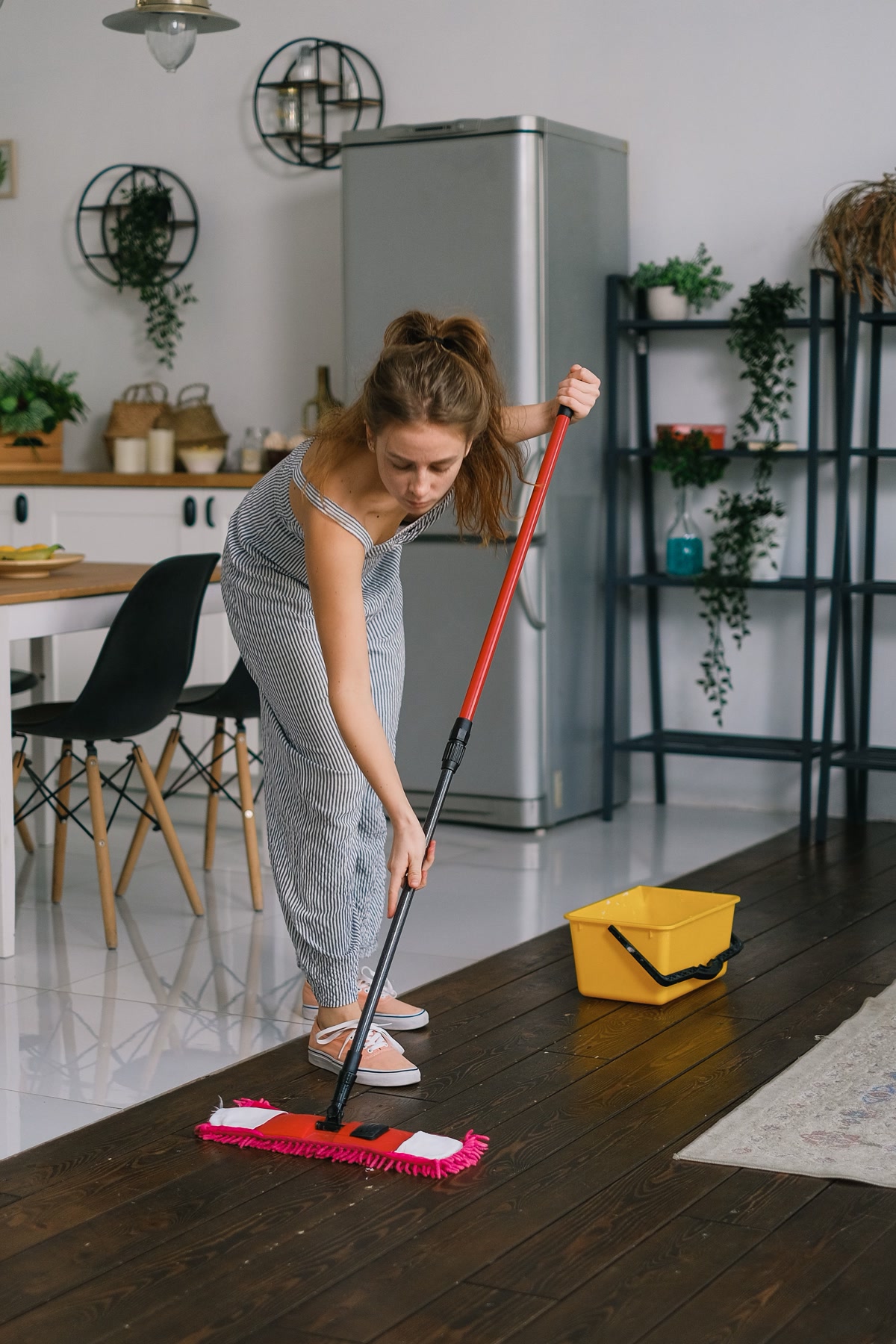
Never punish accidents — if caught in the act, interrupt with a clap and carry outside; if found later, just clean with enzyme cleaner and reset the schedule.
Accidents happen. How you handle them determines whether potty training takes 2 weeks or 2 months.
What to Do
If you catch your puppy peeing inside, clap once to interrupt, carry them outside, and reward if they finish out there — never rub their nose in it or scold after the fact.
- If you catch them in the act — clap once to interrupt (do not yell), scoop them up, carry them outside, and reward if they finish out there
- If you find it after the fact — clean it up with enzyme cleaner. Do not rub their nose in it. Do not show it to them. Do not say “no” — they will not connect the scolding with something they did 30 minutes ago
- Re-set the schedule — if accidents increase, go back to more frequent outings
What NOT to Do
Never punish accidents, never mix pee pads with outdoor training, and never free-feed — these three mistakes extend potty training from 2 weeks to 2 months.
- Never punish accidents. Fear makes puppies hide to pee, which makes training harder
- Never use pee pads and outdoor training simultaneously. Pick one method. Pee pads teach “inside is okay” then you have to un-teach that
- Never free-feed. Scheduled meals mean scheduled potty times
Nighttime Strategy
Puppies under 12 weeks need 1-2 middle-of-night potty breaks — crate them next to your bed, limit water after 8 PM, and keep nighttime outings silent with no play.
A puppy under 12 weeks old cannot hold their bladder all night. Expect 1-2 middle-of-night potty breaks. Options:
- Crate next to your bed — when they whine, carry them outside, then back to crate. No play, no treats, no eye contact. Business only.
- Set an alarm — take them out at 2 AM every night for the first 2 weeks, then extend to 4 AM, then through the night
- Limit water after 8 PM — remove the water bowl 2 hours before bedtime. Do not restrict water during the day.
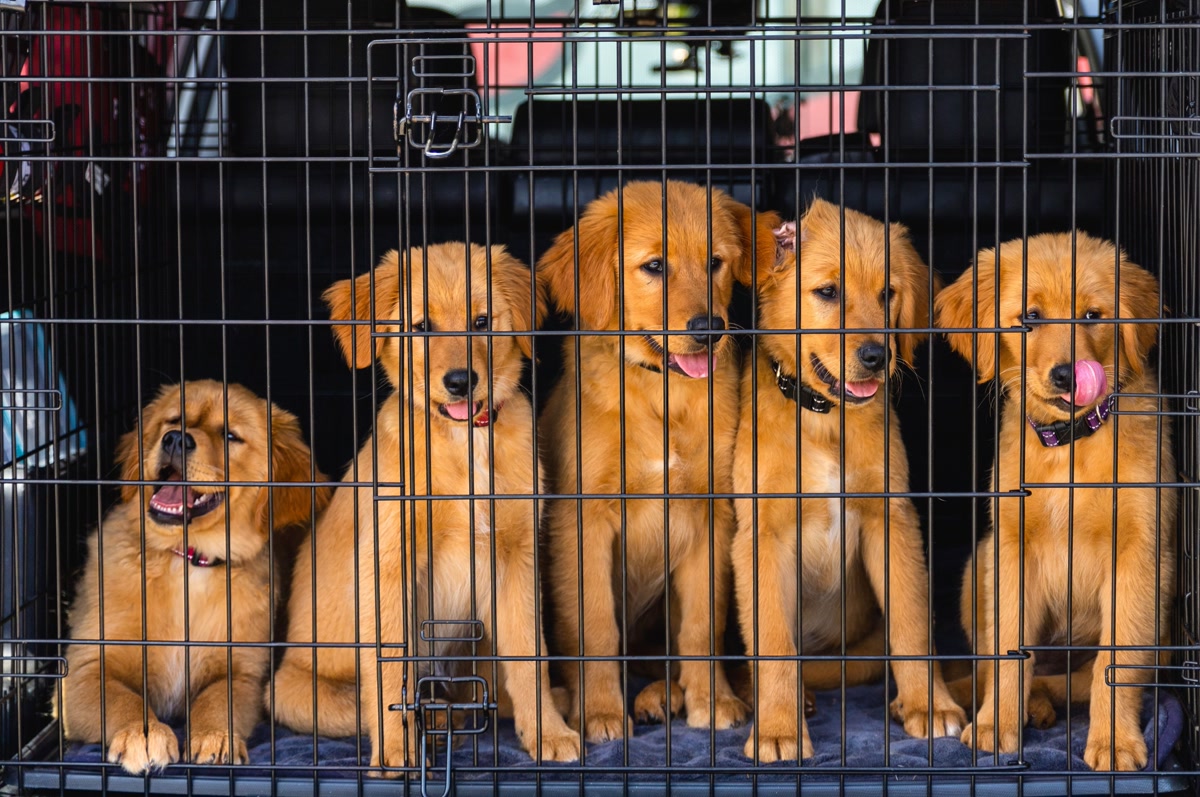
A crate is essential for nighttime. Puppies do not soil their sleeping space. A crate sized so they can stand, turn, and lie down — not so big they can pee in one corner and sleep in another.
Potty Training by Age
An 8-week-old puppy holds their bladder 1-2 hours needing 8-10 daily outings, while a 6-month-old holds 6-8 hours with 3-4 outings and no nighttime breaks.
| Age | Max Hold Time | Outings Per Day | Nighttime Breaks |
|---|---|---|---|
| 8-10 weeks | 1-2 hours | 8-10 | 2 |
| 10-12 weeks | 2-3 hours | 6-8 | 1 |
| 12-16 weeks | 3-4 hours | 5-6 | 0-1 |
| 4-6 months | 4-5 hours | 4-5 | 0 |
| 6+ months | 6-8 hours | 3-4 | 0 |
Small breed puppies have smaller bladders and need more frequent outings than large Breeds at the same age.
Cost Comparison: DIY vs Alternatives
DIY potty training costs 20-30 dollars and takes 2-4 weeks, compared to pee pads at 30-50 dollars per month ongoing or board-and-train at 500-1,500 dollars.
| Method | Cost | Timeline |
|---|---|---|
| DIY (this guide) | 20-30 dollars | 2-4 weeks |
| Pee pad training | 30-50 dollars/month ongoing | Transition to outdoors later |
| Indoor grass patch | 30-60 dollars/month subscription | Transition to outdoors later |
| Professional trainer | 75-150 dollars per session | 1-3 sessions |
| Board and train | 500-1500 dollars | 2-4 weeks |
The DIY method is not just the cheapest — it is also the most effective because you are the one building the relationship and routine with your puppy. A trainer cannot do that for you.
The Bottom Line
Potty training is about consistency not products — 20 dollars of enzyme cleaner and training treats plus a 2-week schedule is all it takes to house-train a puppy for life.
Potty training is about consistency, not products. Twenty dollars of enzyme cleaner and training treats, a leash you already own, and a schedule you stick to is all it takes. The biggest investment is your time during those two weeks — and the payoff is a lifetime of a house-trained dog. Skip the pee pads, skip the expensive indoor grass systems, and commit to the routine. Your puppy will get it.
Last updated: July 2026 | By ThriftyPaw | Prices and availability subject to change
ThriftyPaw is reader-supported. As an Amazon Associate, we earn from qualifying purchases. This means we may earn a small commission when you buy through links on this site at no additional cost to you. We only recommend products we genuinely believe in. Thank you for supporting ThriftyPaw.
My take: The method is free — schedule and consistency — and the $12 enzyme cleaner is the only purchase that’s truly mandatory. Two weeks of outings on a clock beats any $500 program; skip the pads, they just add a transition to untrain later.
Related guides
- The 40 Dollar Camera That Caught My Dog Red-Pawed on the Couch
- Best Waterproof Car Seat Covers for Dog Owners (Mess-Tested)
- Best Budget Dog Leashes for Small Dogs (All Under 15 Dollars)
- The Wrong Crate Twice Cost Me 150 Dollars. One Divider Panel Fixes It.
- Best Dog Toys Under 10 Dollars That Actually Last (2026)
🐾 Get Your Free Big Dog First Aid Kit Checklist
Join our newsletter and get this free printable plus weekly tips.
Frequently Asked Questions
What do I need to potty train a puppy?
The $20-30 kit: enzyme cleaner (under $12 — the one non-negotiable, because regular cleaners leave the uric acid crystals that draw dogs back), training treats ($8), a leash ($10), and optional doorbell bells ($8, or $3 DIY). Skip the pee pads and indoor grass systems — they teach the wrong lesson at $30-60 a month.
How long does potty training take?
Two weeks to a reliable pattern with the guide's method — 8-10 outdoor outings per day in week one on a fixed schedule, then building bladder control in week two. Total: $20-30 versus $500-1,500 for board-and-train or $30-50 a month for a pee-pad habit you'll later have to untrain.
Why does my puppy keep having accidents in the same spot?
Because regular cleaners don't break down the uric acid crystals — the dog smells a marked bathroom and returns. The enzyme cleaner is the fix, applied properly: saturate, let it sit, let it air-dry. It's the single item in the kit that solves the most common training failure.
Liked this guide? Get the next one in your inbox — the pet budget checklist is free too.
✓ You're in — check your inbox.
No spam. Unsubscribe anytime. We never share your email.
Price Check
Prices verified via our product tracker. Updated Sep 27.
| ThunderEase Dog Calming Pheromone Diffuser Kit | Powered b | $24.99 | 3.5★ (5,503) |
| Pupford Freeze Dried Training Treats for Dogs & Puppies (B | $16.85 | 4.6★ (8,178) |
| Dog Nail Grinder - Upgraded Pet Nail Grinder, Electric 5 S | $29.99 | 4.4★ (229) |
As an Amazon Associate we earn from qualifying purchases.