
This article contains affiliate links. We may earn a commission from qualifying purchases.
Some content on this site is AI-assisted and reviewed by our editorial team.
My cat shredded the corner of my couch in about six weeks. I priced a reupholstery quote at $600, looked at my cat like she’d committed a felony, and did what any ThriftyPaw reader would do: I started tracking what a “legal” place to scratch actually costs. The answer annoyed me — the good scratchers cost less than one month of the behavioral damage they prevent.
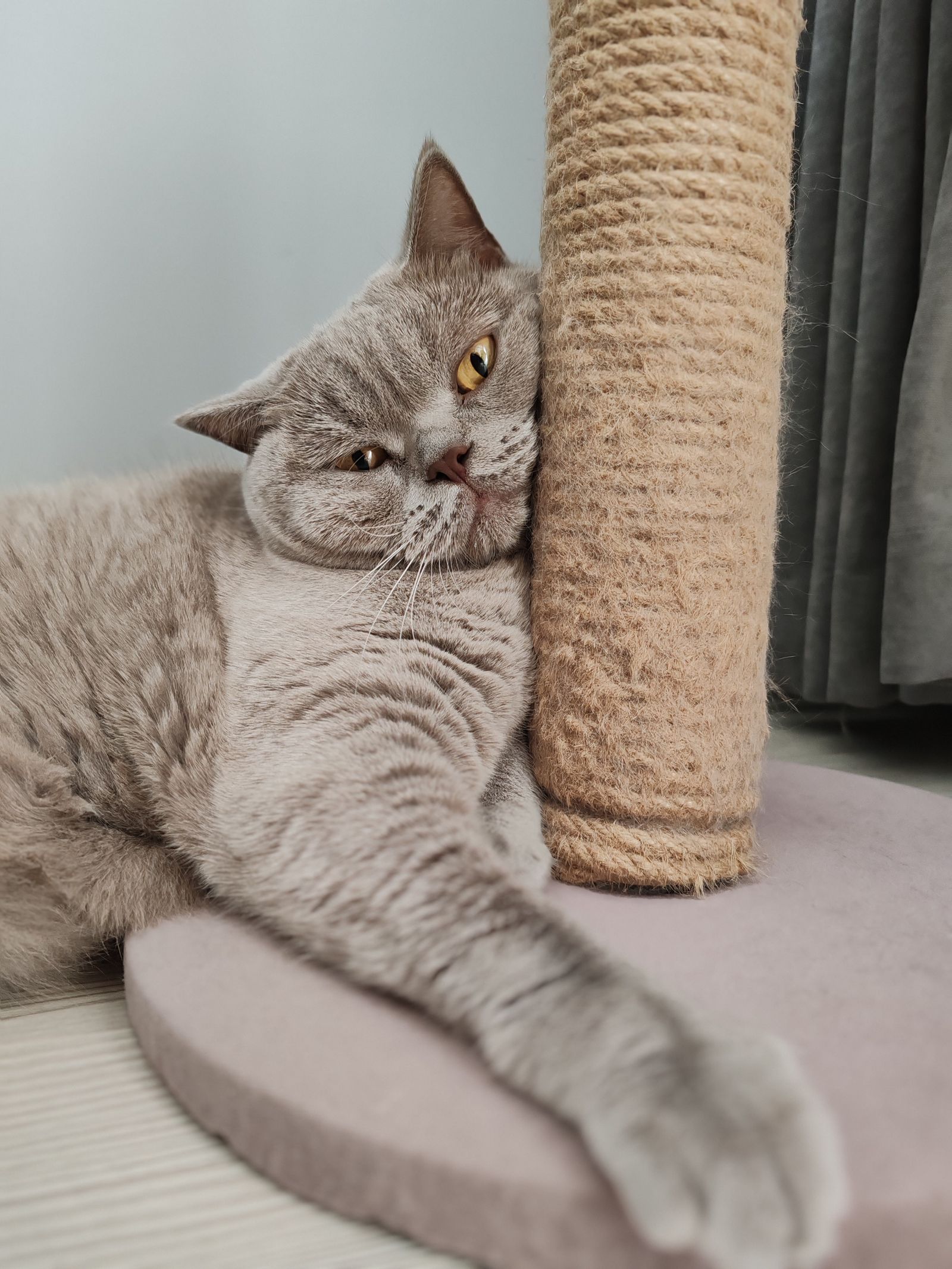
I tracked prices on four scratcher styles — tall post, heavy lounge, ball-track, and cheap wave — and tested them against the most destructive cat I know. Here’s the math and what survived.
What Scratching Actually Costs You Without One
The couch corner quote was $600. A slipcover runs $40-80 and looks like a slipcover. Declawing is not an option — it’s toe amputation, and behaviorists warn it creates worse problems than it solves. Meanwhile cats scratch to shed claw sheaths and stretch their backs, which means they need a surface that is taller than their full stretch and rougher than your upholstery. A scratching post is not a luxury purchase. It is the $10-70 alternative to a four-figure furniture bill.
SmartCat Pioneer Pet Ultimate Scratching Post — The Tall One That Actually Gets Used
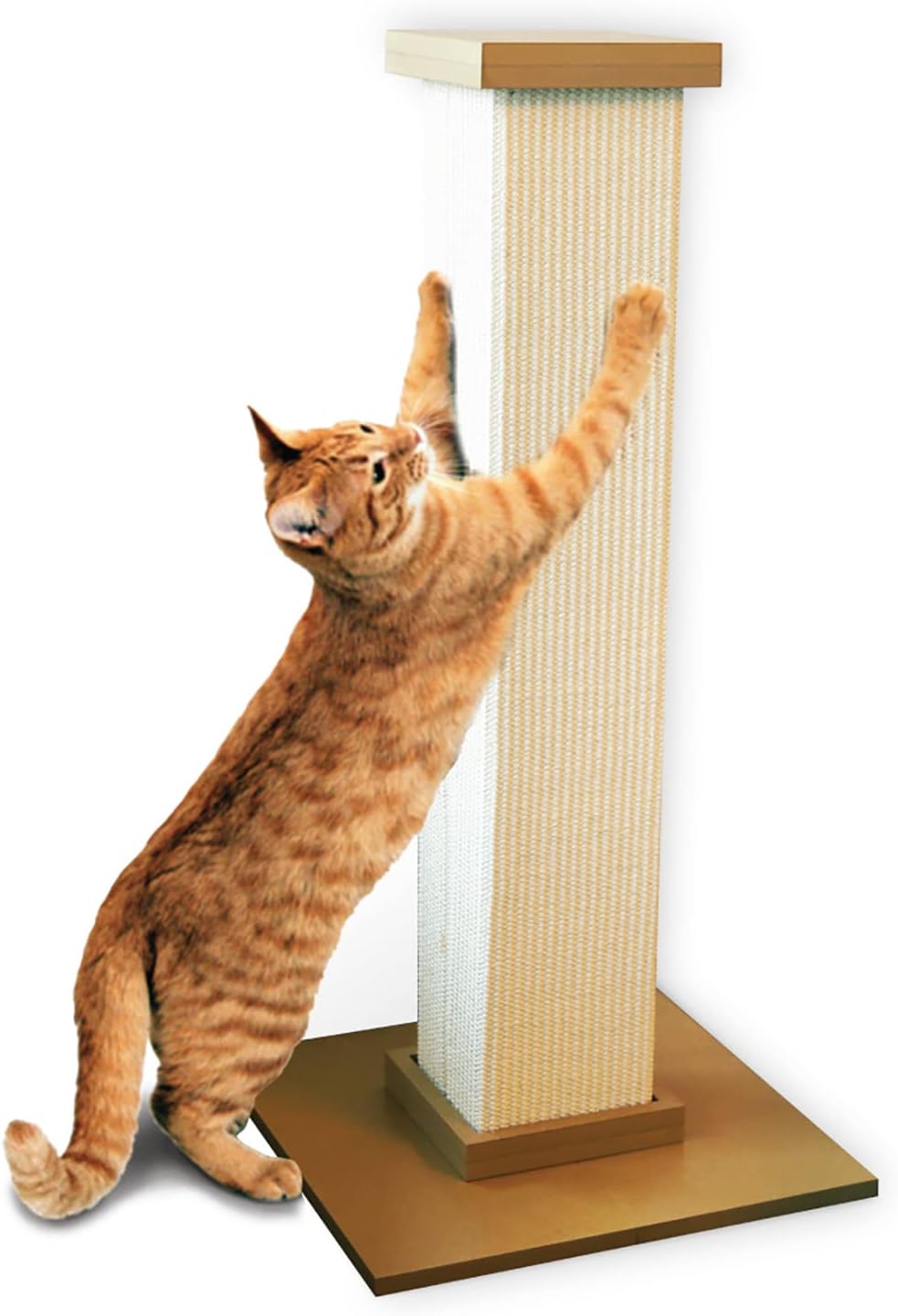
About $70 — the priciest pick here, and the one behaviorists recommend most. It is 32 inches of woven sisal on a 16×16 base, which is the magic combination: tall enough for a full vertical stretch (cats need to scratch something higher than their shoulder), heavy enough not to tip when a 12-pound cat commits. Cheaper posts are almost always too short, and a short post is a dead post — the cat tries it twice and goes back to your couch. The con is honest: it’s a plain beige pole in your living room, and sisal sheds fibers for the first few weeks.
My take: if you buy one scratcher ever, buy this shape and height. It’s the one my couch-destroyer switched to permanently.
Amazon Basics Sturdy Cat Scratching Post — The Budget Slot That Holds Up
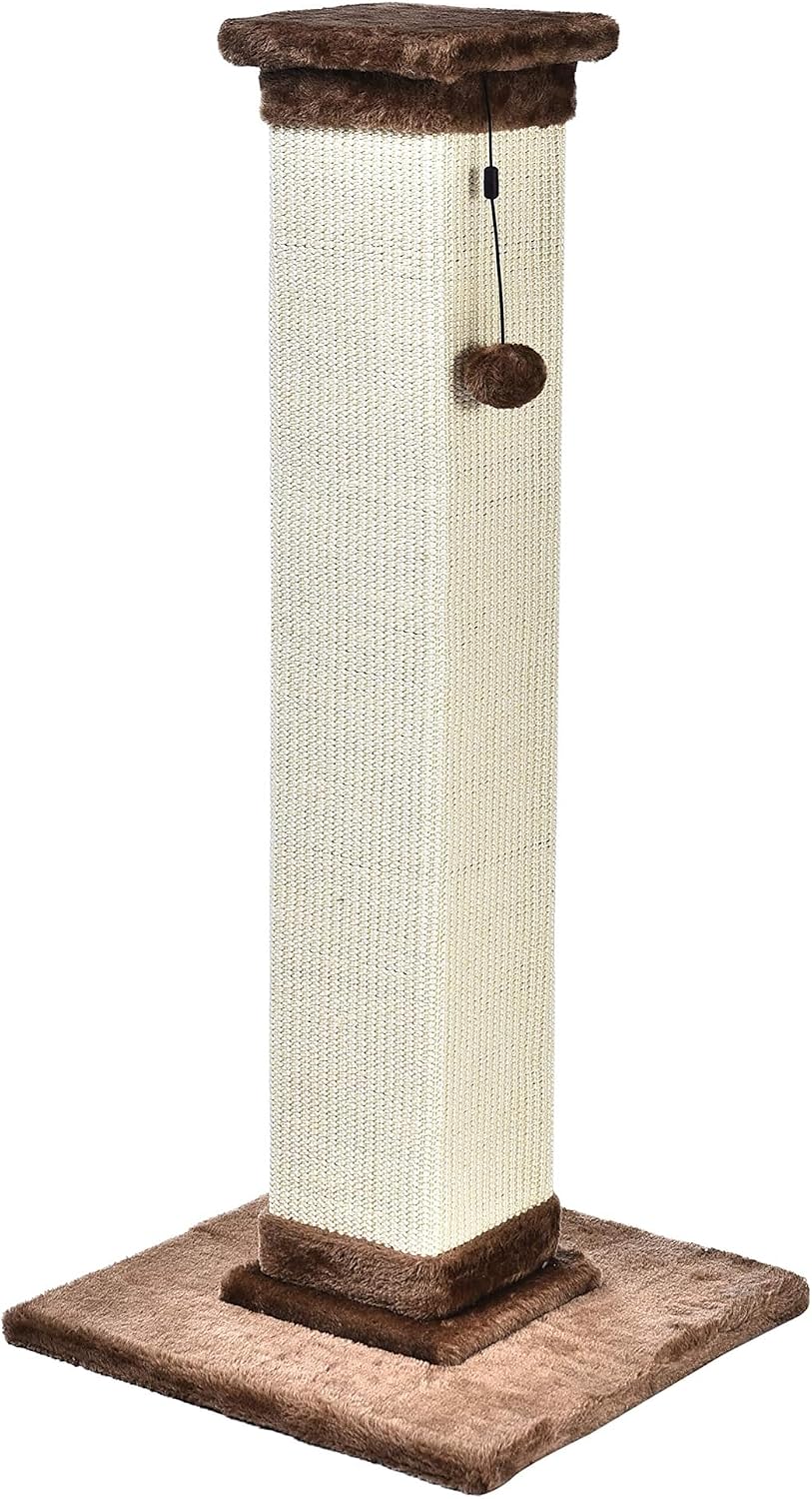
About $37 for the 35-inch version. This is the rare Amazon Basics product that matches the name brand where it counts: real sisal rope, a solid wood base, and — the spec that actually matters — the height. It is 3 inches taller than the SmartCat for half the money. The tradeoffs: the base is lighter, so a really committed scratcher can rock it on carpet, and the included toy dangling from the top lasted about a day at my house before it was ripped off. On hardwood it is rock solid.
My take: the best value on this list. If your cat is under 12 pounds and your floor is hard, save the $32 and buy this one.
Bergan Turbo Scratcher — The One That Doubles as a Toy
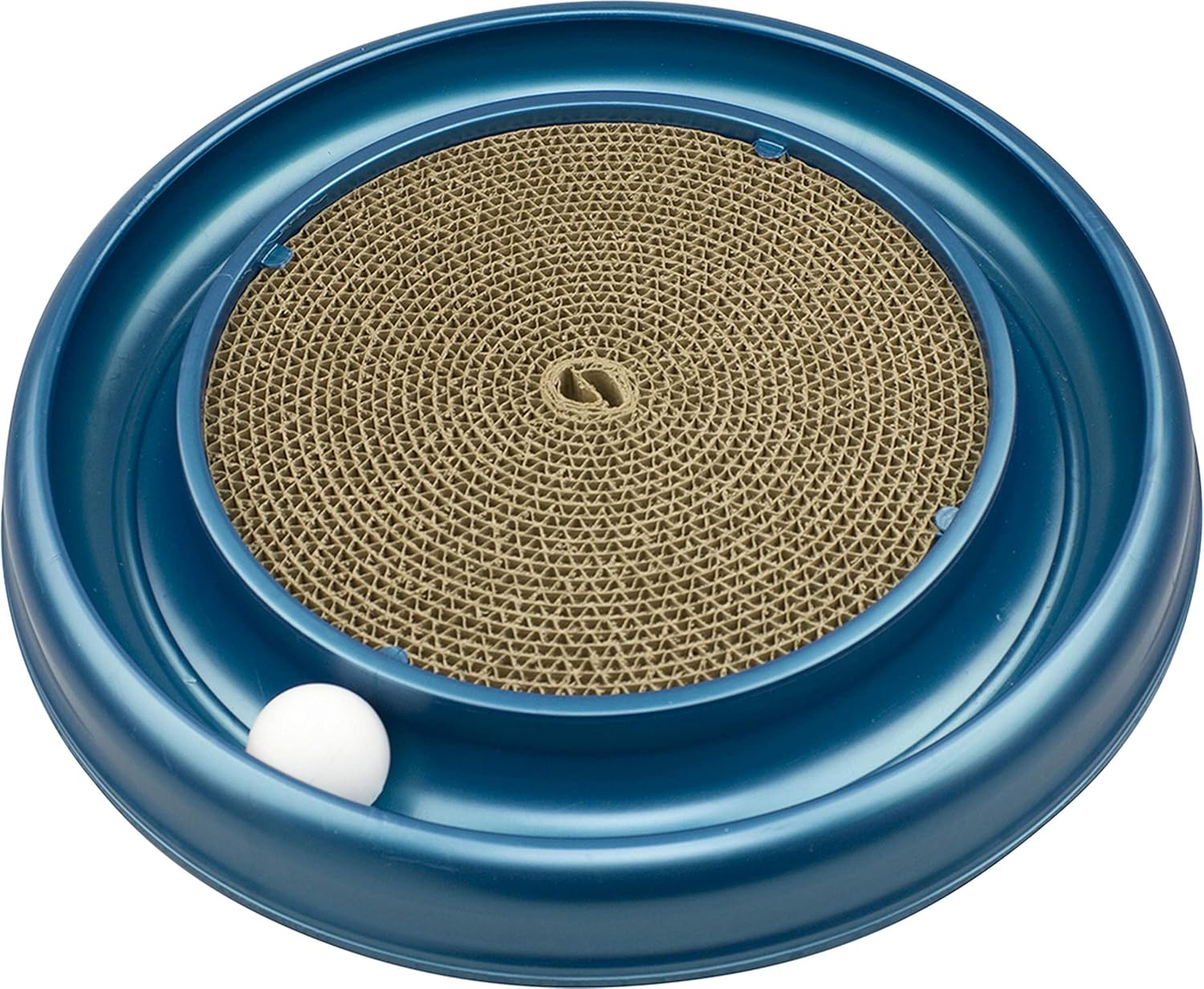
About $18. The Turbo Scratcher is a round corrugated cardboard pad inside a plastic track with a ball cats can bat around the rim. It has been a shelter-foster favorite for 20 years for one reason: it works for scratchers AND players, so a bored indoor cat burns energy two ways. Cardboard is the surface many cats prefer over sisal — if yours ignores posts, texture is probably why. The cons: the pad is single-sided (flip it to double the life), and the plastic housing is not going to match a nice living room.
My take: the cheapest behavioral win available. Pair it with a tall post and you’ve covered both scratch textures for under $90 total.
Amazon Basics Wave Scratcher 2-Pack — The Disposable Refill Strategy
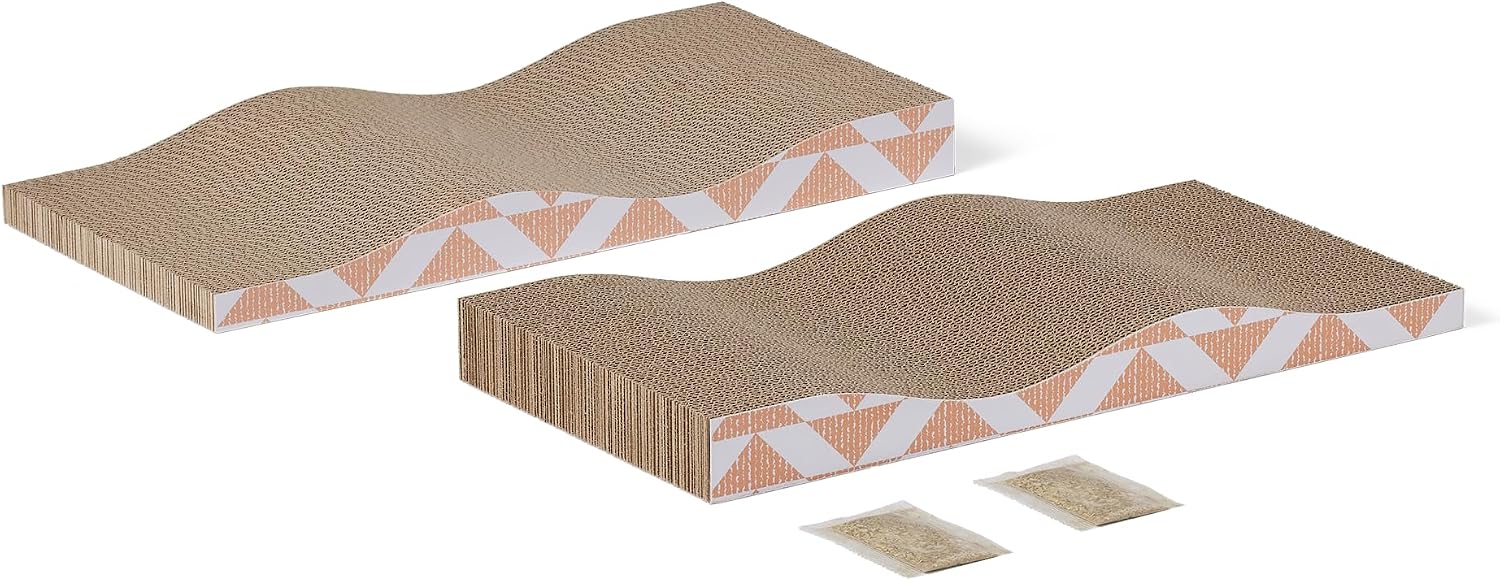
About $10 for a 2-pack of curved double-sided cardboard waves, catnip included. This is the scratcher version of the poop-bag economy: cheap enough that you replace the consumable instead of protecting it. A wave supports a horizontal stretch posture that posts can’t, and two means one upstairs and one down. They shred — expect cardboard confetti under each one and a replacement cycle measured in months. At $5 apiece, that’s the deal: roughly $70 in waves covers a year of heavy scratching for less than the tax on one reupholstery quote.
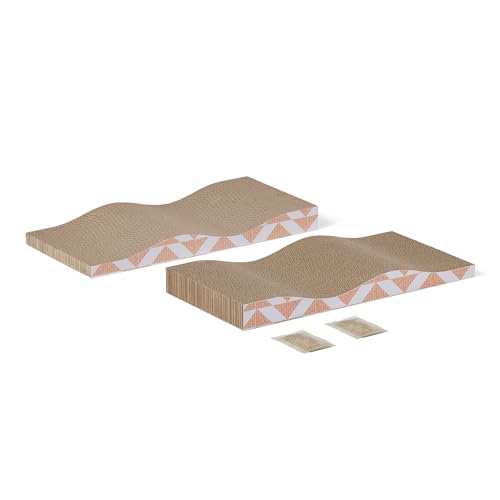
My take: buy the 2-pack on day one and stop caring about wear. This is the closest thing scratching has to a Subscribe & Save item — set up a Subscribe & Save cadence on the refill pads and never think about it again.
Save on shipping: scratchers are bulky-but-light, which is where shipping fees bite. A free 30-day Prime trial covers the post and the refills in one order.
Features That Actually Matter (And Ones That Don’t)
Height beats everything: a post shorter than your cat’s shoulder-to-claw stretch will be ignored. 32 inches is the floor; 35 is better. This single spec explains most “my cat won’t use the post” complaints.
Texture is personal: sisal rope, sisal fabric, and corrugated cardboard all have fans. Watch which furniture corner your cat picks — fabric mimics the couch, cardboard mimics the carpet. Buy the texture they already chose.
Stability or it’s furniture: any post that tips once becomes a toy instead of a scratcher. Weight and base size matter more than carpet color or included dangly toys.
Placement is free and decisive: put the post next to the thing they currently scratch, not in a corner where furniture looks nicer. Then rub catnip into it and give it two weeks before you judge.
Doesn’t matter: carpeted versus sisal aesthetics, “ergonomic” curves on cardboard, and brand names. My cat’s favorite scratcher this month is a $5 cardboard wave.
The Annual Cost Comparison
- Do nothing: one shredded couch corner = $600 reupholstery, or a $40-80 slipcover that hides it forever.
- Budget path: Amazon Basics post ($37) + 2-pack waves ($10) = $47 once, plus about $20/year in replacement cardboard.
- Full coverage: SmartCat post ($70) + Turbo Scratcher ($18) + annual waves ($20) = $108 once, then $20/year.
- What else that money buys: a year of scratcher coverage costs less than two months of the Greenies habit I already talked you down from.
Keep reading: the cat litter math that saved me 126 dollars a year and the enzyme cleaner that beat 40 dollars of products — because a scratcher keeps the couch safe, but the litter box line item is the real budget fight.
ThriftyPaw is reader-supported. As an Amazon Associate, I earn from qualifying purchases. That means if you buy through one of the links above, I get a small commission at no extra cost to you. I only recommend products I’ve actually used with my own dog.
🐾 Get Your Free Big Dog First Aid Kit Checklist
Join our newsletter and get this free printable plus weekly tips.
Frequently Asked Questions
How tall should a cat scratching post be?
At least 32 inches, and taller is better. Cats need to scratch something taller than their full shoulder-to-claw stretch, and a short post is the number-one reason cats ignore a brand-new scratcher. The 35-inch budget post in this guide exists precisely because the common 16-24 inch posts fail this test.
Why does my cat scratch the couch instead of the post?
Usually texture and placement. Cats pick surfaces that mimic what they already scratch u2014 soft fabric reads as couch, corrugated reads as carpet u2014 and they scratch where they spend time, not where the post looks best. Put the scratcher next to the spot they already use and rub catnip in it.
How much should I spend on a cat scratcher?
Between $10 and $70 covers everything that works. The $70 SmartCat post is the behaviorist-recommended height and weight; a $10 two-pack of cardboard waves covers the horizontal scratch habit. Above $70 you are buying furniture aesthetics, not better scratching.
Do cat scratcher replacement pads save money?
Yes u2014 that is the whole design. The Bergan Turbo Scratcher's replacement cardboard pads (a 2-pack) revive the toy for a few dollars instead of buying a whole new unit. Setting refills on Subscribe & Save keeps the cycle running without a shopping trip.
Is declawing a cheaper fix than buying scratchers?
No, and it is not a fix at all. Declawing amputates the toe bone at the first knuckle and is banned or restricted in many places; behaviorists link it to litter-box avoidance and biting. A $47 scratcher setup prevents the furniture damage without the surgery.