
This article contains affiliate links. We may earn a commission from qualifying purchases.
Some content on this site is AI-assisted and reviewed by our editorial team.
I did something I’m not proud of last quarter: I never checked what I was paying per pound for cat litter. I just grabbed whatever bag was at eye level. When I sat down with the receipts — three cats, one very used litter box, and a mountain of 40-pound bags in the garage — the total came to $504 for the year. On litter. For cats who do not even say thank you.
Here’s the part that stung: the habit bag wasn’t even the good one. It was mid-priced per pound, and there were 40-pound bags costing less than half that per pound that clump just as well. I tracked six weeks of scooping, weighed the waste (yes, really), and price-checked every option. Here’s the math that saved me $126 a year — and the trap that would have cost me $80 more.
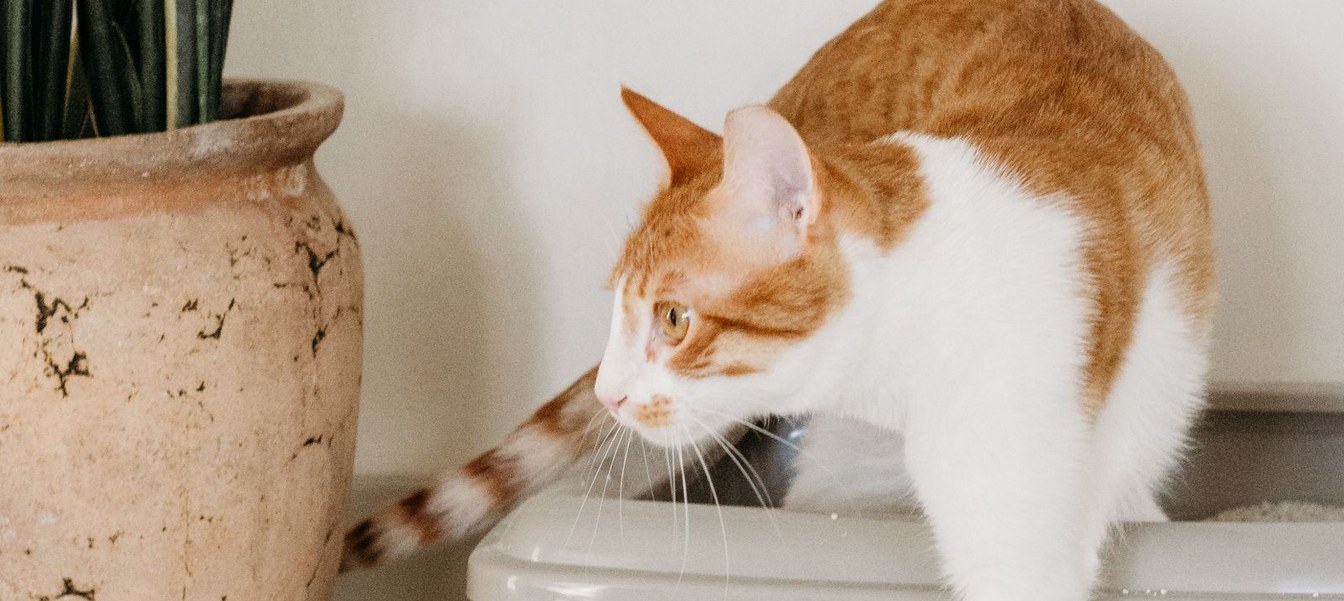
The habit I had to break first: buying litter by the bag instead of by the pound. A “big” 26-pound bag at $18 sounds like a deal until you run the same math on a 40-pound bag at $21. That’s 32 cents a pound — across a year of three-cat scooping, real money.
The Cost of the Problem, In Pounds
One average indoor cat goes through roughly 20 pounds of litter per month with daily scooping and a monthly full change. My three cats run about 60 pounds a month, or 720 pounds a year. Multiply by the per-pound price for your true annual bill:
- Mid-range scented clumping (the eye-level bag I was buying): about $0.70/lb — roughly $504/year.
- Big-bag value clumping bought right: about $0.53/lb — roughly $378/year.
- The difference: $126 a year, for scooping the same boxes.
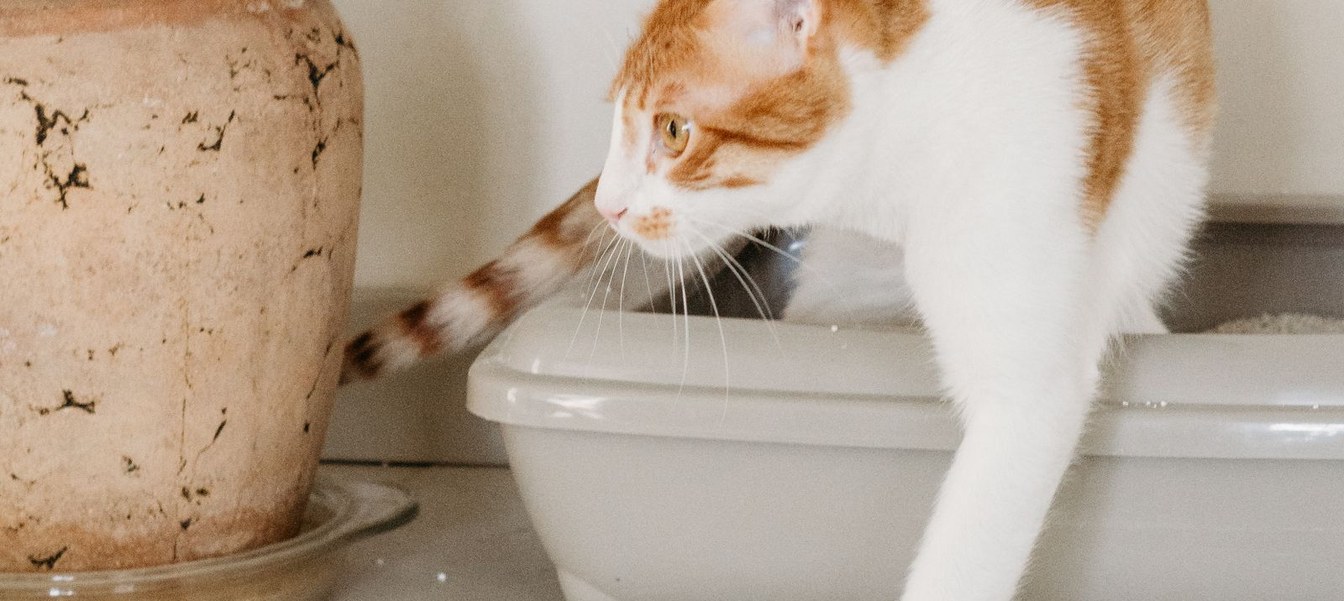
That’s the whole game: the product that works for your cats, at the lowest per-pound price, bought in the largest bag your back can carry. Here’s what I found testing the main options.
Dr. Elsey’s Ultra — The Per-Pound Benchmark
Dr. Elsey’s Ultra Clumping Clay (40 lb) at about $21 is the math winner and the one my cats used for the whole test without complaint. The clumps are hard and dark, they hold together through daily scooping, and the unscented formula matters — cats have noses far more sensitive than ours, and perfumed litter is a common box-avoidance trigger. At roughly $0.53/lb my three-cat year lands at about $380.
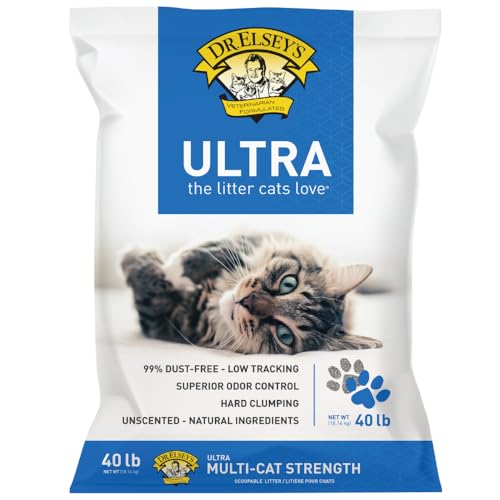
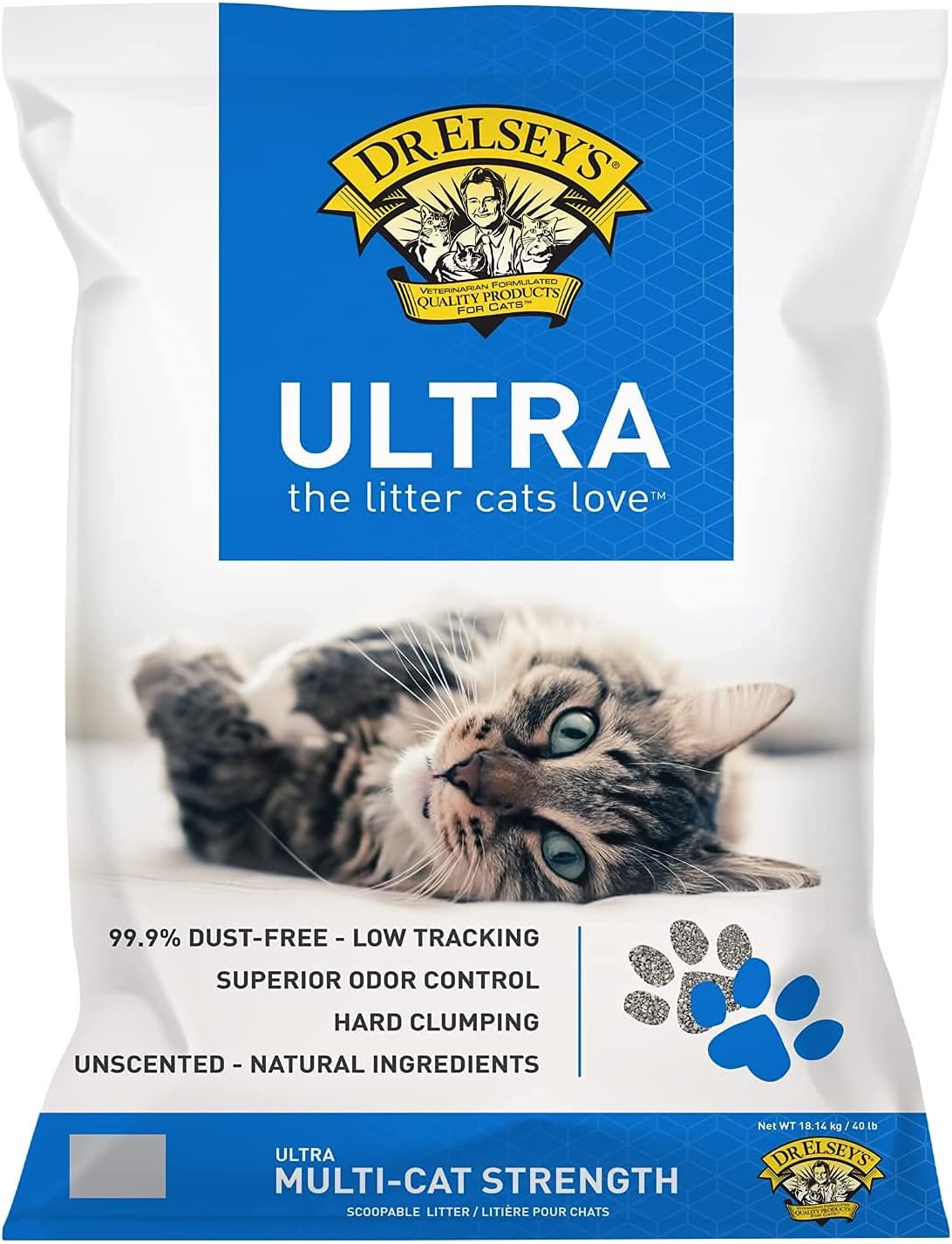
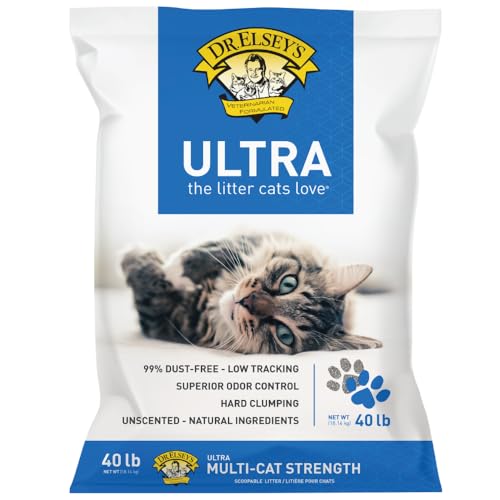
Cons: it tracks. The medium clay grains ride out on paws — a litter mat stopped most of it, but that’s another $15. It’s also plain gray with zero odor-fighting additives, so odor control is entirely your scooping schedule. Miss a day with three cats and you’ll know.
My take: The cheapest litter my cats used happily all test long — the default answer unless your cats demand scented.
Arm & Hammer MultiCat — The Odor Fighter
Arm & Hammer MultiCat Clumping Litter (26.3 lb) at about $44 is what I bought when the basement box started losing the smell war. The baking-soda content genuinely absorbs ammonia — it won my sniff test on day 3 of a scooping slip, where the value clay was getting assertive. In a multi-cat house that odor control is worth real sanity.
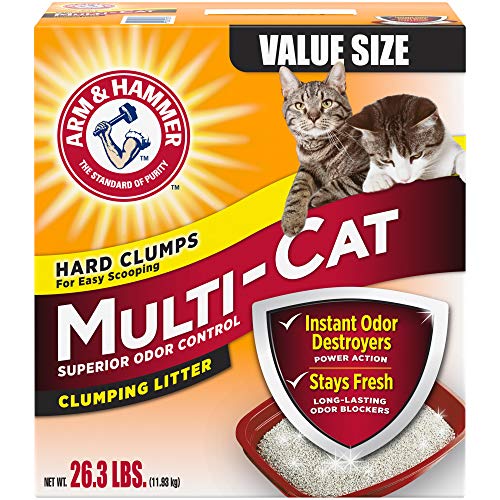
The cons are price and dust: at roughly $1.67/lb it’s more than triple Dr. Elsey’s per-pound cost — the math only works in the one high-traffic box, not all three. I priced my house both ways for this piece: even a quarter of my litter volume in A&H would run $584 a year — $80 more than my old habit, $206 more than pure value clay. It’s dustier on pour-in too. Two of my three cats used it without pause; the youngest took a day of re-introduction.
My take: The right tool for one problem box, the wrong tool for every box — buy it small, keep it targeted.
Fresh Step Advanced — The Scented Pick That Earns Its Price
Fresh Step Advanced with Gain scent (2-pack, 18.5 lb each) at about $20 for the two-pack at current deal pricing quietly wins the scented per-pound game: 37 pounds for $19.99 is $0.54/lb — within a penny of Dr. Elsey’s value clay, odor-shield scenting included. It clumps fast and tight, and the Gain scent is strong enough that guests noticed the absence of cat smell. Watch the price though — this one swings hard between deals; at list it loses the math.
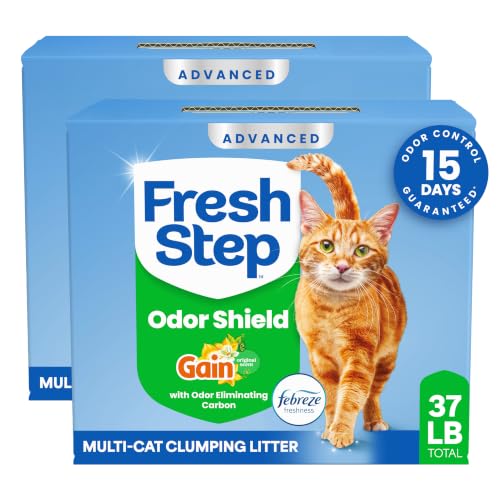
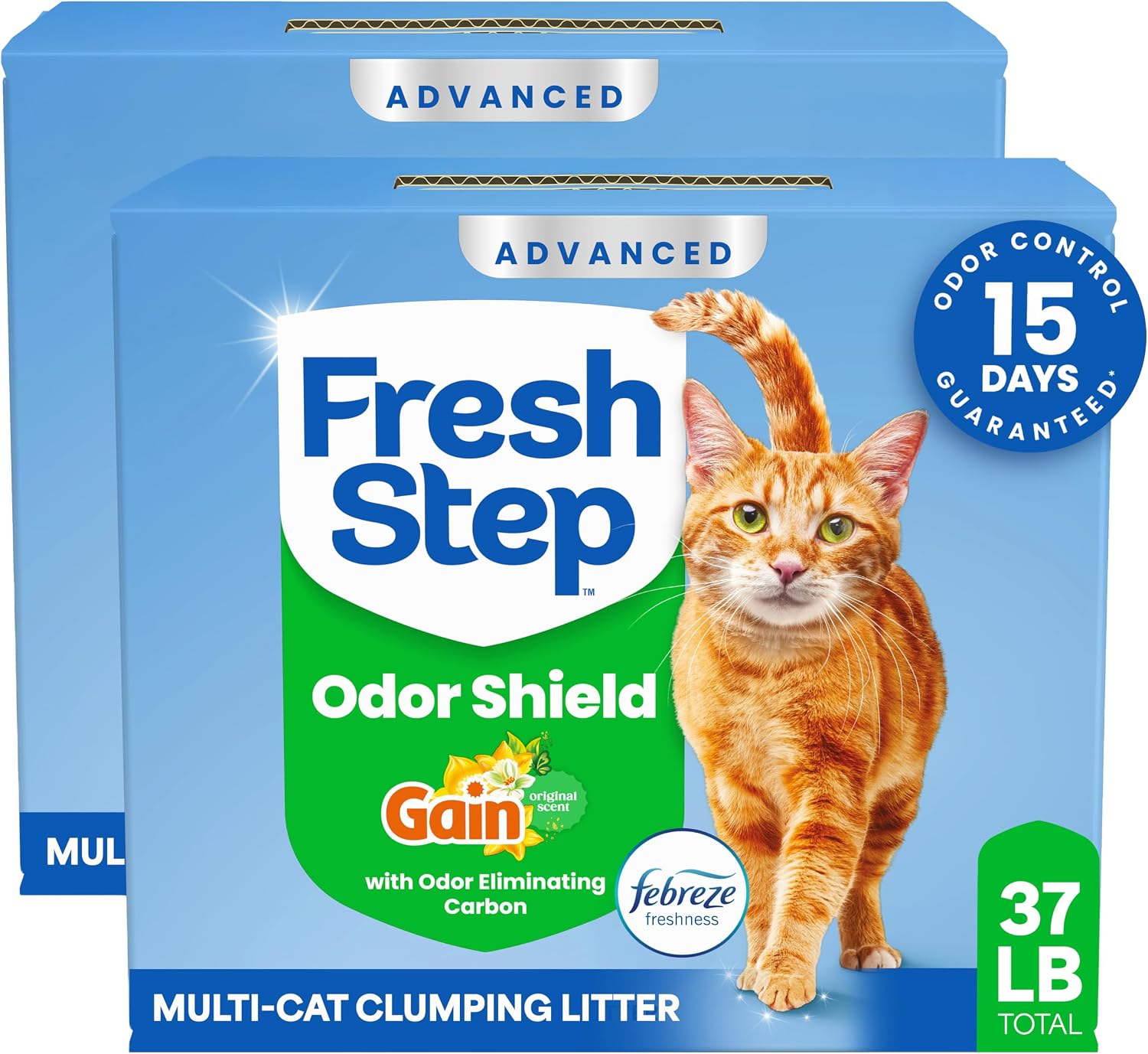
Cons: scented litters are the category most associated with box rejection — always transition by mixing 25% new into the old over a week. The clay dust is moderate, and clumps can stick to the box floor if you skimp on depth. Keep 3 inches in the box and it behaves.
My take: If you want scented and your cats accept it, this is the one — buy it on deal, never at list.
Tidy Cats Instant Action — The Budget Big-Bag Play
Purina Tidy Cats Instant Action (27 lb pail) at about $44 is the classic “get through the month” option — fine clumping, solid ammonia control for the price tier, and a jug handle that saves your back. It was the workhorse of my 20s and still does the basics honestly.
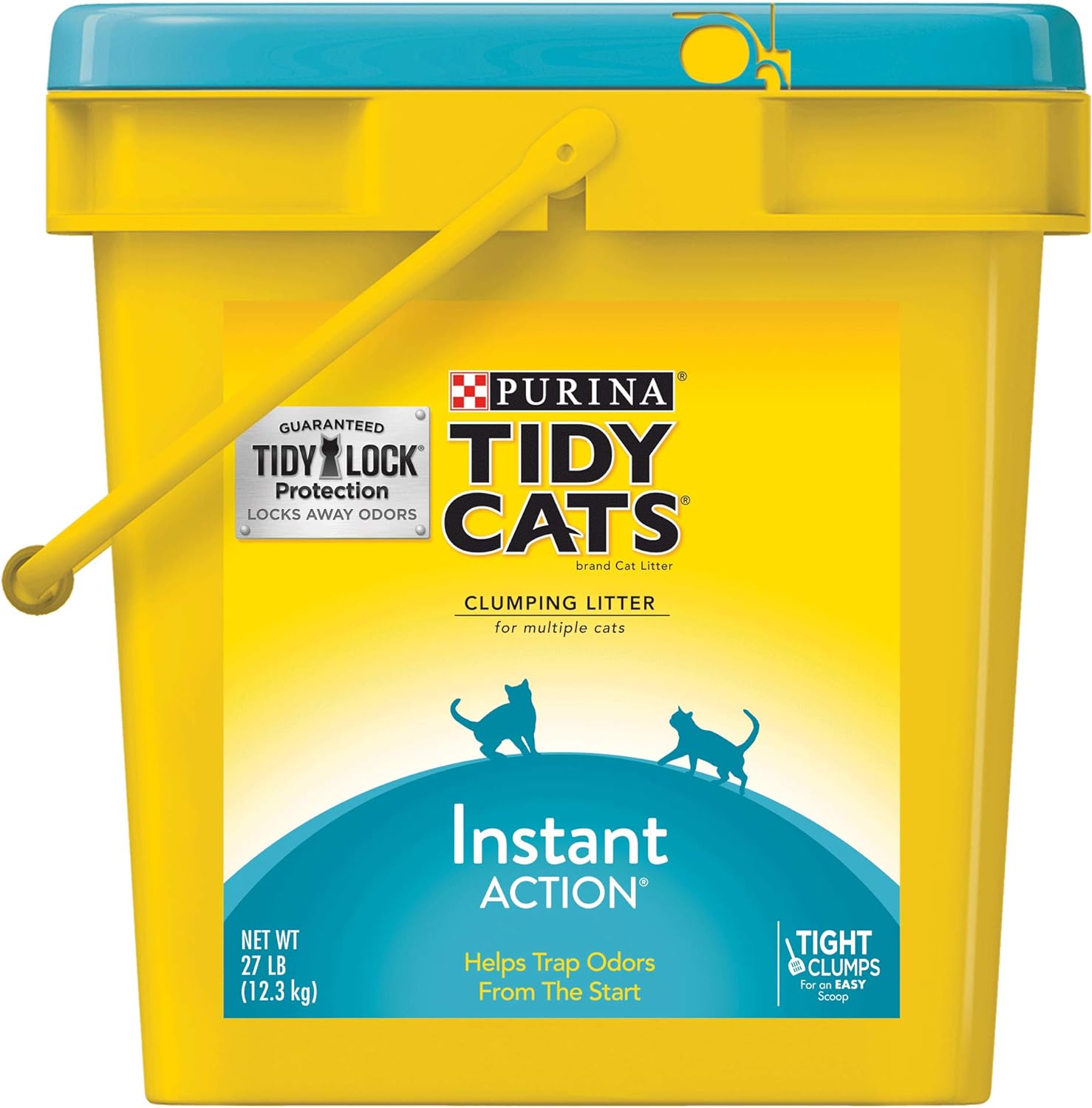
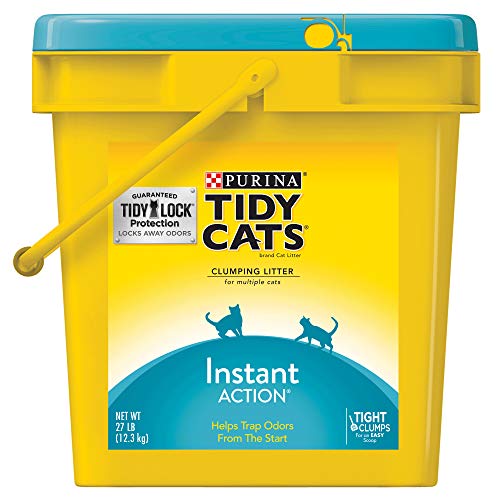
The cons: clumps are softer than Dr. Elsey’s and shed in the scoop when you’re late, the scenting is synthetic rather than subtle, and per-pound math at this size lands around $1.64 — near-premium money for mid-tier clay. It makes sense on Subscribe & Save discounts, less so at list.
My take: The reliable middle — never the cheapest per pound, never the worst box.
World’s Best — The Natural Counterpoint
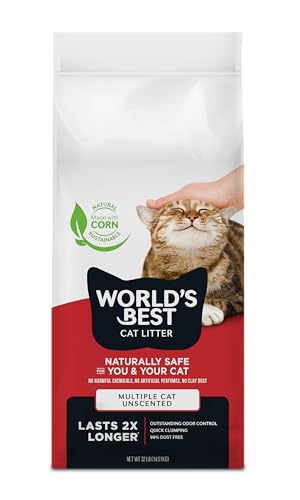
World’s Best Multiple Cat Unscented (32 lb) at about $40 is the one non-clay option that survived my three-cat test: corn-based, flushable in small amounts (check local rules), dramatically lighter to carry, and near-zero dust on pour. For one cat or a dust-sensitive household, it’s genuinely excellent.
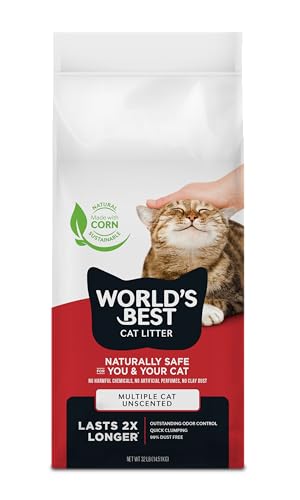
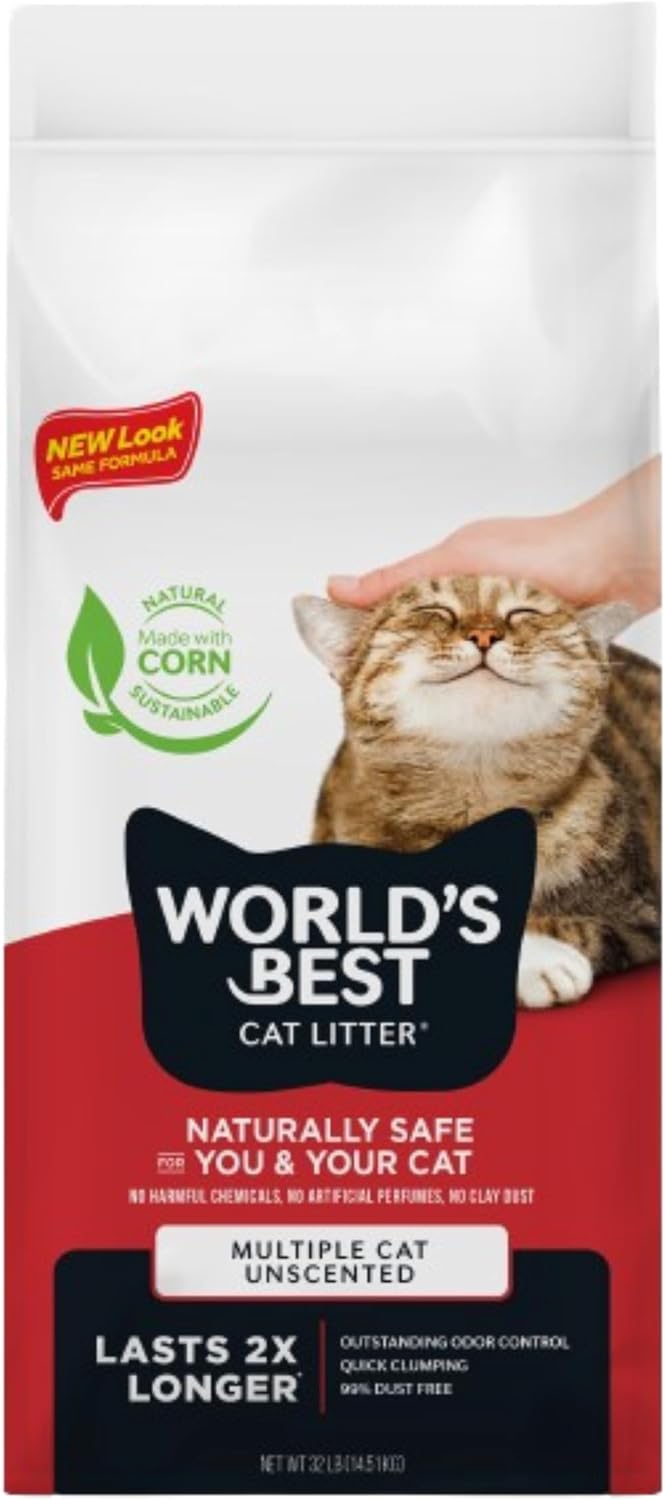
But the math at my scale is brutal: at roughly $1.25/lb, a 720-pound year costs $900 — nearly double my clay bill. Corn clumps also age faster in humid summers, meaning more full-box changes. Right product, wrong household size.
My take: Best-in-class if you have one cat or dust allergies; at three cats the per-pound math breaks it.
Features That Actually Matter (And Ones That Don’t)
Per-pound price beats everything. Divide bag price by bag weight before you decide anything. The marketing is all scent and crystals; the math is all pennies per pound.
Unscented is safer for box acceptance. Cats prefer unscented by a wide margin in every shelter study I’ve read. Scented litter is for humans; the cat gets a vote.
Clump hardness predicts your scooping happiness. A clump that survives the scoop means a box that stays fresh between full changes. Soft clumps mean re-scooping crumbs forever.
Dust level matters for you, not the cat. Low-dust litters cost more; they’re worth it only if someone in the house reacts to clay dust.
“Flushable” is conditional. Only small amounts, only in homes not on septic, and never for cats with parasite risk. Treat the claim as marketing until you’ve read your local rules.
The Annual Cost Comparison
- Before (eye-level mid-range bags): about $504/year for 720 pounds.
- After (Dr. Elsey’s 40 lb everywhere): about $378/year — the A&H in the problem box is a sanity spend on top, not a savings line.
- Annual savings: $126 — in cat terms, a year of the good treats, a vet-visit buffer, and 126 fewer dollars of me grumbling in the pet aisle.
The system that stuck: one 40-pound value bag per month for the main boxes, a small odor-fighter bag every couple of months for the problem box, litter mats everywhere, and a standing habit of running the per-pound division before anything goes in the cart.
Keep reading: the fountain-filter bulk math that halved that bill and the auto feeder that fixed her schedule.
ThriftyPaw is reader-supported. As an Amazon Associate, I earn from qualifying purchases. That means if you buy through one of the links above, I get a small commission at no extra cost to you. I only recommend products I’ve actually used in my own house.
🐾 Get Your Free Big Dog First Aid Kit Checklist
Join our newsletter and get this free printable plus weekly tips.
Frequently Asked Questions
Why is my cat suddenly not using the litter box?
Rule out a scent change first u2014 new perfumed litter is a top-three cause of box avoidance. Transition by mixing 25% new into old over a week, and if it persists, call the vet; urinary trouble is urgent in cats.
Does clumping litter hurt kittens?
Kittens under 4 months can ingest litter while grooming, so most vets recommend non-clumping for kittens. Switch at about 4 months.
Price Check
Prices verified via our product tracker. Updated Sep 27.
| Dr. Elsey's Ultra UnScented Clumping Clay Cat Litter 40 lb | $22.99 | 4.4★ (70,161) |
| Arm & Hammer MultiCat Clumping Litter, Scented 26.3lb : Pe | $44.44 | 4.5★ (298) |
| Fresh Step Advanced Odor Shield Clumping Cat Litter with G | $33.59 | 4.7★ (54,114) |
| Purina Tidy Cats Clumping Cat Litter, Instant Action Multi | $49.47 | 4.6★ (278) |
| World's Best Cat Litter Multiple Cat, Unscented, Odor Cont | $39.94 | 4.5★ (11,446) |
As an Amazon Associate we earn from qualifying purchases.