
This article contains affiliate links. We may earn a commission from qualifying purchases.
Some content on this site is AI-assisted and reviewed by our editorial team.
Last August, my dog came inside from the backyard with a flea on her ear. One flea. I found it because she was scratching, and when I parted the fur, there it was — a tiny brown dot running through the gold fur like it owned the place. I killed it, checked the rest of her, and thought I was done.
Two weeks later, my entire house had fleas. The carpet, the couch, her bed, my bed. I spent 180 dollars on flea bombs, sprays, and a professional treatment. The vet told me what I already knew by then: one flea turns into a thousand in a month, and the only way to prevent it is year-round medication. Not just during “flea season” — all year, because fleas survive indoors during winter.
The problem: the popular prescription preventives like NexGard and Bravecto cost 50 to 70 dollars per month. Over a year, that’s 600 to 840 dollars. For one dog. I love my dog, but that’s a car payment. So I went looking for OTC options that actually work, cost less, and don’t require a vet prescription.
Here’s what I found after three months of testing.
What Actually Works Without a Prescription
First, the honest truth: prescription preventives (NexGard, Bravecto, Simparica) are more effective than anything you can buy over the counter. They contain active ingredients that kill fleas and ticks within hours, and they’re backed by safety studies. If you can afford them and your vet will prescribe them, do that.
If budget is an issue — or if your vet is slow to respond and flea season is starting — there are OTC options that work reasonably well. They’re not as fast or as comprehensive as prescriptions, but they can prevent an infestation if used consistently.
The two categories: chewables (systemic — the medication enters the bloodstream and kills fleas that bite) and topicals (applied to the skin, repelling and killing on contact). Chews are easier to give. Topicals are cheaper but can wash off if your dog swims or gets bathed frequently.
CapAction Flea Tablets — The Fast-Acting Emergency Pill
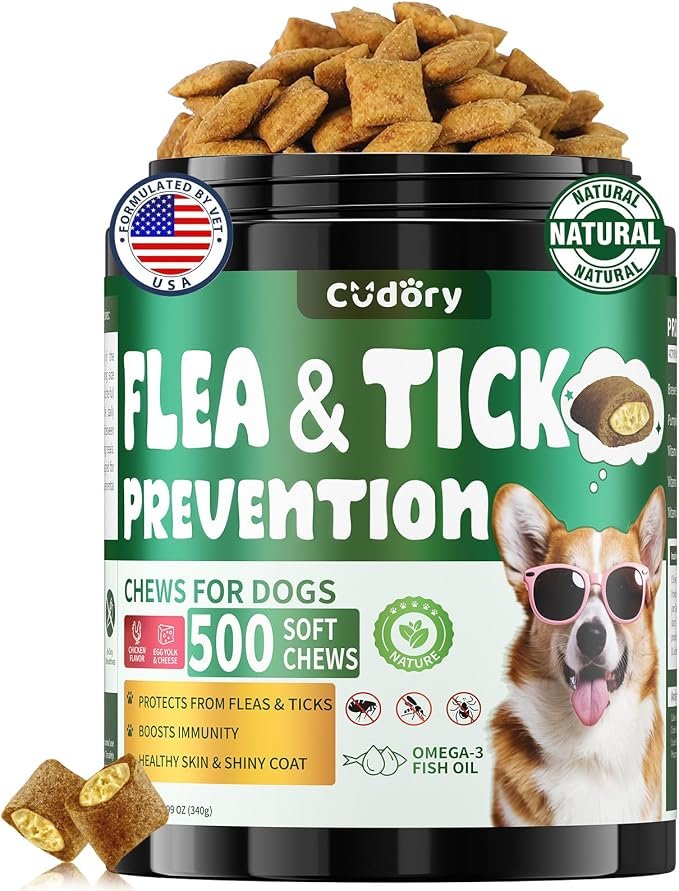
CapAction Flea Tablets are not a preventive — they’re a treatment. You give the pill when you see fleas, and it kills adult fleas within 30 minutes. It contains nitenpyram, the same active ingredient as the vet-prescribed Capstar, but it’s available over the counter.
I keep a box of these in my medicine cabinet for emergencies. When my dog picked up a flea at the dog park last month, I gave her a pill when I got home. By the time she’d finished her dinner, the flea was dead. No prescription, no vet visit, no waiting.
The limitation: CapAction only kills adult fleas. It doesn’t kill eggs, larvae, or ticks. It’s a fire extinguisher, not a fire prevention system. Use it when you see fleas, then follow up with a preventive.
A 6-count box costs about 25 dollars. Each pill works for 24 hours. This is your “oh no, there’s a flea” backup plan, not your daily strategy.
My take: Keep a box on hand for emergencies. It’s the fastest-acting OTC option available, and at about 4 dollars per pill, it’s cheap insurance against an infestation starting.
Advantus II Flea Soft Chews — The Monthly Preventive I Use Now
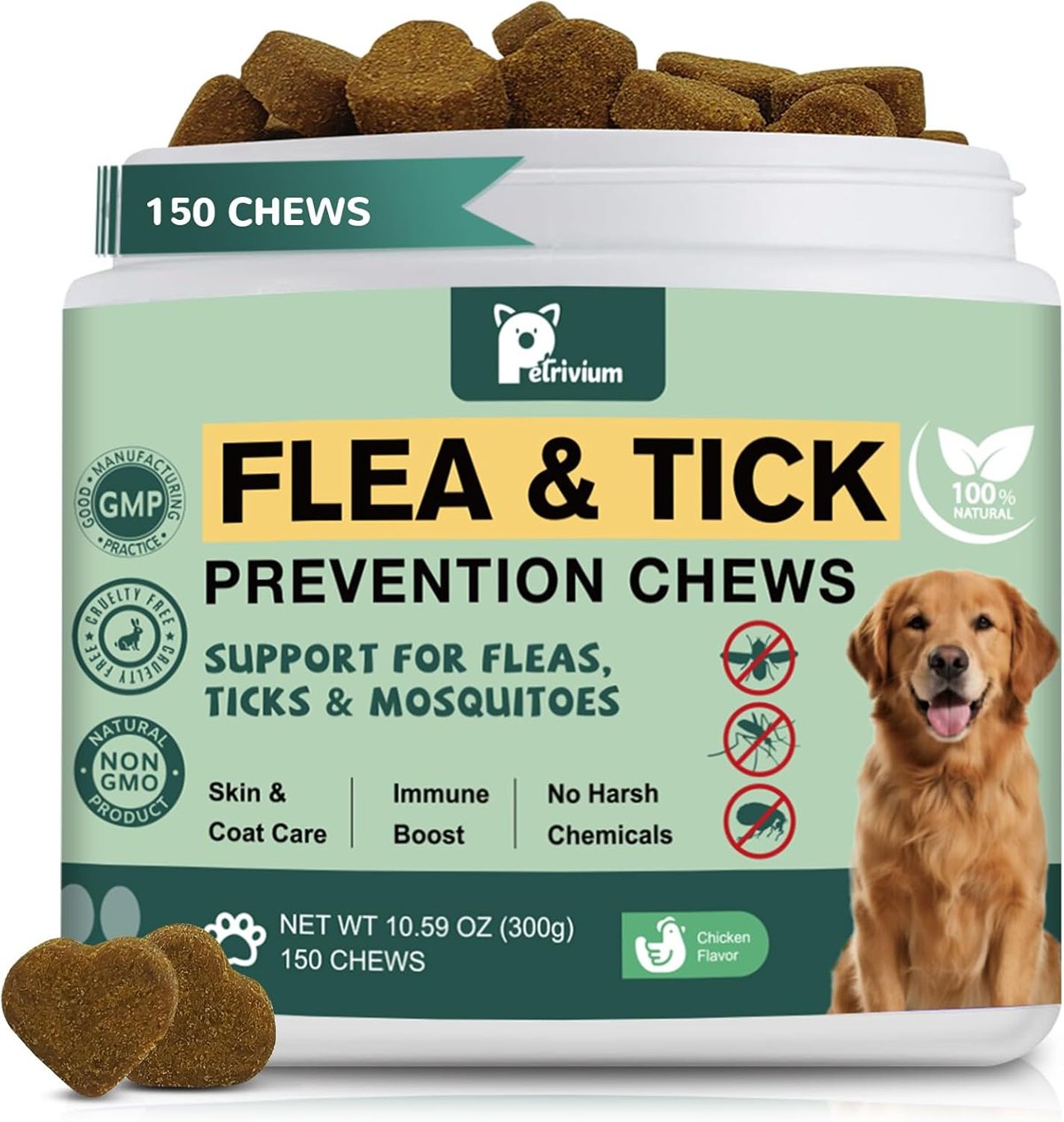
Advantus II Flea Soft Chews are what my dog takes monthly now. They contain imidacloprid, an OTC active ingredient that kills adult fleas before they can lay eggs. It’s not as broad-spectrum as NexGard (which also kills ticks), but for flea prevention specifically, it works.
I give her one chew on the first of every month. She eats it like a treat. I haven’t seen a flea since I started this routine six months ago, which is notable because my neighborhood has a serious flea problem — my neighbor’s dog had fleas three times last summer.
A 12-month supply costs about 95 dollars, which works out to about 8 dollars per month. Compare that to NexGard at 50+ dollars per month, and you’re saving 500+ dollars per year. That’s a meaningful difference for most budgets.
The limitation: this doesn’t cover ticks. If you live in a tick-heavy area, you need a separate tick preventive or a combination product. I use a tick collar in addition to the monthly chew during spring and summer.
My take: If fleas are your main concern and you want an affordable monthly chew without a prescription, this is the one. Eight dollars per month for peace of mind is hard to beat.
Natural Care Flea and Tick Collar — The Supplemental Layer
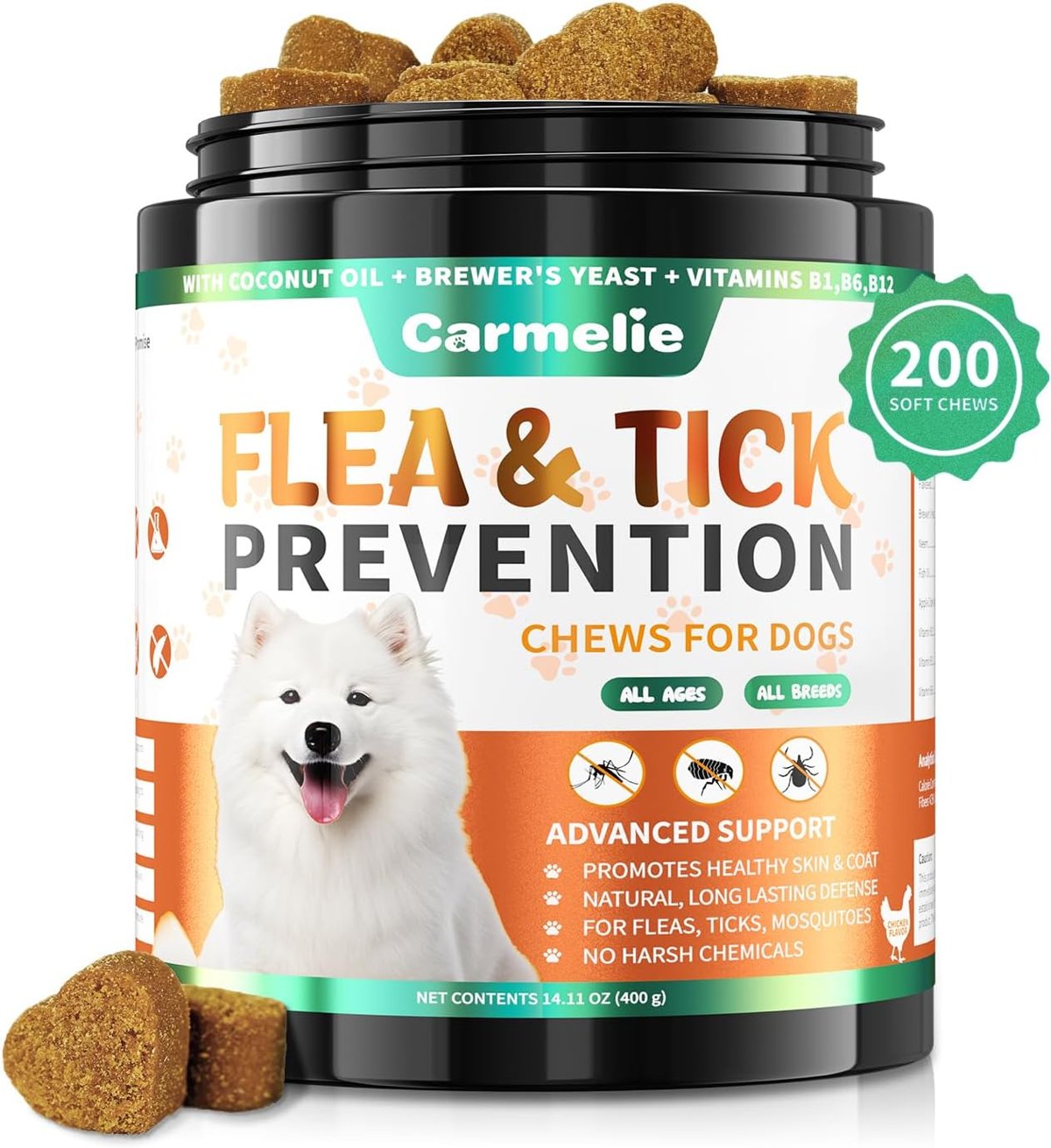
I’m skeptical of “natural” pest control. Most essential oil flea products don’t work — the research is clear that peppermint oil and lemongrass don’t repel fleas at concentrations safe for dogs. But this collar uses a mix of essential oils at a low enough concentration to be safe but high enough to provide some repellent effect.
I use it as a supplemental layer during peak tick season (April through September), on top of the monthly chew. Do I know it’s working? Not definitively. I haven’t found a tick on my dog since I started using it, but I also haven’t found many ticks in my yard this year, so it’s hard to isolate the collar’s effect.
At 15 dollars for a collar that lasts 8 months, it’s cheap enough that the “might help, can’t hurt” calculation makes sense. I wouldn’t rely on it alone, but as a second layer on top of a monthly preventive, it’s reasonable.
My take: Use as a supplement, not a standalone. Don’t trust “natural” alone to prevent fleas — use it alongside a proven systemic preventive.
Get flea prevention delivered fast. Start your 30-day Prime free trial for free 2-day shipping on preventives, collars, and more.
The Budget Annual Flea Plan (About 110 Dollars)
Here’s my full flea and tick prevention plan for the year:
- Monthly: Advantus II chew on the 1st of every month — 95 dollars/year
- Emergency: CapAction pills kept on hand — 25 dollars (lasts the year if unused)
- Tick season: Natural Care collar, replaced every 8 months — 15 dollars
- Spring: Yard treatment with beneficial nematodes (kills flea larvae in soil) — 25 dollars
Total: about 135 dollars for the full year. That’s a fraction of what I’d spend on prescription preventives, and it’s been effective — no fleas in six months, no ticks, no infestations. Your mileage may vary depending on where you live and how much your dog is exposed.
One critical thing I learned the hard way: prevention is cheaper than treatment. My 180-dollar flea extermination bill was more than a full year of preventive medication. If I’d started the monthly chew in March instead of waiting until August, I would have saved money and my dog would have been more comfortable.
If you’re unsure about which product is right for your dog, call your vet and ask. Most vets are happy to recommend an OTC option if you explain that the prescription ones are too expensive. Don’t skip prevention entirely because you can’t afford the premium option — there are effective products at every price point.
For more on seasonal pet care, check our guide to summer essentials for big dogs and our tips for fall flea and tick prep.
ThriftyPaw is reader-supported. As an Amazon Associate, I earn from qualifying purchases. That means if you buy through one of the links above, I get a small commission at no extra cost to. I only recommend products I’ve actually used on my own dog.
Related guides
- Dog Sunscreen and Sunburn Prevention: A Budget Guide for Pet Owners
- Budget-Friendly Pet Insurance Comparison (Under $30/Month Options)
- Best Budget Dog Grooming Tools Under 30 Dollars That Actually Work (2026)
- Dog Paw Care on a Budget: Complete Guide Under 25 Dollars in Tools
- Dog Skin Allergies on a Budget: Complete Treatment Guide Under 25 Dollars (2026)
🐾 Get Your Free Big Dog First Aid Kit Checklist
Join our newsletter and get this free printable plus weekly tips.
Frequently Asked Questions
What's the cheapest flea prevention that works?
The author's post-infestation plan under $30: the Advantus II monthly chews at about $95 a year ($8/month — against NexGard and Bravecto's $50-70 monthly, $600-840 a year), plus the CapAction tablets as the emergency layer ($25 for 6, about $4 a pill, kills fleas within hours). The full annual plan runs about $110 versus the $180 extermination bill a single infestation cost.
How much does a flea infestation cost to fix?
The author's number: $180 on flea bombs, sprays, and professional treatment — and that was the lucky version (the professional-extermination cases run $200-600). The prevention math is stark: one month of OTC prevention costs less than one bomb, and the house-wide lifecycle is why treatment is 10x prevention.
Do flea collars actually do anything?
As a supplemental layer, the honest answer is 'might help, can't hurt' — the $15 Natural Care collar lasting 8 months sits alongside the monthly chew, not replacing it. The author's framing is fair: the collar tier lacks the evidence of the OTC chews and topicals, which is why it's the third layer, not the first.
Liked this guide? Get the next one in your inbox — the pet budget checklist is free too.
✓ You're in — check your inbox.
No spam. Unsubscribe anytime. We never share your email.
Price Check
Prices verified via our product tracker. Updated Sep 27.
| Cudory Flea and Tick Prevention for Dogs, 500 Dog Flea Tre | $35.00 | 4.1★ (660) |
| Flea and Tick Prevention for Dogs, 200 Soft Chews Natural | $19.99 | 3.6★ |
| Carmelie Flea and Tick Prevention for Dogs Chewables, 200 | $23.89 | 4.0★ (1,551) |
As an Amazon Associate we earn from qualifying purchases.