This article contains affiliate links. We may earn a commission from qualifying purchases.
Some content on this site is AI-assisted and reviewed by our editorial team.
Dog dental cleaning at the vet costs 400-1,000 dollars — and most dogs need it every 1-2 years. But you can reduce cleaning frequency and prevent 70-80 percent of dental disease with a home dental care routine that costs 3-15 dollars per month. The trick is consistency: 2 minutes per day of brushing plus the right chew products prevents tartar buildup that leads to expensive professional cleanings and painful tooth extractions. This guide covers the complete home dental care routine, the 3 products you actually need, how to brush a dog’s teeth (even if they hate it), and when a professional cleaning is unavoidable.
Why Dog Dental Care Matters
80 percent of dogs show signs of dental disease by age 3. Periodontal disease is not just a cosmetic problem — it causes:
- Tooth loss — Diseased teeth become loose and fall out or require extraction (150-400 dollars per tooth)
- Pain — Dogs hide dental pain well, but cracked, infected teeth hurt constantly. Many owners report “a new dog” after dental treatment — their dog had been in pain for months and they did not know.
- Heart and kidney disease — Bacteria from infected gums enter the bloodstream and settle on heart valves and kidneys, causing irreversible organ damage
- Jaw fractures — Advanced bone loss in the jaw (from chronic infection) weakens the bone until it fractures
- Bad breath — “Dog breath” is not normal. It is the smell of bacterial infection and rotting tissue.

The 4 Stages of Periodontal Disease
| Stage | What Is Happening | Signs | Treatment | Cost |
|---|---|---|---|---|
| Stage 0 | Healthy teeth and gums | No signs | Home care only | 3-15 dollars/month |
| Stage 1 (Gingivitis) | Gum inflammation, no bone loss | Red gums, mild bad breath | Home care + professional cleaning | 400-600 dollars |
| Stage 2 (Early Periodontitis) | 25% bone loss around tooth roots | Red gums, bad breath, yellow-brown tartar visible | Professional cleaning + home care | 500-800 dollars |
| Stage 3 (Moderate Periodontitis) | 25-50% bone loss | Tartar heavy, gums receding, loose teeth | Cleaning + extractions | 800-1,500 dollars |
| Stage 4 (Advanced Periodontitis) | Over 50% bone loss | Loose and missing teeth, pus, severe pain | Multiple extractions, possible jaw surgery | 1,500-3,000+ dollars |
The progression from Stage 0 to Stage 4 takes 2-5 years without home care. With daily brushing, most dogs stay at Stage 0-1 for life and may never need a professional cleaning.
The Home Dental Care Routine (3-15 Dollars Per Month)
The complete routine has 3 components: brushing, chews, and water additive. Used together, they prevent 70-80 percent of tartar buildup.
1. Daily Brushing (3-5 Dollars Every 3-6 Months)
The single most effective thing you can do for your dog’s teeth. Brushing removes plaque (the soft, sticky film of bacteria) before it hardens into tartar (the yellow-brown crust that requires professional scaling to remove). Plaque hardens into tartar within 24-48 hours — so daily brushing is essential.

What You Need
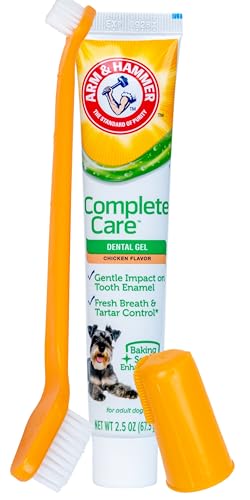
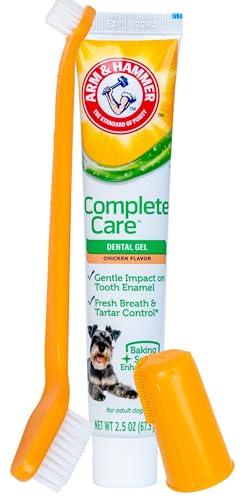
- Dog toothbrush — 3-5 dollars. Has softer bristles and a different angle than human brushes. The Arm & Hammer Complete Care Dental Kit includes a toothbrush, finger brush, and chicken-flavored toothpaste in one package. Alternatively, a finger brush (3-5 dollars) slips over your finger and is easier for beginners.
- Dog toothpaste — 4-8 dollars per tube (lasts 3-6 months). The Arm & Hammer dental kit includes enzymatic toothpaste that is safe for dogs. NEVER use human toothpaste — fluoride is toxic to dogs, and the foaming agents cause stomach upset. Dog toothpaste comes in poultry, beef, and peanut butter flavors.
Total cost: 3-5 dollars every 3-6 months (toothpaste replacement). Amortized: 1-2 dollars per month.
How to Brush Your Dog’s Teeth (Even If They Hate It)
Most dogs resist tooth brushing at first. Follow this 7-day training plan:
Days 1-2: Introduce the paste. Let your dog lick toothpaste off your finger. This builds a positive association. Most dogs love the poultry flavor.
Days 3-4: Introduce the brush. Put toothpaste on the brush and let your dog lick it off. Do not attempt to brush yet — just let them get used to the brush near their mouth.
Days 5-6: Brush the front teeth. Gently lift the lip and brush the canine teeth (the large fangs) and incisors (the small front teeth). These are the easiest to reach. Brush for 15-30 seconds. Reward with a treat after.
Day 7+: Brush all teeth. Work your way to the back teeth (molars). Brush the outside surfaces — you do not need to open the mouth or brush the inside surfaces (the tongue keeps the inside relatively clean). Brush in circular motions for 60 seconds total on each side.
Tips for success:
- Always use dog toothpaste — the flavor makes it a treat, not a chore
- Reward with a treat after every brushing session — this builds positive association
- Brush at the same time each day (after the evening walk, before bed) — routine helps
- If your dog absolutely will not tolerate a brush, use a finger brush or wrap gauze around your finger with toothpaste
- Even brushing 3 times per week is better than nothing — some plaque removal is always better than none
- Do not force the mouth open — this causes fear and biting. Only brush the outside surfaces that are visible when you lift the lip.

2. Dental Chews (5-15 Dollars Per Month)
See the dedicated dental chews guide for the full comparison. Summary: always choose VOHC-approved chews. Best budget options:
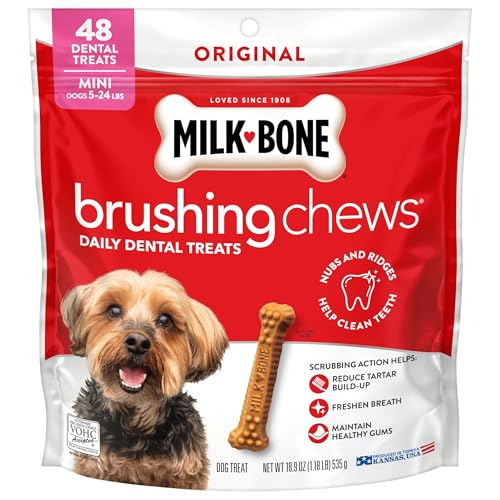
- Milk-Bone Brushing Chews — 5-8 dollars/month, VOHC-approved, 60 percent tartar reduction
- Greenies — 8-15 dollars/month, VOHC-approved, 78 percent plaque reduction
Dental chews work through mechanical action — the chewing motion scrapes plaque off teeth. Give one chew per day. They are a supplement to brushing, not a replacement — brushing is more effective because it reaches all surfaces, while chews only clean the surfaces the dog chews on.
3. Water Additive (5-10 Dollars Per Month)
A liquid added to your dog’s drinking water that reduces plaque and bacteria. Not as effective as brushing, but it reaches areas brushing and chews miss (the back of the mouth and between teeth). Look for products containing chlorhexidine or zinc (Healthy Mouth, 8-12 dollars/month; Oxyfresh, 10-15 dollars/month).
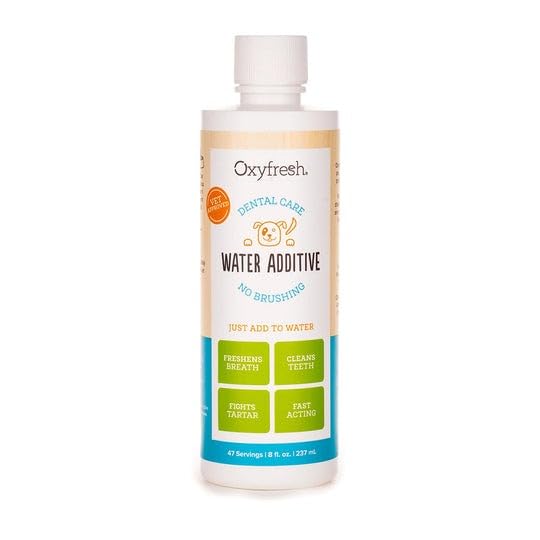
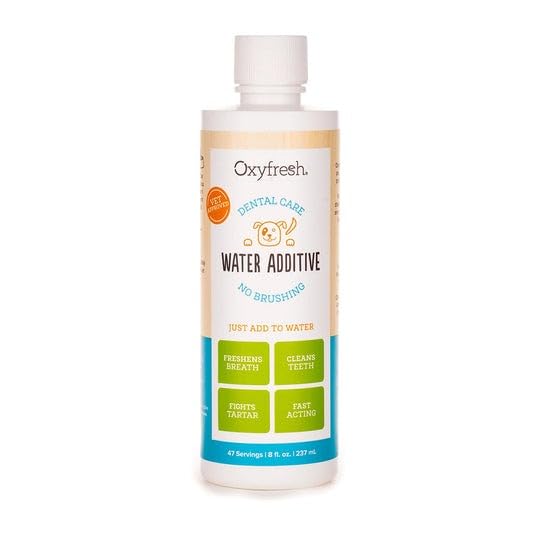
Effectiveness: Water additives reduce plaque by 20-30 percent on their own. Combined with brushing and chews, the total reduction is 80-90 percent.
Not all water additives are effective — look for the VOHC seal on water additives as well. Some products make claims without evidence.
The Monthly Cost Breakdown
| Component | Monthly Cost | Effectiveness |
|---|---|---|
| Dog toothpaste + brush | 1-2 dollars | 70-80% plaque reduction |
| Dental chews (VOHC-approved) | 5-15 dollars | 55-78% plaque reduction |
| Water additive | 5-10 dollars | 20-30% plaque reduction |
| Total (all three combined) | 11-27 dollars | 80-90% plaque reduction |
Compare to a professional dental cleaning: 400-1,000 dollars every 1-2 years. The home routine costs 132-324 dollars per year and can extend the time between cleanings to 3-5 years — or eliminate the need entirely for some dogs.
When Professional Cleaning Is Unavoidable
Even with perfect home care, most dogs need a professional cleaning at some point. Signs that a cleaning is needed:
- Visible tartar buildup — Yellow-brown crust on the teeth, especially the back molars and canine teeth
- Persistent bad breath — Not improved with brushing and chews
- Red, swollen gums — Gums that bleed when brushed
- Loose teeth — Any tooth that moves when touched
- Broken or cracked teeth — Need extraction or root canal
- Pain when eating — Dropping food, chewing on one side, reluctance to eat hard food
- Pus around the gumline — Active infection
Why Professional Cleaning Requires Anesthesia
Non-anesthetic dental cleaning is advertised by some groomers and mobile services for 100-200 dollars. These services are NOT equivalent to veterinary dental cleaning:
- They only clean the visible surfaces — not below the gumline where disease starts
- They cannot take dental X-rays (which reveal problems under the gums and in the tooth roots)
- They cannot extract diseased teeth
- Most dogs will not tolerate the scaling instruments without anesthesia
The American Veterinary Dental College states that non-anesthetic dentistry is “below the standard of care” and can mask serious dental disease. The 400-1,000 dollar anesthetized cleaning is the safe, effective option.
What the professional cleaning includes:
| Service | Cost Component |
|---|---|
| Pre-anesthetic blood work | 80-150 dollars |
| Anesthesia and monitoring | 100-200 dollars |
| Dental X-rays (full mouth) | 80-150 dollars |
| Scaling (above and below gumline) | 100-200 dollars |
| Polishing | 50-80 dollars |
| Fluoride treatment | 20-40 dollars |
| Extractions (if needed) | 150-400 dollars per tooth |
| Total (no extractions) | 400-800 dollars |
| Total (with extractions) | 800-2,000+ dollars |
Dental-Safe and Dental-Dangerous Products
Safe (Helps Teeth)
- VOHC-approved dental chews (Milk-Bone, Greenies, Oravet, Dentastix)
- Raw bones (raw, never cooked) — Under supervision, 20-30 minutes max
- Bully sticks — 100 percent digestible, mechanical cleaning action
- Dog toothbrush and toothpaste
- Water additives with VOHC seal
Dangerous (Can Break Teeth)
- Cooked bones of any kind — Splinter and fracture teeth
- Deer antlers — Too hard, commonly fracture molars
- Nylon bones (Nylabone, etc.) — Can fracture teeth in aggressive chewers
- Ice cubes — Hard enough to crack teeth
- Tennis balls (when chewed obsessively) — The felt surface wears down tooth enamel over time
- Hard plastic toys — If your dog is a power chewer, avoid hard plastics
Rule of thumb: if you would not want to be hit in the kneecap with it, it is too hard for your dog’s teeth.
The Bottom Line
Dog dental care at home costs 11-27 dollars per month and prevents 80-90 percent of tartar buildup: brush daily with dog toothpaste (1-2 dollars/month, the most important component — plaque hardens into tartar within 24-48 hours), give one VOHC-approved dental chew per day (5-15 dollars/month, Milk-Bone Brushing Chews at 5-8 dollars are the cheapest proven option), and add a water additive (5-10 dollars/month, reaches areas brushing and chews miss). Train your dog to accept brushing over 7 days: introduce paste, then brush, then front teeth, then all teeth. Always use dog toothpaste (human toothpaste is toxic) and reward with a treat after every session. Even 3 times per week is better than nothing. Avoid hard chews that fracture teeth: cooked bones, antlers, nylon bones, and ice. Non-anesthetic dental cleaning (100-200 dollars) is below the standard of care — it only cleans visible surfaces and cannot take X-rays or extract teeth. Professional anesthetized cleaning costs 400-1,000 dollars but with consistent home care, most dogs only need it every 3-5 years instead of every 1-2 years. The 11-27 dollars per month you spend on home care prevents the 800-2,000 dollar cleaning with extractions and protects your dog’s heart and kidneys from bacteria spreading through the bloodstream. Start today — get the Arm & Hammer Complete Care Dental Kit and Milk-Bone Brushing Chews and begin the 7-day training plan.
Last updated: July 2026 | By ThriftyPaw | Prices and availability subject to change
ThriftyPaw is reader-supported. As an Amazon Associate, we earn from qualifying purchases. This means we may earn a small commission when you buy through links on this site at no additional cost to you. We only recommend products we genuinely believe in. Thank you for supporting ThriftyPaw.
My take: The 3-product stack — paste, chews, additive — at $3-15 a month prevents 70-80% of the $400-1,000 cleanings and the $150-400 extractions. Brushing is the one that matters most; the chews and additive are honest supplements, never replacements.
Related guides
- Budget Dog Jackets for Winter Prep: Complete Guide Under 25 Dollars (2026)
- Cat Weight Loss on a Budget: Safe Program Under 5 Dollars Per Month
- How to Trim Your Dog's Nails at Home Without Stress
- Kennel Cough Home Treatment: Complete Budget Guide Under 10 Dollars
- Dog Frostbite Prevention on a Budget: Complete Guide Under 25 Dollars
🐾 Get Your Free Big Dog First Aid Kit Checklist
Join our newsletter and get this free printable plus weekly tips.
Frequently Asked Questions
What are the 3 products that prevent dog dental disease?
The $3-15/month stack: enzymatic toothpaste and brush ($3-5 every 3-6 months — the single most effective item, amortized to $1-2 a month), VOHC dental chews ($5-15), and a water additive ($5-10). Together they prevent 70-80% of dental disease against the $400-1,000 professional cleanings.
Why do dog dental cleanings cost so much?
Anesthesia — that's the cost driver, plus the scaling and the extractions at $150-400 per tooth. It's also why prevention compounds: every cleaning you avoid is $400-1,000, and the stage table is the whole argument — stage 1 gingivitis is reversible with free home care, stage 4 is permanent tooth loss.
Which dental products are dangerous for dogs?
Hard natural chews that fracture teeth (the slab-fracture items — weight-bearing bones, antlers), and human toothpaste (xylitol, fluoride). The safe mechanical items: VOHC-sealed chews, rubber toys, and the enzymatic paste that works even with imperfect brushing. The $3-15 routine beats the $400 extraction every time.
Liked this guide? Get the next one in your inbox — the pet budget checklist is free too.
✓ You're in — check your inbox.
No spam. Unsubscribe anytime. We never share your email.
Price Check
Prices verified via our product tracker. Updated Sep 27.
| Arm & Hammer Complete Care Dental Gel Toothbrush Kit, Chic | $7.22 | 4.5★ |
| Milk-Bone Brushing Chews Mini Daily Dental Dog Treats, 18. | $13.48 | 4.7★ (5,858) |
| Greenies Teenie Natural Dental Dog Treats, Fresh Mint Flav | $17.96 | 4.8★ (15,888) |
| Oxyfresh Premium Pet Dental Care Solution Pet Water Additi | $18.95 | 4.3★ (40,571) |
As an Amazon Associate we earn from qualifying purchases.