
This article contains affiliate links. We may earn a commission from qualifying purchases.
Some content on this site is AI-assisted and reviewed by our editorial team.
Dog food labels are intentionally confusing. The pet food industry uses marketing terms, vague ingredient names, and legal loopholes to make low-quality food look premium. But behind the marketing, every dog food label contains the information you need to evaluate quality — if you know where to look. This guide teaches you to read a dog food label in 60 seconds, identify red flags, and choose a food that provides complete nutrition without paying for marketing.
The Four Parts of a Dog Food Label That Matter
Every bag of dog food has four sections that tell you what is actually inside:
- The AAFCO nutritional adequacy statement
- The ingredient list
- The guaranteed analysis
- The feeding chart
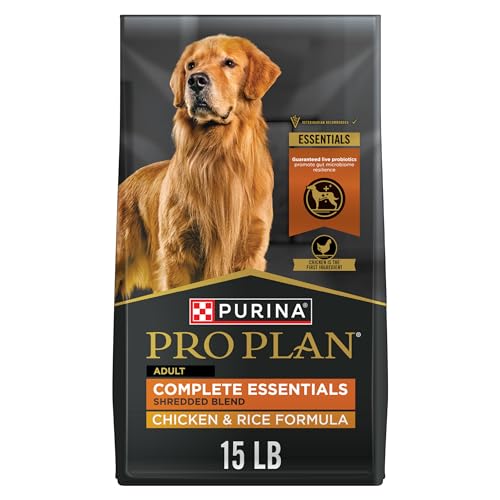
Everything else on the bag — the brand name, the pictures, the claims like “natural,” “grain-free,” “ancestral,” “wild,” or “protein-rich” — is marketing. None of these terms are legally defined or regulated. Focus on the four sections above and ignore everything else. For example, Purina Pro Plan Essentials clearly displays its AAFCO statement and undergoes feeding trials, making it a solid mid-budget choice that meets nutritional standards.
1. The AAFCO Statement (The Most Important Line on the Bag)
Somewhere on the bag, in small print, you will find a statement that looks like one of these:

- “[Brand] is formulated to meet the nutritional levels established by the AAFCO Dog Food Nutrient Profiles for [life stage].”
- “[Brand] has undergone AAFCO feeding trials for [life stage].”
This statement is the legal guarantee that the food contains all required nutrients at the right levels. Without it, the food is not a complete diet.
What the Life Stage Designations Mean
| Designation | Meaning | Safe For |
|---|---|---|
| “All Life Stages” | Meets minimums for puppies and adults | Puppies and adults (including pregnant/nursing) |
| “Growth” | Meets minimums for puppies | Puppies only. Not formulated for adult maintenance. |
| “Adult Maintenance” | Meets minimums for adult dogs | Adults only. Do NOT feed to puppies. |
| “Large Breed Growth” | Meets puppy minimums with controlled calcium/phosphorus | Large breed puppies (expected adult weight over 70 lbs) |
| “Intermittent or supplemental feeding only” | Does NOT meet minimum nutrient requirements | Treats, toppers, or prescription foods only. NOT a complete diet. |
Critical: if you have a large breed puppy (expected adult weight over 70 pounds), the food MUST say “Large Breed” or include large breed growth in the AAFCO statement. Regular puppy food has too much calcium for large breed puppies, causing skeletal problems.
Formulated vs Feeding Trials
“Formulated to meet” means the food was designed on paper to meet AAFCO nutrient profiles. The manufacturer calculated the nutrient content based on ingredient analysis but did not feed the food to dogs to verify it works.
“Animal feeding tests using AAFCO procedures” means the food was actually fed to dogs for 26 weeks, and blood work, weight, and health were monitored. This is the gold standard. Foods with feeding trial data are more reliably nutritious than formulated-only foods.
Purina, Hill’s, Royal Canin, and Iams conduct feeding trials. Most boutique and grain-free brands do not. If the label says “formulated to meet,” the food has not been tested on dogs.
2. The Ingredient List (Read Past the First Three Ingredients)
Ingredients are listed by weight, including water content. Because meat is 60-70 percent water, fresh meat appears high on the list but contributes less protein than you might think. Meat meal (rendered, dehydrated meat) is only 10 percent water, so it contributes far more protein per pound.
How to Read the First Five Ingredients
The first five ingredients make up the bulk of the food. Look for:
- Position 1: A named animal protein — “chicken,” “lamb,” “salmon,” “beef.” NOT “meat,” “animal,” or “poultry.” The protein should be specifically identified.
- Position 2: A named animal meal or second protein — “chicken meal,” “lamb meal,” “salmon meal.” This is concentrated protein. “Meal” is not a byproduct — it is rendered meat with water removed, which concentrates the protein.
- Position 3-5: Carbohydrate sources and fillers — “brown rice,” “oatmeal,” “barley,” “sweet potato,” “peas.” These provide energy and fiber. Whole grains are fine for most dogs (see our grain-free vs grain-inclusive guide).
Red Flags in the Ingredient List
| Red Flag | Why It Matters |
|---|---|
| “Meat by-product” or “animal by-product” | Unspecified animal parts. Not necessarily harmful but lacks transparency. |
| “Animal digest” or “meat digest” | Flavor additive from unspecified animal sources. |
| “Animal fat” (not named) | Could be from any animal, including euthanized pets (in extreme cases). Look for “chicken fat” or “salmon oil” instead. |
| Artificial colors (Red 40, Yellow 5, Blue 2) | Added for human appeal. Dogs do not see color in food. Completely unnecessary and potentially harmful. |
| BHA, BHT, or ethoxyquin | Artificial preservatives linked to health issues. Natural preservatives (mixed tocopherols, vitamin E, vitamin C, rosemary extract) are safer. |
| “Corn” as the first ingredient | Corn is not inherently bad, but if it is the first ingredient, the food is grain-heavy and protein-light. |
| Multiple pea/legume ingredients (peas, pea protein, pea fiber, pea starch) | Associated with dilated cardiomyopathy (DCM) in dogs. If the food is loaded with pea ingredients, choose a different food. |
| “Proprietary blend” or vague descriptions | Manufacturer will not reveal specific amounts. Usually means mostly cheap ingredients with tiny amounts of premium ones. |
Green Flags in the Ingredient List
- Named animal protein as first ingredient (chicken, lamb, salmon, beef)
- Named animal meal as second ingredient (chicken meal, lamb meal)
- Whole grains (brown rice, oatmeal, barley) or named alternative carbs (sweet potato, potato)
- Named fat source (chicken fat, salmon oil, flaxseed)
- Natural preservatives (mixed tocopherols, vitamin E)
- Probiotics or prebiotics (chicory root, dried fermentation products)
- Omega-3 sources (fish oil, flaxseed, salmon oil)
3. The Guaranteed Analysis (The Numbers)
The guaranteed analysis lists minimum crude protein, minimum crude fat, maximum crude fiber, and maximum moisture. Some foods also list omega fatty acids, glucosamine, or other added nutrients.
What the Numbers Mean for Adult Dogs
| Nutrient | AAFCO Minimum | Ideal Range | Too High |
|---|---|---|---|
| Protein | 18 percent | 22-28 percent | Above 35 percent (unnecessary, may stress kidneys) |
| Fat | 5 percent | 10-15 percent | Above 20 percent (weight gain) |
| Fiber | None | 3-5 percent | Above 8 percent (excess, reduces nutrient absorption) |
| Moisture | None | 10-12 percent | Above 12 percent (shorter shelf life) |
For puppies, look for slightly higher protein (25-30 percent) and fat (12-18 percent) to support growth.
The Dry Matter Conversion (For Comparing Foods Accurately)
Different foods have different moisture levels, which makes the guaranteed analysis misleading. A canned food at 10 percent protein and 75 percent moisture actually has more protein than a dry food at 25 percent protein and 10 percent moisture. To compare, convert to dry matter:
- Subtract the moisture percentage from 100 to get dry matter. (100 – 10 = 90 percent dry matter for kibble)
- Divide the protein percentage by the dry matter percentage. (25 / 90 = 28 percent protein on a dry matter basis)
- Compare dry matter protein across foods.
This calculation lets you compare kibble, canned, and raw foods on equal footing. Most budget kibbles have 25-30 percent protein on a dry matter basis, which is appropriate for adult dogs.
4. The Feeding Chart (Reality Check)
The feeding chart on the bag tells you how much to feed. But these charts are often generous — they assume your dog is highly active and needs more calories than most dogs actually do.
How to Use the Feeding Chart
- Find your dog’s weight on the chart.
- Start with the lower end of the recommended range.
- After 2 weeks, assess body condition: you should be able to feel ribs without pressing hard, and your dog should have a visible waist from above.
- If ribs are hard to feel, reduce by 10 percent. If ribs are very prominent, increase by 10 percent.
- Reassess monthly.
Overfeeding is the most common feeding mistake. Over 50 percent of dogs in the United States are overweight. It costs you more in food and thousands more in vet bills for obesity-related conditions (arthritis, diabetes, heart disease). Feed less, not more.
Marketing Terms That Mean Nothing (Do Not Pay Extra For These)
| Term | What It Sounds Like | What It Actually Means |
|---|---|---|
| “Natural” | Wholesome, minimally processed | Contains no artificial colors or preservatives. Does not mean high quality. |
| “Holistic” | Whole-body health approach | Nothing. “Holistic” is not legally defined. Any food can use this term. |
| “Grain-free” | Healthier, more natural | No grains. Usually replaces them with peas, lentils, or potatoes. Not healthier and linked to DCM. |
| “Ancestral” or “wild” or “wolf” | What wolves eat | Marketing. Dogs have evolved to digest starches that wolves cannot. Your dog is not a wolf. |
| “Human grade” | Safe for human consumption | Only applies if ALL ingredients and the manufacturing facility meet human food standards. Rarely verified. |
| “No fillers” | No low-quality ingredients | “Filler” is not legally defined. Any ingredient can be called a filler by a competitor. |
| “Premium” or “gourmet” | Higher quality | Nothing. Any food can use these terms regardless of quality. |
| “Made with real chicken” | High chicken content | Contains some chicken. Could be 1 percent or 50 percent. The first ingredient tells you the real story. |
The 60-Second Label Reading Method
Here is your quick evaluation process for any dog food bag:
- Find the AAFCO statement (10 seconds). Does it say “complete and balanced” for your dog’s life stage? Does it say “feeding trials” (better) or “formulated to meet” (acceptable)? If the statement is missing, put it back.
- Read the first 5 ingredients (15 seconds). Is a named animal protein first? Is a named animal meal second? Are the carbohydrates whole grains or named alternatives? If “meat by-product” or “animal fat” appears, put it back.
- Scan for red flags (10 seconds). Artificial colors, BHA/BHT/ethoxyquin, multiple pea ingredients, “proprietary blend.” If any are present, put it back.
- Check the guaranteed analysis (10 seconds). Protein 22-28 percent, fat 10-15 percent for adults. Protein 25-30 percent, fat 12-18 percent for puppies.
- Check the feeding chart (5 seconds). Does the recommended amount seem reasonable? Start at the low end.
If the food passes all five checks, it is a nutritionally adequate diet. You do not need to spend more.
The Bottom Line
Reading a dog food label takes 60 seconds once you know what to look for. Check the AAFCO statement for life stage and feeding trials, read the first five ingredients for named proteins and whole carbohydrates, scan for artificial preservatives and colors, and verify protein and fat levels in the guaranteed analysis. Ignore all marketing terms — “natural,” “holistic,” “grain-free,” “ancestral,” and “premium” mean nothing legally. A 30-dollar bag of Purina Pro Plan that passes all five checks provides the same complete nutrition as an 80-dollar bag of boutique food with fancier marketing. The difference is what you pay for the bag, not what your dog gets from it. Learn to read labels and save 500+ dollars per year on dog food.
Last updated: July 2026 | By ThriftyPaw | Prices and availability subject to change
ThriftyPaw is reader-supported. As an Amazon Associate, we earn from qualifying purchases. This means we may earn a small commission when you buy through links on this site at no additional cost to you. We only recommend products we genuinely believe in. Thank you for supporting ThriftyPaw.
🐾 Get Your Free Big Dog First Aid Kit Checklist
Join our newsletter and get this free printable plus weekly tips.