

This article contains affiliate links. We may earn a commission from qualifying purchases.
Some content on this site is AI-assisted and reviewed by our editorial team.
Last updated: May 2026 | By ThriftyPaw
Traveling with a dog is expensive — or at least that’s what most guides will tell you. Pet hotel fees, airline charges, emergency vet visits in unfamiliar cities, and the sheer cost of hauling dog food across state lines can add hundreds to any trip.
But a lot of those costs are optional. You can travel with your dog comfortably and safely without spending a fortune, if you know the shortcuts. This guide covers the real costs, the unnecessary upsells, and the strategies that actually save money on the road.
(Planning a bigger life change with your dog? Our guide to moving with a dog on a budget covers relocation costs in detail.)
The Real Cost of Traveling With a Dog
Here’s what people typically spend, and what you can actually get away with:
| Expense | Typical Cost | Budget Alternative |
|---|---|---|
| Pet-friendly hotel fee | 25–100 dollars/night | Stay at no-fee chains (La Quinta, Red Roof) |
| Airline pet fee (in-cabin) | 100–200 dollars each way | Drive instead if under 8 hours |
| Airline pet fee (cargo) | 200–500 dollars each way | Drive — always cheaper for medium/large dogs |
| Travel crate (airline-approved) | 40–120 dollars | Buy used on Marketplace, resell after |
| Health certificate for travel | 50–150 dollars | Only needed for flights and some states |
| Emergency vet in new city | 300–1,500+ dollars | Research in advance, carry pet insurance |
| Portable food/water bowls | 10–30 dollars | Use a collapsible silicone bowl (8 dollars) |
| Dog seatbelt harness | 15–35 dollars | See our car harness guide |
| Boarding (if you can’t bring dog) | 40–75 dollars/night | In-home pet sitter (25–40 dollars/night) |
Budget trip (driving, 3 nights): 200–400 dollars in dog-related costs
Premium trip (flying, 3 nights): 500–1,200 dollars in dog-related costs
The single biggest savings: drive instead of fly when you can.
Road Trips With Your Dog
Driving is cheaper, safer, and less stressful for most dogs. Here’s how to do it right on a budget.
Pre-Trip Prep (1–2 Weeks Before)
Vet check. If your dog has any health issues, get a quick exam. Ask about motion sickness medication if your dog hasn’t done long car rides before — Cerenia (vet prescription) or Dramamine (vet-approved dose only) can save you from a very unpleasant drive.
Update microchip and tags. Make sure your microchip registration has your current phone number and an emergency contact. Get a tag with your cell number — not your home phone.
Pack smart. You don’t need specialized “travel” dog gear. Here’s what you actually need:
- Food for the trip plus 2 extra days (in case of delays)
- Medications (enough for the trip plus a buffer)
- Collapsible bowl (8 dollars on Amazon — works for food and water)
- Leash and harness (plus a backup leash — they break at the worst times)
- Waste bags (buy a 900-count roll for 12 dollars — don’t pay 5 dollars for 60 at a gas station)
- Vaccination records (photo on your phone + printed copy)
- Favorite blanket or toy (reduces anxiety in new places)
Dog car harness — not optional
Don’t buy travel dog food. Switching food before a trip is a recipe for diarrhea on day 2. Bring their regular food in a sealed container. If you’re flying and can’t bring enough, order it to your destination via Chewy — see our pet medication hacks for saving on pet supplies online.
On the Road
Feeding: Feed light meals on travel days — about half their normal amount. Full stomachs + car motion = mess. Feed their full meal after you stop for the night.
Water: Offer water every 2–3 hours. Bring a gallon jug from home — some dogs are sensitive to different water sources, and a sudden change can cause GI upset. (This is a real thing. It’s called “traveler’s diarrhea” and it’s just as unpleasant for dogs as it sounds.)
Bathroom breaks: Stop every 2–3 hours for 10–15 minutes. Don’t let your dog drink from puddles or standing water at rest stops — giardia and leptospirosis are real risks.
Never leave your dog in a hot car. Not even for 5 minutes. Not even with the windows cracked. The inside of a car reaches 120 degrees in 75-degree weather within 30 minutes. See our summer cooling guide for more.
Pet-Friendly Hotels That Don’t Charge Extra
These chains have no pet fee or a very low fee:
| Hotel Chain | Pet Fee | Weight Limit | Notes |
|---|---|---|---|
| La Quinta Inn | Free | No limit | Most consistent pet policy |
| Red Roof Inn | Free | 1 pet/room | Clean, basic |
| Motel 6 | Free | 1 pet/room | Quality varies by location |
| Extended Stay America | 25 dollars/night | 2 pets/room | Kitchenettes — great for longer stays |
| Best Western | 20 dollars/night | 80 lbs max | Pet-friendly at most locations |
| Holiday Inn Express | Varies | Varies | Call ahead — policies differ |
Pro tip: Always call the specific location, not the national number. Individual managers can waive pet fees, especially for well-behaved dogs and mid-week stays.
Camping With Your Dog
Camping is the cheapest dog-friendly travel option, and most dogs love it.
Cost: 10–35 dollars/night for a state or national park campsite (vs. 100–200+ dollars for a hotel).
What you need:
• A leash (most campgrounds require dogs to be leashed at all times)
• A tie-out stake if your campsite doesn’t have a post
• Bug spray formulated for dogs (DEET is toxic to dogs — use picaridin or natural alternatives)
• Tick prevention (make sure your dog is current — see our flea and tick guide)
• A reflective collar or LED light for nighttime visibility
Where to camp with dogs:
• Most national parks allow dogs in campgrounds and on paved trails, but not on backcountry trails
• State parks are generally more dog-friendly than national parks
• KOA campgrounds are dog-friendly and have more amenities (showers, laundry) than state parks
Flying With a Dog
Flying with a dog is expensive, stressful, and carries real risks. If you can drive in under 8 hours, drive. If you must fly, here’s how to minimize cost and risk.
In-Cabin vs. Cargo
In-cabin (dogs under 20 lbs that fit in a carrier under the seat):
• Fee: 100–200 dollars each way
• Your dog stays with you in a soft carrier under the seat
• Safer, less stressful, and the obvious choice for small dogs
Cargo (dogs over 20 lbs):
• Fee: 200–500 dollars each way
• Your dog flies in a hard-sided crate in the cargo hold
• Significantly more risk — temperature extremes, rough handling, and noise
• The AVMA recommends against cargo travel for pets unless necessary
Brachycephalic (flat-faced) breeds — Pugs, French Bulldogs, Boston Terriers, Bulldogs — should never fly cargo. They have compromised airways that make them extremely vulnerable to heat and stress. Many airlines have banned brachycephalic breeds from cargo entirely.
Airline Pet Fees Compared (2026)
| Airline | In-Cabin Fee | Cargo Fee | Weight Limit (In-Cabin) | Notes |
|---|---|---|---|---|
| Southwest | 75 each way | N/A | Carrier + pet under 20 lbs | No cargo pets |
| JetBlue | 100 each way | N/A | Under 20 lbs | Limited to 1 pet/flight |
| American | 150 each way | 200 each way | Under 20 lbs | Brachycephalic breeds banned from cargo |
| Delta | 95 each way | 200 each way | Under 20 lbs | Strict carrier size limits |
| United | 125 each way | 200+ each way | Under 20 lbs | Brachycephalic breeds banned from cargo |
| Alaska | 100 each way | 200 each way | Under 20 lbs | Generally pet-friendly |
Saving Money on Flights
Southwest is cheapest for small dogs. At 75 dollars each way, they’re 25–75 dollars cheaper than competitors per flight.
Book early. Most airlines limit pets to 2–7 per flight. Wait too long and the pet spots are gone, even if regular seats are available.
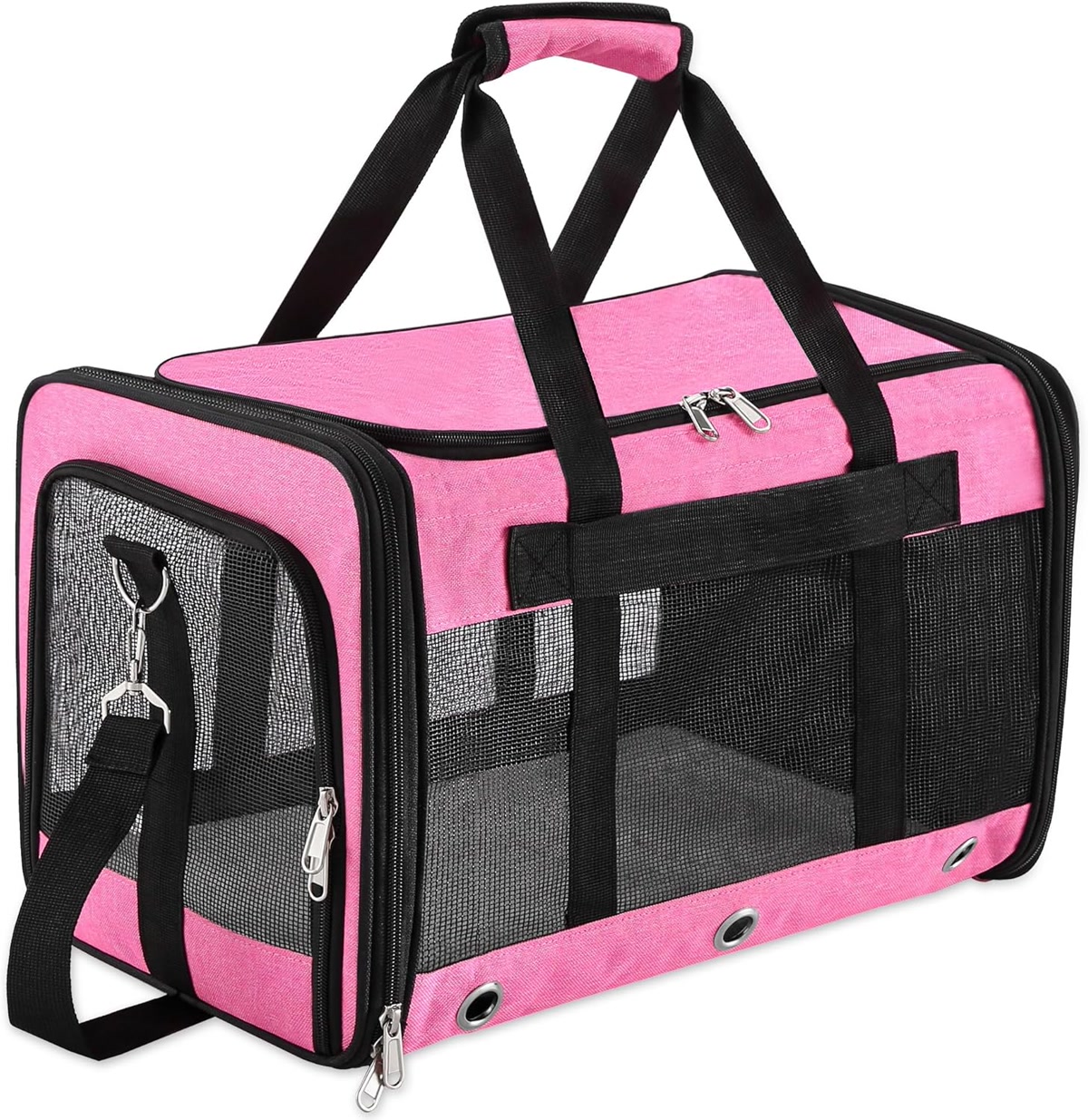
Skip the travel crate for in-cabin. You need a soft-sided carrier that fits under the seat, but you don’t need the “airline-approved” branded ones for 80 dollars. A Sherpa Original (25–40 dollars) works on every major airline.
Don’t pay for pet insurance just for the trip. If you already have pet insurance, great — it covers emergencies away from home. If you don’t, a one-time policy isn’t worth it (waiting periods mean it won’t cover a trip that starts within 14 days of purchase). Instead, set aside 500 dollars in an emergency fund.
Finding Dog-Friendly Activities at Your Destination
You’ve arrived. Now what?
Free Dog-Friendly Activities
- Hiking trails — Most state parks and many national park trails allow leashed dogs. AllTrails has a “dog-friendly” filter.
- Dog parks — Every city has them. Search “[city name] dog park” or check BringFido.
- Beaches — Many beaches allow dogs in the off-season or early morning. Check local regulations — fines for dogs on restricted beaches can be 200–500 dollars.
- Outdoor patios — Most brewery and restaurant patios allow well-behaved leashed dogs. Call ahead to confirm.
- Farmers markets — Many are dog-friendly (leashed). Great for socializing and getting local treats.
Paid Activities Worth the Money
- Dog daycare at your destination — 25–40 dollars/day. Useful if you have a non-dog-friendly activity planned (museum, fancy dinner). Your dog gets to play and socialize instead of sitting in a hotel room.
- Guided dog-friendly tours — Some cities offer walking tours that welcome dogs. Check BringFido or BarkHappy for local options.
What to Do in a Pet Emergency Away From Home
This is the scenario no one plans for, but everyone should.
Before you leave: Search for emergency vets at your destination. Save 2–3 in your phone with addresses and hours. See our emergency vet costs guide for what to expect.
Bring your vet’s phone number. Your regular vet can often provide guidance over the phone for non-critical issues, saving you an unnecessary ER visit.
Carry pet insurance info. If you have it, bring your policy number and claims phone number. Most pet insurance covers emergencies anywhere in the US.
Know the ASPCA Poison Control number: 888-426-4435. A 95-dollar consultation is cheaper than a 500-dollar ER visit that turns out to be nothing.
Pack a basic pet first aid kit. Gauze, antiseptic wipes, tweezers, tick remover, styptic powder, and a digital pet thermometer. See our first aid kit guide for a complete list.
The Budget Travel Checklist
Before you leave:
• [ ] Vet check (if your dog has health concerns)
• [ ] Microchip registration updated
• [ ] Vaccination records on phone + printed
• [ ] Pet-friendly hotels booked (confirmed pet policy)
• [ ] Emergency vet numbers saved for your destination
• [ ] Food and medications packed (trip length + 2 days buffer)
• [ ] Car harness installed and tested
• [ ] Collapsible bowl, waste bags, leash, backup leash
On the road:
• [ ] Light meals on travel days
• [ ] Water from home (or bottled — avoid sudden changes)
• [ ] Stops every 2–3 hours
• [ ] Never leave dog in hot car
• [ ] Dog on harness (not collar) in the car
At your destination:
• [ ] Dog-proof the hotel room (check for choking hazards, toxic plants on balconies)
• [ ] Establish a walking routine quickly
• [ ] Keep dog leashed in new areas until you know the layout
• [ ] Have fun — your dog is probably happier being with you than being boarded
Traveling with your dog doesn’t have to break the bank. Drive when you can, stay at no-fee hotels, skip the overpriced “travel” accessories, and bring the basics. Your dog doesn’t need a luxury vacation — they just need to be with you.
More budget travel and pet guides from ThriftyPaw:
• Moving With a Dog on a Budget — Relocation costs and strategies
• Emergency Vet Costs: What to Expect — Know before you go
• Best Dog Car Harnesses Under 30 Dollars — Car safety that doesn’t cost a fortune
• How Much Does a Dog Cost Per Month? — The full monthly breakdown
Meta title: How to Travel With a Dog on a Budget: Road Trips, Flights, and Hotels (2026)
Meta description: Traveling with a dog costs 200–1,200+ dollars. Here’s how to find free pet hotels, cheap flights, budget camping, and cut every unnecessary cost on the road with your dog.
n
ThriftyPaw is reader-supported. As an Amazon Associate, we earn from qualifying purchases. This means we may earn a small commission when you buy through links on this site at no additional cost to you. We only recommend products we genuinely believe in. Thank you for supporting ThriftyPaw.
🐾 Get Your Free Big Dog First Aid Kit Checklist
Join our newsletter and get this free printable plus weekly tips.