This article contains affiliate links. We may earn a commission from qualifying purchases.
Some content on this site is AI-assisted and reviewed by our editorial team.
The Invoice Nobody Mentions in the Puppy Brochure
The breeder’s folder covers shots, food, and crate size. Nobody mentions the baseboards. Then week twelve arrives, the puppy teeth come in, and you find the corner of the dining-room chair leg chewed to bare wood, a lamp cord with insulation missing, and gouges up the doorframe at exactly snout height. A carpenter to fix one chair leg runs $150 to $250; a chewed cord in the wrong spot is a house fire. Meanwhile the entire spray-and-train fix for one teething season costs under $15 and takes ten seconds to apply. That math is why the bitter bottle lives on my counter before the puppy comes home.
I went through this with my current dog and re-tested it with five sprays this fall. Here’s the honest version, including the part most reviews skip: bitter spray deters most dogs, not all, and it’s a bandage while the real training — redirection, enrichment, crate time — happens underneath it. Last checked Nov 2026.
I priced the five bottles groomers and trainers actually keep in stock and tested them the only way that counts — on my own baseboards. Here’s what I found.
The Cost of the Problem, Per Chewed Object
One chewed chair leg: $150–250 to repair or replace the chair — more than a decade of bitter spray at one bottle a year. One lamp cord: the cord is $8; the fire risk is not replaceable. One doorframe corner: $40 in wood filler and paint if you DIY, triple that if a handyman does it. Every bottle below costs about $8–$13 and covers all of it. The spray is not the cheap option and the repairs the expensive one — the spray is the only option where the math even exists.
Grannick’s Bitter Apple Original Spray, 8 oz — The 1960s Original
The Grannick’s Bitter Apple Original Spray at about $9 is the bottle every groomer’s shelf has had on it since the sixties, and it’s the right first purchase for one reason: some dogs — maybe one in five — lick it like cider, and you want to find out cheap. Two squirts on the chair leg, one week of watching. If the dog gags and backs off, you’ve solved a $200 repair for nine dollars. If the dog likes it, you’ve spent nine dollars on the diagnostic. That’s the honest con: it’s a coin flip on taste-driven dogs, and it wears off wood in a few days so you reapply on a schedule.
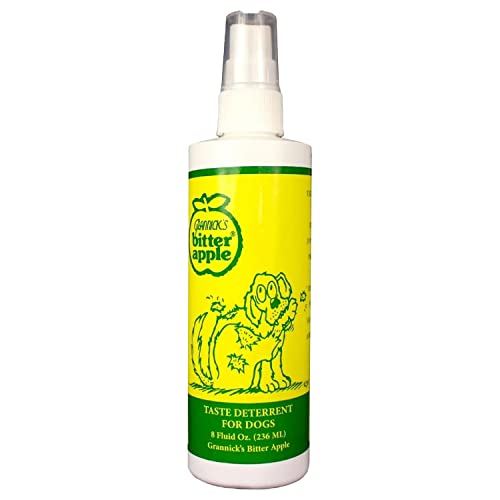
My take: buy this bottle first, always — it’s the cheapest test that tells you which of the stronger options you actually need.
Grannick’s Care No Chew Spray, 8 oz — The Wound-and-Bandage Version
The Grannick’s Care No Chew Spray is the sister bottle tuned for hot spots, surgical sites, and bandages — the situation where the target is the dog’s own body, not your furniture. Same bitter-apple base, about the same $9–$12, formulated for direct skin contact. The honest note from my vet-tech friend: with any of these, the reapplication schedule matters more than the brand — a bandage chewer needs it re-sprayed every time the wrap changes, or it does nothing.
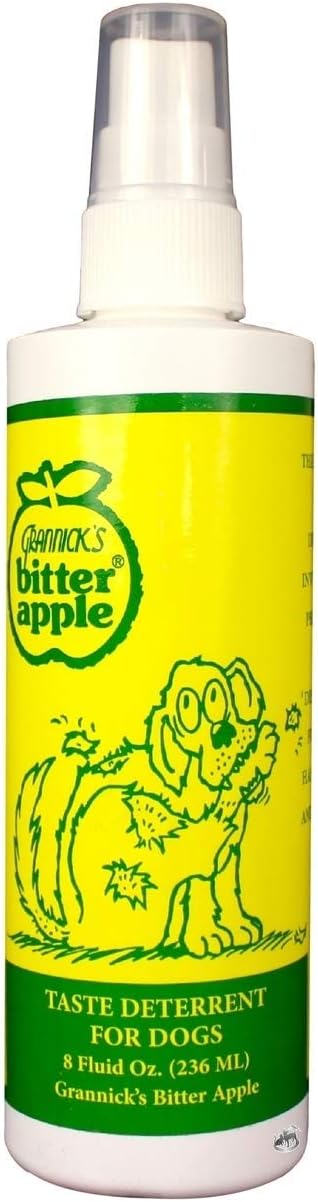
My take: this is the post-surgery bottle, not the baseboard bottle — worth having in the cabinet before the neuter appointment, not after.
Aeridok Bitter Apple No-Chew Spray, 8 oz — The 8-Dollar Refill Value
The Aeridok Bitter Apple No-Chew Spray does the same job for about $8, and once you know your dog respects bitter apple, this becomes the refill bottle — same active aversive, a dollar or two cheaper per ounce. The con is real, though: the spray head is the weak link, sputtering and dying before the bottle’s empty. Keep the trigger bottle from your first Grannick’s purchase and decant when the cheap one clogs.
My take: the working-dog value pick — a dollar saved is a dollar toward the actual chew toys, just don’t trust its sprayer to finish the bottle.
Warren London Extra Bitter Anti-Chew Spray — The Groomer-Brand Stronger Stuff
The Warren London Extra Bitter Anti-Chew Spray is what you reach for when the original formula failed — it’s the concentrated groomer-brand version for the dogs that lick regular bitter apple off the woodwork. About $12–$14. Two honest warnings from testing: it dries clear on leather furniture (a genuine plus — Grannick’s can haze some finishes), but it stained a light cotton cushion cover in my test, so patch-test fabric first.
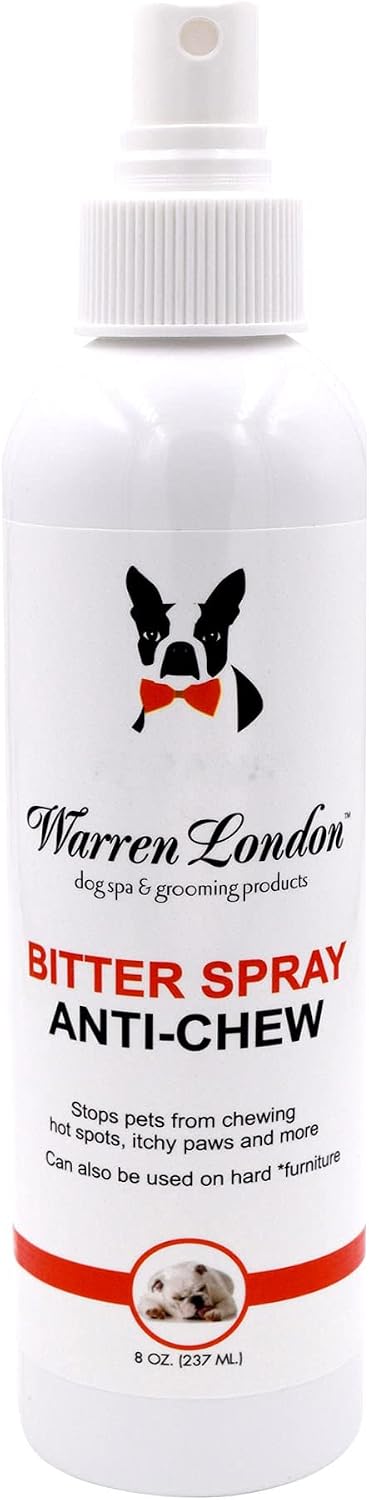
My take: the escalation bottle — only worth its price after the $9 original proves too mild, and patch-test anything absorbent before you commit.
Totally Animal Xtreme Bitter Spray — The Strongest-Bitter Budget Option
The Totally Animal Xtreme Bitter Spray at about $8 markets itself on the “strongest bitter agent” claim, and here’s the honest read: that claim is marketing until your specific dog proves it. It’s alcohol-free, which matters if you’re spraying near a dog’s own skin or a healing wound, and the price is right. But bitter perception varies dog to dog more than brand to brand — the alcohol-free formulation is the actual reason to pick this one, not the “Xtreme” label.
My take: the right pick if you want to skip alcohol near wounds or sensitive skin at a budget price; otherwise treat it as interchangeable with the Aeridok — trial size first, always.
One-bottle-a-year trick: bitter spray is a consumable you’ll reorder every teething season — set it up on Subscribe & Save (save ~5%, never run out), and grab a free 30-day Prime trial here so the first bottle arrives before the puppy does.
Features That Actually Matter (And Ones That Don’t)
Reapplication schedule beats brand choice. Every spray on this list wears off wood in 2–4 days and washes off with a damp rag. The one you reapply weekly works; the better one you forget doesn’t.
Buy small first, always. The $9 diagnostic bottle saves you from buying four $12 specialty bottles for a dog who was never going to chew cords in the first place.
Alcohol-free matters on skin, not on furniture. For bandage-chewing and hot spots, pick the alcohol-free formulation. For baseboards it makes no difference.
The spray is a bandage, not the cure. Redirection to a frozen Kong, enough exercise, and crate time do the actual training. The spray just makes your furniture taste like the wrong answer while that happens.
Ignore “Xtreme” and “maximum strength” labels. Bitter perception varies more between dogs than between brands. Your dog is the only lab that matters.
The Annual Cost Comparison
- Before the spray: one chair leg repair ($150–250) + one doorframe ($40–120) + one replaced cord ($8) — call it $200–380 for a normal teething season, and that’s the lucky version.
- With the spray: two bottles a year ($18–25) plus the chew toys you were buying anyway.
- Annual savings: roughly $180–355 — enough for the entire first year of flea prevention, or the good crate, or two months of the decent food.
Keep reading: muzzle training without the guilt and the 40-dollar vault guarding 800 dollars of kibble cover the other two puppy-proofing line items nobody budgets for.
ThriftyPaw is reader-supported. As an Amazon Associate, I earn from qualifying purchases. That means if you buy through one of the links above, I get a small commission at no extra cost to you. I only recommend products I’ve actually used with my own dog.
🐾 Get Your Free Big Dog First Aid Kit Checklist
Join our newsletter and get this free printable plus weekly tips.
Frequently Asked Questions
Does bitter apple spray work on all dogs?
No — most dogs back off immediately, but roughly one in five either ignores it or likes the taste. That's why the 9-dollar Grannick's original is the right first bottle: it's the cheapest way to find out which kind of dog you have before buying anything stronger.
Is bitter apple spray safe for cats and kittens?
Most bitter-apple formulas are safe for cats in small licked amounts, but check the label for essential oils like citrus, which cats metabolize poorly. Alcohol-free sprays are the safer choice around cats, and always spray the object — never the animal.
How often do I need to reapply anti-chew spray?
Every two to four days on wood and fabric, and after any wipe-down of the surface. On bandages, reapply each time the wrap changes. Reapplying on a schedule matters more than which brand you pick.
Does bitter spray stop a puppy from teething on furniture?
It stops the furniture from being the target — it doesn't stop the teething. Puppies still need to chew; the spray makes baseboards and cords taste wrong while you redirect that need to real chew toys and frozen Kongs. The spray is a bandage while the training happens underneath.
Liked this guide? Get the next one in your inbox — the pet budget checklist is free too.
✓ You're in — check your inbox.
No spam. Unsubscribe anytime. We never share your email.