

This article contains affiliate links. We may earn a commission from qualifying purchases.
Some content on this site is AI-assisted and reviewed by our editorial team.
Dog training does not have to drain your bank account. Professional trainers charge anywhere from 50 to 200 dollars per hour, and board-and-train programs can run 1,000 to 2,500 dollars per week. But here is the truth most trainers will not tell you: the basics every dog needs — sit, stay, come, down, leave it, and heel — can be taught at home with a handful of treats and a clicker that costs two dollars. This guide walks you through every free and low-cost resource available, gives you step-by-step instructions for the six commands every dog must know, and shows you exactly when spending money on a professional actually makes sense.
What Professional Dog Training Actually Costs
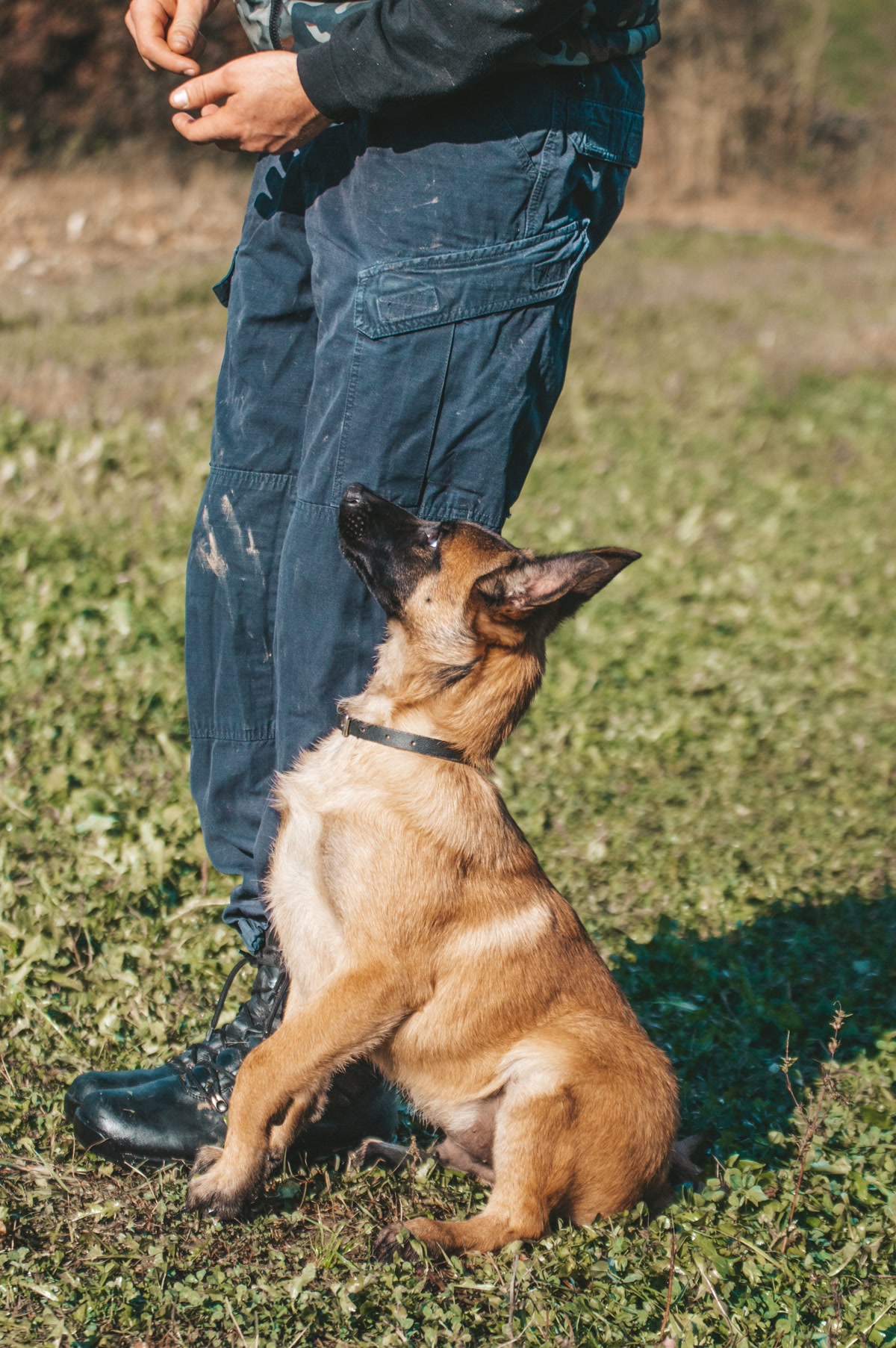
Private sessions with a certified dog trainer typically run between 75 and 150 dollars per hour depending on your location. In major cities like New York or San Francisco, rates climb to 200 dollars an hour or more. A standard six-week group class at Petco or PetSmart costs around 120 to 150 dollars, which works out to roughly 20 to 25 dollars per session. Board-and-train programs, where your dog lives at a facility for one to three weeks, range from 1,000 to 2,500 dollars per week — and many of these programs teach the exact same commands you can teach at home.
The problem is not that professional training is bad. A good trainer can be invaluable for serious behavioral issues. The problem is paying premium prices for basic obedience that you can teach yourself with free resources and a bag of kibble. If your goal is a well-mannered companion who listens on and off leash, you do not need a 200-dollar-per-hour professional. You need consistency, the right tools, and about ten minutes a day.
The Free Resources That Work Just as Well
YouTube is the single best free dog training resource available. Three channels stand out above the rest:
- Zak George — Former professional trainer with hundreds of breed-specific and skill-specific videos. His series on puppy training basics covers everything from potty training to leash manners in clear, beginner-friendly language.
- Kikopup (Emily Larlham) — The gold standard for positive reinforcement training. Her videos are concise, technique-focused, and cover everything from basic sits to advanced tricks. She shows you exactly what to do and what not to do.
- McCann Dog Training — A Canadian family-run channel with practical, real-world training advice. Their leash walking and recall videos are particularly strong.
Beyond YouTube, your local library is an underrated goldmine. Look for books by Pat Miller (“The Power of Positive Dog Training”) and Karen Pryor (“Don’t Shoot the Dog”). Both are available at most public libraries for free. If you prefer a structured app, Puppr is completely free with step-by-step video lessons, and Dogo offers a solid free tier with daily training plans and progress tracking.
Clicker Training Basics — 7 Dollars for Everything You Need
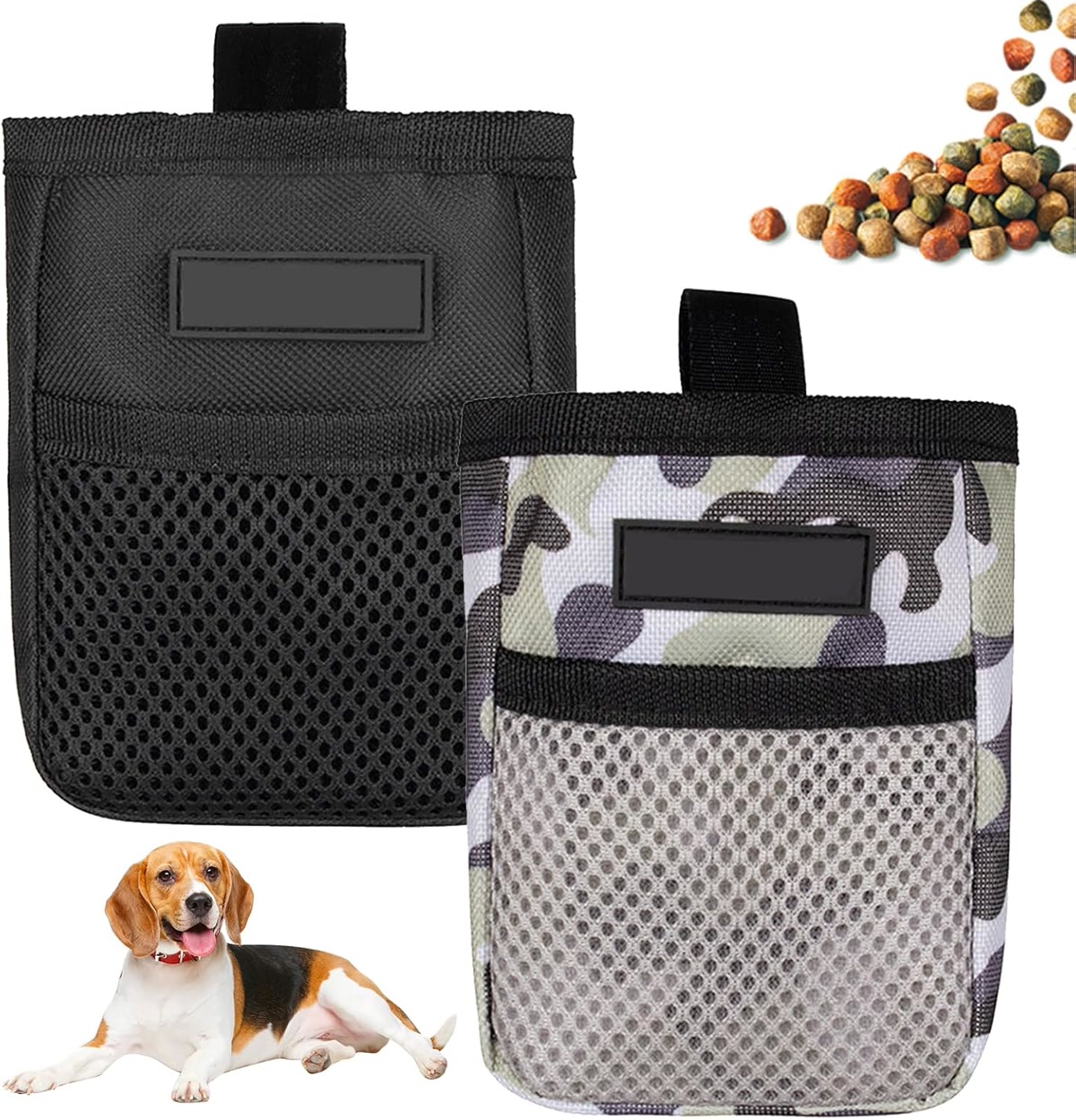
Clicker training is one of the most effective training methods ever developed, and the total startup cost is under seven dollars. A training clicker costs about 2 dollars on Amazon. A bag of small training treats runs 5 to 10 dollars. But here is the budget trick most people miss: you can use your dog’s regular kibble as training treats. If you measure out their daily food allowance in the morning and use pieces of kibble throughout training sessions, your treat cost drops to zero.
The concept is simple. The clicker marks the exact moment your dog does the right thing, and the treat that follows reinforces it. The click is faster and more precise than saying “good dog,” which means your dog learns faster. Here is how to start:
- Step 1: Load the clicker. Click once, immediately give your dog a piece of kibble. Repeat 15 to 20 times until your dog looks at you expectantly when they hear the click. This teaches them that click means reward is coming.
- Step 2: Capture behaviors. Wait for your dog to sit naturally. The moment their rear hits the ground, click and treat. Do not say “sit” yet — just click the behavior when it happens. After 10 to 15 repetitions, your dog will start offering the sit to get you to click.
- Step 3: Add the cue. Once your dog is offering the behavior reliably, start saying “sit” right before they do it. Click and treat. Within a few sessions, they will sit on command.
This method works for every command. Capture the behavior, mark it with a click, reward it, and then add the verbal cue. Total cost: 2 dollars for the clicker, or free if you use a pen that clicks.
The Six Commands Every Dog Must Know
Six commands form the foundation of a well-behaved dog. Master these and you will solve 90 percent of common behavior problems without ever paying a trainer.
1. Sit
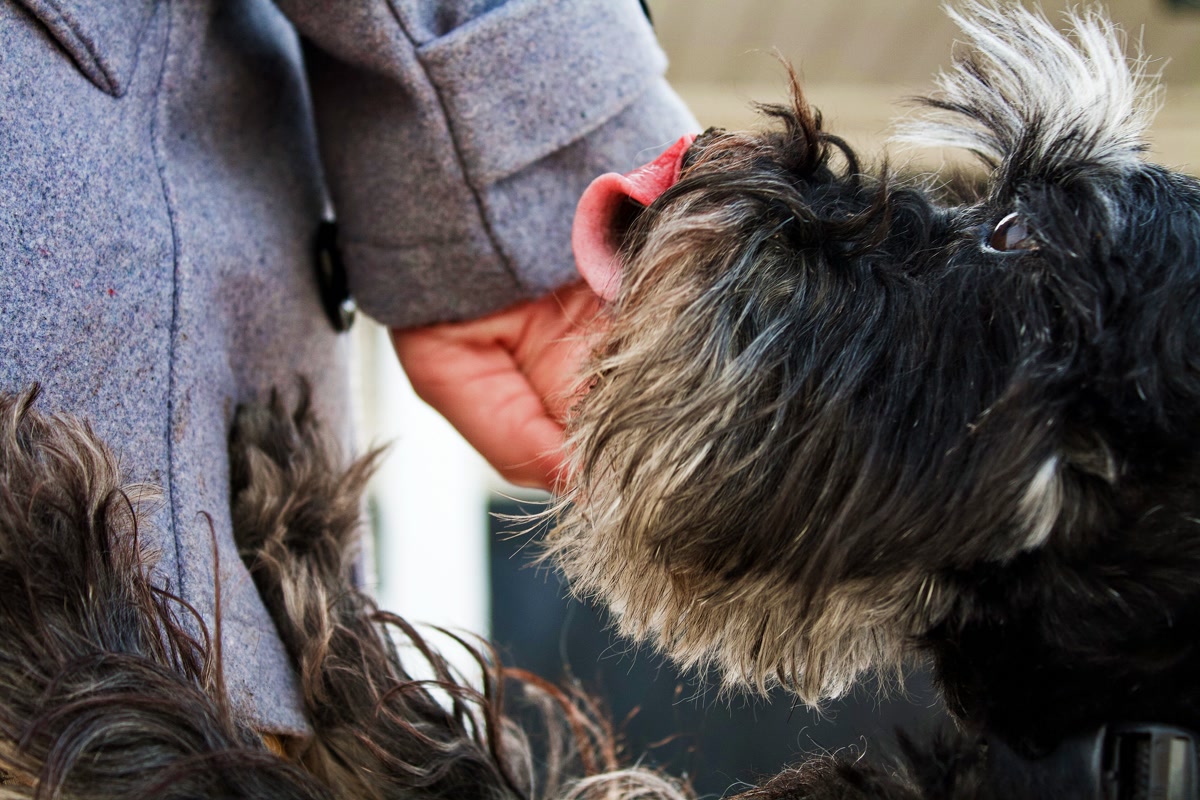
Hold a piece of kibble just above your dog’s nose and slowly move it back toward their ears. Their natural response is to rock back into a sit. Click the moment their rear touches the ground and give the treat. Practice 10 times per session, twice daily. Most dogs learn sit in one to two sessions.
2. Stay
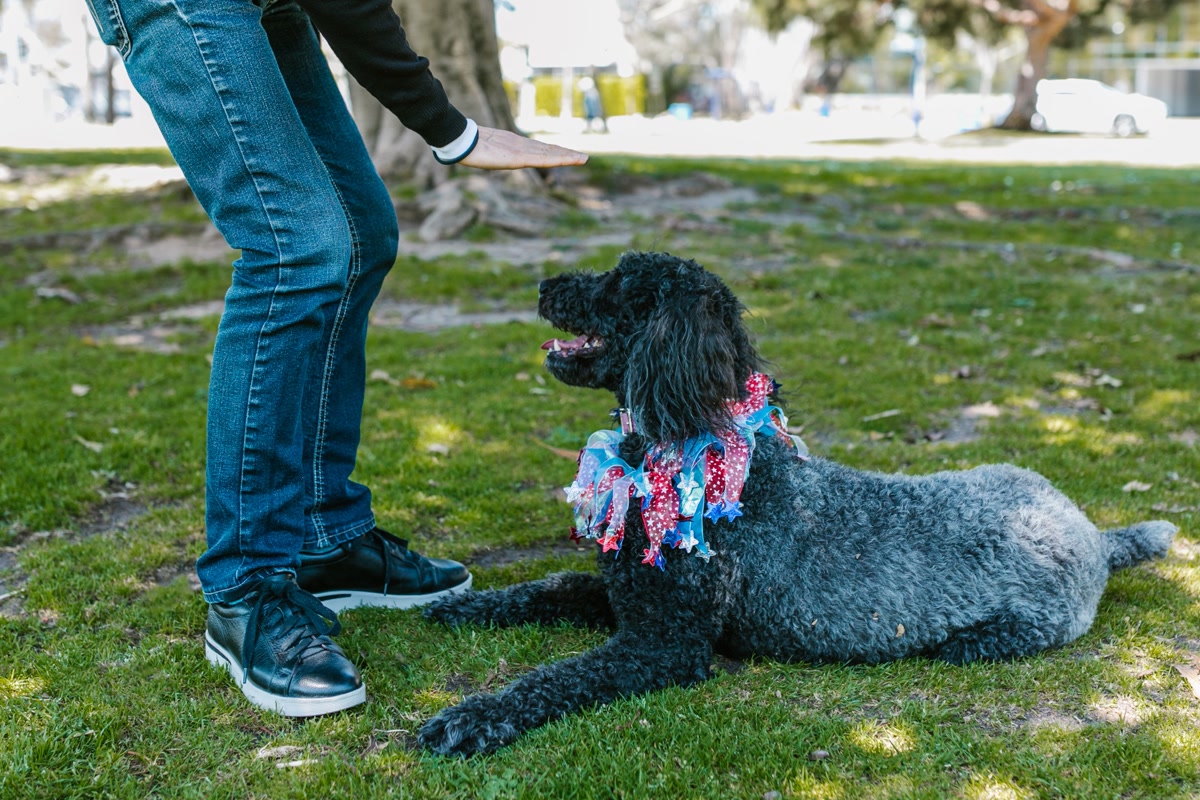
Ask your dog to sit, then hold your palm out like a stop sign and say “stay.” Take one step back. If they hold position for two seconds, click and treat. Gradually increase distance and duration — three steps, five seconds, then across the room, 30 seconds. Practice in low-distraction areas first, then add distractions.
3. Come (Recall)
This is the most important safety command. Start in a hallway or enclosed space. Say your dog’s name followed by “come” in a happy, excited voice. When they reach you, click and give a jackpot reward — five pieces of kibble one at a time. Never call your dog for something unpleasant like a bath or nail trim, or they will stop coming. Practice in progressively more distracting environments.
4. Down
From a sit, hold kibble at your dog’s nose and slowly lure it straight down to the ground between their front paws. They should follow the treat into a lying position. Click and treat the moment their elbows touch the floor. If they stand instead, try luring from a sit position under your leg so they have to crawl under to get the treat.
5. Leave It
Place a piece of kibble under your foot. Let your dog sniff and try to get it. The moment they back away or look at you, click and give a different treat from your hand. Repeat until they ignore the covered treat immediately. Then progress to an uncovered treat on the floor. This command could save your dog’s life if they go for something dangerous on a walk.
6. Heel
Heel means your dog walks at your left side with their ear at your leg, no pulling ahead and no lagging behind. Start in your backyard or a quiet area. Hold treats at your left hip. Walk a few steps — if your dog stays in position, click and treat from your hip. If they pull ahead, stop walking, wait for them to return to your side, then resume. This is the foundation for pleasant walks.
Leash Walking — The Number One Problem and the 20 Dollar Fix
Pulling on leash is the single most common complaint from dog owners, and it is also one of the easiest problems to solve with the right equipment and a few minutes of daily practice. The fix costs 15 to 25 dollars and it is called a front-clip harness.
A front-clip harness clips at your dog’s chest rather than their back. When they pull, the harness turns them back toward you instead of letting them lean into the leash like a sled dog. The PetSafe Easy Walk Harness (PetSafe Easy Walk Harness) (Compare prices on Amazon) is the most popular option and costs around 20 dollars. The Rabbitgoo No Pull Harness (Rabbitgoo No Pull Harness) (Compare prices on Amazon) is another solid option at 15 to 18 dollars.
Equipment alone will not fix pulling. You also need to train the “be a tree” method. When your dog pulls, stop walking immediately. Stand still like a tree. Do not yank, do not say anything. Wait for your dog to turn back toward you or create slack in the leash. The moment there is slack, click, treat, and resume walking. Within a week of consistent practice, most dogs learn that pulling makes walks stop and walking politely makes walks continue.

Puppy Socialization on a Budget
Puppy socialization classes charge 30 to 50 dollars per session for something you can do for free. Socialization simply means exposing your puppy to new people, dogs, environments, sounds, and surfaces in a positive way during their critical socialization window, which closes around 14 to 16 weeks of age.
Here are free socialization activities that are just as effective as paid classes:
- Dog parks during quiet hours — Go early morning or mid-afternoon when crowds are thin. This lets your puppy meet well-behaved dogs without being overwhelmed.
- Friend and family dogs — Arrange playdates with dogs you know are vaccinated, friendly, and appropriate size for your puppy.
- Pet store visits — Most pet stores allow leashed dogs. Walk your puppy through the aisles to experience new sights, sounds, and friendly strangers who want to say hello.
- Different surfaces and sounds — Walk your puppy on grass, concrete, gravel, wood chips, and metal grates. Play recordings of thunder, fireworks, and traffic sounds at low volume during positive activities like mealtime.
- Playgrounds (off-hours) — A quiet playground lets your puppy experience moving children, different surfaces, and novel objects like swings and slides.
The key is quality over quantity. Five minutes of calm, positive exposure is worth more than an hour of overwhelming chaos. Watch your puppy’s body language — if they are hiding, yawning, or lip-licking, reduce the intensity. The goal is positive associations, not flooding.
When You Actually Need a Professional Trainer
While basic obedience is well within reach of any dedicated owner, some situations genuinely call for professional help. Here is when spending money on a trainer is a smart investment, not a waste:
- Aggression — If your dog has bitten a person or another dog, or shows signs of resource guarding with teeth, you need a certified behaviorist. This is not a DIY project. Look for a Certified Applied Animal Behaviorist (CAAB) or a trainer with the CCPDT-KSA credential.
- Severe separation anxiety — Dogs who destroy doors, windows, or crates when left alone need a structured behavior modification plan. A few sessions with a qualified trainer (150 to 300 dollars total) can save you thousands in property damage and give your dog real relief.
- Fear and reactivity — If your dog lunges, barks, and screams at other dogs or strangers on walks, a behavior modification protocol from a professional will save you months of frustration. One or two consultations (75 to 150 dollars each) can give you a customized plan that works.
- Service dog training — Task-specific service dog work requires precision that most owners cannot achieve alone. Invest in a professional program for this.
For everything else — sit, stay, come, down, leave it, heel, leash manners, crate training, potty training, and basic socialization — you absolutely can do it yourself with the free and low-cost resources in this guide.
Training Schedule — 10 Minutes Twice Daily Beats One-Hour Sessions
The single biggest mistake new dog owners make is training for too long in one session. Dogs, especially puppies, have short attention spans. A one-hour training session will leave your dog frustrated, bored, and less likely to learn. The secret that professional trainers know is this: short, frequent sessions are dramatically more effective than long, rare ones.
Here is the ideal schedule:
- Morning: 5 to 10 minutes — Practice two or three commands your dog already knows, plus introduce one new skill. Keep it upbeat and end on a success.
- Evening: 5 to 10 minutes — Review what you worked on in the morning. Add a little more distance or distraction. End with a fun trick your dog enjoys.
- Walks: Practice in real life — Every walk is a training opportunity. Practice sit at curbs, stay before crossing, leave it when passing trash, and heel when other dogs are nearby.
This schedule works because of a learning principle called distributed practice. Studies in both human and animal learning consistently show that spacing practice out produces stronger, longer-lasting behavior than cramming. Ten minutes twice a day, every day, will give you a well-trained dog faster than a weekly one-hour class. The consistency of daily practice is what builds habits, not the duration.
Cost Comparison — Professional vs Budget Training
Here is the side-by-side breakdown of what you would spend for six months of basic obedience training, which is enough to produce a solidly trained companion dog:
Professional Training Path:
- Six-week group class: 120 to 150 dollars
- Three private sessions for problem behaviors: 225 to 600 dollars
- Board and train (if you were considering it): 1,000 to 2,500 dollars
- Training treats and equipment: 50 to 80 dollars
- Total: 395 to 3,330 dollars
Budget Training Path:
- Clicker: 2 dollars
- Front-clip harness: 15 to 25 dollars
- Six-foot nylon leash: 8 to 12 dollars
- Training treats (or use kibble): 0 to 10 dollars
- YouTube videos: Free
- Library books: Free
- Training apps: Free (Puppr) or freemium (Dogo)
- AKC Canine Good Citizen test (optional goal): 20 to 30 dollars
- Total: 25 to 79 dollars
The budget path gives you the same well-behaved dog for 85 to 97 percent less money. And because you are training daily in short sessions rather than weekly in a class, your dog may actually learn faster and retain commands better. The AKC Canine Good Citizen test at 20 to 30 dollars is an excellent milestone to train toward — it proves your dog has solid real-world manners and can behave around strangers, other dogs, and distractions.
Bottom Line
You do not need to spend hundreds or thousands of dollars to have a well-behaved dog. The six commands every dog needs — sit, stay, come, down, leave it, and heel — can be taught at home with a 2-dollar clicker, your dog’s regular kibble, and free video resources from trainers like Zak George, Kikopup, and McCann Dog Training. A front-clip harness for 15 to 25 dollars solves the most common leash problem. Ten minutes of training twice daily will outperform a weekly class that costs ten times as much. Save the professional trainer money for genuine behavioral issues like aggression and severe anxiety, and handle the rest yourself. Your dog will learn just as well, and your wallet will thank you.
n
ThriftyPaw is reader-supported. As an Amazon Associate, we earn from qualifying purchases. This means we may earn a small commission when you buy through links on this site at no additional cost to you. We only recommend products we genuinely believe in. Thank you for supporting ThriftyPaw.
🐾 Get Your Free Big Dog First Aid Kit Checklist
Join our newsletter and get this free printable plus weekly tips.