
This article contains affiliate links. We may earn a commission from qualifying purchases.
Some content on this site is AI-assisted and reviewed by our editorial team.
Last July, a thunderstorm spooked my Golden Retriever while I was at work. She jumped our four-foot fence — something I didn’t know she could do — and was gone. My neighbor called me at 2 PM. I drove home in a panic, searched the neighborhood for an hour, and eventually found her two blocks away at a park, sitting under a tree like nothing had happened.

That hour of driving around was the worst hour of my life. I kept imagining her hit by a car, picked up by a stranger, lost in the woods behind our neighborhood. When I found her, I went straight online and bought a GPS tracker. Not a microchip — those only work if someone finds your dog and takes them to a vet. I wanted something that would show me her location on my phone in real time.
I tried three GPS trackers over the following months. Here’s what I found.
How Dog GPS Trackers Work
There are two types: collar-mounted GPS trackers that use cellular networks to send location data to your phone, and Bluetooth-only trackers (like Tile) that only work within 100 feet. Bluetooth trackers are cheap but useless for finding a lost dog — if your dog is more than a block away, you’re out of range. You need a GPS tracker with cellular connectivity.
The catch: cellular GPS trackers require a subscription. The device itself costs 50 to 150 dollars, and the monthly subscription is 5 to 20 dollars. Over a year, you’re paying 60 to 240 dollars on top of the hardware cost. That sounds like a lot, but consider what I would have paid that day — if my dog had been hit by a car instead of sitting under a tree, the vet bill could have been thousands. A GPS tracker is insurance against the worst-case scenario.
Features that matter: battery life (some last a week, some only 2 days), accuracy (GPS plus WiFi positioning is more accurate than GPS alone), and coverage area (some only work in the US, others worldwide). You also want real-time tracking, not periodic pings — some cheaper trackers only update location every 10 minutes, which is useless if your dog is actively running.
Fi Series 3 GPS Dog Collar — The One I Use Every Day
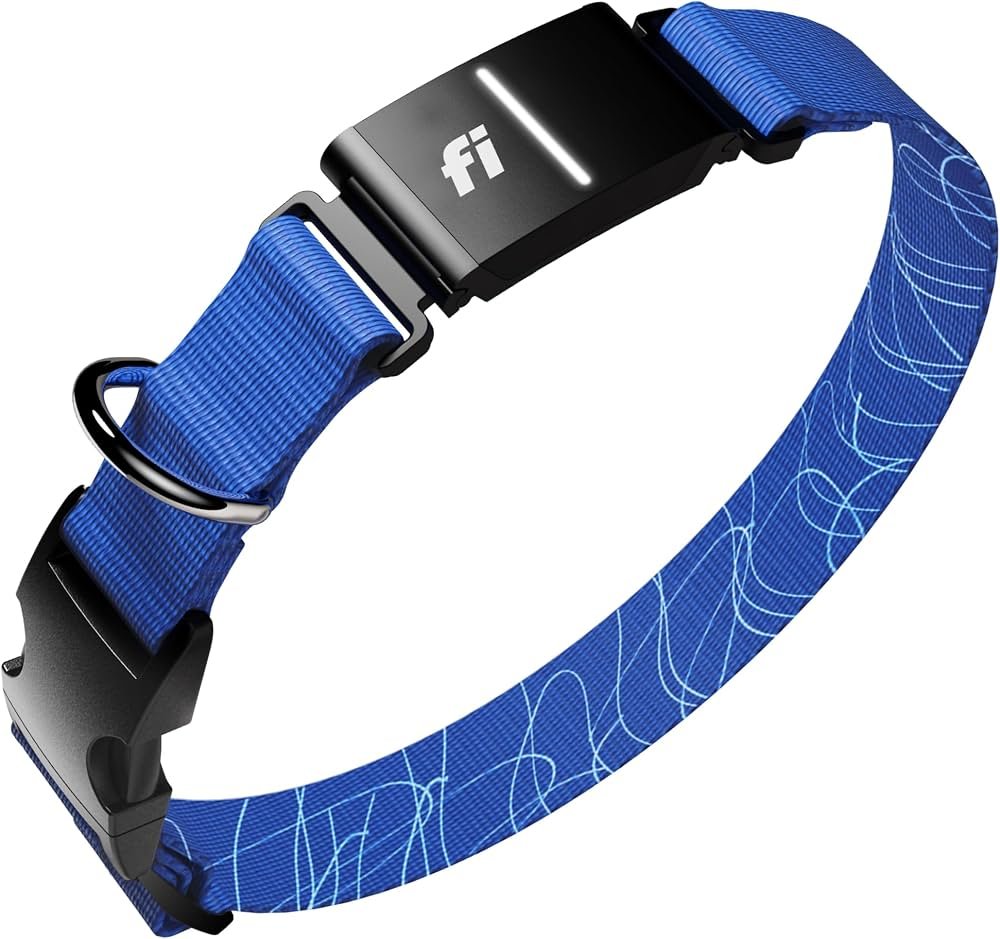
The Fi Collar is what my dog wears now, 24/7. It combines GPS, cellular, and WiFi positioning to give accurate location data, and it doubles as an activity tracker — it counts her steps, tracks her sleep, and gives me a daily activity score. Think of it as a Fitbit for dogs with GPS built in.
The battery lasts about 2 weeks between charges, which is excellent. The previous tracker I tried lasted 3 days, and I was charging it constantly. The Fi charges via a magnetic cable in about 2 hours.
The app shows her location on a map in real time. When I’m at work, I can open the app and see that she’s at home. If she leaves the “home zone” (a geofenced area I set up around my house), I get an immediate notification. That’s the feature that matters — not the tracking, but the alert that tells me something is wrong before I’ve even noticed.
The collar costs about 149 dollars, and the subscription is about 10 dollars per month. Over a year, that’s 269 dollars total. Is it worth it? For me, yes. The peace of mind alone justifies it, and the activity tracking is genuinely useful — I can see when she’s been less active than usual, which can signal health issues.
My take: The best all-around dog GPS tracker. Long battery life, accurate tracking, and the activity data is a bonus. If you can afford the subscription, this is the one to get.
Tractive GPS Dog Tracker — The Budget Alternative
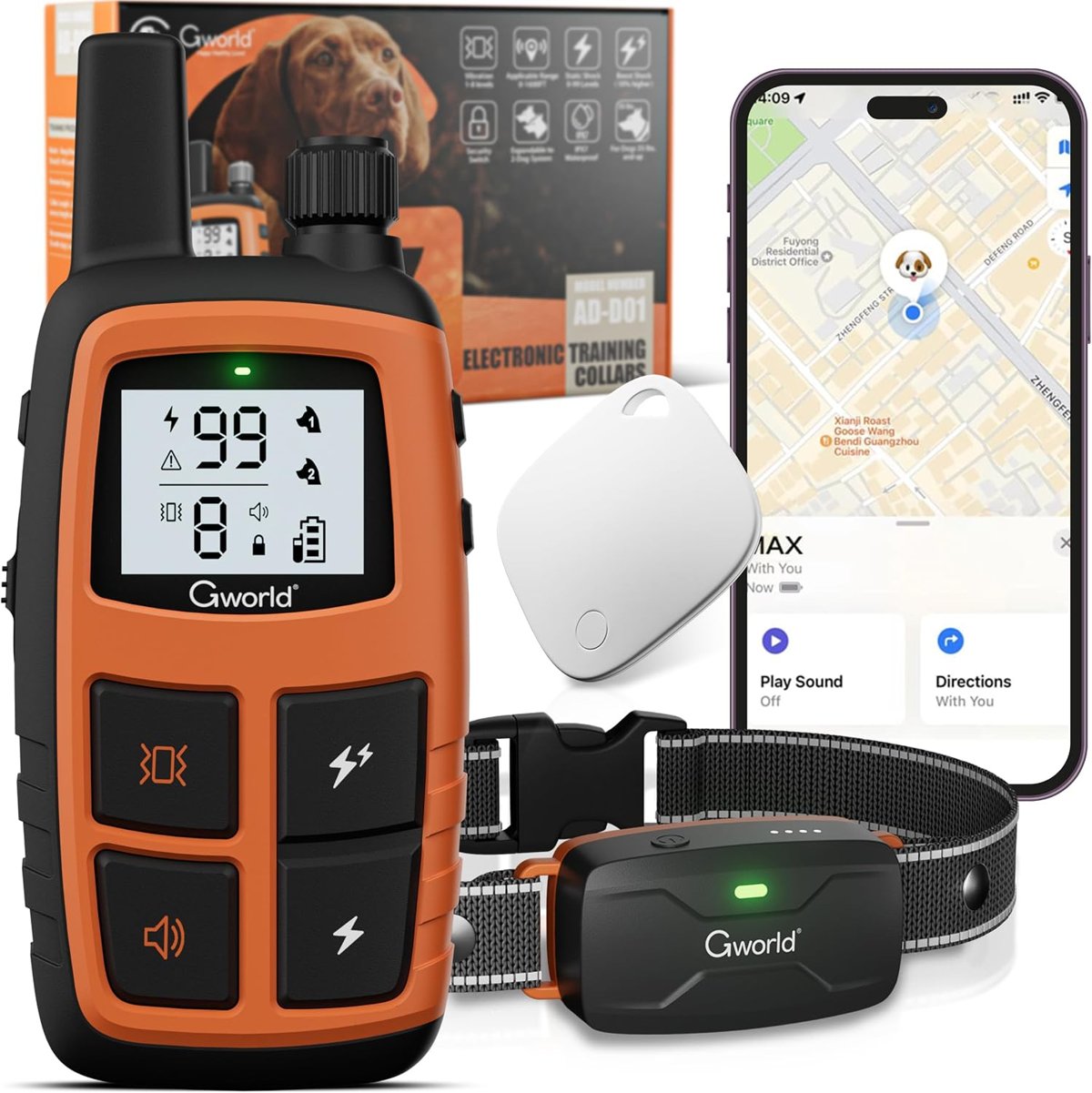
Tractive GPS is a clip-on device that attaches to your dog’s existing collar. It doesn’t replace the collar like the Fi does — it’s an add-on. That makes it lighter and less bulky, but it also means you need a collar to attach it to.
The hardware is cheaper at about 50 dollars, but the subscription is slightly higher at about 12 dollars per month with the basic plan. Total first-year cost is about 194 dollars — cheaper than the Fi but not dramatically so.
The tracking is accurate and updates frequently. Battery life is about 5 days, which means charging twice a week. The app shows location history, which the Fi doesn’t — you can see where your dog has been over the last 24 hours. That’s useful if your dog escapes with a dog walker or sitter and you want to verify their route.
One limitation: Tractive only works in areas with cellular coverage. If you’re in a remote area hiking, it won’t track until your dog comes back into cell range. The Fi has the same limitation, but Fi’s WiFi positioning helps in areas where cellular is weak.
My take: Good tracker at a lower hardware price. Battery life is the main downside — 5 days vs Fi’s 14 days. If you don’t mind charging more often, this is a solid choice.
Whistle GO Explore — The Fitness-Focused Option
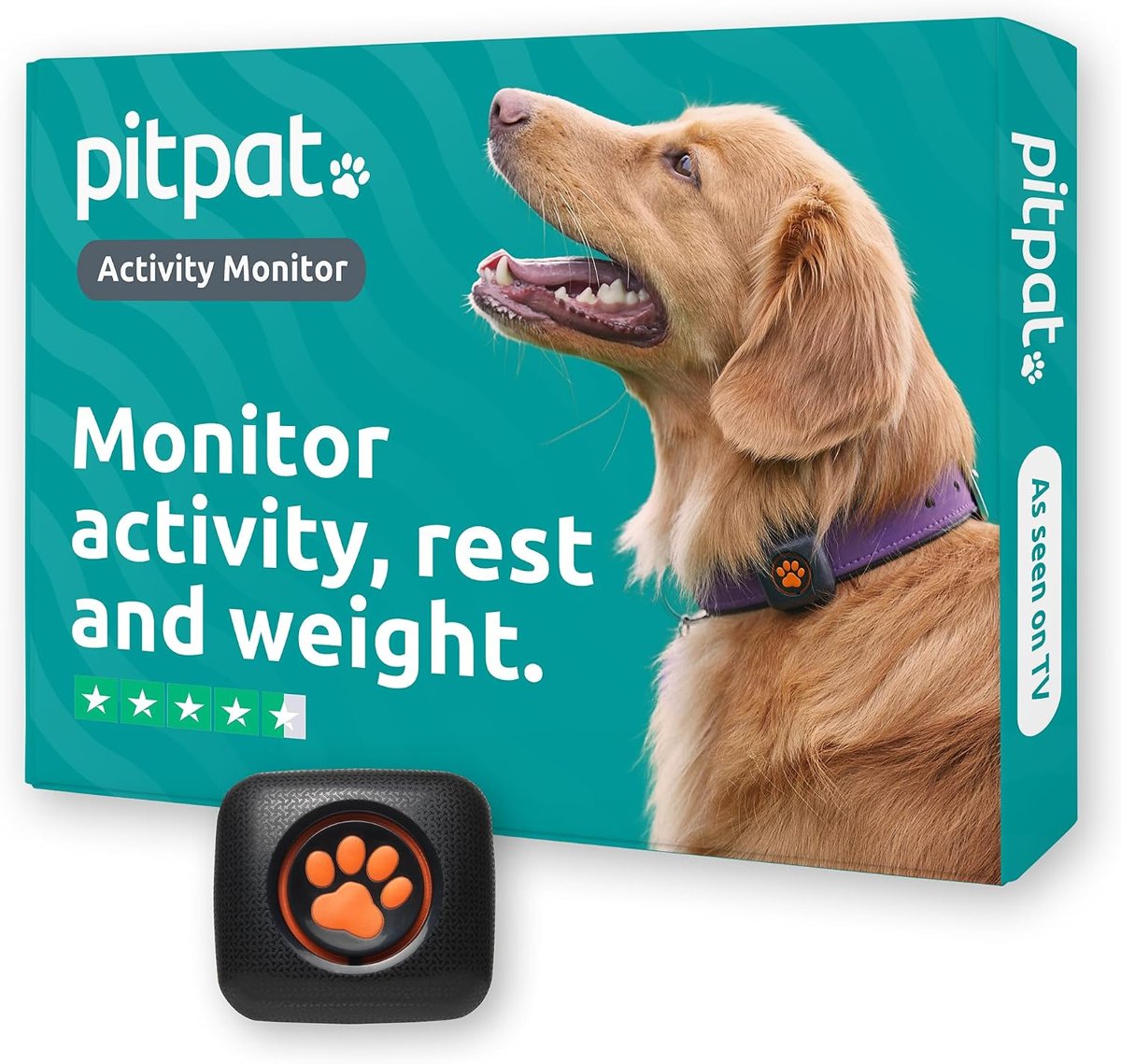
Whistle GO Explore is the most health-focused of the three. It tracks location like the others, but its real strength is the health monitoring — it tracks resting heart rate, sleeping patterns, licking and scratching behavior, and can alert you to potential health issues before they become visible.
The health tracking is genuinely impressive. When my friend’s dog started licking her paw excessively, the Whistle app flagged it as unusual behavior two days before my friend noticed it visually. The dog had a foxtail embedded in her paw that needed vet removal. That early warning saved my friend from a worse infection.
The downside: battery life is about 7 days, and the subscription is about 15 dollars per month — the most expensive of the three. The hardware costs about 130 dollars. Total first-year cost is about 310 dollars.
My take: If health monitoring is your priority, Whistle is the best option. If you just want location tracking, the Fi is simpler and has better battery life.
Get a GPS tracker with fast shipping. Start your 30-day Prime free trial for free 2-day shipping.
How I Use the Fi Collar Day to Day
The GPS tracking is why I bought it, but the daily features are why I keep it. Here’s my typical routine:
- Morning: Check the app to see her sleep score. If she slept poorly, I know she might be stiff or uncomfortable.
- Work days: I get a notification if she leaves the home zone. I can check her location anytime from my desk.
- Walks: The app tracks our route, distance, and her step count. I can see if she’s getting enough exercise.
- Evening: I check her daily activity score. If it’s low, I take her for an extra walk.
- Charging: Every 2 weeks, I charge it while she’s sleeping. It’s done by morning.
The one thing I’d warn against: don’t rely on a GPS tracker as a substitute for a secure fence and proper containment. The tracker tells you where your dog is — it doesn’t prevent them from escaping. I fixed my fence (raised it to 6 feet) after the escape incident, and the tracker is my backup, not my primary prevention.
If your dog has ever escaped, or if you live near busy roads, a GPS tracker is one of those purchases that feels expensive until the day you need it. That one hour of panic when my dog was missing was worth every dollar I’ve spent on the Fi collar since.
For more on keeping your dog safe, check our guide to budget crates for large dogs and our review of no-pull harnesses.
ThriftyPaw is reader-supported. As an Amazon Associate, I earn from qualifying purchases. That means if you buy through one of the links above, I get a small commission at no extra cost to you. I only recommend trackers I’ve actually used on my own dog.
Related guides
- How to Build a Dog First Aid Kit for Under 30 Dollars (With Printable Checklist)
- Best Budget Dog GPS Trackers Under 50 Dollars (2026)
- Big Dog Summer Essentials: What I Actually Buy for My 75-Pound Golden (And What I Skip)
- Fireworks Season Is a Training Problem. The 45-Dollar Vest Is Only Part of It.
- How to Dog-Proof Your Home on a Budget
🐾 Get Your Free Big Dog First Aid Kit Checklist
Join our newsletter and get this free printable plus weekly tips.
Frequently Asked Questions
What's the best GPS tracker for dogs?
The author's daily driver: the Fi Series 3 at $149 plus $10/month ($269 first year) — the battery life and the reliability after the fence-jumping scare. The Tractive at $50 hardware plus $12/month ($194 first year) is the budget alternative with a 7-day battery; the Whistle at $130 plus $15/month ($310 first year) is the fitness-focused premium with the most expensive subscription.
Are dog GPS collars worth the subscription?
For the escape-risk dog, the math the author does is emotional plus financial: the hour of neighborhood panic versus $269 a year, and the device-plus-subscription totals ($194-310 first year) against the search-the-neighborhood alternative. For the dog that's never left the yard, it's optional — the 4-foot fence she cleared is the case for honest self-assessment.
How does a GPS dog collar actually work?
Cellular triangulation plus the base station — the device reports location through a subscription data plan (the $5-20 monthly fee across brands), with accuracy good enough for the two-blocks-away park recovery. The battery life is the real spec that separates them: Fi's multi-week life versus Tractive's 7-day, which is the trade behind the price gap.
Liked this guide? Get the next one in your inbox — the pet budget checklist is free too.
✓ You're in — check your inbox.
No spam. Unsubscribe anytime. We never share your email.