This article contains affiliate links. We may earn a commission from qualifying purchases.
Some content on this site is AI-assisted and reviewed by our editorial team.

I work from home most days, which means my dog’s feeding schedule revolves around my meetings. He eats at 7 AM and 6 PM — unless I’m on a call, in which case he eats whenever I remember. Which is sometimes 9 PM. Not great for a dog with a sensitive stomach.
I finally broke down and bought an automatic feeder after my vet mentioned that irregular feeding times were probably contributing to my dog’s occasional vomiting. The difference was immediate. He stopped begging between meals. His digestion evened out. And I stopped feeling guilty about forgetting his dinner.
I tested four automatic feeders over three weeks. Here’s what I found, including one I returned after four days.
The One I Kept: PETLIBRO 8L Automatic Dog Feeder
The PETLIBRO 8L was the first feeder I tried, and it’s the one still sitting in my kitchen. The 8-liter capacity holds about 34 cups of kibble, which lasts my 75-pound golden about five days. I fill it on Sunday and don’t think about it again until Friday.
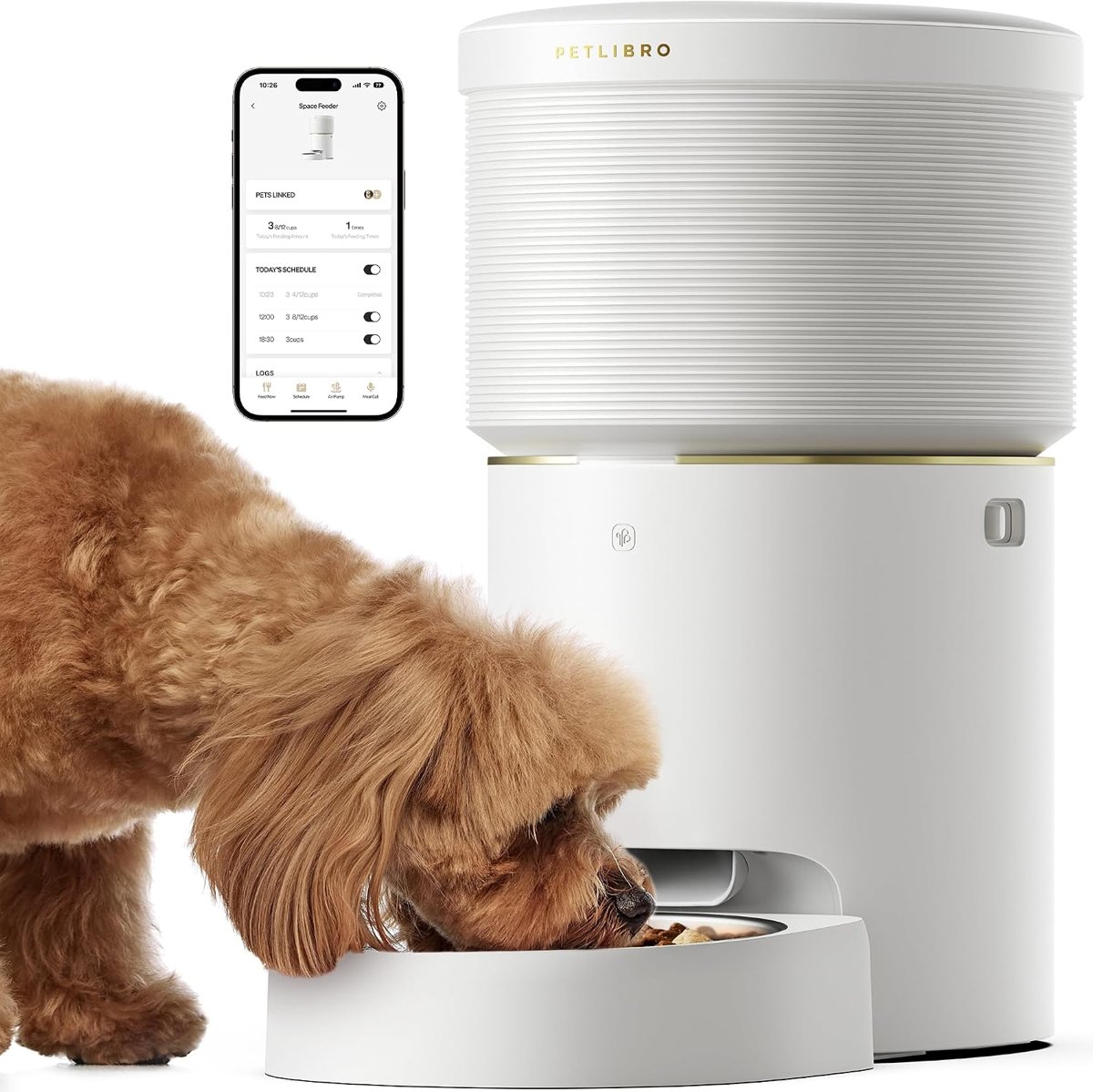
The 5G Wi-Fi connection means I can adjust feeding times from my phone without being on the same network. I was skeptical about the app at first — most smart pet products have terrible apps — but PETLIBRO’s is actually usable. You set portion sizes (1-50 cups per meal), schedule up to 10 meals per day, and it logs every dispense so you can see if your dog actually ate. The vacuum-sealed hopper keeps kibble fresh for about a week, which matters if you buy food in bulk.
The one complaint: the dispenser isn’t perfectly accurate. A “1 cup” portion is actually closer to 0.9 cups. Over a day, that adds up to a slight underfeed. I compensated by setting 1.5 cups instead of 1 cup per meal and monitoring my dog’s weight. Not a dealbreaker, but something to know.
The PETLIBRO 8L is on Amazon here. Expect to pay around $130.
The Budget Option: WOPET 6L Wi-Fi Feeder
The WOPET 6L costs about half what the PETLIBRO does, and it covers the basics well. Six liters holds roughly 25 cups of food — enough for three to four days with a large dog. The Wi-Fi connectivity works fine, the app lets you schedule meals, and it records short voice clips that play before dispensing. My dog learned the sound within two days and started trotting to the kitchen when he heard it.
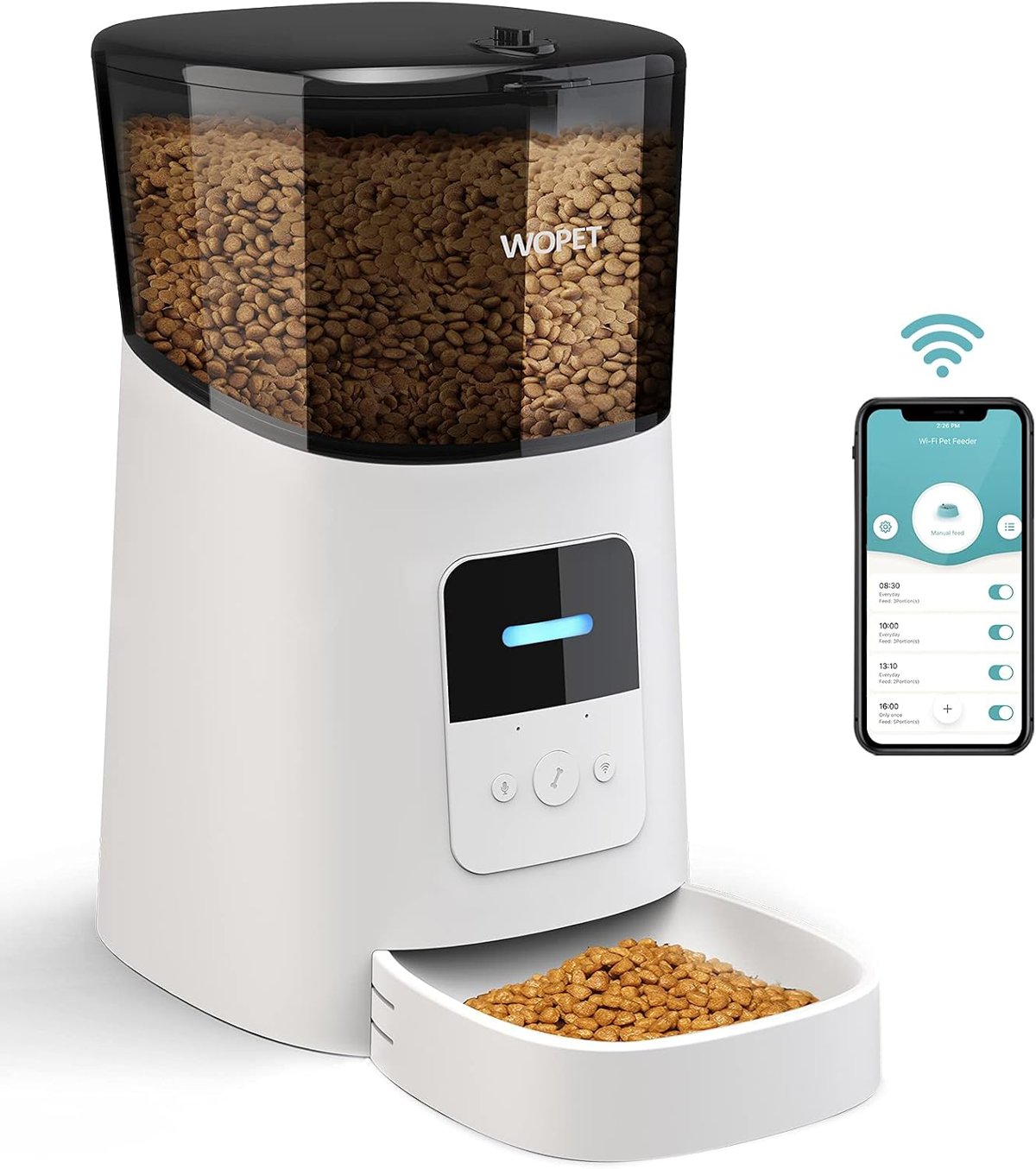
Where it falls short is the build quality. The hopper lid doesn’t seal airtight, which means kibble goes stale faster — about four days in summer before my dog started turning his nose up at it. The dispenser mechanism is also more prone to clogging with larger kibble sizes. My dog eats a mix of large and small kibble, and the WOPET jammed twice in three weeks. Each time, I had to disassemble the dispenser housing to clear it. Not hard, but annoying.
The portion control is less accurate than the PETLIBRO. A 1-cup setting actually dispenses anywhere from 0.8 to 1.2 cups depending on kibble size. If your dog is on a strict diet — like my friend’s diabetic lab — that inconsistency is a problem. For a healthy dog who just needs regular meals, it’s fine.
Check the WOPET 6L on Amazon — usually around $60-70.
The Large Breed Pick: 15L Anti-Clog Feeder
If you have a giant breed — anything over 90 pounds — you need capacity. The 15L feeder from NITYERS holds 63 cups of kibble, which is a full week of food for a large lab or shepherd. I tested it with my friend’s 110-pound malamute, who eats four cups twice a day.
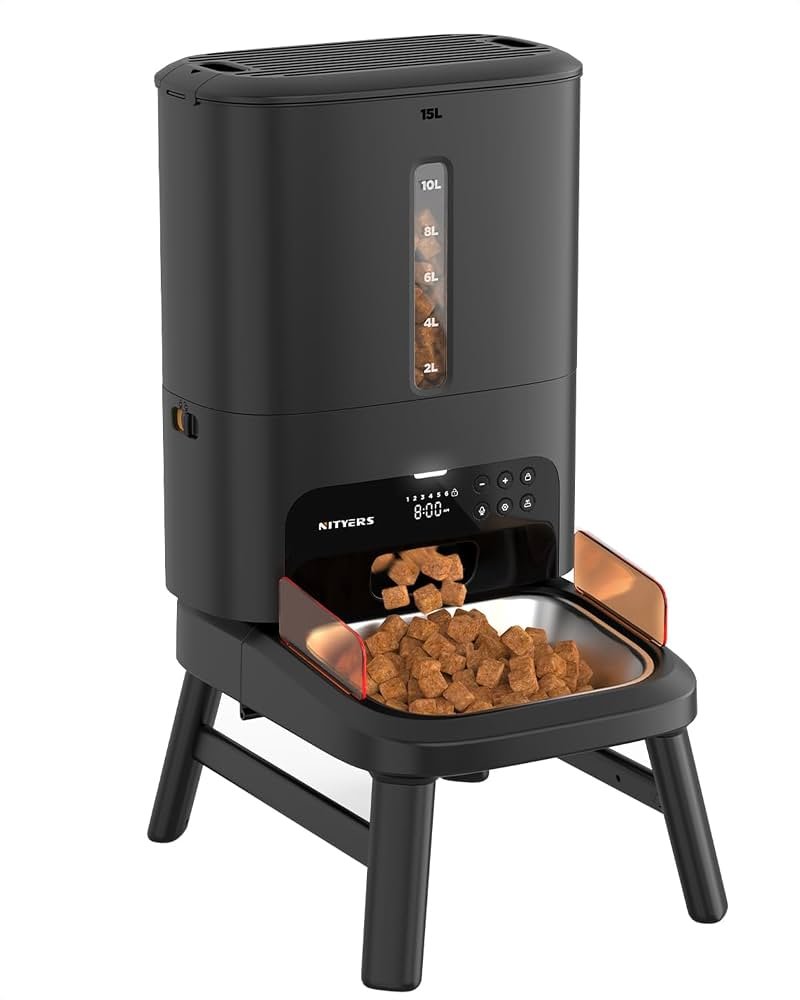
The anti-clog design is the main selling point, and it works. The dispenser uses an auger system instead of gravity, which means it handles large kibble without jamming. I ran it for three weeks without a single clog, using a mix of large-breed kibble that’s about 15mm in diameter. The PETLIBRO and WOPET both struggled with this kibble size.
The trade-off is that this feeder is big. Like, takes-up-a-corner-of-your-kitchen big. The footprint is 12 x 14 inches, and it’s 18 inches tall. If counter space is tight, look elsewhere. The app is functional but not great — it crashed twice during setup, and the scheduling interface is clunky compared to PETLIBRO’s.
At around $90, it’s the best value for large breed owners who need serious capacity.
The Camera Feeder: Nice to Have, Not Essential
The NITYERS camera feeder does everything the 15L version does, but adds a 1080p camera so you can watch your dog eat from your phone. I tested it for a week, and honestly, the camera is a gimmick for most people.
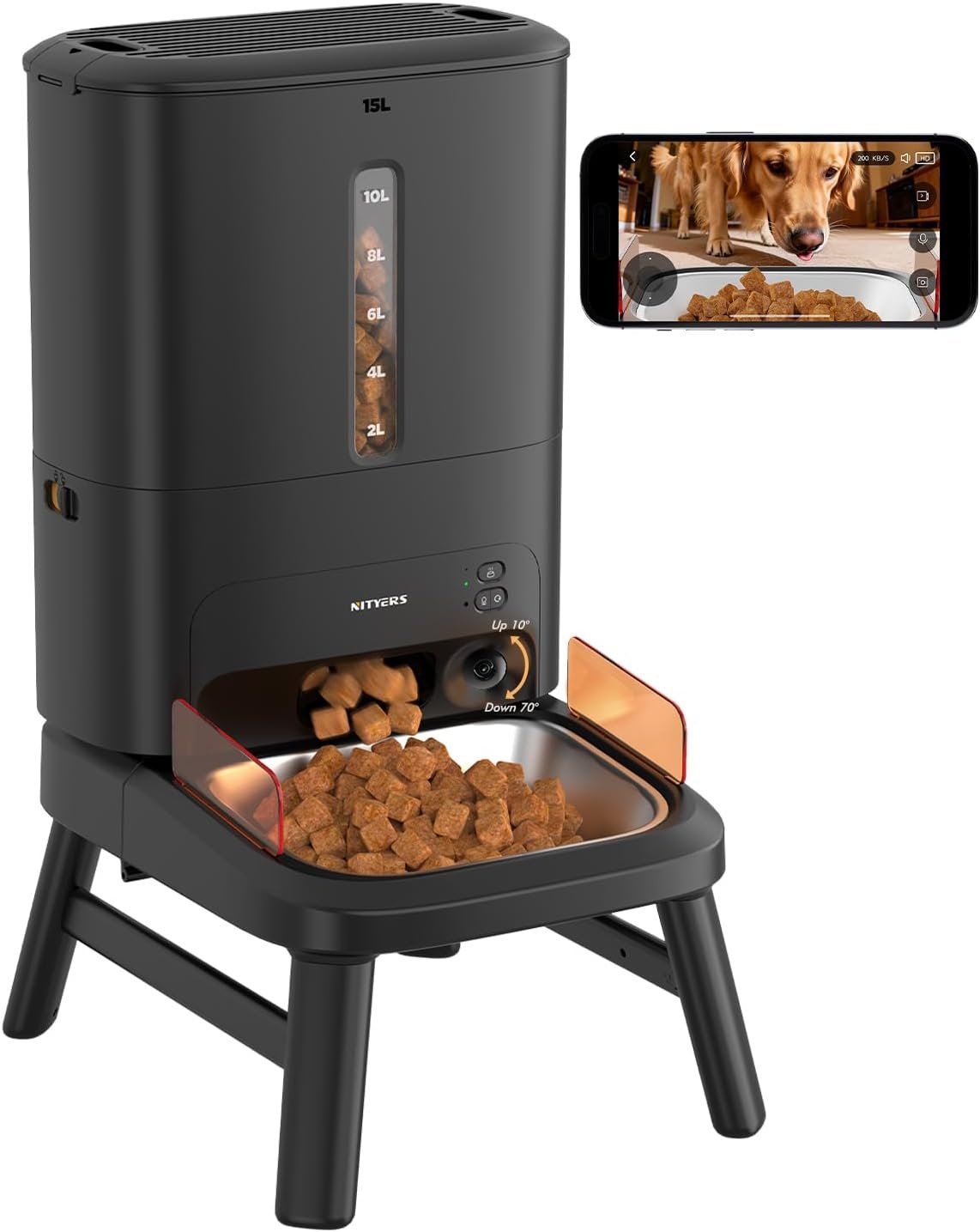
It works fine — the video is clear, the night vision is decent, and the two-way audio means you can talk to your dog while they eat. But I found I almost never checked it. My dog eats his food in about 90 seconds. Watching that on video from the office is not compelling.
Where the camera could be useful: if you’re monitoring a dog recovering from surgery, or if you have a multi-pet household where one animal might eat another’s food. For a single dog with a healthy appetite, save the $40 and skip the camera.
What I Learned About Automatic Feeding
Three weeks in, I’ve noticed real changes in my dog’s behavior. He no longer stares at me around 6 PM waiting for dinner. He doesn’t beg during my afternoon calls. His morning meals happen at 7 AM sharp, even on weekends when I’d rather sleep in. The routine is better for both of us.
One thing I didn’t expect: my dog gained two pounds in the first week. Not because the feeder over-dispensed, but because I was previously underfeeding him due to my inconsistent schedule. The consistent portions actually corrected a problem I didn’t know existed. Worth monitoring for the first couple of weeks.
The Bottom Line
The PETLIBRO 8L is the best all-around feeder if you can spend $130. It’s accurate enough, the app is genuinely good, and the vacuum-sealed hopper keeps food fresh. The WOPET 6L is the budget pick — it does the job for half the price, but expect jamming with large kibble and less accurate portions. For giant breeds, the NITYERS 15L solves the capacity problem that the others can’t touch.
Skip the camera version unless you have a specific reason to watch your dog eat. And whatever you buy, measure the first few meals by hand to calibrate the dispenser — every feeder I tested was slightly off from its stated portion size.
Disclosure: This post contains affiliate links. If you buy through one of these links, I earn a small commission at no extra cost to you. I purchased all products tested in this post with my own money.
My take: The $60-70 WOPET fixes the irregular-schedule problem for most dogs — the $130 PETLIBRO is the large-dog upgrade, and the camera tier is a skip. The feeder’s real value for the sensitive-stomach dog is consistency: same portions, same times, no 9 PM dinners.
Related guides
- Dog Allergies on a Budget — Symptoms, Treatments, and What Actually Saves Money
- Best No-Pull Harnesses for Large Dogs (We Tested 5)
- Holiday Gift Guide for Pets: Best Budget Picks Under 50 Dollars (2026)
- Back to the Office Broke My Cat's Schedule. Three Auto Feeders Fixed It.
- I Ordered Five Dog Halloween Costumes Under 20 Dollars. Two Survived the Zoomies Test.
🐾 Get Your Free Big Dog First Aid Kit Checklist
Join our newsletter and get this free printable plus weekly tips.
Frequently Asked Questions
Are automatic dog feeders worth it?
For the irregular-schedule household, yes — the author's work-from-home dog was eating at 9 PM whenever meetings ran long, and the vet flagged the connection to his vomiting. The feeder fixed the schedule immediately: consistent 7 AM and 6 PM portions, and the begging between meals stopped with the predictability.
What's the best budget automatic dog feeder?
The WOPET 6L Wi-Fi at $60-70 — the budget pick for the schedule problem. The PETLIBRO 8L at $130 is the author's kept upgrade (capacity and reliability for large dogs), the 15L anti-clog at $90 is the large-breed value pick, and the camera feeder is the 'nice to have, not essential' — skip the $40 premium for a single dog.
How much should an automatic feeder dispense per meal?
Match the measured portions to your vet's calorie guidance — the feeder's precision is the point (a measuring cup is off by up to 20%). The author's setup: two scheduled meals matching the previous manual portions, which the sensitive-stomach dog needed more than any food change.
Liked this guide? Get the next one in your inbox — the pet budget checklist is free too.
✓ You're in — check your inbox.
No spam. Unsubscribe anytime. We never share your email.