This article contains affiliate links. We may earn a commission from qualifying purchases.
Some content on this site is AI-assisted and reviewed by our editorial team.
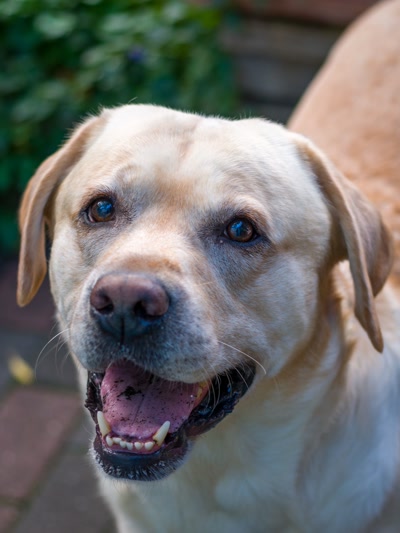
Last spring I did a 12-hour drive with my golden in the back seat, no restraint, because “she’s fine, she sleeps the whole way.” Around hour nine a deer jumped out on a state road and I braked hard from 60. She slammed into the back of my seat hard enough to knock the wind out of her — no injury, but $1,400 of emergency vet math was one soft shoulder away, and I’d been rolling the dice on every trip since she was a puppy because a good setup “seemed expensive.”
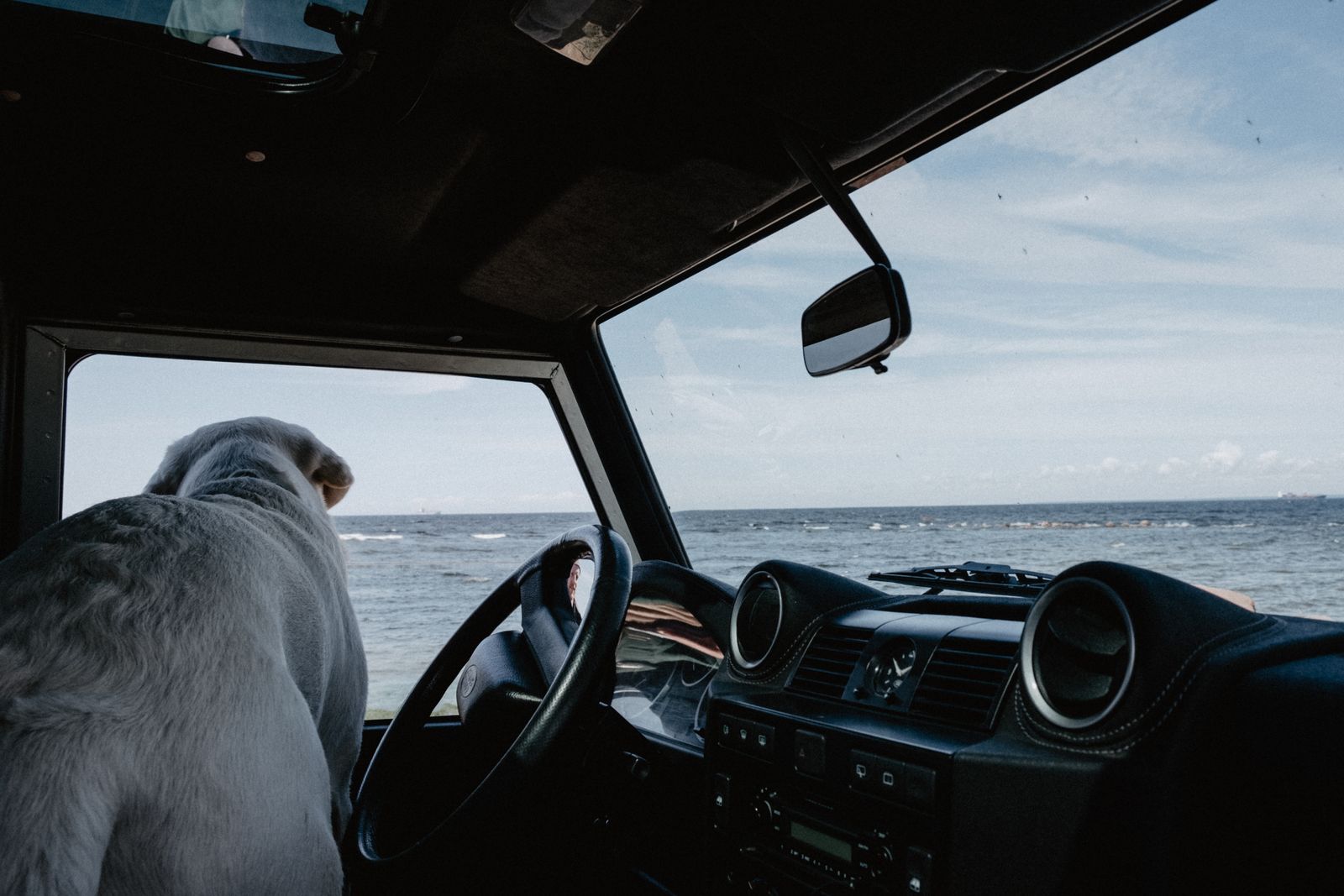
Window rides are her favorite part of any trip. They’re also the part where an unrestrained dog becomes a projectile.
I tracked prices, crash-test standards, and my own bad habits, then priced out what every level of car safety actually costs per year. The cheap answer isn’t a strap — it turns out the strap IS the expensive option when you count what it doesn’t do. Here’s the breakdown.
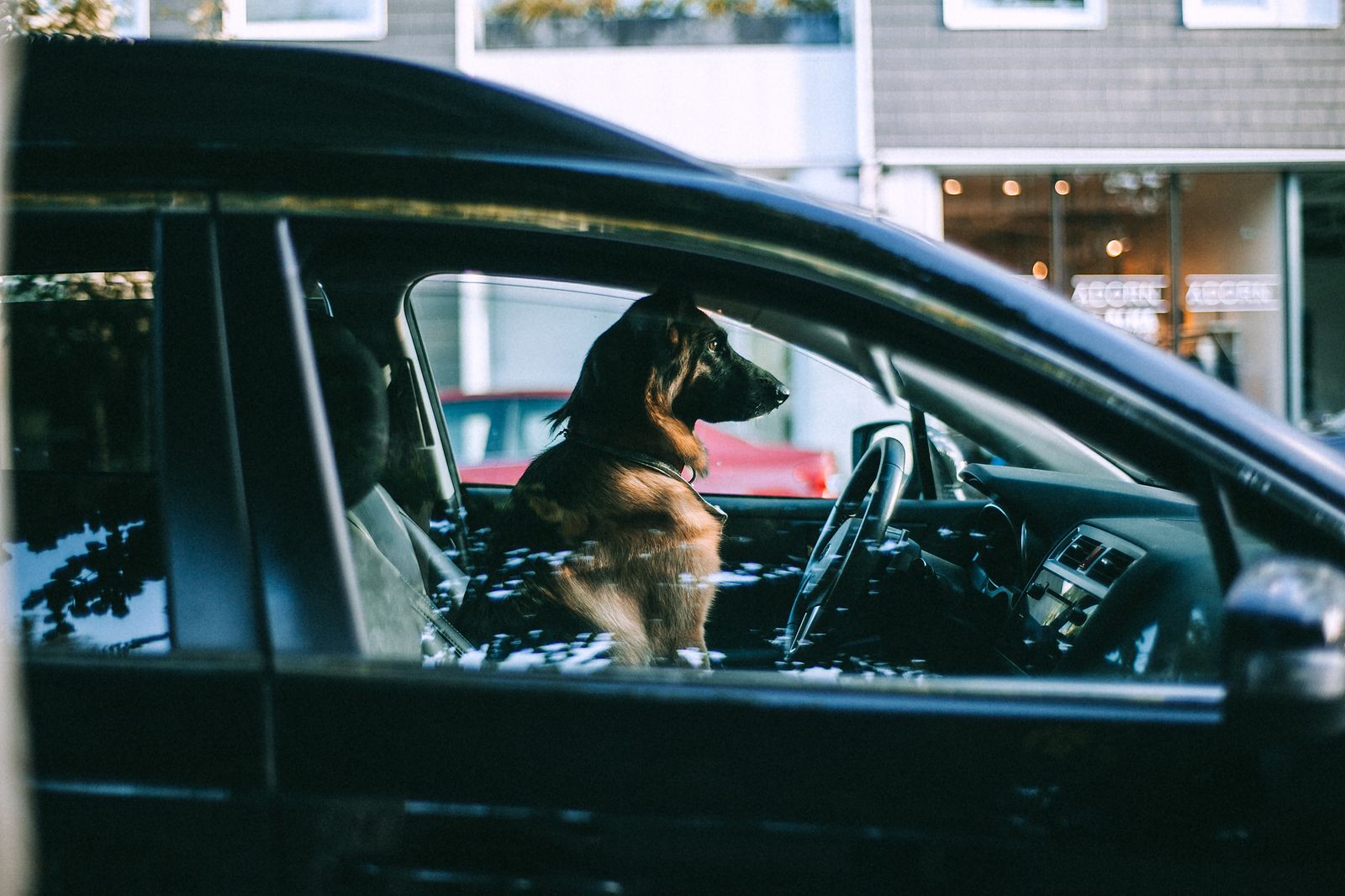
How the mess usually starts — she’s driving, apparently.
The Cost of the Problem
An unrestrained 75-pound dog in a 50-mph crash hits the front of the cabin with roughly 15 times its body weight behind it. That’s not a pet-safety blog statistic I’m quoting for drama — it’s basic physics, and my hour-nine brake check was a live-fire demo at 30 mph.
The real bill looks like this: an emergency visit after a hard-stop injury runs $800 to $2,000 (my reader emails after the ramp story all had their own numbers). Distracted-driving tickets with a dog on your lap run $100+ in a dozen states. And the insurance math is ugly: some carriers have started attaching “unsecured pet” riders or denying parts of claims when a loose dog contributed to a crash.
Against that: every option below is a one-time buy under $130 that lasts the dog’s whole riding career. The most expensive option here is still less than 10% of one emergency visit.
Kurgo Tru-Fit Smart Harness — The Crash-Tested Default
Kurgo Tru-Fit Smart Harness is about $39 in size medium, and it’s the piece I’d buy again tomorrow for my golden. It doubles as a walking harness (one less thing in the trunk), it’s crash-tested, and the seatbelt tether clips into the car’s own belt receiver — no headrest fiddling, no velcro. My dog settled in ten minutes the first time she wore it, because a snug harness reads as “car harness = car ride = good” after about the third trip.
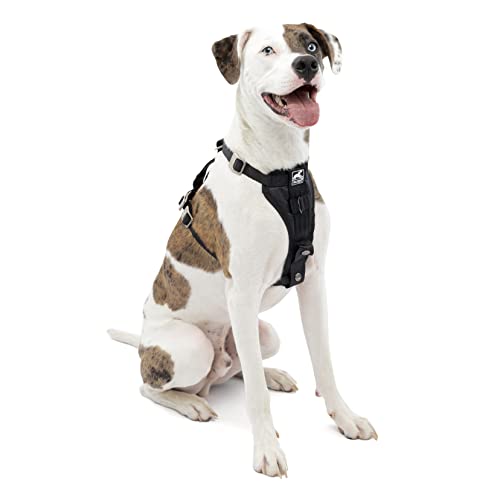
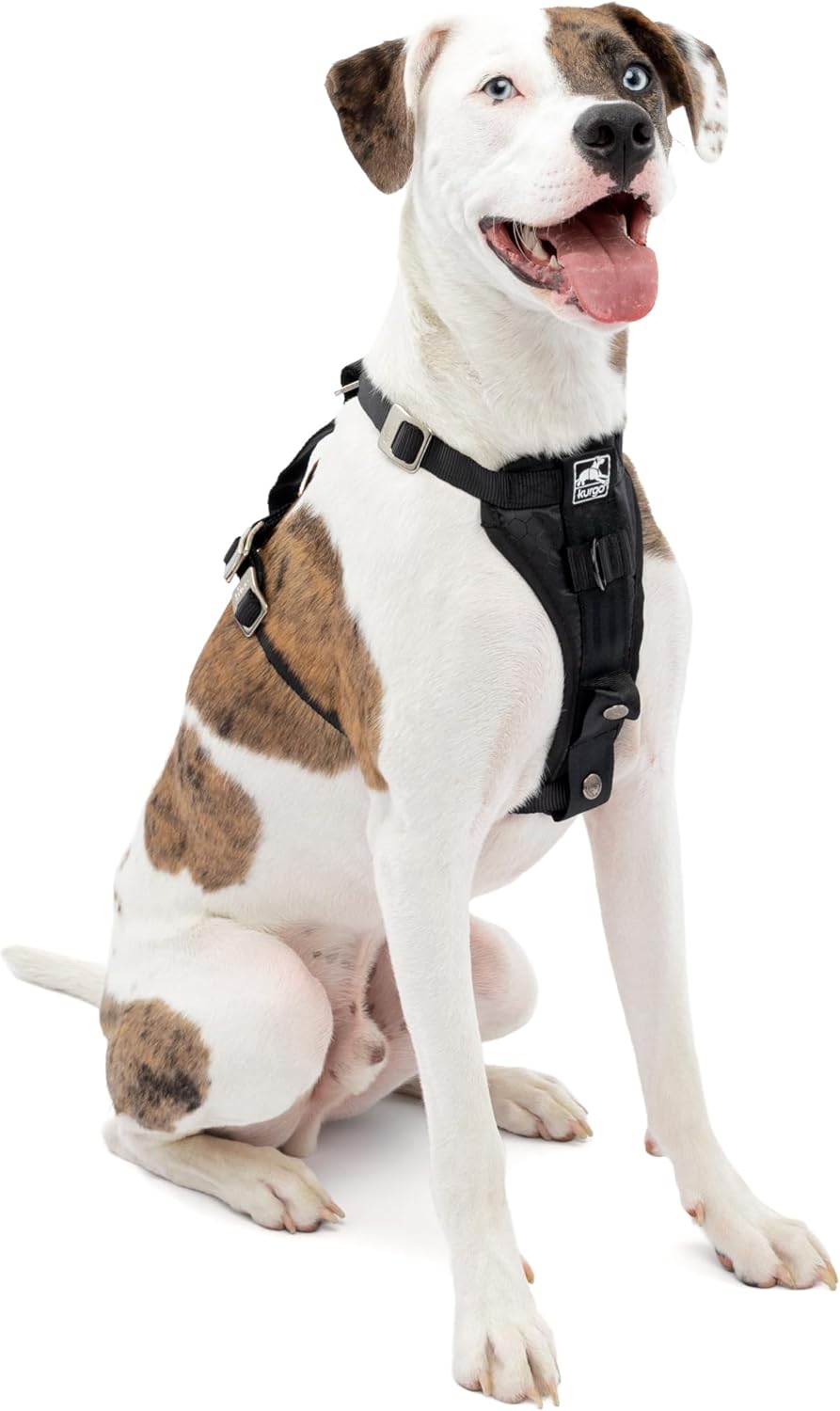
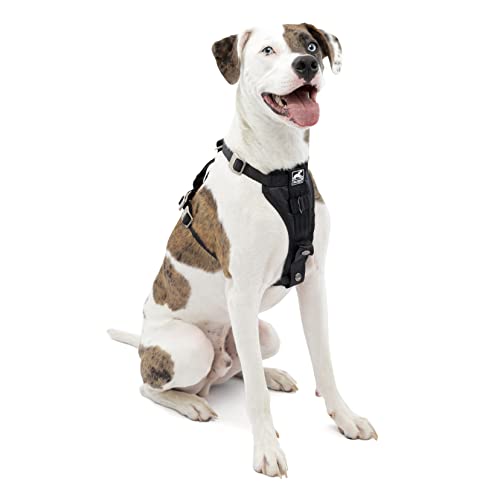
Cons: sizing runs snug — measure the chest, not the weight chart. And the tether is sold separately on some listings, so the “buy it once” math has a footnote: confirm the tether is in the box price you’re looking at. Over three years of use the per-year cost of the full setup is about $13.
My take: The single best money-per-safety purchase in this whole category, and the reason my “cheap option” section below fails my math.
EzyDog Zero Shock Click — The Comfort Tether
If your dog is fine in a harness and you just need a smart tether, EzyDog’s Zero Shock Click seat belt is about $28 and it’s the one worth the premium over the $10 clones. The bungee section absorbs the jolts of hard cornering, which my older dog visibly appreciated on our first trip with it (she stopped doing the braced-legs thing), and the same belt material as an actual car seat belt doesn’t fray into fuzz after a month.
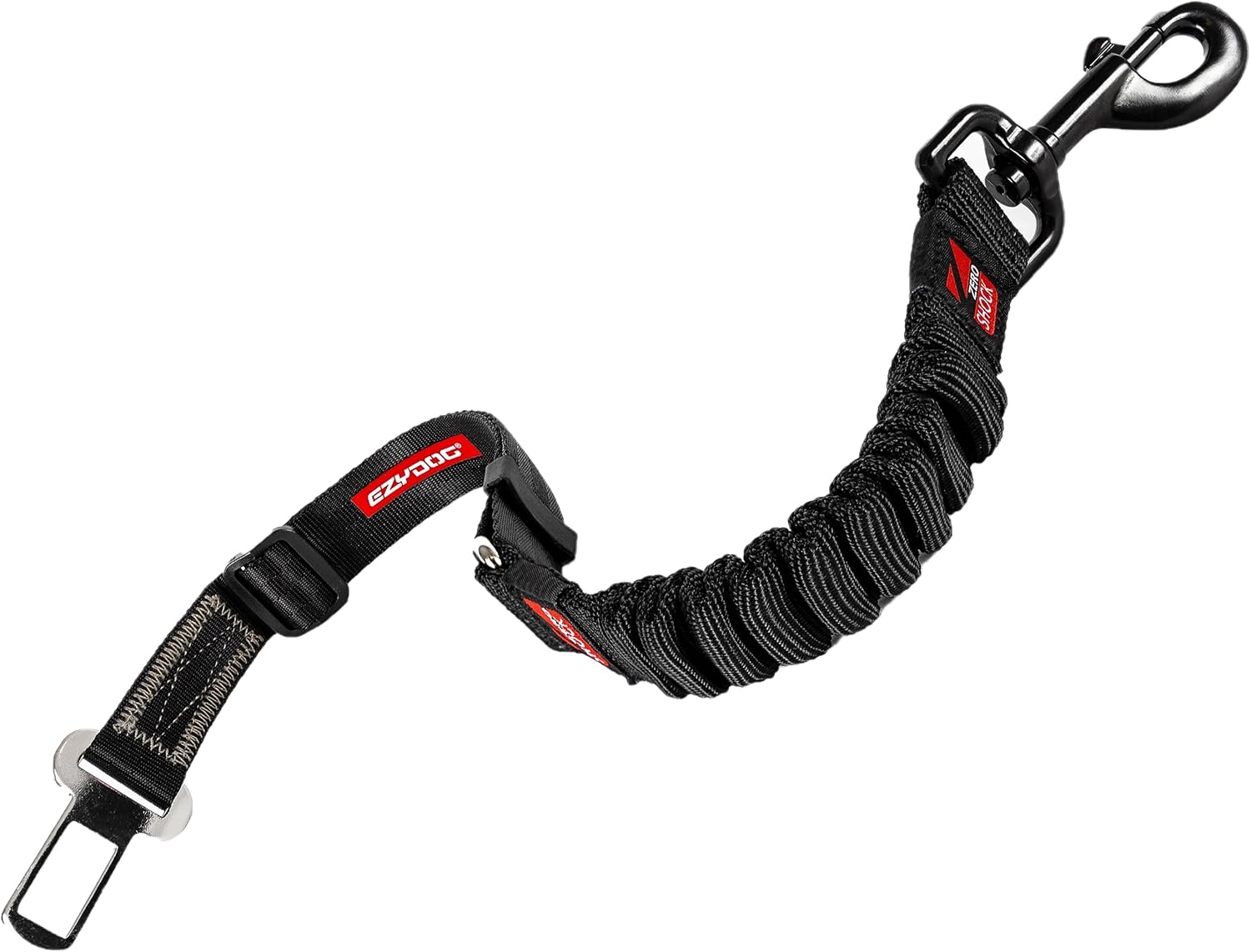
Cons: it’s a tether, not a harness — pair it with the Tru-Fit above or it’s clipping a rope to a collar, which is how neck injuries happen in exactly the crash we’re trying to prevent.
My take: The comfort upgrade for dogs who ride weekly — the bungee washes out hard-stop jolts that a rigid tether transmits.
EzyDog Drive Harness — The Certified Option
EzyDog Drive harness, about $125, is the piece built for the actual deer moment: it’s crash-tested and certified to US FMVSS 213, the same standard child car seats are held to, with a structural chest plate that spreads the load across the whole chest. The con besides the price: it’s bulky enough that my dog gives me a look when I pull it out — this is a driving harness, not a walking one, and it’s overkill for a 20-minute vet run. Worth it for the highway road-trip dogs who ride 500+ miles a year.
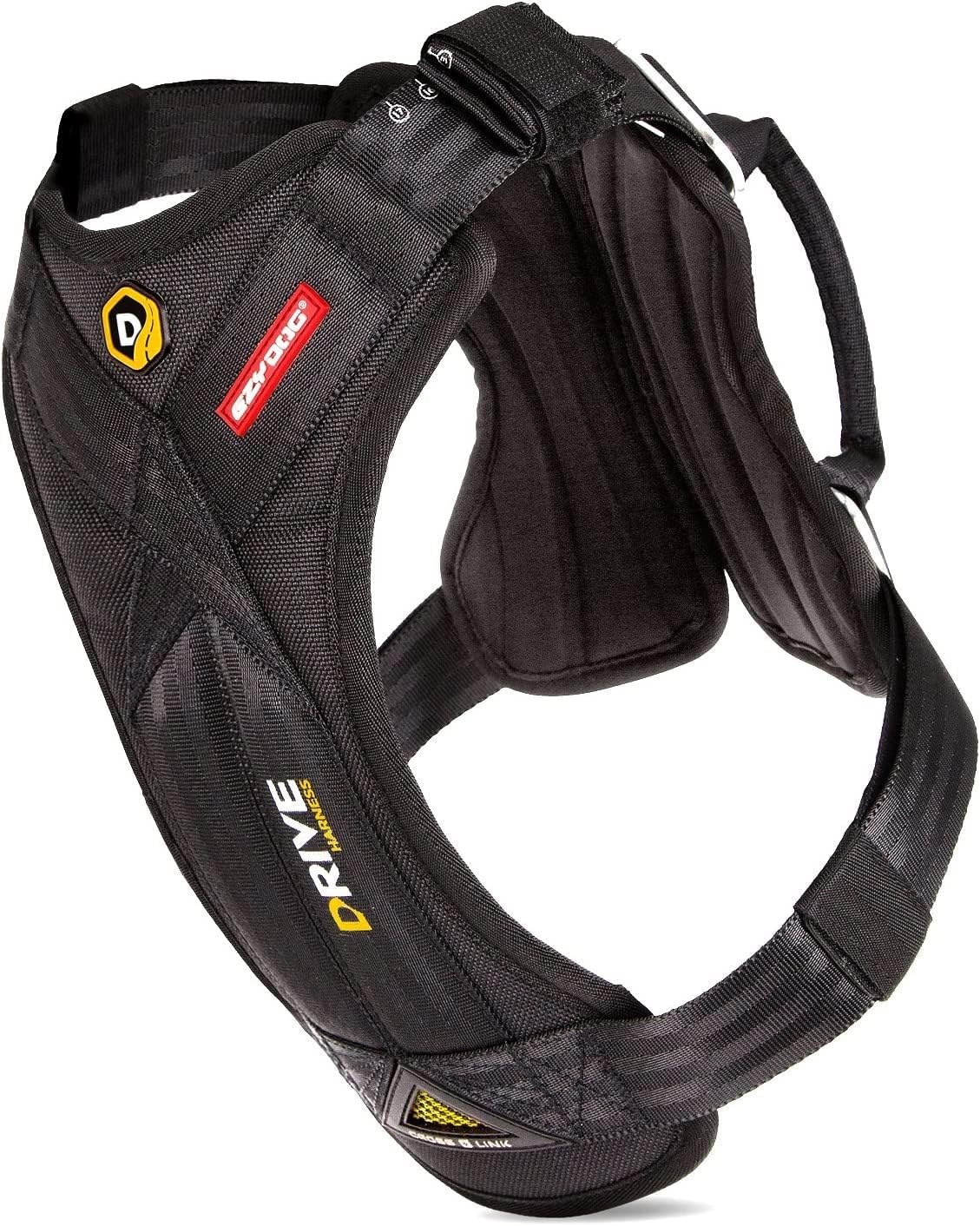
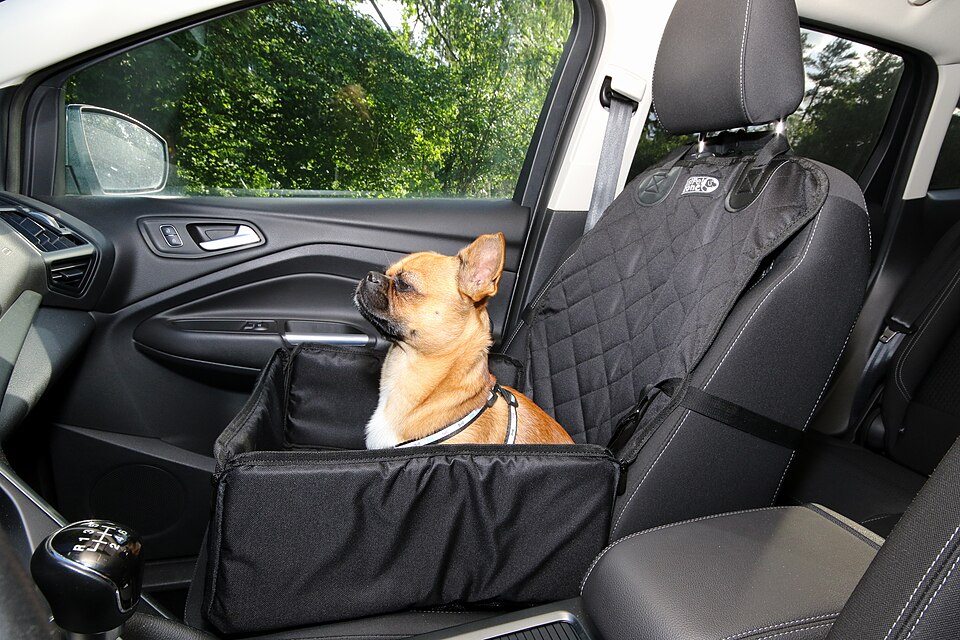
Photo: Jernej Furman, CC BY 2.0, via Wikimedia Commons — the harness-and-tether pairing as it should look: clipped to structure, not the collar.
My take: For big dogs who ride serious highway mileage, this is the one that actually does the crash-scene math the $10 straps pretend to do.
The $10 Strap — Why I Talk People Out of It
Two-pack bungee seat belt straps run about $10 and they’re what I bought first, which is exactly how I learned the lesson. They prevent the “dog in my lap while I shift” problem — genuinely — and that’s where the value stops. They clip to a collar, not a harness; they’ve never been crash-tested by anyone; and the “bungee” is a spring that stores the crash energy it’s supposed to stop. They lull you into thinking the box is checked, and the box is not checked.
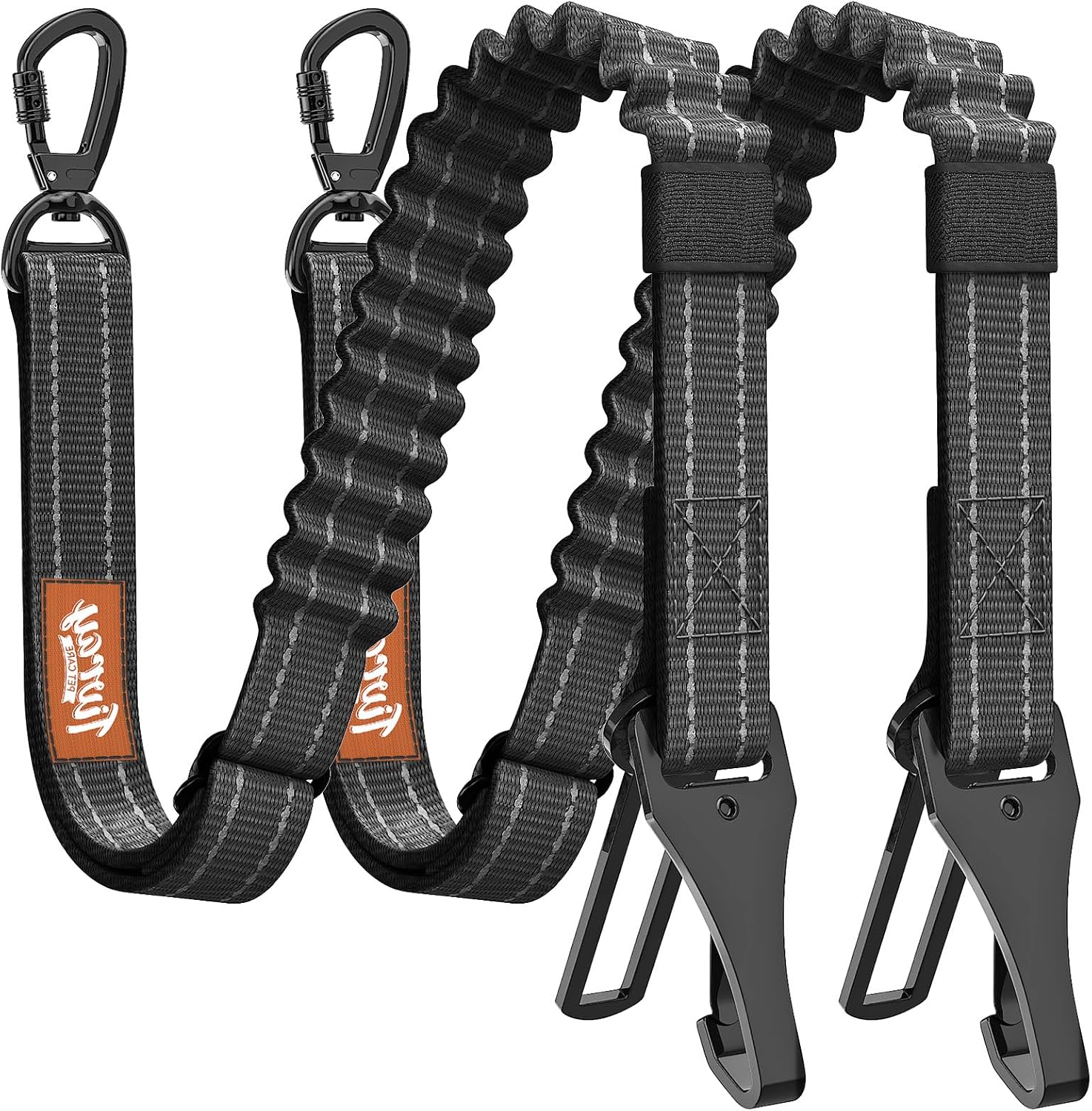
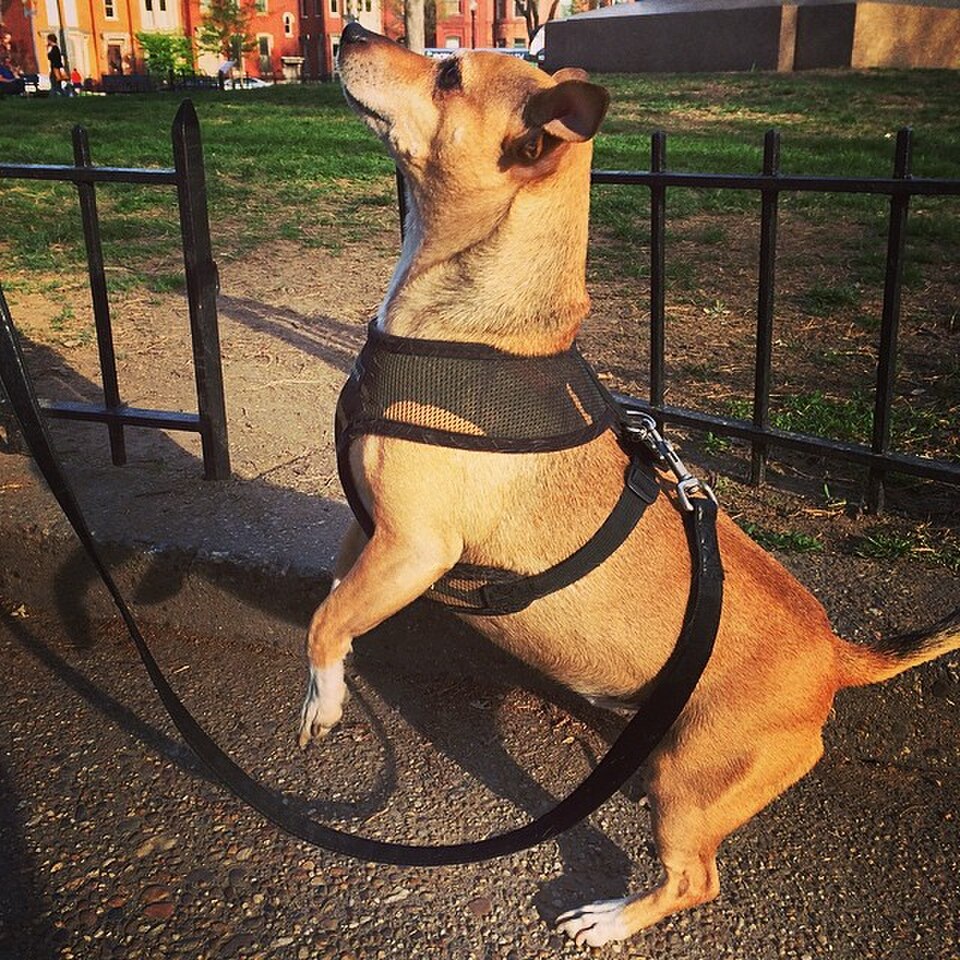
Photo: Ted Eytan, CC BY-SA 2.0, via Wikimedia Commons.
My take: Fine as a back-seat divider for a calm small dog, indefensible as “safety gear” for anything over 30 pounds.
Features That Actually Matter (And Ones That Don’t)
Real crash testing — matters. Look for either a named standard (FMVSS 213, ECE R17) or the brand actually publishing test data. “Crash tested” language on a card without a standard or a video usually means one marketing guy watched a sled test once.
Chest-plate load spread — matters. A crash transfers force through whatever’s smallest: the chest plate spreads it, a strap gathers it. Small dogs in a proper booster or carrier get that spread for free; 60-pound dogs need the plate.
Tether-plus-harness pairs — matter. Clip hardware to structure, not to a collar. This one rule is the whole difference between the $39 and $10 options above.
“Reflective bungee” and cupholders — don’t. None of it does anything in a 30-mph event.
The Annual Cost Comparison
- Nothing (the default): $0/year — until the one brake check that isn’t a parking lot, then $800–$2,000 and a story you don’t tell casually.
- $10 straps: ~$5/year over a two-year life, and they check the wrong box — collar-clip failures are the documented failure mode.
- Tru-Fit + Zero Shock Click: about $67 up front, ~$13/year amortized over five years, crash-tested hardware on both ends.
- Tru-Fit + EzyDog Drive harness (my pick for a big dog who rides weekly): about $164 up front, ~$33/year over the harness’s five-year life. About 2.3% of one average emergency-visit bill, paid once, for the version that actually has a certification behind it.
What that money buys every time you start the car: the dog stays behind the seat line in a hard stop, and I stop doing shoulder checks to confirm she’s in the back at all. That’s the whole pitch. It’s the rare category where the honest cost math argues against the budget pick instead of for it.
Keep reading: the slow-feeder bowl that fixed the 40-second dinner is the other under-$20 fix I’d recommend to anyone, and the $130 vet bill a $10 jar prevented is every reason this site does the math out loud.
ThriftyPaw is reader-supported. As an Amazon Associate, I earn from qualifying purchases. That means if you buy through one of the links above, I get a small commission at no extra cost to you. I only recommend products I’ve actually used with my own dog.
🐾 Get Your Free Big Dog First Aid Kit Checklist
Join our newsletter and get this free printable plus weekly tips.
Price Check
Prices verified via our product tracker. Updated Sep 27.
| Kurgo Enhanced Strength Tru-Fit Smart Harness, Black, Medi | $35.00 | 4.4★ (7,845) |
| EzyDog Zero Shock Click - Bungee Dog Seat Belt Car Restrai | $28.00 | 4.5★ |
| EzyDog Drive Dog Car Harness, Crash Tested and Certified - | $125.00 | 4.2★ (1,044) |
| Tivray 2Pcs Dog Seat Belt, Dog Car Seat Belt Bungee for Pe | $9.99 | 4.3★ (227) |
As an Amazon Associate we earn from qualifying purchases.