

This article contains affiliate links. We may earn a commission from qualifying purchases.
Some content on this site is AI-assisted and reviewed by our editorial team.
Summer means swimming, and for many dogs, water is pure joy. But water also hides dangers that can turn a fun afternoon into an emergency vet visit costing hundreds or thousands of dollars. Drowning, water intoxication, ear infections, blue-green algae toxicity, and saltwater poisoning are all risks that most owners never think about until it is too late. This guide covers how to keep your dog safe around pools, lakes, rivers, and oceans. A portable dog water bottle prevents dehydration and saltwater ingestion, and ear cleaning solution after swimming prevents costly ear infections. — and how to do it on a budget.
Can All Dogs Swim? (The Short Answer: No)
The idea that all dogs instinctively know how to swim is a myth. Some breeds are natural swimmers (Labrador Retrievers, Golden Retrievers, Portuguese Water Dogs, Newfoundlands), but many breeds are physically unsuited for swimming and can drown quickly:
- Bulldogs, Pugs, French Bulldogs — brachycephalic (flat-faced) breeds struggle to keep their airways above water. Their heavy heads and short snouts make swimming dangerous.
- Dachshunds, Corgis, Basset Hounds — short legs and long bodies make paddling inefficient. They tire quickly.
- Boston Terriers, Boxers — short muzzles and dense bodies make buoyancy difficult.
- Greyhounds, Whippets — low body fat means poor buoyancy. They can swim but sink easily.
Never throw a dog into water to “teach” them to swim. This can cause panic, aspiration of water, and drowning. Introduce water gradually in shallow areas where your dog can touch the bottom.
Pool Safety for Dogs (Budget Tips)
Fencing and Barriers
If you have a pool, the most important safety measure is a barrier. A pool fence costs 200-500 dollars but prevents drowning. If a permanent fence is not in the budget:
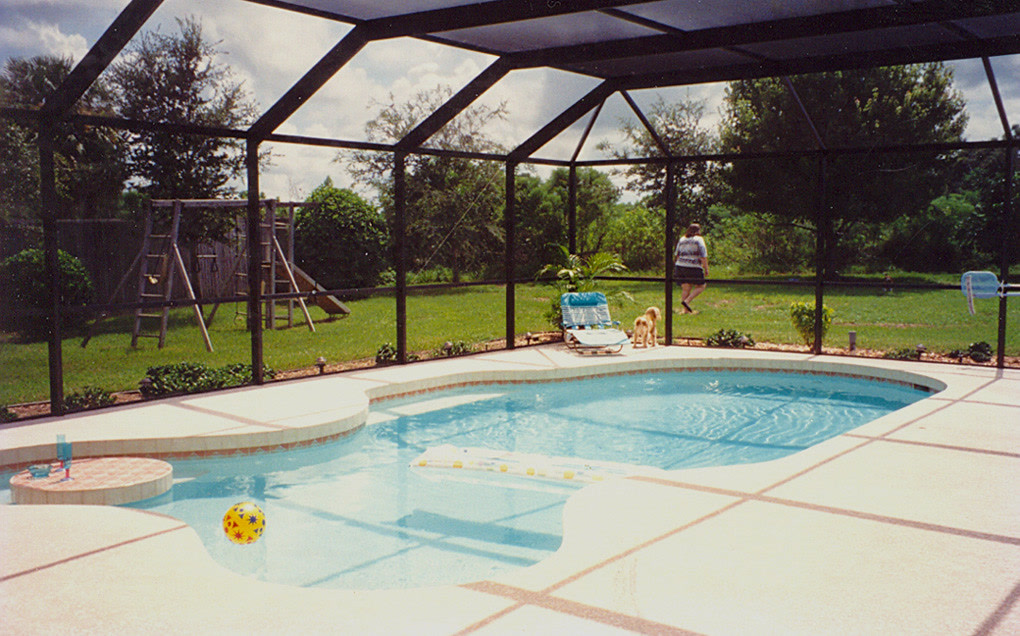
- Pool safety cover — a mesh safety cover that supports a dog’s weight costs 100-300 dollars. It is cheaper than a fence and prevents accidental falls.
- Alarm system — surface wave alarms (30-80 dollars) alert you if something falls into the pool. Not a substitute for a barrier, but an additional layer.
- Remove pool steps or ladders — if your pool has removable steps, take them out when the pool is not in use. Dogs cannot climb out without steps.
Teach Your Dog Pool Exits
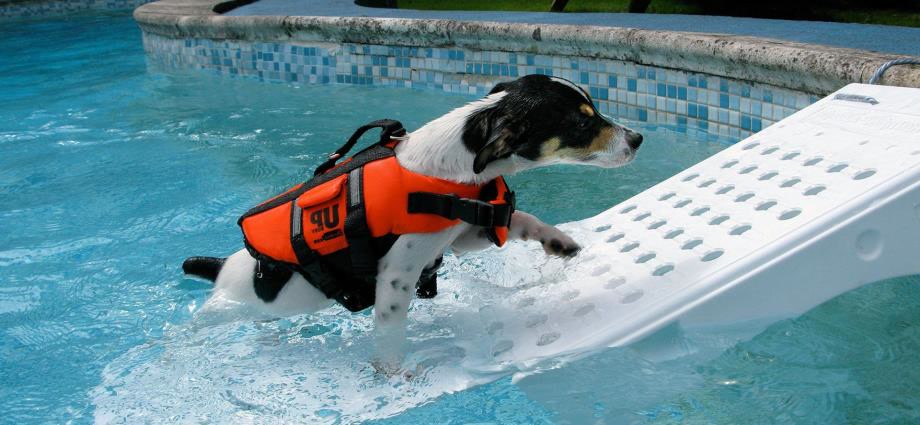
If your dog will be around a pool, teach them where the steps are. Practice entering and exiting from the steps repeatedly until they can find them without guidance. This is the single most important thing you can do — most pool drownings happen because the dog can swim but cannot find the exit.
If your pool does not have steps your dog can use, consider a pool ramp (50-150 dollars). The Skamper-Ramp (around 50 dollars) is a budget option that attaches to the pool deck and gives dogs an exit point.
Pool Chemicals and Dogs
Chlorinated pool water is generally safe for dogs to swim in, but:
- Rinse your dog with fresh water after swimming to remove chlorine, which can dry skin and irritate eyes.
- Do not let your dog drink pool water. The chlorine and algaecides can cause stomach upset.
- Saltwater pools are safer for dogs than traditionally chlorinated pools, but still rinse after swimming.
- Keep pool chemical containers sealed and stored out of reach. Pool chemicals are highly toxic if ingested.
Natural Water Safety (Lakes, Rivers, Ponds)
Blue-Green Algae (Cyanobacteria) — Lethal and Free to Avoid
Blue-green algae blooms in warm, stagnant water during summer and early fall. The toxins produced by cyanobacteria are among the most potent natural poisons known. A dog that swallows even a small amount of water containing blue-green algae can die within hours.
Symptoms of blue-green algae poisoning:
- Vomiting and diarrhea within 30-60 minutes of exposure
- Weakness, stumbling, collapse
- Seizures
- Jead twitching, muscle rigidity
- Yellowing of eyes and gums (liver failure)
If you suspect blue-green algae exposure, go to an emergency vet immediately. There is no antidote — treatment is supportive and often unsuccessful. Prevention is the only reliable protection.
How to avoid blue-green algae:
- Do not let your dog swim in or drink from water that looks green, has a pea-soup appearance, or has visible scum on the surface.
- Check local water quality advisories before visiting lakes or ponds.
- Avoid stagnant water, especially during hot weather.
- Bring fresh water for your dog to drink so they are not tempted to drink from lakes or ponds.
Currents and Water Depth
Rivers and oceans have currents that can overwhelm even strong swimming dogs:
- Do not let your dog swim in rivers with fast currents. Even a moderate current can exhaust a dog quickly.
- At the beach, check for rip currents. If the water looks rough, keep your dog on a leash near the water line.
- Use a canine life jacket (15-40 dollars) for any dog in open water. This is the cheapest insurance against drowning you can buy.
- Do not throw toys into fast-moving water for your dog to retrieve. The instinct to chase can override their judgment about safety.
Water Intoxication (Hyponatremia)
Water intoxication is a rare but fatal condition that occurs when a dog swallows too much water while swimming or playing. The excess water dilutes sodium in the blood, causing brain swelling. It can happen in pools, lakes, or any body of water.
Risk factors:
- Dogs that dive underwater to retrieve toys
- Dogs that bite at the water surface (sprinklers, hoses, waves)
- Small dogs (less body mass means less water needed to cause toxicity)
- Extended swimming sessions (over 30 minutes of continuous water play)
Symptoms of water intoxication:
- Lethargy, loss of coordination
- Vomiting
- Bloating
- Dilated pupils
- Seizures and coma in severe cases
Prevention: Take breaks every 15-20 minutes during water play. Give your dog time on dry land. Do not let them bite at water continuously. If your dog loves diving for toys, use floating toys instead of sinking ones to reduce water ingestion.
Ocean and Beach Safety
Saltwater Poisoning
Drinking seawater causes salt toxicity. The high salt concentration draws water out of cells, causing dehydration and neurological symptoms. Symptoms include vomiting, diarrhea, lethargy, and seizures. If your dog drinks seawater, offer fresh water immediately and monitor for symptoms.

Always bring fresh water to the beach (a gallon per dog per hour is a good guideline). Offer it frequently so your dog is not tempted to drink seawater.
Hot Sand
Sand can reach 130+ degrees on sunny summer days. If it is too hot for your bare feet, it is too hot for your dog’s paw pads. Walk on wet sand near the water line, or bring dog booties (8-15 dollars) for hot sand crossings.
Jellyfish and Sharp Objects
Check the sand and shallow water for jellyfish, broken shells, and fishing hooks before letting your dog run. Jellyfish stings cause immediate pain and allergic reactions. Stepping on a fishing hook requires emergency vet care (sedation and hook removal, 200-500 dollars).
Dog water shoes (10-20 dollars) protect paw pads from sharp shells and hot sand. They are cheaper than one vet visit for a cut paw.
Ear Infections from Water (Prevention Costs Under 5 Dollars)
Dogs that swim regularly are prone to ear infections. Water trapped in the ear canal creates a warm, moist environment where bacteria and yeast thrive. Floppy-eared breeds (Labs, Goldens, Spaniels) are especially susceptible.
One ear infection costs 100-300 dollars at the vet (exam, ear cytology, medication). Prevention costs under 5 dollars per month:
- Dry ears after every swim — use a clean towel or cotton ball to gently dry the outer ear canal. Free.
- Use an ear drying solution — veterinary ear drying solutions (8-15 dollars per bottle, lasts months) help evaporate trapped moisture. Apply 2-3 drops in each ear after swimming.
- Avoid deep ear cleaning with cotton swabs — swabs push debris deeper and can damage the eardrum. Only clean the outer ear you can see.
If your dog shakes their head frequently, scratches at their ears, or has discharge or odor from the ears after swimming, see a vet. Ear infections worsen quickly and can rupture the eardrum if left untreated.
After-Swim Care Checklist (All Free or Under 10 Dollars)
- Rinse with fresh water — remove chlorine, salt, algae, and debris from the coat. Free.
- Dry ears thoroughly — cotton ball or towel in the outer ear canal. Free.
- Check for ticks — if you swam in a natural body of water, check your dog for ticks afterward. Ticks wait in vegetation near shorelines. Free.
- Check paws for cuts — shells, rocks, and debris can cut paw pads. Clean small cuts with mild soap and water. Free.
- Offer fresh water — prevent your dog from drinking pool or lake water by offering clean water after swimming. Free.
- Monitor for 24 hours — watch for lethargy, vomiting, diarrhea, or loss of appetite. These can indicate water intoxication, algae exposure, or saltwater toxicity. Early treatment saves lives and money.
Dog Life Jackets: What to Look For (Under 40 Dollars)
A canine life jacket is essential for open water swimming, boating, or weak swimmers. Key features:
- Handle on the back — allows you to lift your dog out of the water. Critical for safety.
- Bright color — orange, yellow, or red for visibility.
- Chin float — keeps the head above water, especially important for brachycephalic breeds.
- Adjustable straps — secure fit prevents the jacket from slipping off.
- Reflective strips — visibility in low light.
Budget options under 40 dollars: Outward Hound Granby (25-35 dollars), Paws Aboard (20-30 dollars), or the Kurgo Surf N’ Turf (35-40 dollars). All provide adequate buoyancy for most dogs. Spend more (50-80 dollars) for large breeds over 80 pounds or for boating where extra buoyancy is needed.
The Bottom Line
Water safety for dogs is mostly about awareness, not equipment. The most important measures cost nothing: teach pool exits, avoid stagnant water with algae, take breaks during water play, and bring fresh water to the beach. A 30-dollar life jacket and a 10-dollar pair of water shoes are the only real investments needed. Compare that to the cost of one emergency — 500 dollars for a near-drowning, 1,000+ dollars for algae toxicity, 200-300 dollars for an ear infection — and prevention is the obvious budget choice. Enjoy the water with your dog this summer, but know the risks and prepare for them.
Last updated: July 2026 | By ThriftyPaw | Prices and availability subject to change
ThriftyPaw is reader-supported. As an Amazon Associate, we earn from qualifying purchases. This means we may earn a small commission when you buy through links on this site at no additional cost to you. We only recommend products we genuinely believe in. Thank you for supporting ThriftyPaw.
🐾 Get Your Free Big Dog First Aid Kit Checklist
Join our newsletter and get this free printable plus weekly tips.