
This article contains affiliate links. We may earn a commission from qualifying purchases.
Some content on this site is AI-assisted and reviewed by our editorial team.
Summer heat is dangerous for dogs. Dogs do not sweat like humans — they cool themselves primarily through panting, which is far less efficient. When the air temperature approaches your dog’s body temperature (101-102.5 degrees), panting stops working. Heatstroke can kill a dog in 15 minutes. But keeping your dog cool does not require expensive equipment. This guide covers the best budget cooling products under 25 dollars, free cooling strategies, and the signs of heatstroke every owner needs to know.
How Dogs Cool Themselves (And Why It Is Not Enough)
Dogs have four cooling mechanisms, none of which are as effective as human sweating:
- Panting — evaporates moisture from the tongue, mouth, and upper respiratory tract. This is the primary cooling method but becomes ineffective above 90 degrees ambient temperature.
- Vasodilation — blood vessels in the face and ears dilate to release heat. You may notice your dog’s ears feel hot and look red.
- Conduction — lying on cool surfaces (tile, concrete, grass) transfers heat away from the body.
- Minimal sweating — dogs have a few sweat glands in their paw pads, but they contribute very little to cooling.
Because panting is the primary cooling method, anything that impairs breathing impairs cooling. Brachycephalic (flat-faced) breeds — Bulldogs, Pugs, French Bulldogs, Boston Terriers — are at extremely high risk for heatstroke because their airway structure makes panting inefficient. These dogs can develop heatstroke at 80 degrees with moderate exercise.
Free Cooling Strategies (Cost: 0 Dollars)
1. Timing Your Walks
Walk early morning (before 8 AM) and late evening (after 8 PM) during summer. Avoid midday walks entirely when the temperature is above 80 degrees. Check the pavement temperature before walking — place the back of your hand on the pavement for 5 seconds. If it is too hot for your hand, it is too hot for your dog’s paws. Pavement can be 40-60 degrees hotter than air temperature in direct sun.
2. Shade and Water Access
If your dog is outside, ensure they have access to shade at all times. Remember that shade moves throughout the day — a spot that is shaded at noon may be in full sun by 3 PM. Provide multiple water stations in shaded locations. Add ice cubes to water bowls to keep water cool longer.
3. The Wet Towel Method
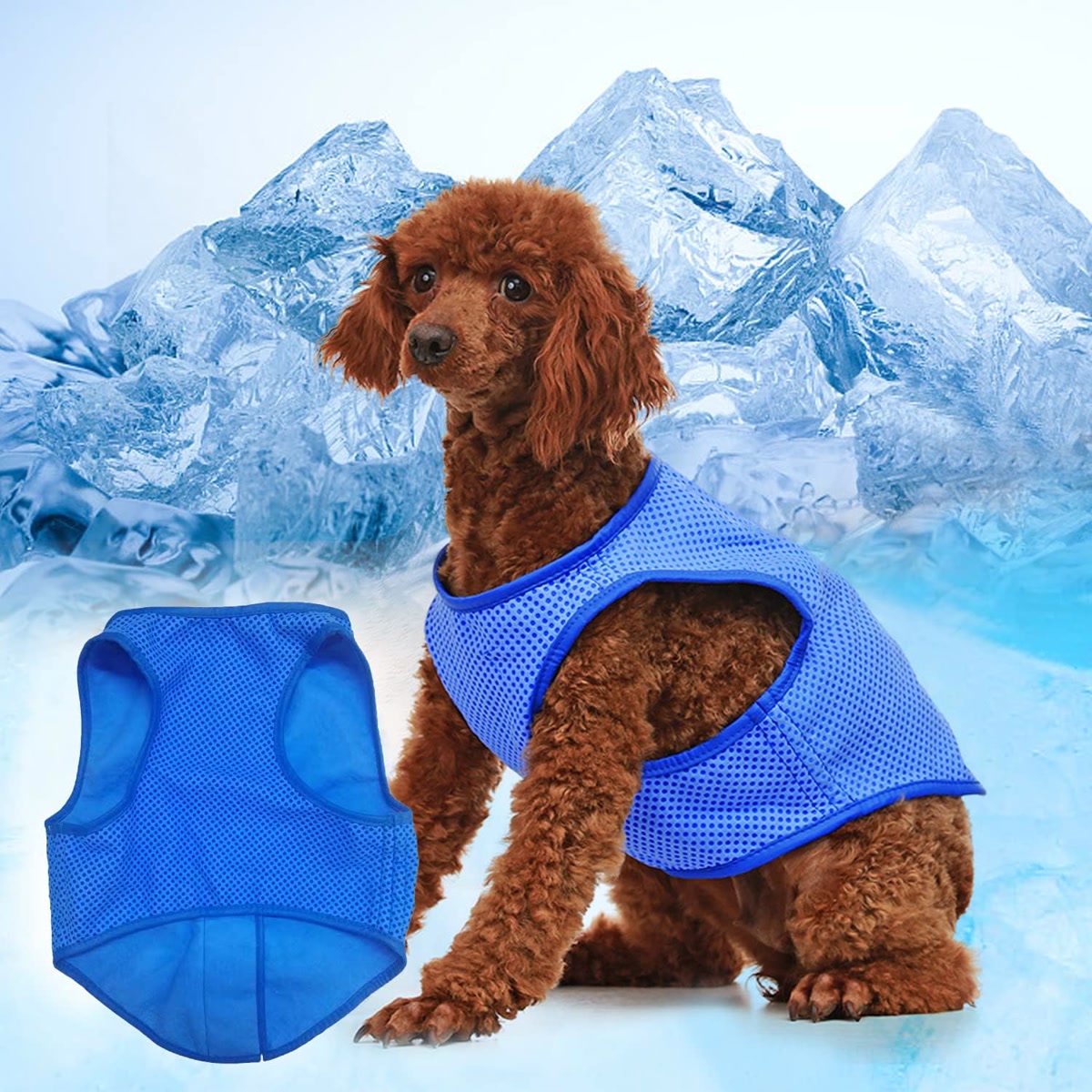
Soak a towel in cool water, wring it out so it is damp but not dripping, and drape it over your dog or place it on the floor for them to lie on. As the water evaporates, it cools the dog. Re-wet every 20-30 minutes. This mimics the cooling vests that cost 25-40 dollars but costs nothing. Focus on the belly, chest, and armpits where blood vessels are close to the surface.
4. Frozen Water Bottles
Freeze water bottles and place them near your dog’s resting spot. Your dog can lean against them or lie near them for conductive cooling. Wrap frozen bottles in a towel so they are not too cold against the skin. Free.
5. Cool Floor Access
If you have tile, hardwood, or concrete floors, encourage your dog to lie on these surfaces instead of carpet or dog beds. The cool floor draws heat away from the body. If you do not have cool floors, a damp towel on a hard surface works.
6. Never Leave Your Dog in a Parked Car
A car parked in 85-degree weather reaches 120 degrees in 30 minutes — even with windows cracked. This is lethal. There is no safe amount of time to leave a dog in a parked car in summer. If you cannot bring your dog inside, leave them at home.
Budget Cooling Products (All Under 25 Dollars)
1. Cooling Mats (15-25 Dollars)
Cooling mats contain a pressure-activated gel that absorbs body heat. They do not require electricity, freezing, or water. Your dog simply lies on the mat and the gel draws heat away from the body. They stay cool for 1-3 hours and recharge automatically when not in use.
| Product | Price | Size | Notes |
|---|---|---|---|
| PetFusion Cool Mat | 15-20 dollars | Small/Medium | Good for dogs up to 40 lbs |
| Green Pet Cool Pet Pad | 18-25 dollars | Medium/Large | Up to 80 lbs, recharges in 15 min |
| Arf Pets Cooling Mat | 15-22 dollars | Multiple sizes | Non-toxic gel, wipe clean |
Limitations: cooling mats work best in temperatures up to 90 degrees. Above 90 degrees, the gel cannot absorb enough heat to stay cool. In extreme heat, use the frozen towel method instead.
2. Cooling Vests (20-40 Dollars)
Cooling vests use evaporative cooling. You soak the vest in water, wring it out, and put it on your dog. As the water evaporates over 2-3 hours, it cools your dog significantly. The vest also reflects sunlight, reducing heat absorption.
| Product | Price | Best For | Duration |
|---|---|---|---|
| Kurgo Wave Dog Collar | 12-18 dollars | Neck cooling only | 1-2 hours |
| Paws Aboard Cooling Vest | 20-30 dollars | Small/Medium dogs | 2-3 hours |
| Ruffwear Swamp Cooler | 40-55 dollars | Active dogs, hiking | 3-4 hours (premium option) |
For budget purposes, the Paws Aboard vest at 20-30 dollars provides good cooling for everyday use. Soak it, wring it, put it on. The Ruffwear Swamp Cooler is the premium option for hiking and active use but costs 40-55 dollars.
DIY alternative: soak a bandana or small towel in cool water and tie it around your dog’s neck. The large blood vessels in the neck are close to the surface, and evaporative cooling here is effective. Cost: 0 dollars if you already have a bandana.
3. Cooling Bandanas (8-15 Dollars)
Cooling bandanas contain polymer crystals that absorb water and stay cool for hours. Soak the bandana in water for 5-10 minutes, then tie it around your dog’s neck. The crystals swell and provide evaporative cooling for 2-4 hours.
Brands: K&H Pet Products Coolin’ Bandana (10-15 dollars), All for Paws Chill Out Bandana (8-12 dollars). These are the cheapest wearable cooling product available.
4. Portable Water Bottles with Bowls (8-15 Dollars)
A portable water bottle with an attached bowl ensures your dog can drink on walks. Dehydration significantly increases heatstroke risk — a dog that is 5 percent dehydrated loses 25 percent of cooling efficiency.
Brands: MalsiPree Dog Water Bottle (10-15 dollars), LESOTC Travel Water Bottle (8-12 dollars). Look for bottles with a fold-out bowl and a one-way valve so water does not drain back into the bottle.
5. Dog Pool or Sprinkler (10-25 Dollars)
A cheap plastic kiddie pool (8-12 dollars at Walmart or Target) is one of the best summer investments you can make. Fill it with a few inches of water in a shaded area. Most dogs will naturally wade or lie in it to cool down. For dogs that love water, a sprinkler attachment (5-10 dollars) provides both cooling and entertainment.
For travel or small spaces, a foldable dog pool (15-25 dollars) works well. These are made of durable PVC and fold flat for storage.
6. Paw Protection Wax (8-15 Dollars)
Musher’s Secret (12-15 dollars) is a wax-based paw protectant originally developed for sled dogs. It creates a breathable barrier that protects paw pads from hot pavement, rough surfaces, and road salt. Apply every 3-5 days. A small jar lasts months.
This is cheaper than dog booties (15-25 dollars) and easier for most dogs to tolerate. Booties are better for extreme heat or long walks on pavement, but wax is sufficient for most situations.
Heatstroke: Symptoms, First Aid, and Vet Costs
Symptoms of Heatstroke (Act Immediately)
- Excessive, heavy panting that does not stop with rest
- Drooling — thick, sticky saliva
- Bright red or purple tongue and gums
- Weakness, stumbling, collapse
- Vomiting or diarrhea (may be bloody)
- Seizures
- Loss of consciousness
Normal body temperature for a dog is 101-102.5 degrees. At 104 degrees, heatstroke begins. At 106 degrees, organ damage and death can occur within minutes.
First Aid for Heatstroke
- Move to shade or air conditioning immediately.
- Wet your dog with cool (not cold) water. Focus on the belly, armpits, and groin where blood vessels are closest to the surface. Do not use ice water — it constricts blood vessels and slows cooling.
- Use wet towels or a hose. Do not submerge your dog in a pool or tub — this can cause shock.
- Offer small amounts of water to drink. Do not force water into the mouth.
- Go to the vet immediately. Even if your dog seems to recover, heatstroke causes delayed organ damage. The vet needs to check for kidney injury, blood clotting disorders, and brain swelling.
Heatstroke Vet Costs
- Mild heatstroke (caught early, body temp 104-105): 200-500 dollars for IV fluids, monitoring, bloodwork
- Moderate heatstroke (body temp 105-106): 500-1,500 dollars for IV fluids, oxygen, bloodwork, overnight monitoring
- Severe heatstroke (body temp above 106, organ damage): 1,500-5,000 dollars for ICU care, transfusions, dialysis
- Survival rate for severe heatstroke: 50 percent. Even with aggressive treatment, half of dogs with severe heatstroke do not survive.
Compare these costs to a 15-dollar cooling mat and a 0-dollar policy of not walking during the hottest part of the day.
Dogs at Highest Risk (Extra Precautions Needed)
- Brachycephalic breeds — Bulldogs, Pugs, French Bulldogs, Boston Terriers, Boxers. These dogs can develop heatstroke at 80 degrees with minimal exercise. Keep them indoors with air conditioning above 80 degrees.
- Senior dogs — reduced cardiovascular efficiency and often underlying health issues make heat harder to tolerate.
- Overweight dogs — excess fat acts as insulation and impairs cooling. Weight loss is the most effective long-term heat tolerance improvement.
- Dark-coated dogs — black and dark brown coats absorb more solar radiation. A black dog in direct sun heats up 30-40 percent faster than a light-coated dog.
- Thick-coated breeds — Huskies, Malamutes, Newfoundlands, Bernese Mountain Dogs. Their coats are designed for cold weather and trap heat in summer. Consider professional grooming to thin the undercoat (30-50 dollars, every 6-8 weeks).
- Dogs with heart or respiratory disease — impaired circulation and breathing reduce cooling capacity.
The Bottom Line
Keeping your dog cool in summer costs under 25 dollars. A cooling mat (15-20 dollars), a cooling bandana or DIY wet towel (0-15 dollars), a kiddie pool (8-12 dollars), and paw wax (12-15 dollars) cover everything you need. The most important cooling strategies cost nothing: walk before 8 AM and after 8 PM, provide shade and water, use the wet towel method, and never leave your dog in a parked car. Know the signs of heatstroke and act immediately if you see them — a 15-dollar cooling mat is 1,485 dollars cheaper than a moderate heatstroke vet bill and infinitely cheaper than losing your dog.
Last updated: July 2026 | By ThriftyPaw | Prices and availability subject to change
Check Current Prices on Amazon
ThriftyPaw is reader-supported. As an Amazon Associate, we earn from qualifying purchases. This means we may earn a small commission when you buy through links on this site at no additional cost to you. We only recommend products we genuinely believe in. Thank you for supporting ThriftyPaw.
🐾 Get Your Free Big Dog First Aid Kit Checklist
Join our newsletter and get this free printable plus weekly tips.
Price Check
Prices verified via our product tracker. Updated Sep 27.
| ThunderShirt for Dogs Calming Anxiety Vest, Small, Heather | $44.88 | 4.2★ (42,996) |
| Outward Hound Granby Splash Dog Life Jacket, Life Vest, Or | $19.99 | 4.4★ (18,180) |
| Happy Hoodie The Original Dog & Cat Calming Band for Noise | $12.99 | 4.1★ (18,863) |
As an Amazon Associate we earn from qualifying purchases.