This article contains affiliate links. We may earn a commission from qualifying purchases.
Some content on this site is AI-assisted and reviewed by our editorial team.
Three vet visits, a fecal panel, and a shrug every owner dreads: “could be stress, could be food.” That’s where my dog’s on-and-off loose stools landed me last spring — $380 in vet bills and no diagnosis. The thing that finally held her gut steady wasn’t a prescription diet or a $40 jar of chewable probiotics. It was the boring, vet-recommended move: a FortiFlora packet sprinkled on dinner, about a dollar a day. Here’s the honest guide to dog probiotics — what the research actually supports, when they beat the chew jars, and when your vet is still the right first call.
I tracked the costs, tested the alternatives, and kept a stool journal (yes, really). Here’s what I found.
The Cost of the Problem Before Probiotics
Three vet visits at $95-120 each. A fecal panel at $65. A limited-ingredient diet trial that ran $85 for a 15-pound bag she barely touched. Total before the packet that worked: about $380 and six weeks of laundry. The problem with dog digestive issues isn’t just the mess — it’s the diagnostic spiral. Your vet rules out parasites, rules out infection, and lands on “sensitive stomach” or “stress” or “food intolerance” with the same confidence level as a coin flip. Probiotics aren’t a diagnosis. They’re a tool that gives the gut a stable baseline while you and your vet figure out the rest.
Purina Pro Plan FortiFlora Canine Probiotic (30 packets) — The Vet-Recommended Powder That Earned It
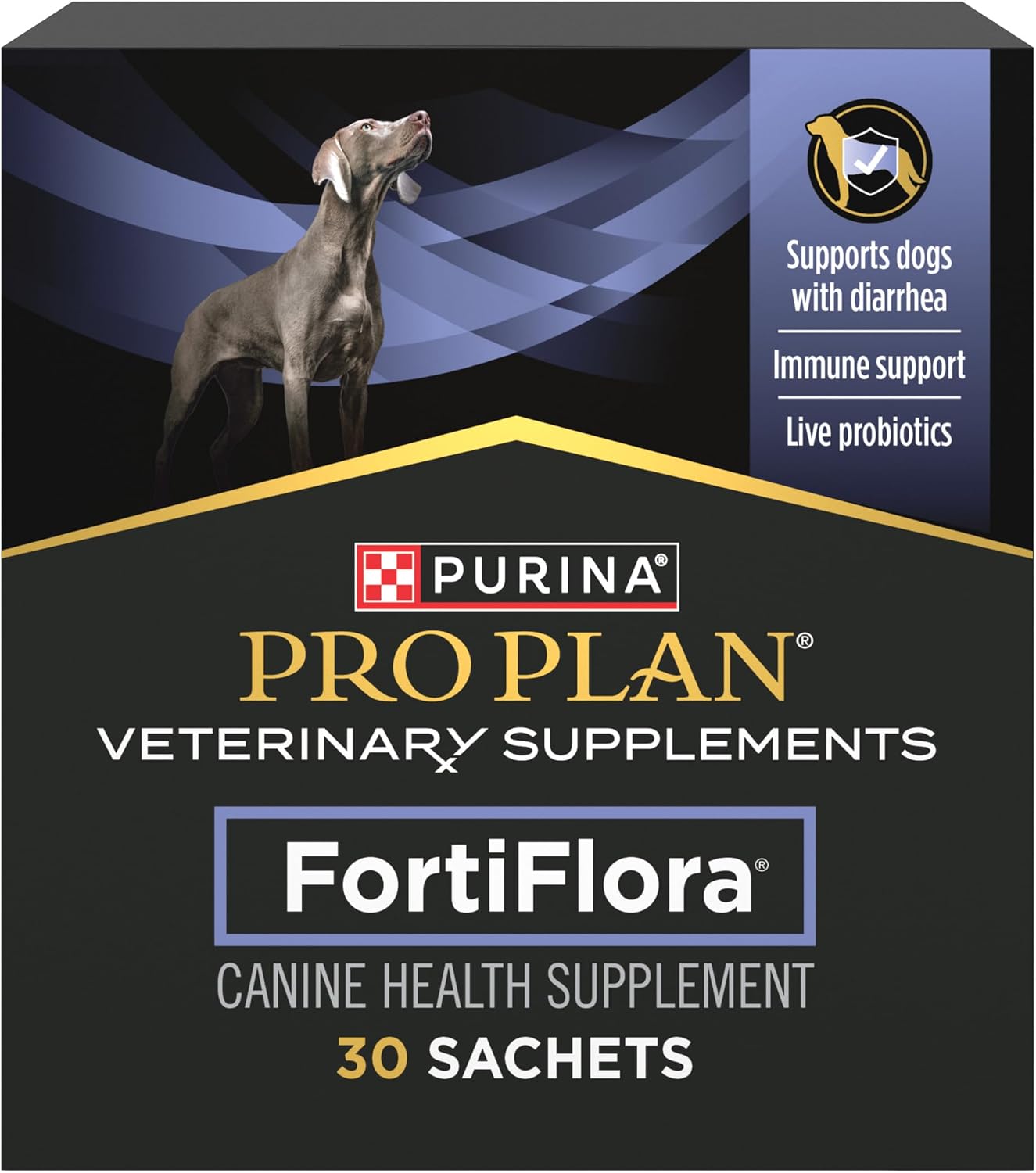
The Purina Pro Plan FortiFlora Canine Probiotic is what my vet handed me after visit three, and it’s what most vets reach for first. Each packet contains a strain of Enterococcus faecium — one of the few probiotic strains with actual clinical backing in dogs. You tear open a packet, sprinkle it on dinner, and the dog eats it without noticing. About $30 for 30 packets, so roughly $1 per day.
The honest con: the ingredient list includes “animal digest,” which reads alarming if you Google it. It’s the flavor coating that makes the powder palatable — not a quality issue, but it trips up owners who read labels. And FortiFlora is a single-strain product. Dogs with complex gut issues may need a multi-strain approach your vet recommends.
My take: This is the $1/day packet that ended my $380 spiral. Start here, not at the chew jar.
Purina FortiFlora 2-Box Bundle (60 packets) — The Stock-Up Math for Daily Use
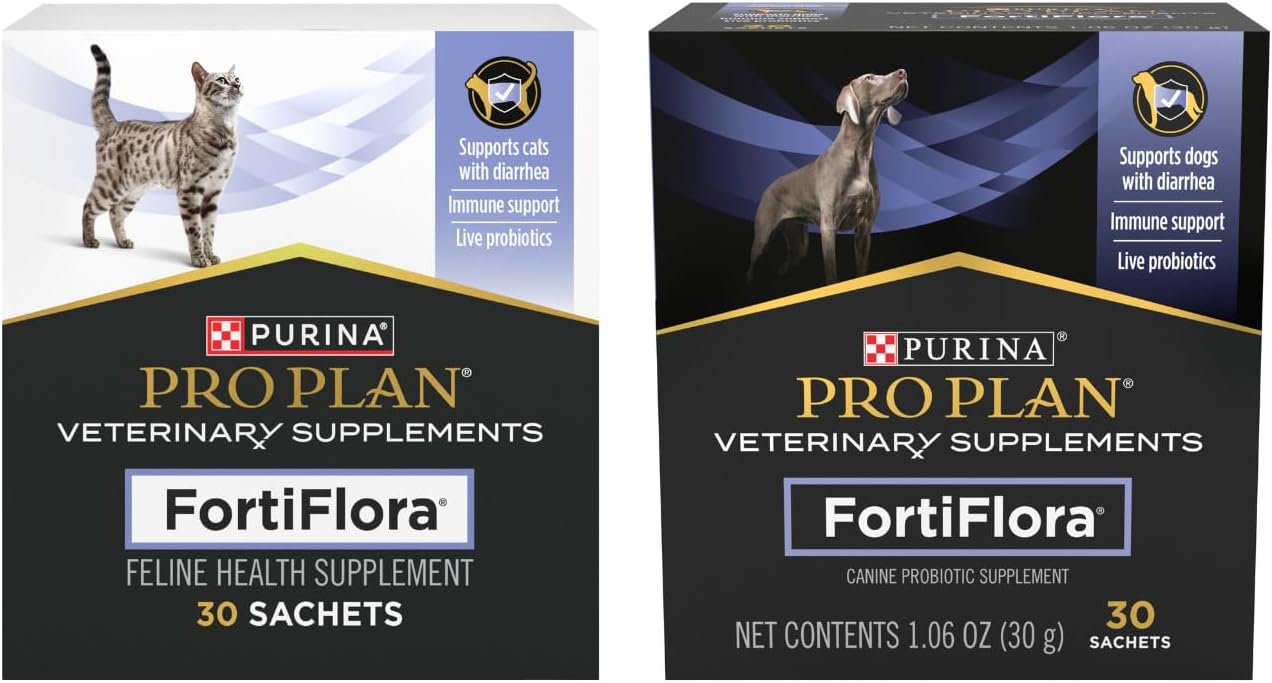
If the first box works — and for simple stress- or diet-related loose stools, it usually does within a week — the FortiFlora 2-Box Bundle (60 packets) drops the per-packet cost by cutting the shipping math in half. Same product, same strain, same packets. The bundle only makes sense after you’ve confirmed the first box works — don’t commit to 60 packets of something your dog might not need long-term.
My take: Buy one box first. If it works, the 2-box bundle is the smart refill for dogs on it daily.
Canned Pumpkin Puree — The 40-Cent Fiber Fix That Pairs
A spoonful of plain canned pumpkin puree alongside the FortiFlora packet firms stools for cents a day — about $0.40 per serving from a 6-pack of Farmer’s Market or Libby’s. The soluble fiber absorbs water in the gut, which is the mechanism that makes it work for both loose stools and constipation (yes, the same food fixes both). The critical rule: plain puree only. The pie-filling version has added sugars and spices that cause the exact problem you’re trying to fix.
My take: Pumpkin plus FortiFlora is the cheapest gut-stability stack in pet care. About $1.40/day total, and it works for most dogs within 72 hours.
PetLab Co Probiotic Chews — The Chew-Jar Comparison Point
The PetLab Co Probiotic Chews are the best-selling chew alternative at about $1/day — similar cost to FortiFlora. The advantage is convenience: a chew is a treat, not a powder you sprinkle. The disadvantage is the hidden cost: dogs tire of chew flavors, and once they refuse the chew, you’ve got a $35 jar of rejected treats. Powders hide in food and never get refused.
My take: Chews work until they don’t. FortiFlora powder is the more reliable daily habit for long-term use.
Set up Subscribe & Save on FortiFlora: If your dog is on it daily, Subscribe & Save drops the price about 5% and you never run out. Start your Amazon shopping from our Shop & Support page — it supports the site at no extra cost.
Features That Actually Matter (And Ones That Don’t)
Strain specificity: Not all probiotics are the same. Enterococcus faecium (FortiFlora’s strain) has clinical data behind it for dogs. Many chew jars list “probiotic blend” without specifying strains or CFU counts — that’s a label dodge, not a feature.
Delivery format: Powder sprinkled on food wins for daily consistency. Chews are easier for occasional use but fail when dogs get picky. Liquid probiotics are the least researched format for dogs.
Speed of effect: For stress or diet-related loose stools, expect improvement in 3-7 days. If you see no change after two weeks, the problem isn’t probiotic-responsive — go back to your vet.
Antibiotic pairing: If your dog is on antibiotics, FortiFlora during and for two weeks after the course helps repopulate the gut bacteria the antibiotics killed. This is the one scenario where probiotics have the strongest evidence base.
What doesn’t matter: “Human-grade” probiotics for dogs. Human gut flora strains (like Lactobacillus rhamnosus GG) aren’t studied in dogs and may not survive the canine gut. Stick with canine-specific products.
The Annual Cost Comparison
- Before FortiFlora: 3 vet visits + fecal panel + rejected diet trial = $380 in one spiral, plus weeks of mess and laundry.
- After FortiFlora (daily): $1/day × 365 = $365/year, or about $330/year with Subscribe & Save. Plus pumpkin at $0.40/day = $146/year. Total gut-stability stack: about $476/year.
- What else that money buys: One less vet visit per year covers the entire annual probiotic cost. The math favors prevention.
Keep reading: Our diarrhea at 2 AM guide covers the pantry fix that beats the panic, and our budget dog probiotics guide breaks down every option under $20/month.
ThriftyPaw is reader-supported. As an Amazon Associate, I earn from qualifying purchases. That means if you buy through one of the links above, I get a small commission at no extra cost to you. I only recommend products I’ve actually used with my own dog.
🐾 Get Your Free Big Dog First Aid Kit Checklist
Join our newsletter and get this free printable plus weekly tips.
Frequently Asked Questions
Do dog probiotics actually work?
Yes, for specific conditions. The Enterococcus faecium strain in FortiFlora has clinical backing for stress- and diet-related loose stools. Most dogs see improvement within 3-7 days. However, probiotics won’t fix parasites, infections, or food allergies—those need veterinary treatment. Probiotics give the gut a stable baseline, not a diagnosis.
How long should a dog take FortiFlora?
For acute episodes (stress, diet change, dietary indiscretion), 7-14 days is typical. Some dogs with chronic sensitive stomachs stay on it daily long-term at about $1/day. If you see no improvement after two weeks, the problem isn’t probiotic-responsive—go back to your vet.
Can I give my dog probiotics with antibiotics?
Yes, and you should. Antibiotics kill both harmful and beneficial gut bacteria, which is why diarrhea often follows a course. Giving FortiFlora during and for two weeks after antibiotics helps repopulate the beneficial bacteria. This is the scenario with the strongest evidence base for canine probiotics.
What’s the difference between FortiFlora and probiotic chews?
FortiFlora is a single-strain powder (Enterococcus faecium) sprinkled on food—dogs can’t refuse it. Chews are treats that contain probiotic blends, but dogs may tire of the flavor and refuse them. For daily long-term use, powder is more reliable. For occasional use, chews are more convenient.
Liked this guide? Get the next one in your inbox — the pet budget checklist is free too.
✓ You're in — check your inbox.
No spam. Unsubscribe anytime. We never share your email.