
This article contains affiliate links. We may earn a commission from qualifying purchases.
Some content on this site is AI-assisted and reviewed by our editorial team.
Six months ago, my Golden Retriever stopped jumping on the couch. She’d stand at the edge, look up, and then walk away to lie on the floor. At first I thought she was just being lazy. Then I noticed she was also hesitating at the stairs and taking longer to get up from a lying position. The vet confirmed what I suspected: early arthritis, nothing severe yet, but enough to make hard surfaces uncomfortable.

The vet’s first recommendation wasn’t medication — it was a better bed. “A good orthopedic bed does more for joint pain than most supplements,” she said. The floor is hard. A thin dog bed offers almost no support. An orthopedic bed with real memory foam distributes weight evenly and reduces pressure on hips, elbows, and shoulders. It’s the same principle as a good mattress for an older human.
I bought four beds over two months. Two were great, one was okay, and one fell apart in a week. Here’s what I found.
What Makes a Bed “Orthopedic” (And What Doesn’t)
The word “orthopedic” on a dog bed label means nothing — there’s no regulation. Any manufacturer can call any bed orthopedic. What actually matters is the foam inside.
Real orthopedic beds use memory foam or high-density support foam, usually 4 inches or thicker. Cheap beds use egg-crate foam or polyfill, which compresses flat under a large dog’s weight and offers no joint support. You can tell the difference by pressing on the bed — if your hand sinks in and the foam pushes back, it’s memory foam. If it compresses to nothing and stays flat, it’s polyfill.
For a 75-pound dog, you need at least 4 inches of memory foam. Anything less compresses flat when the dog lies on it, and the dog is essentially sleeping on the floor with a fabric cover.
Furhaven Orthopedic Dog Bed — The One My Dog Actually Sleeps On
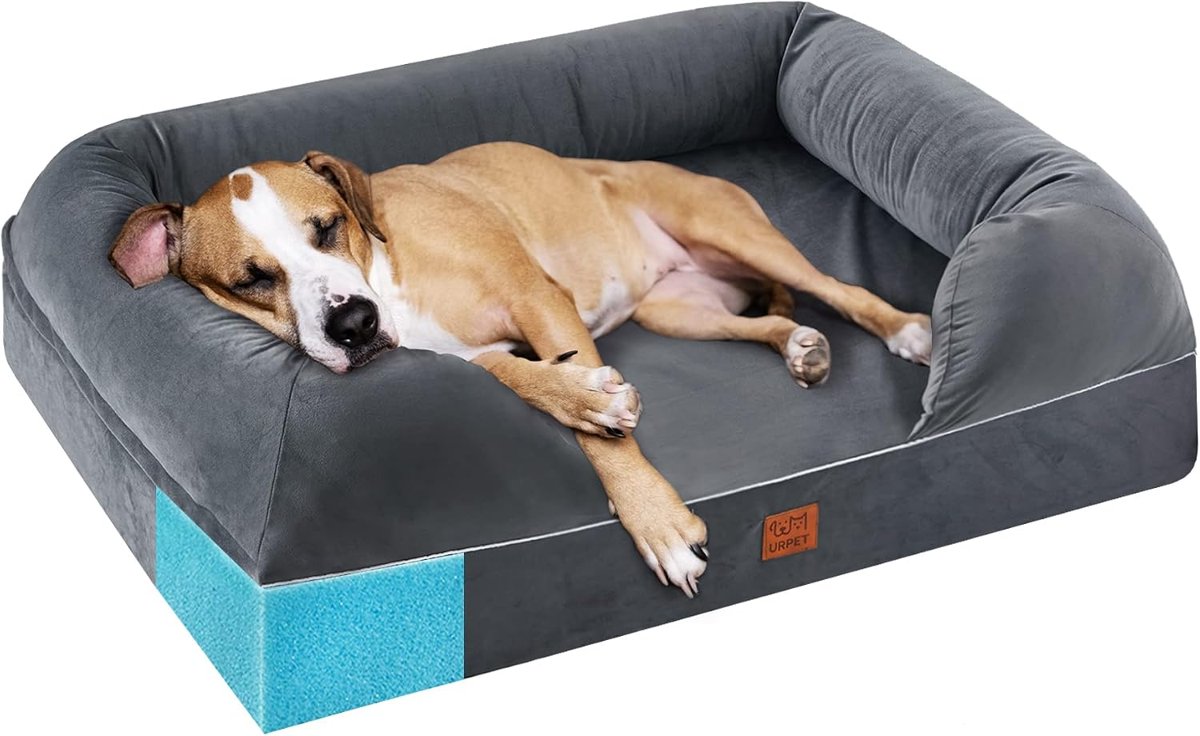
The Furhaven Orthopedic Bed is what my dog sleeps on now. It has a 4-inch memory foam base with a waterproof liner and a removable, washable cover. The bed is 36 by 27 inches — large enough for my 75-pound Golden to stretch out fully without hanging off the edges.
The difference was immediate. The first night I put it down, she slept for 7 hours straight — the longest she’d slept in months. She stopped getting up to reposition constantly, which she used to do on her old polyfill bed. And within a week, she was jumping on the couch again. Not as high as when she was three, but she’s back on the couch, which tells me the pain is manageable.
The cover is machine-washable, which matters more than you’d think. My dog tracks in mud, drools, and occasionally has an upset stomach. I wash the cover every two weeks, and it’s held up through 6 months of washing without shrinking or fraying.
Price: about 45 dollars for the large size. That’s more than I wanted to spend on a dog bed, but it’s dramatically less than the 120-dollar beds I see at pet stores, and the foam quality is comparable.
My take: This is the bed to buy. Real memory foam, washable cover, waterproof liner, and a price that doesn’t make you wince. My dog’s comfort improvement was visible within a day.
Barkbox Orthopedic Bed — Good Foam, Cover Fell Apart
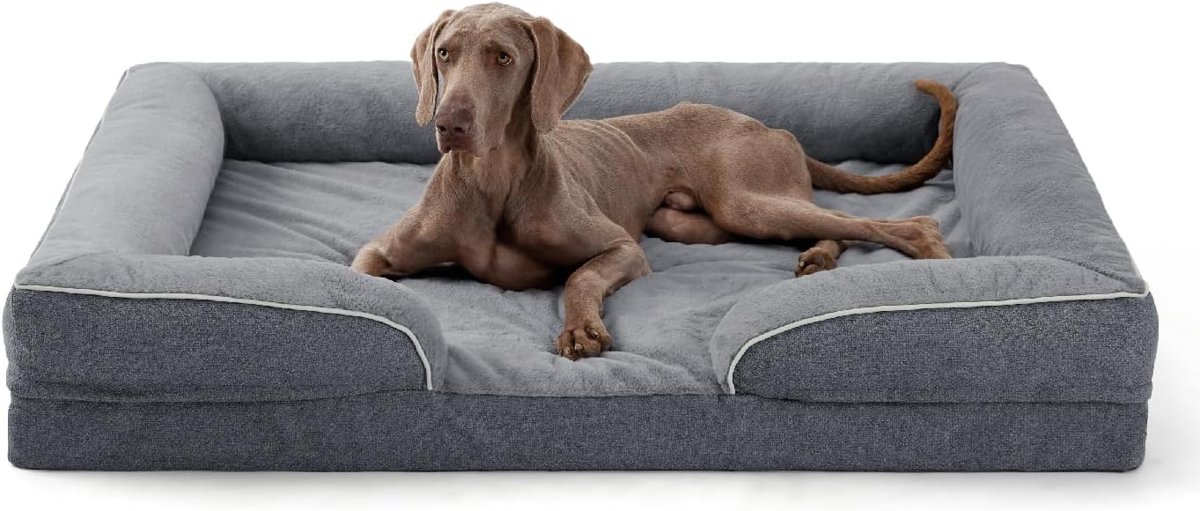
The Barkbox Orthopedic Bed has comparable foam quality to the Furhaven — 4 inches of memory foam, good density, supportive. My dog seemed comfortable on it. The problem was the cover.
The cover started pilling after 3 weeks. By month 2, it had developed holes at the seams where my dog’s claws had scratched the fabric. By month 3, the zipper broke. The foam inside was fine, but without an intact cover, the bed was essentially unusable — foam attracts dog hair and dirt like a magnet when it’s exposed.
At 38 dollars, it’s cheaper than the Furhaven. But I had to replace it after 3 months, which makes it more expensive over time. The Furhaven cover is still going strong after 6 months.
My take: Good foam, terrible cover. If your dog doesn’t scratch or dig at their bed, this might work. If they do, skip it.
Brindle Waterproof Orthopedic Bed — The Durable Option
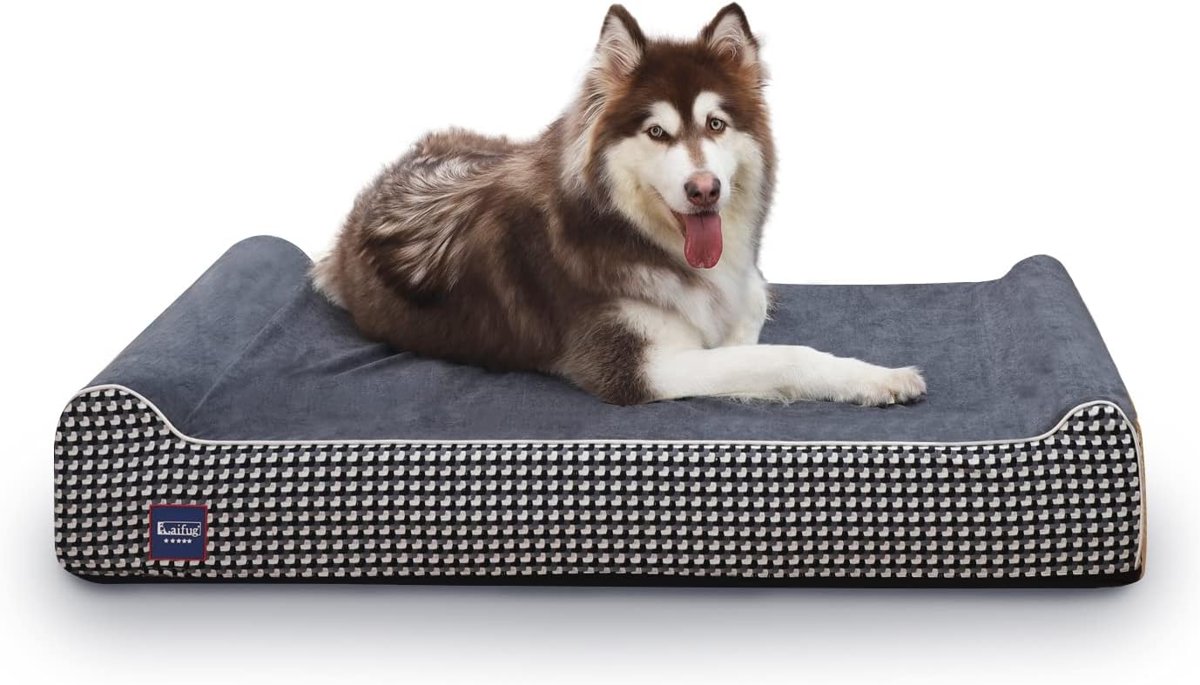
The Brindle Orthopedic Bed is the most durable of the four I tested. The cover is a heavy-duty nylon blend that’s resisted 4 months of claw scratching without a single hole or pill. The foam is dense — slightly firmer than the Furhaven, which some dogs prefer. Older dogs with severe joint pain often do better on a slightly firmer surface because it’s easier to get up from.
The waterproof liner works well. My dog had an accident on this bed (antibiotic side effect), and the foam stayed completely dry. I wiped down the liner and washed the cover, and the bed was fine.
At 52 dollars, it’s the most expensive of the three I recommend. But the durability justifies it — this is the bed I’d expect to last 2 to 3 years, compared to the 1 to 1.5 years I’d expect from the Furhaven.
My take: If your dog is hard on beds — scratching, digging, accidents — this is the most durable option. If your dog just sleeps normally, the Furhaven is fine and 7 dollars cheaper.
Pupperfield “Orthopedic” Bed — Not Actually Orthopedic
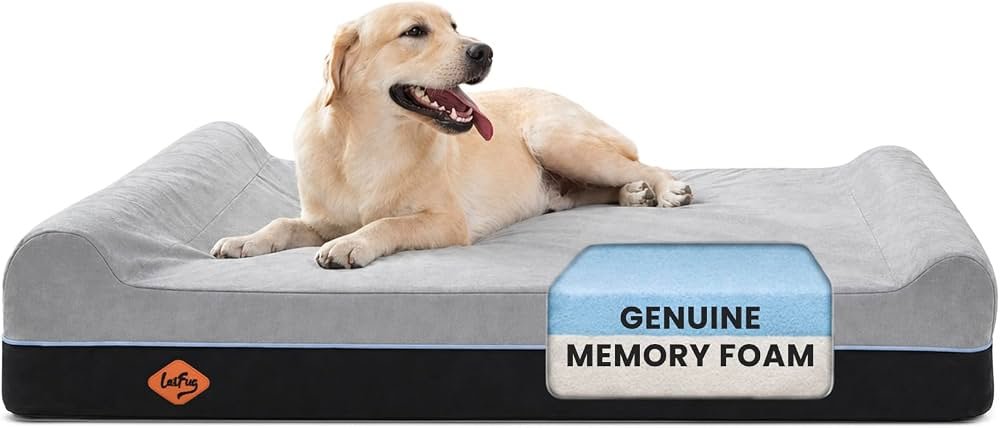
This bed is labeled “orthopedic” but contains 2 inches of egg-crate foam over a polyfill base. When my 75-pound dog lay on it, the foam compressed to less than half an inch. She was essentially lying on the floor with a blanket over it. No support, no pressure relief.
I returned it after two nights. My dog wouldn’t even stay on it — she’d lie on it for 10 minutes, then move to the carpet. Dogs know when a surface isn’t comfortable. Trust their behavior over the product label.
My take: Not orthopedic. Egg-crate foam over polyfill doesn’t support a large dog. Skip this and spend 7 dollars more on the Furhaven.
Get an orthopedic bed delivered fast. Start your 30-day Prime free trial for free 2-day shipping.
The Real Cost of a Good Dog Bed
Here’s how I think about the cost: my dog sleeps 12 to 14 hours per day. She lies on her bed for another 2 to 3 hours while I work. That’s 14 to 17 hours per day on this surface. Over a 2-year lifespan, that’s over 10,000 hours of contact with the bed.
The Furhaven costs 45 dollars. Over 2 years, that’s less than half a cent per hour of use. For something that directly affects my dog’s joint health, comfort, and sleep quality, that’s an absurdly good value.
Compare that to what I was spending on supplements (28 dollars/month for joint chews), and the bed is a one-time 45-dollar purchase that does more for her joints than any supplement. I’m not saying skip the supplements — I still give them — but if I had to choose one, the bed would win.
A few tips for choosing the right size:
- Measure your dog from nose to tail while they’re sleeping in their normal position. The bed should be at least 6 inches longer than that measurement.
- If your dog sleeps curled up, a round or square bed works. If they stretch out, get a rectangular bed.
- For dogs over 60 pounds, always get the “large” or “extra large” size. A bed that’s too small means your dog hangs off the edge, which defeats the purpose of the orthopedic foam.
For more on caring for older dogs, check our guide to joint supplements and our tips for dental care on a budget.
ThriftyPaw is reader-supported. As an Amazon Associate, I earn from qualifying purchases. That means if you buy through one of the links above, I get a small commission at no extra cost to you. I only recommend beds my dog has actually slept on for months.
Related guides
- Budget Dog Jackets for Winter Prep: Complete Guide Under 25 Dollars (2026)
- Best Leashes for Big Dogs That Pull (Under 25 Each)
- Crate Training on a Budget: The Complete 7-Day Method Under 60 Dollars
- Best Budget Dog Jackets and Cold Weather Gear (Under 30 Dollars — 2026)
- Dog Paw Pad Care: Complete Budget Guide Under 15 Dollars (2026)
🐾 Get Your Free Big Dog First Aid Kit Checklist
Join our newsletter and get this free printable plus weekly tips.
Frequently Asked Questions
What makes a dog bed actually orthopedic?
Real foam — the author's testing rule: solid memory or egg-crate foam that rebounds, not the polyfill that 'orthopedic' labels cover. The Furhaven ($45 large) and Brindle ($52) carry genuine support foam; the Pupperfield 'orthopedic' bed failed the category test despite the label — the vet's recommendation was foam, not marketing.
Can a bed help a dog with early arthritis?
Genuinely — the author's 7-year-old stopped jumping and hesitating within weeks of the Furhaven switch, and the vet's first recommendation before any medication was the better bed. The joint logic: the foam distributes pressure off the elbows and hips that hard floors aggravate, and the $45 one-time purchase does more than the $28/month supplement tier alone.
What's the best orthopedic dog bed under 50 dollars?
The Furhaven at $45 for large — the author's kept pick, real orthopedic foam at under half the $120 pet-store tier. The Brindle at $38 is the waterproof alternative for messy dogs, and the Barkbox at $52 is good foam with a cover that fell apart — the durability asterisk. Skip the Pupperfield: the label without the foam is the category's trap.
Liked this guide? Get the next one in your inbox — the pet budget checklist is free too.
✓ You're in — check your inbox.
No spam. Unsubscribe anytime. We never share your email.
Price Check
Prices verified via our product tracker. Updated Sep 27.
| MADE 4 PETS Orthopedic Dog Bed for Large Dogs, Supportive | $56.17 | 4.4★ (303) |
| Laifug Orthopedic Dog Bed, Black and White Plaid50''x36''x | $139.99 | 4.6★ (10,031) |
| Laifug Orthopedic Dog Bed, Slate Grey 50''x36''x10'', Memo | $129.89 | 4.6★ (10,031) |
As an Amazon Associate we earn from qualifying purchases.