This article contains affiliate links. We may earn a commission from qualifying purchases.
Some content on this site is AI-assisted and reviewed by our editorial team.
When I first brought home my Golden Retriever puppy, I did what most new puppy owners do: I stood in the pet food aisle for 25 minutes, picked up every bag, read every label, and still had no idea what to buy. The breeder said one thing. The vet said another. The internet said twelve different things. And every bag claimed to be “complete and balanced” with a picture of a happy puppy on the front.
The Numbers
- Protein sweet spot for large-breed puppies: 25–30%
- Fat target: 12–18%; calcium 1.2–1.5% for large breeds
- Calcium-to-phosphorus ratio: ideally 1.1:1 to 1.3:1
- All four compared foods: under 2 dollars per pound (boutique bag comparison: 90 dollars for 24 pounds)
- Example pick math: 34-pound bag ~55 dollars = ~1.62 dollars per pound, about a month of food for a growing large-breed pup
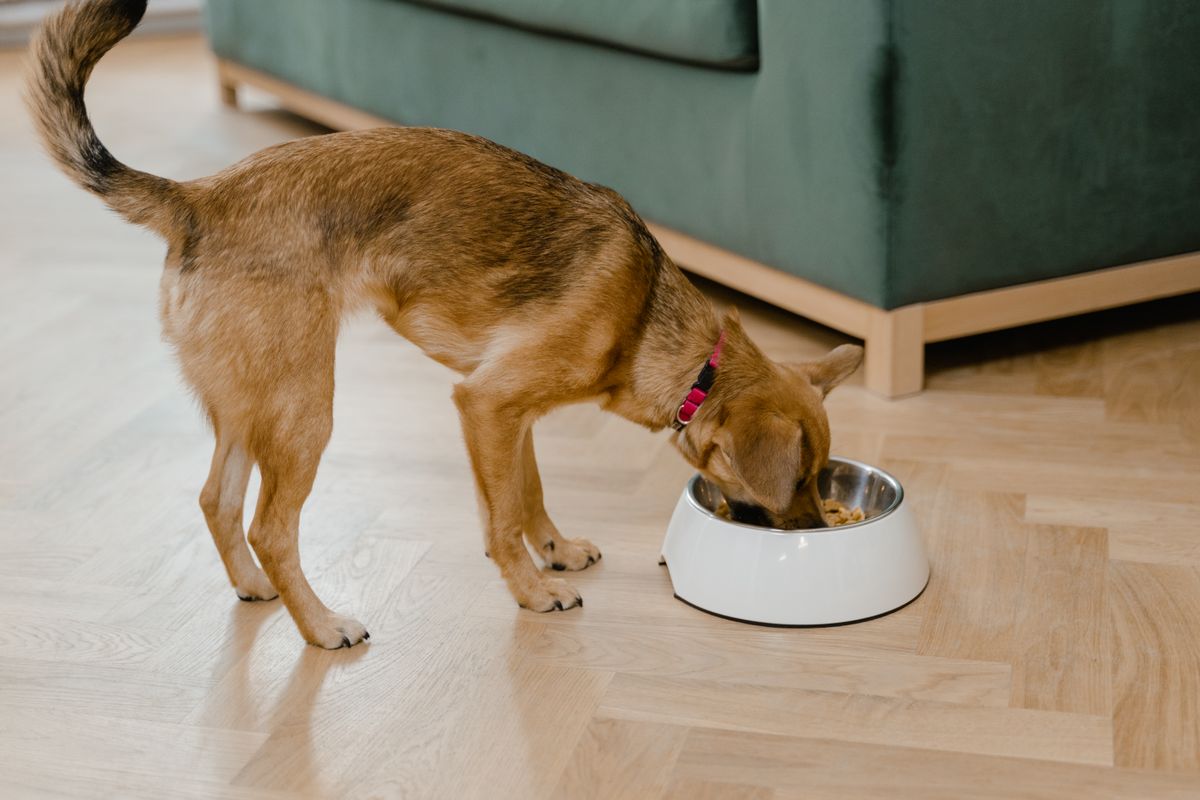
Here’s what I learned after actually researching this stuff: large breed puppies have specific nutritional needs that matter. They’re growing fast, and their joints are developing. Too many calories or too much calcium can actually cause skeletal problems down the road. So you can’t just buy whatever is cheapest. But you also don’t need to spend 90 dollars on a 24-pound bag from a boutique brand.
I compared four large breed puppy foods available on Amazon, all under 2 dollars per pound. I looked at ingredient quality, protein and fat content, calcium and phosphorus levels (these matter a lot for large breeds), and real cost per pound. Here’s what I found.
Why Large Breed Puppy Food Is Different
If you have a puppy that’s going to grow into a dog over 50 pounds, you need large breed specific food. Not because it’s a marketing gimmick — because the calcium and phosphorus ratios are actually regulated differently in these formulas. Too much calcium in a fast-growing large breed puppy can cause abnormal bone development. The Association of American Feed Control Officials (AAFCO) has specific guidelines for large breed puppy food that differ from regular puppy food.
The key numbers to look for:
- Protein: 25-30% is the sweet spot. Higher isn’t always better for puppies.
- Fat: 12-18%. Too high and your puppy grows too fast, which stresses developing joints.
- Calcium: Should be between 1.2% and 1.5% for large breeds. Regular puppy food often has higher calcium, which is fine for small breeds but not for large ones.
- Calcium-to-phosphorus ratio: Ideally between 1.1:1 and 1.3:1. This affects how well the calcium is absorbed.
I kept these numbers in mind while reviewing each food. If a brand didn’t meet these baselines, I said so.
Purina Pro Plan Large Breed Puppy — The One I’d Feed My Own Puppy
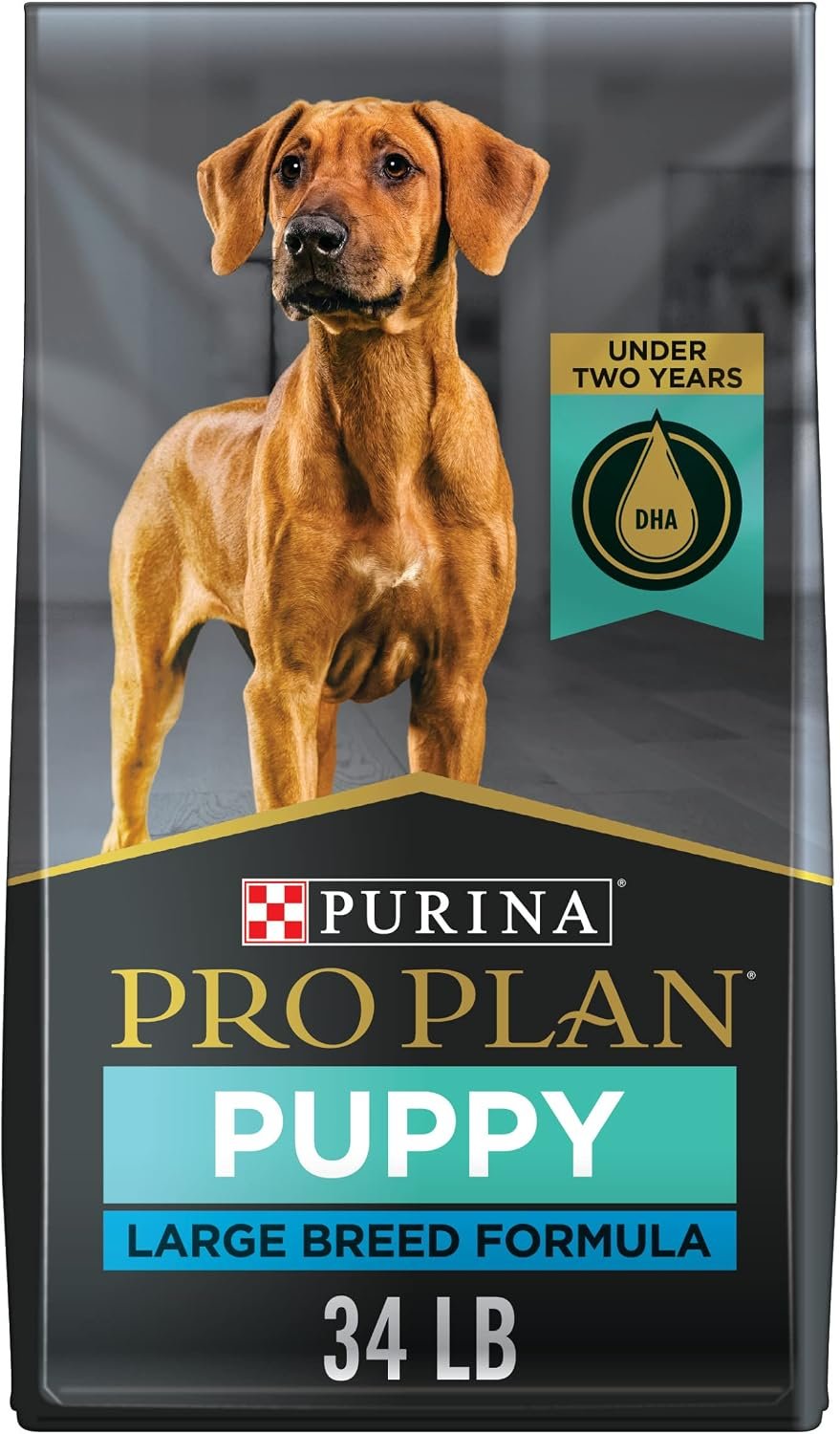
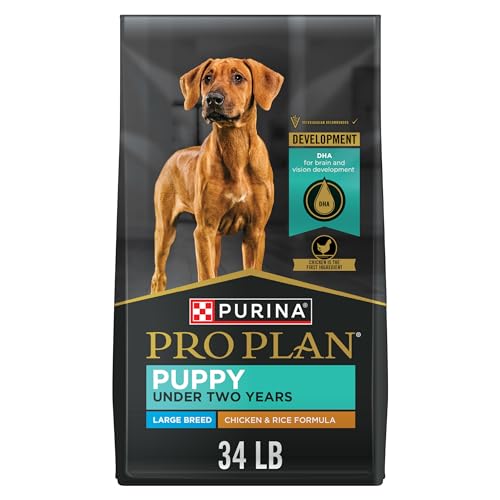
Purina Pro Plan Large Breed Puppy is the food I actually fed my Golden for her first year. Not because it’s the cheapest on this list — it isn’t — but because it hits the nutritional targets dead center, and Purina has actual veterinary nutritionists on staff formulating their diets. That matters more than people realize. A lot of boutique brands outsource their formulation or use generic recipes.
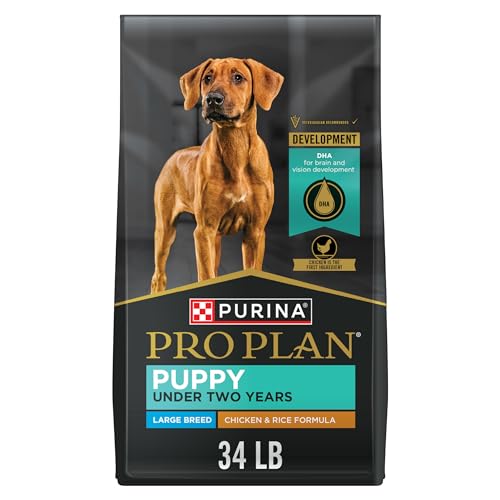
Protein is 28%, fat is 17%, and calcium sits right at 1.2%. The first ingredient is chicken, followed by rice and corn gluten meal. Yes, corn gluten meal. I know corn is the boogeyman in some dog food circles, but it’s a digestible protein source, and in this formula it’s doing a specific job. The food also includes DHA from fish oil for brain and eye development, plus probiotics for digestion.
My puppy’s coat was glossy on this food. Stools were firm and consistent. She grew at a steady rate — not too fast, which is what you want for a large breed. The 34-pound bag lasts about a month for a growing large breed puppy and costs around 55 dollars, which works out to about 1.62 dollars per pound.
What I don’t love: it contains poultry by-product meal. Some people are uncomfortable with that ingredient, and I understand why. But by-product meal includes organ meats, which are nutrient-dense. It’s not the same as “feathers and beaks.” Still, if you want a food with a cleaner ingredient label, keep reading.
My take: This is the safest, most well-researched option on the list. If you want a food that has decades of feeding trials behind it and costs under 2 dollars per pound, this is it.
Diamond Naturals Large Breed Puppy — The Budget Workhorse
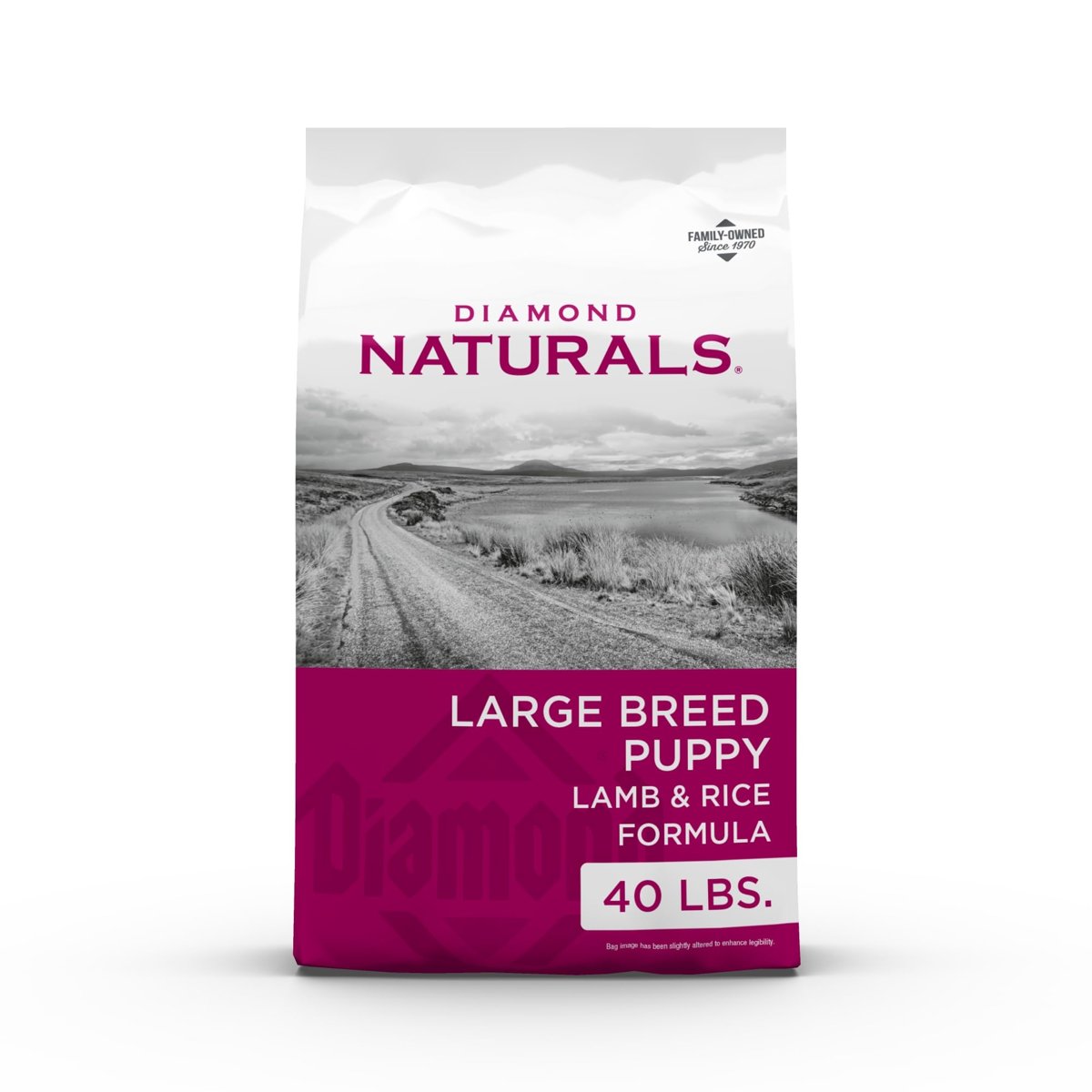
Diamond Naturals Large Breed Puppy is the value pick on this list, and I mean that in the best possible way. At around 40 dollars for a 30-pound bag (about 1.33 dollars per pound), it’s the cheapest option here, and the ingredient list actually reads better than some foods that cost twice as much.
First ingredient: lamb meal. That’s a concentrated protein source — meal just means the moisture has been removed, so you’re getting more protein per ounce than you would from fresh lamb. The food also includes whole grain brown rice, white rice, and oatmeal as carbohydrate sources. No corn, no wheat, no soy. Whether that matters nutritionally is debatable, but if you’re trying to avoid those ingredients, Diamond Naturals makes it easy.
Protein is 26%, fat is 15%, and calcium is 1.3%. Those numbers are right where they should be for large breed puppies. The food also includes K9 strain probiotics, which Diamond claims survive better in dog food than standard probiotics. I can’t verify that claim independently, but the food is made in the USA in Diamond’s own facilities, which is a plus.
The downside: Diamond has had recalls in the past, including a salmonella issue back in 2012. They’ve since invested heavily in their manufacturing processes and haven’t had a major recall since, but it’s worth knowing if you’re the type who tracks these things. Every brand has had recalls at some point — Purina, Hill’s, Royal Canin included — but Diamond’s was more publicized.
My take: The cheapest option on this list that I’d feel good about feeding. If budget is your top priority and you want a food with a clean ingredient list that still hits the nutritional targets, Diamond Naturals is hard to beat at 1.33 dollars per pound.
IAMS Proactive Health Puppy — The Supermarket Staple
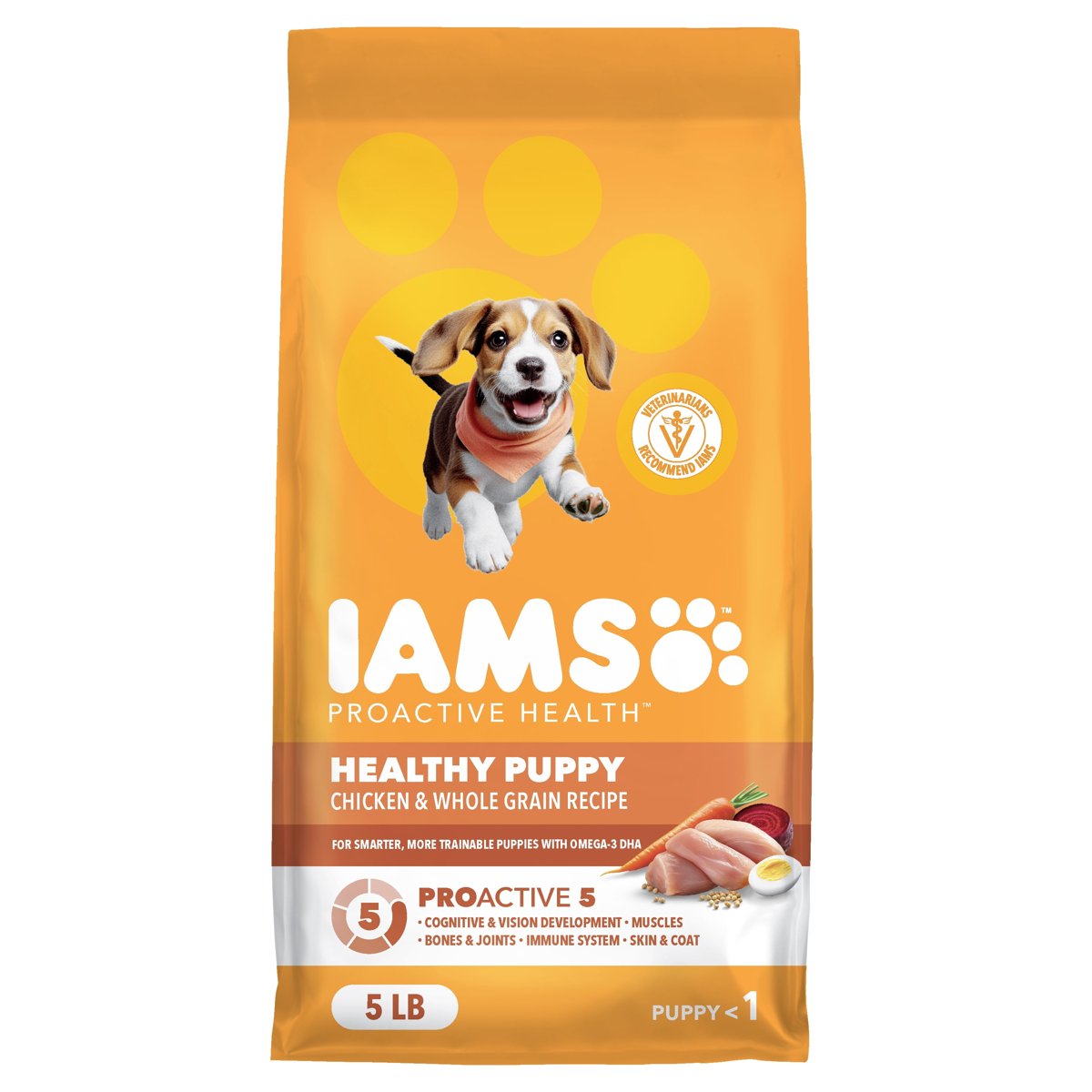
IAMS Proactive Health Puppy is the food everyone’s dad fed the family dog. It’s been around forever, it’s available everywhere, and it’s cheap. But here’s the thing: it’s actually not bad. Not great, but not bad.
Protein is 26%, fat is 15%, and the calcium level is appropriate for large breed puppies. The first ingredient is chicken, which is good. But the ingredient list also includes chicken by-product meal (same caveat as Purina), corn meal, and dried beet pulp. Beet pulp is a filler that adds fiber, and while it’s not harmful, it’s not adding nutritional value either.
The main issue I have with IAMS is that it’s formulated as a general puppy food, not specifically as a large breed puppy formula. The calcium and phosphorus levels are within acceptable ranges, but they’re not as precisely tuned for large breed growth as Purina Pro Plan or Diamond Naturals. If you have a large breed puppy, I’d recommend the large breed specific version of IAMS if you can find it, rather than the general puppy formula.
At around 25 dollars for a 15-pound bag (about 1.67 dollars per pound), it’s mid-range on price. The smaller bag size means you’re buying more frequently, which is annoying. And honestly, for the same price per pound, Purina Pro Plan is a better food.
My take: Fine in a pinch. If this is what’s available at the store near you, your puppy will be okay on it. But if you’re ordering online anyway, spend the same money on Purina Pro Plan or save money with Diamond Naturals.
NutriSource Large Breed Puppy — The Premium Budget Option
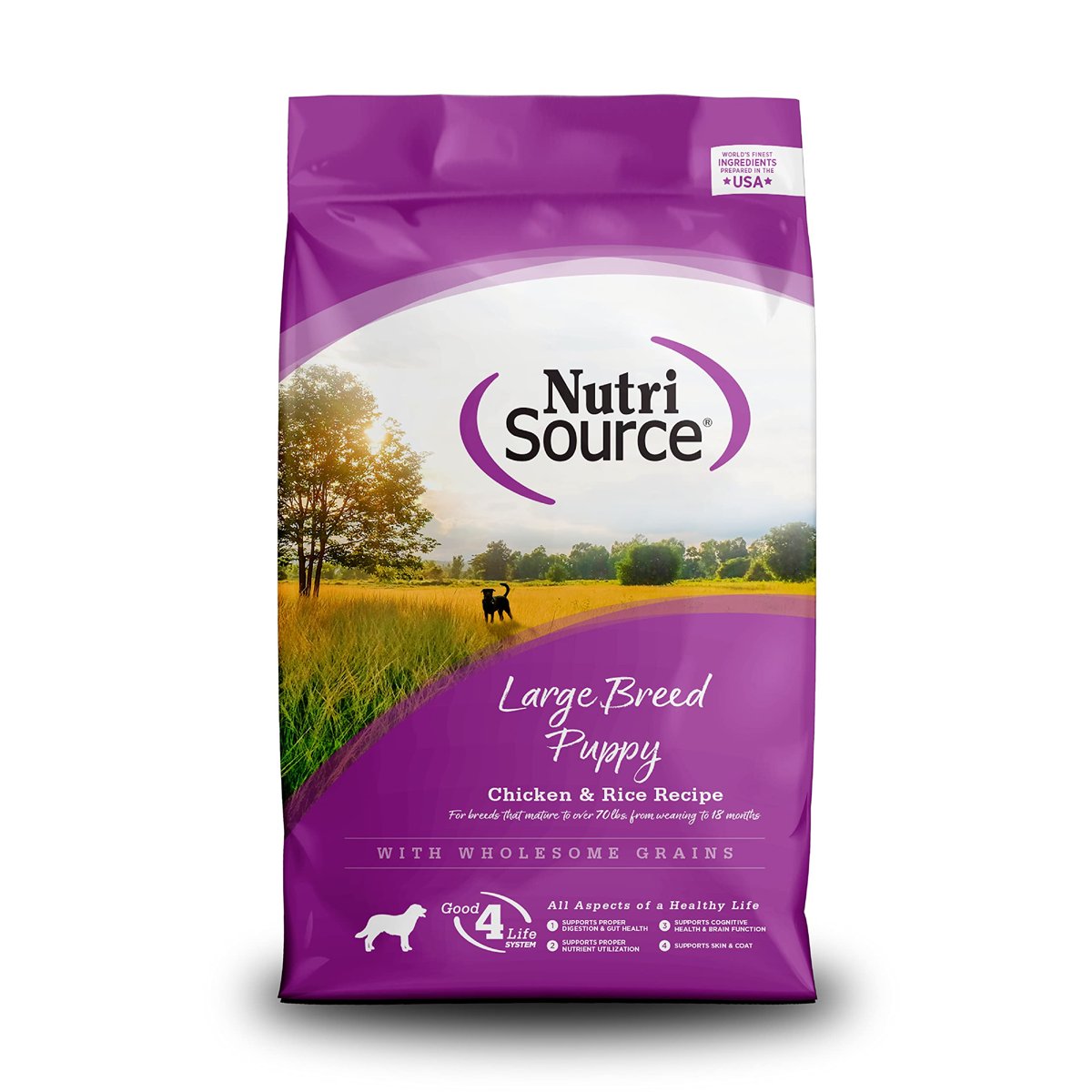
NutriSource Large Breed Puppy is the most expensive food on this list at around 50 dollars for a 26-pound bag (about 1.92 dollars per pound), but it’s still under the 2-dollar-per-pound threshold, and the ingredient quality is a step above the others.
First ingredient: chicken. Real chicken, not meal. Second ingredient: chicken meal. So you’re getting both fresh and concentrated protein. The food also includes brown rice, barley, and oatmeal — all whole grains. No corn, no wheat, no soy. It includes prebiotics and probiotics, plus glucosamine and chondroitin for joint support, which is genuinely useful for large breed puppies whose joints are under rapid development.
Protein is 26%, fat is 14%, and calcium is 1.3%. Well within the target ranges. The lower fat content compared to Purina Pro Plan means slightly slower growth, which some vets prefer for large breeds. The kibble size is also larger than the other foods, which is good for large breed puppies — it forces them to chew rather than inhale their food.
The downside is availability and price. At nearly 2 dollars per pound, you’re at the upper edge of “budget.” And NutriSource doesn’t have the same brand recognition as Purina, which makes some people nervous. But they’re a family-owned company based in Minnesota, and they make their own food in their own facilities. No co-packing.
My take: If you care about ingredient quality and are willing to spend a bit more, NutriSource is the best food on this list. It’s what I’d feed if Purina Pro Plan weren’t available.
Cost Per Pound: The Real Comparison
Here’s the thing that frustrated me when I was shopping: the sticker price tells you nothing. A 55-dollar bag sounds expensive until you realize it’s 34 pounds and costs 1.62 dollars per pound. A 25-dollar bag sounds cheap until you realize it’s 15 pounds and costs 1.67 dollars per pound. So I did the math.
| Food | Bag Size | Price | Cost Per Pound | Protein |
|---|---|---|---|---|
| Purina Pro Plan | 34 lbs | ~55 dollars | 1.62 dollars | 28% |
| Diamond Naturals | 30 lbs | ~40 dollars | 1.33 dollars | 26% |
| IAMS Proactive Health | 15 lbs | ~25 dollars | 1.67 dollars | 26% |
| NutriSource | 26 lbs | ~50 dollars | 1.92 dollars | 26% |
Diamond Naturals is the clear winner on price per pound. Purina Pro Plan is the best balance of nutrition and price. NutriSource is the premium option. And IAMS, frankly, costs more per pound than Purina Pro Plan while offering less. That surprised me.
Want free 2-day shipping on your puppy food? Start your 30-day Prime free trial and get it delivered by tomorrow. Big bags of dog food are heavy — Prime shipping pays for itself fast.
Transitioning Between Puppy Foods
If you’re switching from one food to another, do it over 7 to 10 days. Mix the new food with the old, starting with 25% new and 75% old for a few days, then 50/50, then 75/25, then fully switched. Going cold turkey is the fastest way to give your puppy diarrhea, and puppy diarrhea is not something you want to deal with.
Also: puppies eat a lot. A 4-month-old large breed puppy can eat 3 to 4 cups per day. At that rate, a 30-pound bag lasts about 30 days. Plan your budget accordingly, and buy the biggest bag you can store — the cost per pound drops significantly with larger bags.
One mistake I made early on: buying a 15-pound bag because it was cheaper upfront, then running out in two weeks and having to reorder. The 30 or 34-pound bags are dramatically cheaper per pound. If storage is an issue, get an airtight container — they cost about 20 dollars and pay for themselves in saved food that doesn’t go stale.
How Long Should I Feed Large Breed Puppy Food?
Until your dog is 12 to 18 months old, depending on the breed. Large breeds take longer to reach full skeletal maturity than small breeds. A Golden Retriever is done growing around 14 months. A Great Dane might not be fully mature until 18 months. Your vet can tell you when your dog has reached adult weight and is ready to transition to adult food.
Switching too early can cause growth problems. Switching too late means you’re overfeeding calories for a dog that’s no longer growing, which leads to weight gain. The window matters. If you’re not sure, ask your vet — they can feel your dog’s growth plates and tell you if they’ve closed.
For more on feeding large dogs on a budget, check out our guide to dog food brands under 2 dollars per pound. And once your puppy is past the growth phase, our sensitive stomach dog food guide has adult options that won’t break the bank.
ThriftyPaw is reader-supported. As an Amazon Associate, I earn from qualifying purchases. That means if you buy through one of the links above, I get a small commission at no extra cost to you. I only recommend foods I’d feed my own dog — and in the case of Purina Pro Plan, ones I actually have.
Related guides
- Best Budget Dog Water Bowls and Fountains Under 30 Dollars
- Back-to-School Dog Separation Anxiety: Prevention and Treatment Under 25 Dollars
- Dog Travel Anxiety on a Budget: 4-Week Fix Plus Tools Under 15 Dollars
- Dog Training on a Budget — How to Get a Well-Behaved Dog Without Paying 200 Dollars an Hour
- My Dog Hated Being Alone. These 4 Calming Chews Actually Helped (And One Did Nothing)
🐾 Get Your Free Big Dog First Aid Kit Checklist
Join our newsletter and get this free printable plus weekly tips.
Frequently Asked Questions
What should large breed puppy food contain?
The growth targets: 25-30% protein, 12-18% fat, and the large-breed calcium discipline — 1.2-1.5% with a calcium-to-phosphorus ratio of 1.1:1 to 1.3:1. Too much calcium or too-fast growth is what damages large-breed joints; the AAFCO large-breed-puppy statement on the bag is the certification that the numbers are controlled.
What's the best budget large breed puppy food?
The four under $2/pound: Purina Pro Plan Large Breed Puppy at $55 for 34 pounds ($1.62 — the author's own-puppy pick with decades of feeding trials), Diamond Naturals at $40 for 30 pounds ($1.33 — the budget workhorse with the clean ingredient list), IAMS Proactive Health Puppy at $25 for 15 pounds ($1.67, mid-range), and NutriSource at $50 for 26 pounds ($1.92 — the premium-budget edge).
How long should a large breed puppy eat puppy food?
Until growth completes — roughly 12-18 months for most large breeds (longer for giants), and the guide's transition rules matter more than the exact month: shift gradually over 7-10 days to the adult formula and watch the stool. The per-pound comparison point on the adult side: the $55 bag that sounds expensive is 34 pounds at $1.62.
Liked this guide? Get the next one in your inbox — the pet budget checklist is free too.
✓ You're in — check your inbox.
No spam. Unsubscribe anytime. We never share your email.
Price Check
Prices verified via our product tracker. Updated Sep 27.
| Purina Pro Plan Large Breed Dry Puppy Food, Chicken & Rice | $74.98 | 4.7★ (9,813) |
| IAMS Proactive Health Healthy Puppy Dry Dog Food, Chicken | $10.97 | 4.7★ (5,835) |
As an Amazon Associate we earn from qualifying purchases.