

This article contains affiliate links. We may earn a commission from qualifying purchases.
Some content on this site is AI-assisted and reviewed by our editorial team.
Cat vomiting is one of the most common reasons for vet visits — but unlike dogs, where occasional vomiting is usually dietary, cat vomiting is more often a sign of underlying disease. Many owners dismiss cat vomiting as “just hairballs” or “he ate too fast,” but chronic vomiting in cats is frequently a sign of inflammatory bowel disease, food allergies, kidney disease, hyperthyroidism, or even intestinal lymphoma. The key is knowing when cat vomiting is benign and when it needs investigation. This guide covers the 6 causes of cat vomiting, the home treatment protocol for mild cases, when vomiting is an emergency, and the diagnostic tests that catch serious disease early.
The Difference Between Cat Vomiting and Dog Vomiting
Dogs vomit for relatively benign reasons — they ate too fast, ate something they should not have, or have a sensitive stomach. Cat vomiting is more often a sign of disease. Here is why:
- Cats are more prone to inflammatory bowel disease (IBD) — Chronic inflammation of the digestive tract, causing persistent vomiting and weight loss. Often mistaken for “sensitive stomach” for months before diagnosis.
- Cats get food allergies more often than dogs — Allergic reactions to common proteins (chicken, fish, beef) cause chronic vomiting.
- Cats are prone to foreign body ingestion — String, yarn, hair ties, and rubber bands are irresistible to cats and cause intestinal blockages. A linear foreign body (string) is a surgical emergency.
- Cats develop hyperthyroidism — Overactive thyroid (common in cats over 10) causes vomiting, weight loss, and increased appetite.
- Cats get intestinal lymphoma — Cancer of the intestines, more common in cats than dogs, causes chronic vomiting and weight loss.
- Cats are prone to kidney disease — The number one cause of death in senior cats, and vomiting is an early sign.
The 6 Common Causes of Cat Vomiting
1. Hairballs (Most Benign)
Vomiting a cigar-shaped mass of hair. Occasional (1-2 per month for long-haired cats) is normal. Frequent hairballs indicate overgrooming or a digestive motility issue (see the hairball guide). The vomit contains a visible hair mass — if there is no hair mass, it is not a hairball.
A quality hairball remedy can help reduce frequency during shedding season. Hartz Hairball Remedy Plus Salmon Flavored Paste — about $6 — is an easy-to-administer gel that helps hair pass safely through the digestive tract.

2. Eating Too Fast
Cats that eat quickly regurgitate undigested food within minutes of eating. The food comes up in a tube shape (the shape of the esophagus) and is not digested. This is regurgitation, not true vomiting — there is no abdominal heaving or nausea. It is common in cats that eat dry food quickly or in multi-cat households where cats eat competitively.
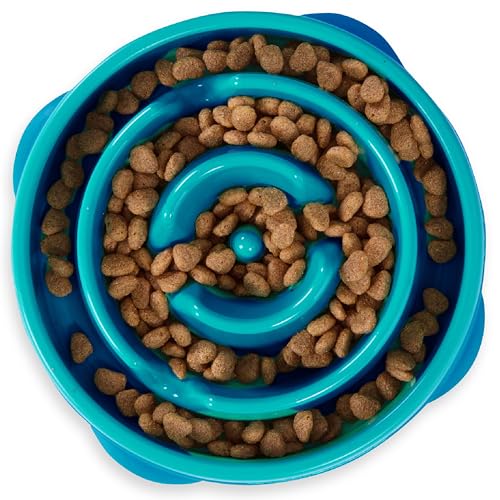
Fix: Use a slow feeder bowl (5-10 dollars), spread food on a flat plate, or feed smaller, more frequent meals. Separate cats in multi-cat households so they do not feel rushed. The Outward Hound Fun Feeder Slo Bowl — about $15 — uses maze-like ridges to slow down fast eaters and is small enough for cats.

3. Food Allergy or Intolerance
Vomiting that occurs regularly after meals, often accompanied by diarrhea or itchy skin. The most common cat food allergens are chicken, fish, beef, and dairy. Develops after months to years of eating the same protein. See the food allergies guide for the 8-week elimination diet protocol.
4. Inflammatory Bowel Disease (IBD)
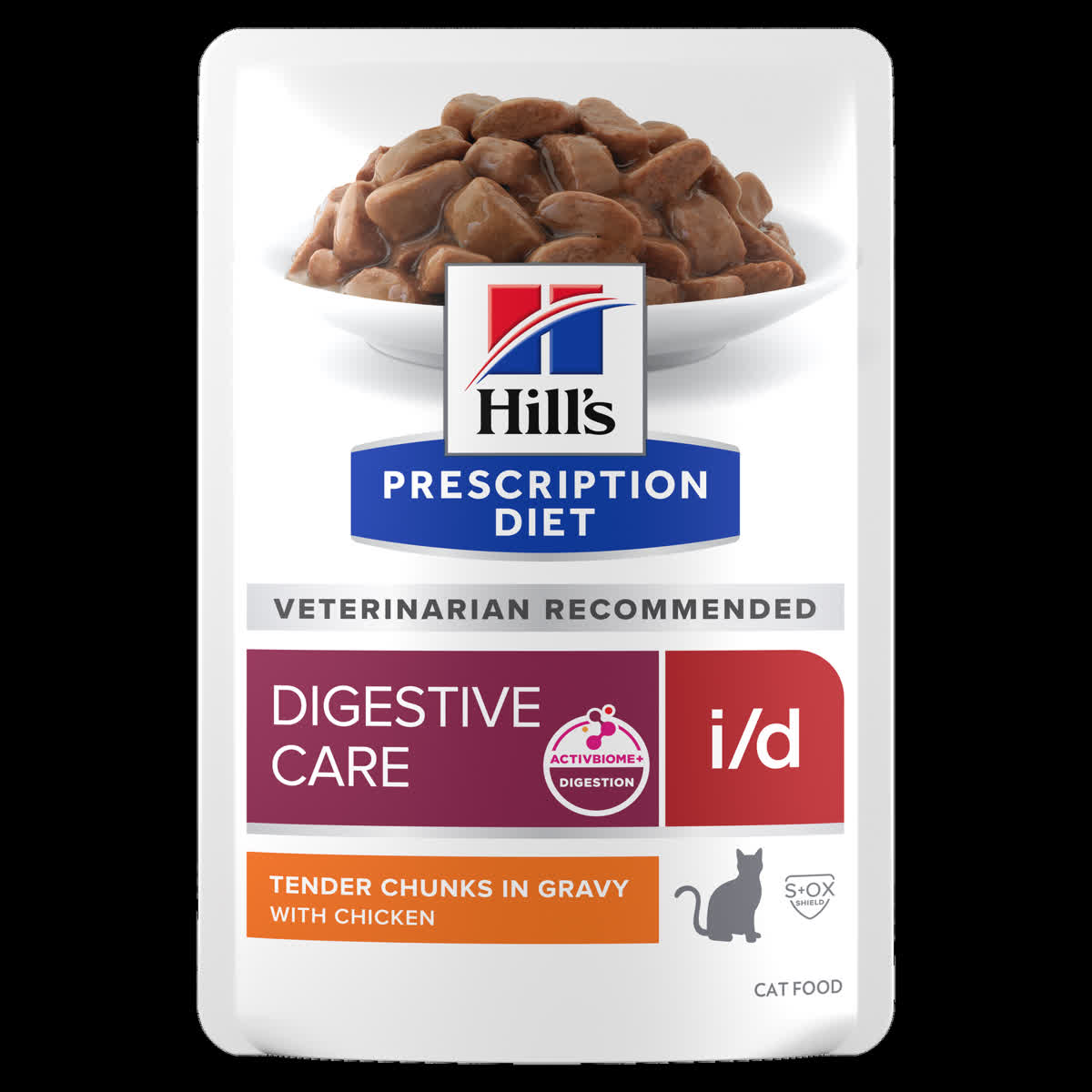
Chronic inflammation of the stomach and intestines. Causes persistent vomiting (2-5 times per week or more), weight loss, and diarrhea. Often mistaken for “sensitive stomach” for months. Diagnosed with blood work, ultrasound, and sometimes biopsy. Treatment: prescription diet such as Hill’s Prescription Diet i/d Digestive Care Wet Cat Food — about $50 for a 24-pack — or Royal Canin Veterinary Diet Gastrointestinal Moderate Calorie — about $69 for a 24-pack — and medication (prednisolone, 5-15 dollars/month, reduces inflammation). Budesonide (10-20 dollars/month) is an alternative steroid with fewer side effects.

5. Systemic Disease (Kidney, Thyroid, Liver)
Vomiting can be a sign of kidney disease (see cat kidney guide), hyperthyroidism (overactive thyroid, common in cats over 10), or liver disease. These conditions cause persistent vomiting, weight loss, increased or decreased appetite, and changes in water intake. Blood work (80-150 dollars) identifies the cause.
6. Foreign Body Ingestion (Emergency)
Cats eat string, yarn, hair ties, rubber bands, dental floss, and other linear objects. A linear foreign body is especially dangerous — the string anchors at the base of the tongue or stomach and the intestines “bunch up” along it like a curtain on a rod. This cuts off blood supply to the intestines and requires emergency surgery (1,500-4,000 dollars).
Signs: Vomiting that does not resolve, not eating, lethargy, abdominal pain. If you see a string hanging from your cat’s mouth or anus, do NOT pull it — cutting the string can cause more damage. Go to the vet immediately.
When Cat Vomiting Is an Emergency
Go to the vet or emergency clinic immediately if:
- Vomiting persists for more than 24 hours — Cats dehydrate faster than dogs
- Vomiting is frequent — 3 or more times in a few hours
- Vomiting with blood — Red blood or coffee-ground appearance
- Vomiting with diarrhea — Rapid dehydration risk
- Your cat is lethargic, weak, or not eating
- Abdominal pain or swelling — Possible blockage
- You know or suspect your cat ate a foreign object — String, yarn, hair ties
- A string is visible in the mouth or anus — Do NOT pull it — go to the vet
- Vomiting in a kitten under 6 months — Dehydrates rapidly, may have parasites or infection
- Vomiting in a senior cat — More likely to be a sign of systemic disease
Home Treatment for Mild Cat Vomiting (Free to 3 Dollars)
Home treatment is appropriate ONLY if:
- Your cat vomited 1-2 times in 24 hours
- The vomit contains food, bile (yellow-green), or a hairball
- No blood in the vomit
- Your cat is otherwise acting normally (alert, interested in food, using the litter box)
- Your cat is not a kitten, senior, or a cat with known health conditions
The Protocol
- Withhold food for 2-4 hours — Rest the stomach. Provide water in small amounts.
- Offer small amounts of water — 1-2 tablespoons every 30 minutes. If your cat vomits the water, withhold for another 2 hours.
- Offer a bland diet — After 4-6 hours without vomiting, offer 1 tablespoon of boiled chicken (plain, no seasoning) or plain wet food mixed with water. If your cat keeps it down for 2 hours, offer a slightly larger portion.
- Gradually return to normal food — Over 2-3 days, mix increasing amounts of normal food with the bland diet.
Do not give your cat Pepto-Bismol (contains salicylate, toxic to cats), Imodium (not safe for cats), or any human medication without veterinary approval. Cats metabolize drugs differently than dogs and humans — many dog-safe medications are toxic to cats.
The Diagnostic Workup (When Vomiting Is Chronic)
If your cat vomits regularly (more than 1-2 times per week for 3+ weeks), see the vet for a diagnostic workup. Chronic vomiting is not normal and indicates an underlying condition:
| Test | Cost | What It Detects |
|---|---|---|
| Blood work (CBC + chemistry + thyroid) | 80-150 dollars | Kidney disease, liver disease, hyperthyroidism, infection, anemia |
| Fecal exam | 15-30 dollars | Parasites, giardia |
| Urinalysis | 20-40 dollars | Kidney function, urinary tract infection |
| Abdominal ultrasound | 150-300 dollars | IBD, tumors, intestinal wall thickening, foreign body |
| X-rays (2 views) | 80-150 dollars | Foreign body, blockage, organ enlargement |
| Endoscopy with biopsy | 500-1,000 dollars | IBD, lymphoma, definitive diagnosis |
| Food trial (8-week elimination diet) | 0-10 dollars/month extra | Food allergy |
Vomiting vs. Regurgitation: Know the Difference
| Feature | Vomiting | Regurgitation |
|---|---|---|
| Time after eating | Minutes to hours | Immediately or within minutes |
| Effort | Active — abdominal heaving, retching, drooling | Passive — no heaving, food simply comes up |
| Content | Digested or partially digested food, bile, stomach acid | Undigested food in a tube shape |
| Nausea signs | Drooling, lip smacking, restlessness before | No nausea signs before |
| Cause | Stomach or intestinal issue, systemic disease | Esophageal issue, eating too fast, megaesophagus |
Regurgitation is usually benign (eating too fast). Vomiting is more likely to indicate disease. Tell your vet which one your cat is doing — it changes the diagnostic approach.
Preventing Cat Vomiting (Free)
- Feed small, frequent meals — 3-4 meals per day instead of 1-2 large meals. Prevents overeating and reduces vomiting from eating too fast.
- Use a slow feeder or flat plate — 5-10 dollars. Prevents rapid eating and regurgitation.
- Feed wet food or add water to dry food — Easier to digest than dry kibble.
- Regular grooming — Reduces hairballs (see hairball guide).
- Keep string, yarn, hair ties, and rubber bands away from cats — Foreign body prevention. Store craft supplies in closed containers.
- Annual blood work for cats over 8 — Catches kidney disease, hyperthyroidism, and other systemic causes before vomiting starts.
- Do not change foods suddenly — Transition over 7-10 days to prevent dietary upset.
- Use hairball gel during shedding season — 3-6 dollars/month (see hairball guide).
The Bottom Line
Cat vomiting is more often a sign of disease than dog vomiting. Home treatment (2-4 dollar protocol: withhold food 2-4 hours, offer small amounts of water, then bland diet of boiled chicken) is appropriate only for 1-2 isolated vomiting episodes in a cat that is otherwise acting normally. Go to the vet if vomiting persists more than 24 hours, is frequent (3+ times in a few hours), contains blood, is accompanied by lethargy or not eating, or if you suspect foreign body ingestion (string, yarn, hair ties — do NOT pull a visible string, go to the vet immediately). For chronic vomiting (more than 1-2 times per week for 3+ weeks), get a diagnostic workup: blood work including thyroid (80-150 dollars, catches kidney disease and hyperthyroidism), fecal exam (15-30 dollars, checks parasites), and abdominal ultrasound (150-300 dollars, checks for IBD and lymphoma). Common causes of chronic cat vomiting: food allergies (8-week elimination diet, 0-10 dollars/month), inflammatory bowel disease (prescription diet + prednisolone at 5-15 dollars/month), hyperthyroidism (methimazole at 8-15 dollars/month), kidney disease (see kidney guide), and intestinal lymphoma (chemotherapy or steroids). Never give cats Pepto-Bismol, Imodium, or dog medications — cats metabolize drugs differently and many dog-safe medications are toxic to cats. Prevent vomiting with small frequent meals, slow feeder bowls (5-10 dollars), wet food, regular grooming, and keeping string and yarn out of reach. The 80-dollar annual blood test that catches kidney disease and thyroid problems early is the best prevention against chronic vomiting.
Last updated: July 2026 | By ThriftyPaw | Prices and availability subject to change
🐾 Get Your Free Big Dog First Aid Kit Checklist
Join our newsletter and get this free printable plus weekly tips.
Price Check
Prices verified via our product tracker. Updated Sep 27.
| Hartz Hairball Remedy Plus Salmon Flavored Paste for Cats | $9.72 | 4.2★ (6,226) |
| Outward Hound Fun Feeder Slo Bowl – Medium 2‑Cup Capacity, | $8.63 | 4.6★ (116,793) |
| Hill's Prescription Diet i/d Digestive Care Wet Cat Food | | $83.99 | 4.2★ (200) |
| ROYAL CANIN Veterinary Diet Feline Gastrointestinal Modera | $69.36 | 3.5★ (2,026) |
As an Amazon Associate we earn from qualifying purchases.