
This article contains affiliate links. We may earn a commission from qualifying purchases.
Some content on this site is AI-assisted and reviewed by our editorial team.
Flea infestations cost 200-600 dollars for professional extermination and veterinary treatment — but you can eliminate fleas from your dog and your home for under 30 dollars total using a combination of budget products and free home treatments. The key is understanding the flea lifecycle: adult fleas are only 5 percent of the problem. The other 95 percent (eggs, larvae, and pupae) live in your carpet, furniture, and baseboards — not on your dog. If you only treat the dog, fleas come back within 2 weeks. This guide covers the complete flea elimination protocol, the cheapest effective products, and how to prevent reinfestation for under 10 dollars per month.
The Flea Lifecycle: Why Most Treatments Fail
Fleas have a 4-stage lifecycle. Understanding it is essential to eliminating them:
| Stage | Where They Are | How Long It Lasts | % of Infestation |
|---|---|---|---|
| Adult flea | On the dog | 2-3 months | 5% |
| Eggs | Fall off dog into carpet, bedding, furniture | 2-14 days to hatch | 50% |
| Larvae | Deep in carpet fibers, baseboards, pet bedding | 5-18 days | 35% |
| Pupae (cocoon) | Deep in carpet, protected by sticky cocoon | 3 days to 1 year (waits for vibration/host) | 10% |

The critical insight: 95 percent of the flea population is NOT on your dog. It is in your home. If you treat only the dog, you kill the 5 percent of adults — but the eggs, larvae, and pupae in your carpet will produce a new generation of adults in 2-3 weeks. You must treat BOTH the dog and the environment.
Pupae are the hardest to kill. The cocoon is waterproof, chemical-resistant, and can survive for up to a year. The only way to eliminate pupae is to wait for them to hatch into adults (triggered by vibration and warmth) and then kill the adults. This is why you must treat repeatedly for 3 months — to catch each wave of newly hatched adults.
The Complete Flea Elimination Protocol (Under 30 Dollars)
Step 1: Treat Your Dog (5-15 Dollars)
Kill the adult fleas on your dog. Options ranked by cost:
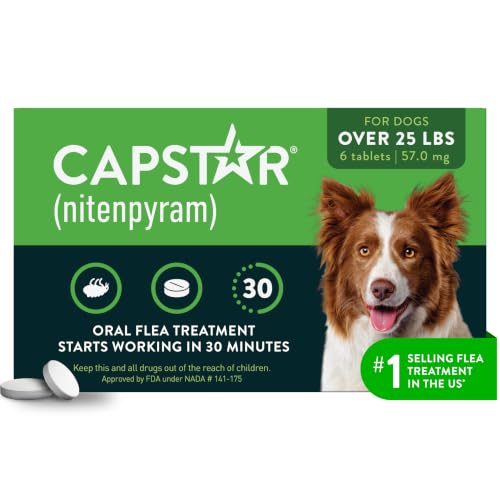
Option A: Capstar (Nitenpyram) — 5-7 Dollars Per Dose
An oral tablet that kills all adult fleas on your dog within 30 minutes. Available over-the-counter (no prescription needed). Effects last 24 hours. This is the fastest way to kill adult fleas and is safe for puppies over 4 weeks and over 2 pounds.
Use Capstar as a “clean sweep” — one dose kills all adults on the dog immediately. Follow with a longer-lasting preventive (Step 2).
Option B: Topical Treatment (Frontline, Advantage) — 10-15 Dollars Per Dose
Applied between the shoulder blades. Kills adult fleas and prevents reinfestation for 30 days. Available over-the-counter. Generic versions (PetArmor, Sentry) contain the same active ingredients (fipronil or imidacloprid) for 5-10 dollars per dose.
Option C: Oral Preventive (NexGard, Simparica) — 10-18 Dollars Per Dose

Prescription-only chewable tablets that kill fleas for 30 days. More expensive but more effective than topicals — fleas cannot build resistance to oral preventives as easily. Also kills ticks. Requires vet prescription.
Option D: Flea Comb + Dish Soap — 2-3 Dollars
The cheapest method for mild infestations. A flea comb (2-3 dollars) removes adult fleas from the coat. Dip the comb in a bowl of water with a few drops of Dawn dish soap — the soap breaks the surface tension and drowns fleas instantly. Comb daily for 2 weeks. This is labor-intensive but effective for light infestations and costs almost nothing.
Do not use: flea collars (ineffective, toxic to humans and cats), essential oils (toxic to cats and many are ineffective), or permethrin products (toxic to cats — if you have cats in the household, avoid all permethrin products).
Step 2: Start Monthly Prevention (5-10 Dollars Per Month)
After the initial Capstar dose, start a monthly preventive to prevent reinfestation from eggs hatching in your home:
- Generic Frontline (PetArmor, fipronil) — 5-10 dollars/month. Over-the-counter.
- Sentry Fiproguard — 5-8 dollars/month. Generic fipronil.
- NexGard or Simparica — 10-18 dollars/month. Prescription. Also covers ticks.
Continue monthly prevention for at least 3 months to cover the full flea lifecycle (until all eggs have hatched and been killed).
Step 3: Treat Your Home (5-15 Dollars)
This is where most people fail. You must treat the environment, not just the dog.
Vacuum Thoroughly (Free)
Vacuuming is the single most effective free home treatment for fleas:
- Vacuum all carpets, rugs, furniture, and baseboards
- Vacuum daily during the first 2 weeks, then every 2-3 days for the next 6 weeks
- Vacuuming removes eggs, larvae, and adult fleas from carpet fibers
- Vibration from vacuuming triggers pupae to hatch — the newly hatched adults are then killed by the monthly preventive on your dog
- Empty the vacuum bag or canister OUTSIDE after each use (fleas can escape from the vacuum)
- Seal vacuum contents in a plastic bag and dispose in outdoor trash

Wash All Bedding (Free)
Wash all pet bedding, your bedding (if the dog sleeps on your bed), blankets, and any fabric your dog contacts in hot water. Dry on the highest heat setting. Fleas at all life stages die at temperatures above 95 degrees F — a hot dryer kills them all.
Wash bedding weekly for 3 weeks to catch newly hatched fleas.
Salt or Boric Acid (3-5 Dollars)
For carpet treatment, sprinkle finely ground salt or boric acid on carpets, work it in with a broom, let it sit for 24-48 hours, then vacuum thoroughly. The salt desiccates (dries out) flea larvae and eggs. Boric acid (3-5 dollars for a bottle) does the same and is more effective.
Keep pets and children off treated carpets until the powder is vacuumed up. Boric acid is low-toxicity but should not be ingested.
Flea Spray for Home (8-15 Dollars)
If vacuuming alone is not enough, use a home flea spray containing an insect growth regulator (IGR) such as methoprene or pyriproxyfen. The IGR prevents flea eggs and larvae from developing into adults — breaking the lifecycle. Spray carpets, furniture, baseboards, and pet bedding. One can covers 1-2 rooms. Products: Precor (10-15 dollars), Flea & Tick Home Spray (8-12 dollars).
Step 4: Treat Your Yard (Free to 5 Dollars)
If your dog spends time outdoors, fleas may be in your yard — especially in shaded, humid areas under bushes and decks. Treatment:
- Mow the lawn short — Fleas prefer tall grass. Keeping grass short exposes fleas to sunlight, which kills them. Free.
- Remove leaf litter and debris — Fleas breed in organic debris. Rake and dispose of leaves. Free.
- Diatomaceous earth (food grade) — 5-10 dollars for a 10-pound bag. Sprinkle in shaded areas where your dog rests. The microscopic particles damage flea exoskeletons and cause dehydration. Reapply after rain. Safe for pets and children.
- Nematodes (beneficial worms) — 15-25 dollars online. Microscopic worms that eat flea larvae. Apply to yard with a watering can. One application lasts 2-3 months. Non-toxic and highly effective.
The 3-Month Timeline
Flea elimination takes 3 months minimum because of the pupal stage. Here is the timeline:
| Week | Dog Treatment | Home Treatment | What Is Happening |
|---|---|---|---|
| Week 1 | Capstar (kill adults) + start monthly preventive | Vacuum daily, wash all bedding, apply boric acid or IGR spray | Killing adults on dog, eggs hatching in home |
| Week 2 | Continue monthly preventive | Vacuum daily, wash bedding | First wave of new adults from eggs — killed by preventive on dog |
| Week 3 | Continue monthly preventive | Vacuum every 2-3 days | Second wave from pupae — vibration from vacuuming triggers hatching |
| Week 4 | Reapply monthly preventive | Vacuum weekly | Most pupae have hatched and been killed |
| Week 5-8 | Continue monthly preventive | Vacuum weekly, wash bedding biweekly | Remaining pupae hatching — stragglers |
| Week 9-12 | Continue monthly preventive | Vacuum weekly | Infestation eliminated — continue prevention to avoid reinfestation |
| Month 4+ | Continue monthly preventive year-round | Normal cleaning | Prevention mode |
If you stop treatment before 3 months, surviving pupae will hatch and restart the infestation. The 3-month commitment is non-negotiable.
The Total Cost Breakdown
| Item | Cost |
|---|---|
| Capstar (1 dose) | 5-7 dollars |
| Monthly preventive (3 months, generic fipronil) | 15-30 dollars |
| Flea comb | 2-3 dollars |
| Boric acid or salt for carpets | 3-5 dollars |
| Home flea spray with IGR (optional) | 8-15 dollars |
| Diatomaceous earth for yard (optional) | 5-10 dollars |
| Vacuuming, washing bedding, yard maintenance | Free |
| Total for 3-month protocol | 25-70 dollars |
Compare to professional extermination: 200-400 dollars per treatment (often needs 2-3 treatments = 400-1,200 dollars). The DIY protocol costs 25-70 dollars and achieves the same result.
Preventing Reinfestation (5-10 Dollars Per Month)
Once the infestation is eliminated, keep your dog on monthly flea prevention year-round. Fleas are active whenever temperatures are above freezing — in many regions, that means year-round. The cheapest effective option: generic fipronil (PetArmor, Sentry Fiproguard) at 5-10 dollars per month.
Additional prevention:
- Vacuum weekly — Removes any fleas brought in from outside before they can establish
- Check your dog after walks — Use a flea comb on areas where fleas congregate (base of tail, groin, belly)
- Treat all pets in the household — If you have cats or multiple dogs, all must be treated. An untreated pet is a reservoir for fleas.
- Be cautious with dog parks and wildlife areas — Fleas can jump from other dogs and from wildlife (raccoons, opossums, foxes)
The Bottom Line
Flea elimination costs 25-70 dollars for the complete 3-month protocol: Capstar oral tablet (5-7 dollars, kills all adult fleas in 30 minutes), generic monthly preventive (PetArmor 5-10 dollars/month for 3 months), vacuuming daily for 2 weeks then weekly (free — vibration triggers pupae to hatch), washing all bedding in hot water weekly (free), boric acid or salt on carpets (3-5 dollars), and optional home flea spray with IGR (8-15 dollars). The critical mistake most people make is treating only the dog — 95 percent of the flea population (eggs, larvae, pupae) lives in the home, not on the dog. You must treat both for 3 months to cover the full lifecycle. Pupae are nearly indestructible — the only way to eliminate them is to trigger hatching (via vacuum vibration) and kill the emerging adults with the monthly preventive on your dog. Total cost: 25-70 dollars vs. 200-1,200 dollars for professional extermination. After elimination, stay on monthly prevention year-round (5-10 dollars/month) — generic fipronil is as effective as brand-name Frontline at half the cost. Treat all pets in the household, vacuum weekly, and check your dog after walks in wildlife areas. The 5-dollar monthly preventive prevents the 200-600 dollar infestation.
Last updated: July 2026 | By ThriftyPaw | Prices and availability subject to change
ThriftyPaw is reader-supported. As an Amazon Associate, we earn from qualifying purchases. This means we may earn a small commission when you buy through links on this site at no additional cost to you. We only recommend products we genuinely believe in. Thank you for supporting ThriftyPaw.
🐾 Get Your Free Big Dog First Aid Kit Checklist
Join our newsletter and get this free printable plus weekly tips.
Price Check
Prices verified via our product tracker. Updated Sep 27.
| Capstar Oral Flea Tablets Dogs 25+ lbs, Nitenpyram, 6-Dose | $42.97 | 4.2★ (32,928) |
| PetArmor Plus Flea & Tick Topical Dogs 89-132 lbs, 6-Month | $39.74 | 4.2★ (62,945) |
| Sentry Fiproguard for Dogs, Flea and Tick Prevention for D | $19.16 | 4.2★ (9,058) |
| NexGard® (afoxolaner) Flea and Tick Protection for Dogs Or | $167.89 | 4.8★ (233) |
As an Amazon Associate we earn from qualifying purchases.