

This article contains affiliate links. We may earn a commission from qualifying purchases.
Some content on this site is AI-assisted and reviewed by our editorial team.
Dog booties are not a fashion accessory. They protect your dog’s paw pads from hot pavement, freezing snow, sharp rocks, road salt, and broken glass. Paw pad injuries are painful, slow to heal (paw pads have poor blood supply compared to other skin), and cost 200-500 dollars per vet visit. A quality set of dog booties costs 15-30 dollars and lasts 6-12 months — one of the highest-return investments in dog gear. This guide covers when your dog needs booties, which types work best for each situation, how to get the right fit, and how to train your dog to actually wear them.
When Does Your Dog Need Booties?
Summer (Above 85 Degrees)
Pavement temperature is 40-60 degrees hotter than air temperature in direct sun. At 85 degrees air temperature, pavement can reach 130-145 degrees — hot enough to cause second-degree burns on paw pads within 60 seconds. The “5-second rule”: place the back of your hand on the pavement. If you cannot hold it for 5 seconds, your dog needs booties or needs to walk on grass.
Signs of paw pad burns:
- Limping or refusing to walk
- Licking paws excessively after a walk
- Dark or discolored paw pads
- Blistering or peeling paw pads
- Raw, bleeding pads
Paw pad burns cost 200-500 dollars to treat (vet visit, pain medication, bandaging, antibiotics for secondary infection). Dog booties at 15-30 dollars prevent the injury entirely.
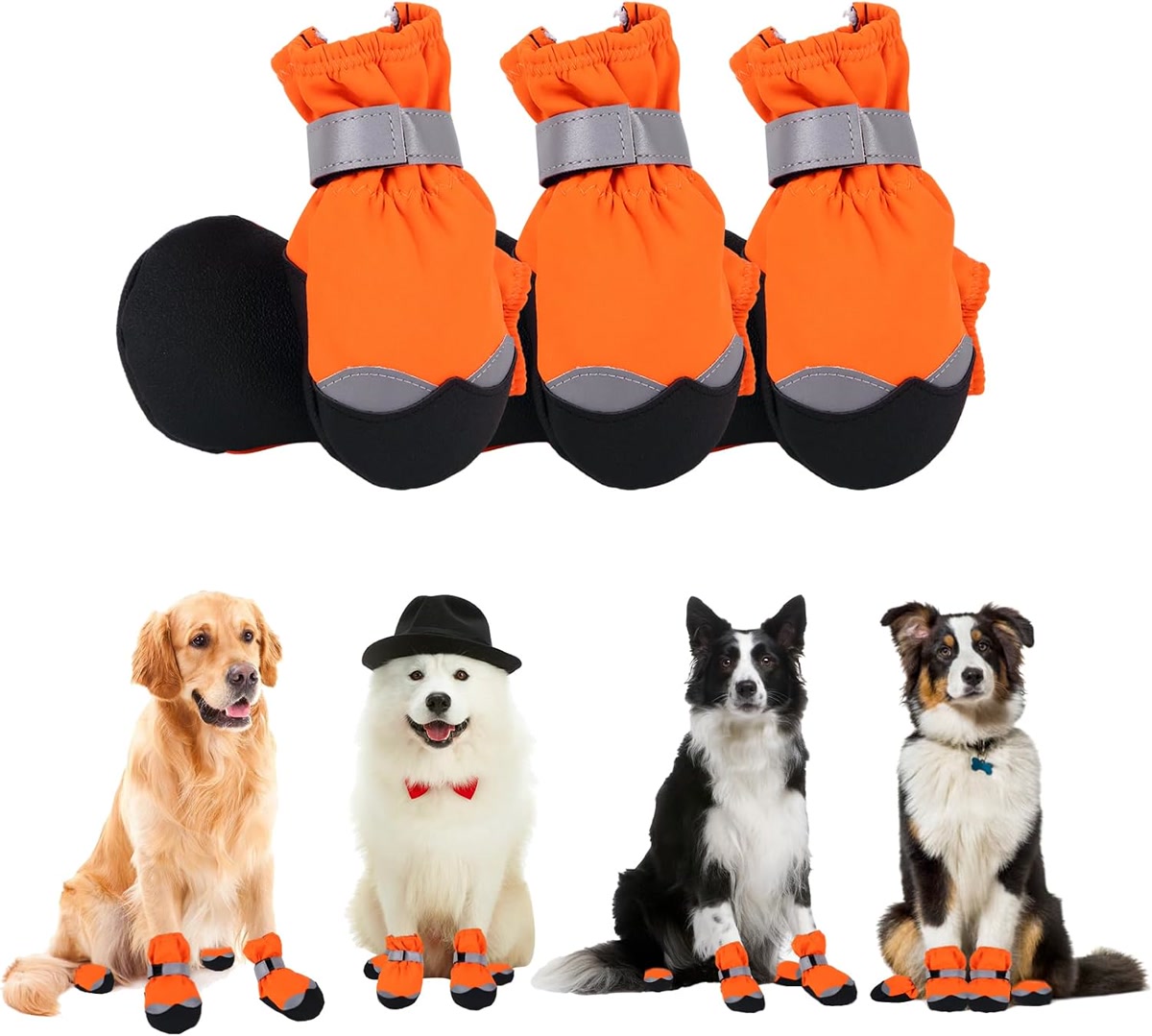
Winter (Below 32 Degrees)
Two winter threats to paw pads:
- Frostbite — paw pads can freeze in temperatures below 20 degrees, especially with wind chill. Small dogs and short-coated breeds are at highest risk. Booties prevent frostbite at 15 dollars.
- Road salt and chemical de-icers — road salt is abrasive and can cause cracking of paw pads. Chemical de-icers (calcium chloride, magnesium chloride) burn paw pads and are toxic if licked off. After winter walks without booties, you must wash your dog’s paws — failing to do so means your dog licks and ingests the chemicals. Booties eliminate this risk entirely.
Hiking and Rough Terrain
Sharp rocks, thorns, burrs, and broken glass on trails can cut paw pads. On long hikes, paw pads can become raw from repetitive contact with rough surfaces. Booties allow dogs to hike longer distances on rough terrain without pad wear. Hiking booties are more durable than summer/winter booties and cost 25-40 dollars.
After Paw Injury or Surgery
If your dog has a paw pad cut, burn, or surgery, booties protect the wound during healing. A waterproof booty prevents infection from ground contact. Your vet can recommend a medical booty (15-30 dollars) or you can use standard dog booties.
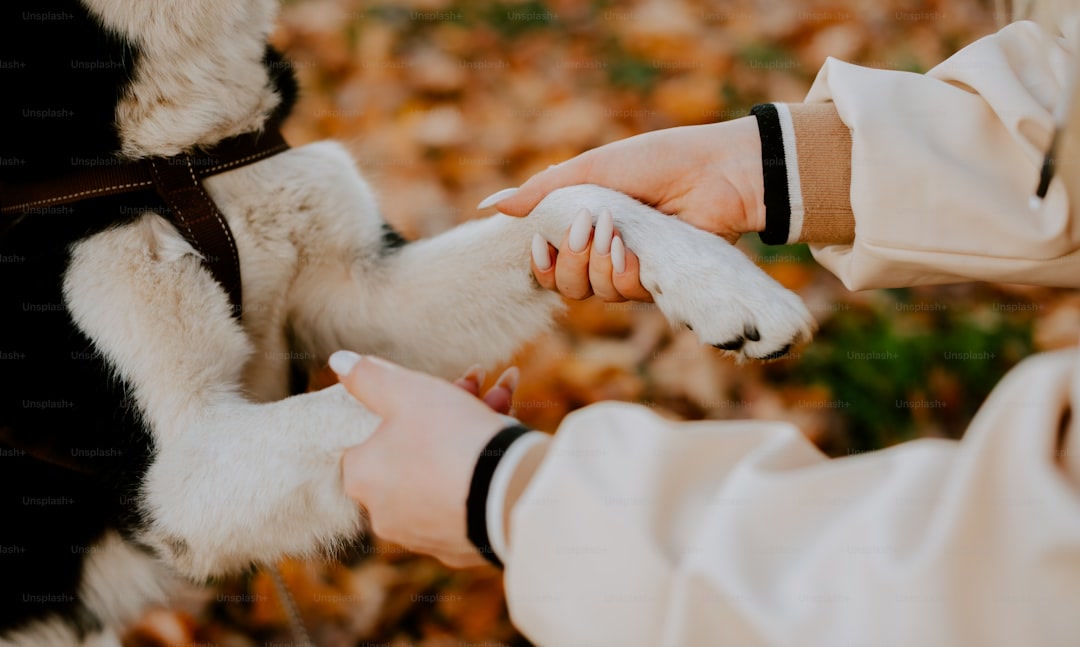
Types of Dog Booties (Ranked by Use Case)
1. Everyday Walking Booties (15-25 Dollars)
Lightweight booties for pavement protection, short walks, and mild weather.
| Brand | Price | Sizes | Best For |
|---|---|---|---|
| Pawz Rubber Booties | 8-15 dollars (pack of 12) | XS-XL | Quick protection, disposable, waterproof |
| QUMY Dog Booties | 15-20 dollars (set of 4) | S-XL | Budget everyday, rubber sole |
| ULAFRET Dog Booties | 15-22 dollars (set of 4) | S-XL | Breathable mesh, anti-slip sole |
Best value: Pawz Rubber Booties. These are disposable rubber balloons that slip over the paw. They are waterproof, stay on well, and cost 8-15 dollars for a pack of 12. Each pair lasts 3-5 walks before wearing through. They do not provide insulation or cushioning but are excellent for protecting paws from hot pavement, road salt, and chemicals. No straps or velcro to fuss with — they slip on and the natural rubber grips the leg.
2. Winter Dog Booties (15-35 Dollars)
Insulated booties for snow, ice, and chemical de-icer protection.
| Brand | Price | Insulation | Waterproof |
|---|---|---|---|
| Kurgo Step-N-Strobe | 20-25 dollars | Moderate | Yes |
| Ultra Paws Rugged | 25-35 dollars | Moderate | Yes |
| Muttluks Fleece-Lined | 25-35 dollars | Fleece lining | Water-resistant |
Look for winter booties with a tall cuff (past the ankle) to keep snow out, a waterproof sole, and a secure closure (velcro strap that wraps around the ankle). Fleece-lined booties provide extra warmth for small dogs and short-coated breeds.
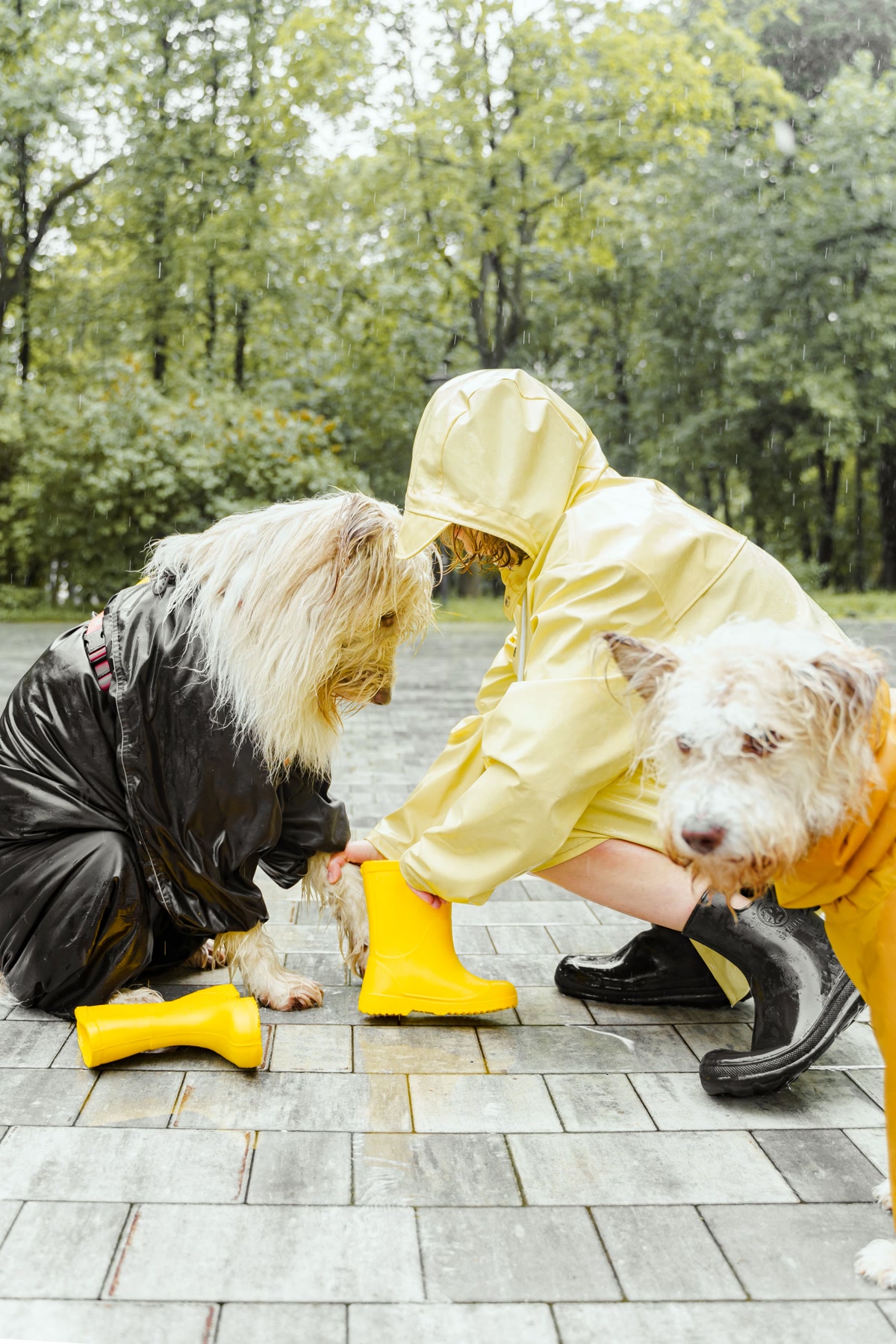
3. Hiking Dog Booties (25-40 Dollars)
Durable booties with thick soles for rough terrain.
| Brand | Price | Sole | Durability |
|---|---|---|---|
| Ruffwear Grip Trex | 35-45 dollars | Vibram rubber | 6-12 months regular use |
| Kurgo Northbound | 25-35 dollars | Rubber | 3-6 months regular use |
| Ultra Paws Durable | 25-30 dollars | Recycled tire | 3-6 months |
Ruffwear Grip Trex is the gold standard — Vibram soles (same material as human hiking boots), breathable mesh, and a secure cuff. At 35-45 dollars they are the most expensive option but last 6-12 months of regular hiking. For occasional hikers, the Kurgo Northbound at 25-35 dollars provides good protection at a lower price.
4. Medical Booties (10-25 Dollars)
For paw injuries, post-surgery, or bandage protection.
- Deracox booties — 10-15 dollars. Waterproof, breathable, stays on with a single strap. Good for protecting bandages.
- Vet wrap — 5-8 dollars per roll. Self-adhesive bandage wrap that protects paws without a booty. Not waterproof but cheap and easy to replace.
- PawFlex — 12-18 dollars. Adjustable medical booty with a non-slip bottom. Machine washable.
How to Measure Your Dog’s Paws for Booties
Incorrect sizing is the number one reason dog booties fail. A booty that is too small pinches and chafes. A booty that is too large slips off or twists, leaving the paw exposed.
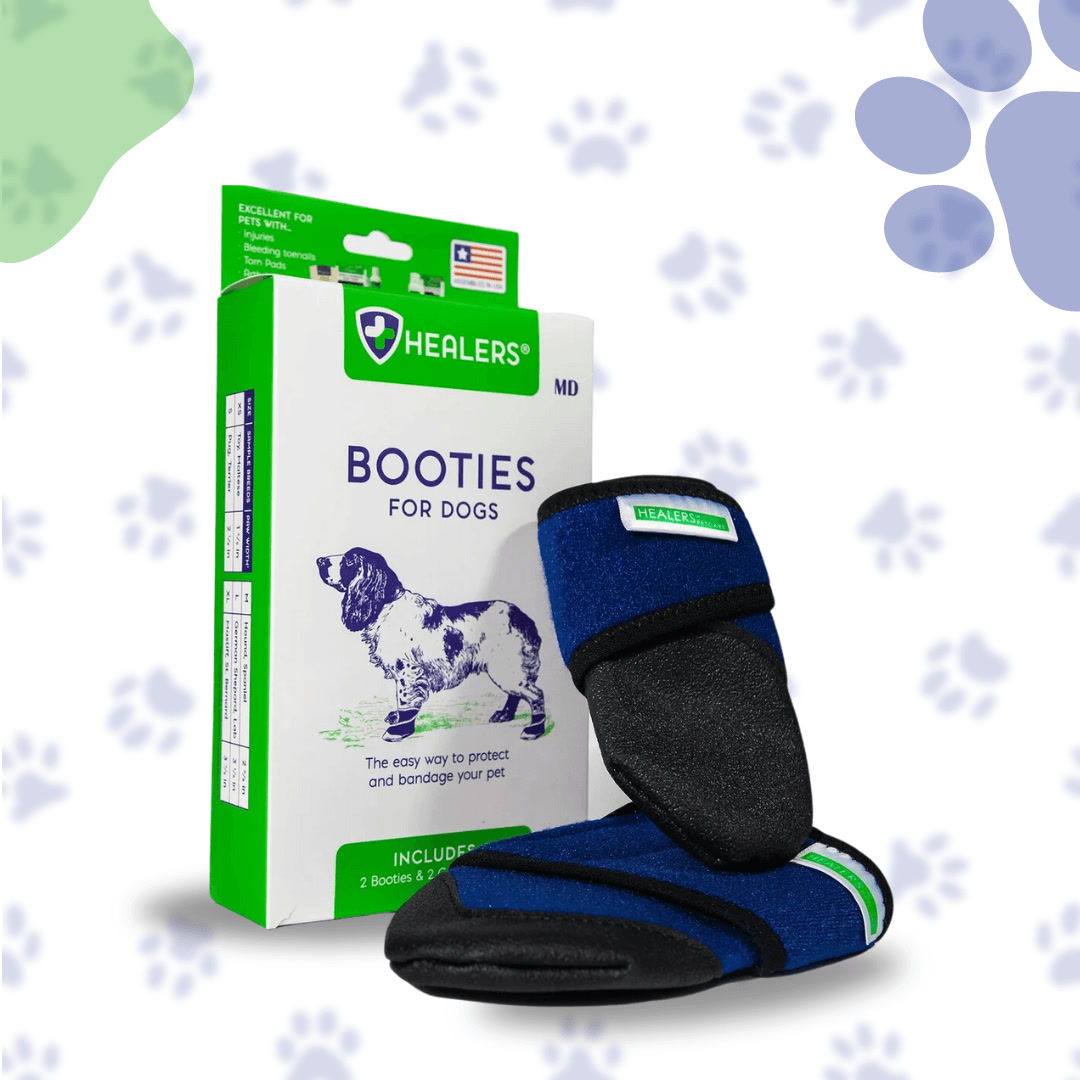
How to measure:
- Have your dog stand on a piece of paper. (Weight-bearing spreads the paw wider than when the dog is sitting.)
- Mark the widest point — the outside of the paw including the toenails, side to side.
- Mark the longest point — from the tip of the longest toenail to the back of the paw pad.
- Measure both marks in inches.
- Check the manufacturer’s sizing chart. Every brand sizes differently. Do not assume your dog is a “medium” across all brands.
- Size up if between sizes. A slightly large booty with a secure strap is better than a slightly small booty that pinches.
Measure all four paws — some dogs have different sized front and back paws. Front paws are typically larger because they bear more weight.
Training Your Dog to Wear Booties (Free, Takes 1-2 Weeks)
Most dogs hate booties at first. They high-step, shake their feet, or refuse to move. This is normal. Training takes patience but is free.
Step 1: Introduction (Day 1-2)
- Let your dog sniff and investigate the booties. Give treats for calm interaction with them.
- Touch one paw with a booty (do not put it on). Treat. Repeat several times.
- Put one booty on loosely, immediately treat, then remove it. Repeat 3-5 times.
Step 2: One Booty at a Time (Day 2-4)
- Put one booty on the front paw. Let your dog walk around the house with it for 5-10 minutes.
- Expect high-stepping and shaking. Ignore it — do not reward the drama.
- When your dog walks normally with one booty, treat and praise.
- Remove the booty. Repeat with each paw.
Step 3: Two Booties (Day 4-6)
- Put booties on both front paws. Walk around the house for 10 minutes.
- Distract with training, play, or food puzzles so your dog focuses on something other than the booties.
- Once comfortable with two front booties, try two back booties.
Step 4: All Four Booties (Day 6-10)
- Put all four booties on. Your dog may freeze or high-step dramatically. Be patient.
- Encourage movement with treats, toys, or short walks in the house.
- Most dogs adjust within 15-20 minutes once they realize they can walk normally.
- Practice daily until your dog no longer notices the booties.
Step 5: Outdoor Walk (Day 10-14)
- Take a short outdoor walk with all four booties.
- Check that booties have not twisted or slipped when you return.
- Gradually increase walk length as your dog becomes comfortable.
Tips: Put booties on right before the walk and remove them immediately after — do not leave them on in the house. Always check for rubbing or chafing after the first few walks. If you see red marks on the paw or ankle, the booty is too tight or too loose — adjust the straps.
Alternatives to Booties
Paw Wax (12-15 Dollars)
Musher’s Secret is a wax-based paw protectant that creates a breathable barrier against hot pavement, cold snow, and chemicals. It does not provide as much protection as booties but is easier to apply and most dogs tolerate it immediately. Apply every 3-5 days. A small jar lasts 2-3 months.
Dog Socks (8-15 Dollars)
Dog socks provide minimal protection but help with hardwood floor traction for senior dogs. They are not suitable for outdoor use — they soak through quickly and offer no puncture protection. For indoor traction only.
Vet Wrap (5-8 Dollars)
Self-adhesive bandage wrap can protect a single injured paw. Not suitable for long walks but works as a temporary measure.
The Bottom Line
Dog booties prevent paw pad injuries that cost 200-500 dollars per vet visit. For 15-30 dollars, you get protection for hot pavement, winter salt, hiking terrain, and post-injury recovery. The best budget option is Pawz rubber booties (8-15 dollars per pack of 12) for everyday protection — waterproof, easy to put on, and no straps to fuss with. For winter, Muttluks or Kurgo booties (25-35 dollars) provide insulation and waterproofing. For hiking, Ruffwear Grip Trex (35-45 dollars) is the gold standard with Vibram soles. Measure your dog’s paws correctly (weight-bearing, including toenails), train patiently over 1-2 weeks with treats, and check for proper fit after each walk. If your dog absolutely refuses booties, Musher’s Secret paw wax (12-15 dollars) provides moderate protection without the fuss. The 15-dollar investment prevents the 500-dollar vet bill and the suffering of a burned or cut paw.
Last updated: July 2026 | By ThriftyPaw | Prices and availability subject to change
Check Current Prices on Amazon
ThriftyPaw is reader-supported. As an Amazon Associate, we earn from qualifying purchases. This means we may earn a small commission when you buy through links on this site at no additional cost to you. We only recommend products we genuinely believe in. Thank you for supporting ThriftyPaw.
🐾 Get Your Free Big Dog First Aid Kit Checklist
Join our newsletter and get this free printable plus weekly tips.
Price Check
Prices verified via our product tracker. Updated Sep 27.
| QUMY Dog Shoes for Hot Pavement, Dog Snow Boots & Paw Prot | $28.99 | 4.0★ (36,168) |
| Dimicoo Breathable Dog Boots for Medium Large Dogs,Non-Sli | $17.98 | 4.0★ (1,024) |
| ThunderShirt for Dogs Calming Anxiety Vest, Small, Heather | $44.88 | 4.2★ (42,996) |
As an Amazon Associate we earn from qualifying purchases.