This article contains affiliate links. We may earn a commission from qualifying purchases.
Some content on this site is AI-assisted and reviewed by our editorial team.
The quote came in at $900. My cat is nine, the vet wanted bloodwork before anesthesia, dental X-rays, the cleaning itself, and — the part that doubled the number — two extractions she could already feel under the gumline. I paid it, because by the time a cat lets you know their mouth hurts, it is bad. But on the drive home I did what I always do: the math on what could have waited. The answer was a routine I skipped for years, and it costs about seven dollars a month.
Full honesty up front: no chew, treat, or gel replaces the professional cleaning — tartar that has already calcified comes off with a scaler, not a kibble. What a daily dental treat routine genuinely does is slow the new plaque that builds between cleanings, stretch the years between procedures, and cost about $80 a year against a four-figure one. Here are the three treats worth that money, the math on each, and the limits nobody puts on the bag.
The cost of the problem: an anesthetic dental for a cat commonly quotes in the low hundreds for a straightforward case and crosses $1,000 once X-rays and extractions stack — $900 was a mid-grade bill, not a horror story. If one cleaning every three years is the pattern, the treat routine between them costs less than a tenth of a single invoice.
Feline Greenies 21-Ounce Tub — The Vet-Familiar Standard
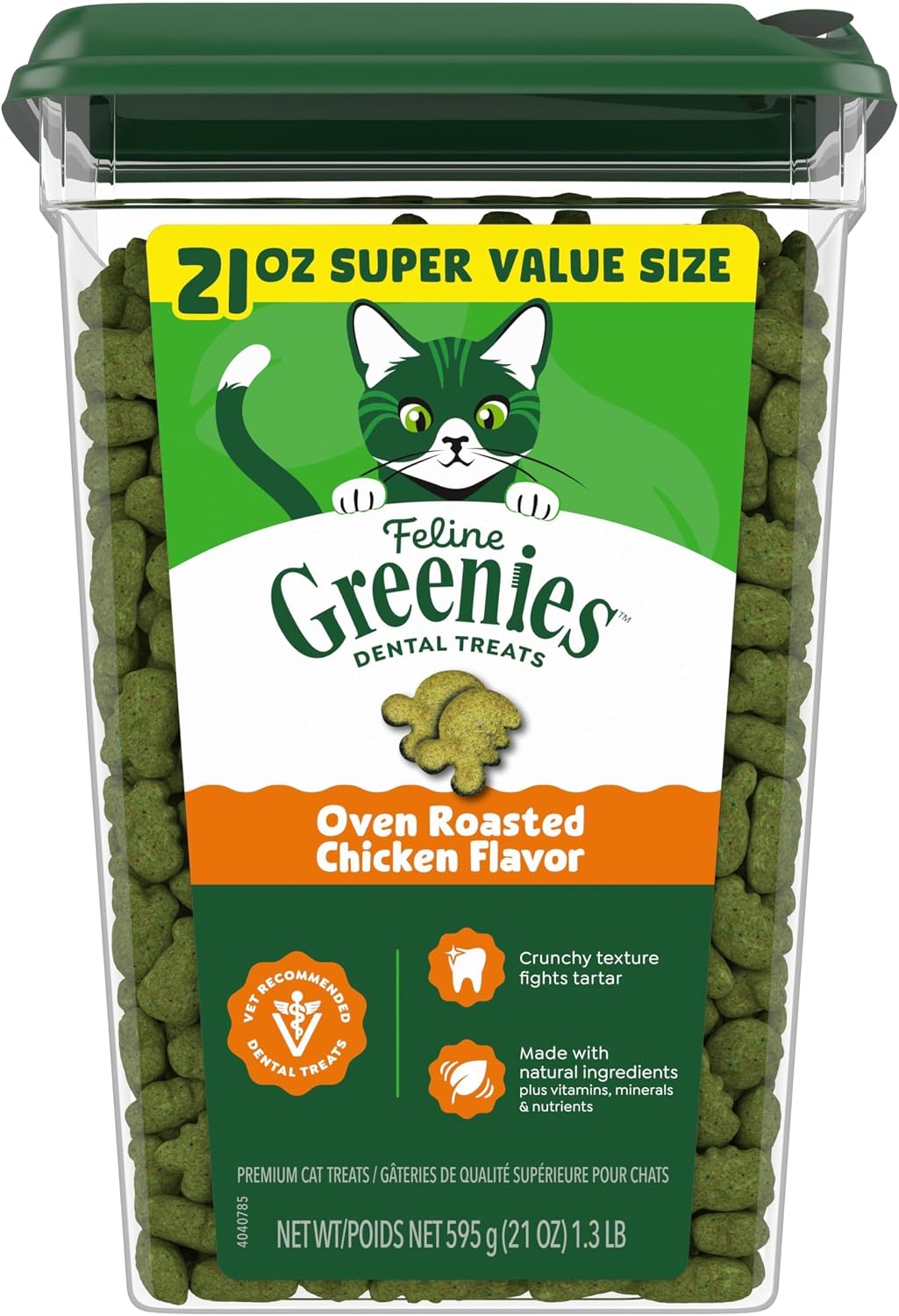
The Feline Greenies Dental Treats 21-ounce tub is the only dental treat most vets name unprompted, and the big tub is where the math gets good: about $23 for 21 ounces — roughly 1,500 treats. The label’s dental feeding is 8 treats, twice a day for a 10-pound cat, which makes one tub last about three months. That works out to about $7 a month.
- What it does well: the crunchy texture scrubs as the cat chews, the treats run under two calories each, and the line carries the VOHC seal — the veterinary council’s accepted-for-plaque-control mark, which almost nothing else in the treat aisle can say.
- Honest cons: these slow new plaque; they do nothing to tartar that is already brown and bonded to the tooth. And the dental feeding assumes the cat actually chews — a gulper clears a Greenie in one swallow and gets zero mechanical benefit.
My take: the default answer and the cheapest credible one — about $7 a month for the treat your vet already recommends, in the size that makes the per-treat math work.
Purina DentaLife Savory Salmon 19-Ounce Pouch — The Porous Crunch Rival
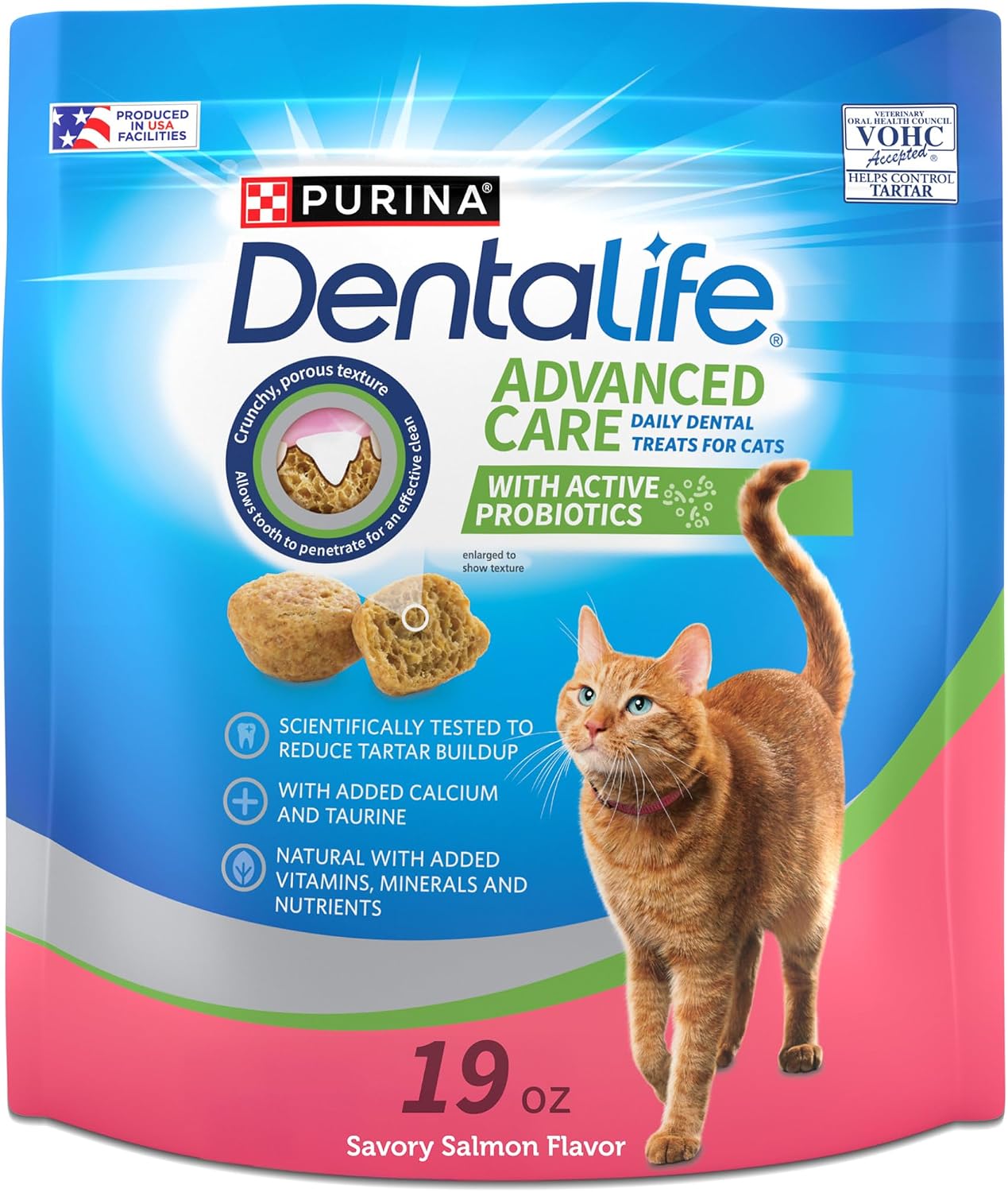
The Purina DentaLife Savory Salmon 19-ounce pouch is DentaLife’s porous, ridge-designed kibble-style chew — the texture is a lattice rather than a biscuit, so it crumbles against the tooth instead of shattering. About $14 for the 19-ounce pouch, 4.5 stars, and the VOHC endorsement sits on the packaging too.
- What it does well: small mouths and older cats handle the porous pieces better than dense biscuits, and the salmon flavor converts cats that turn down chicken-flavored everything.
- Honest cons: the crunch is the entire mechanism — a cat that inhales treats gets flavor and nothing else. The pouch (versus a tub) is also more expensive per ounce than the Greenies bulk math above.
My take: the pick when the cat refuses Greenies or needs an easier texture — run it daily at the label’s feeding and the plaque math holds.
Virbac C.E.T. IntelliDent Cat Bites — The Vet-Line Pick
The Virbac C.E.T. IntelliDent Cat Bites is the chew from the veterinary pharmaceutical side of the aisle: Virbac’s dental line, chicken-flavored crunchy bites, about $11 for a 90-bite bag. This is the product that replaced the old C.E.T. chews vets used to hand out at checkouts.
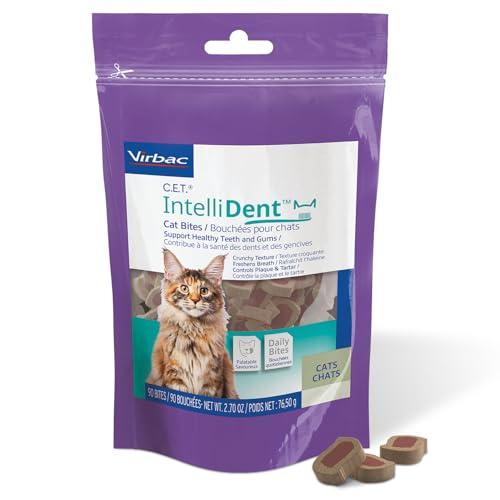
- What it does well: a veterinary brand with a 3-in-1 positioning — clean teeth, fresh breath, gum support — and the backing of a company whose entire catalog your vet already stocks.
- Honest cons: the ratings tell the honest story — around 3.9 stars, and the one-star reviews are overwhelmingly “my cat refused it.” A 90-bite bag at $11 also runs a higher per-treat cost than the Greenies tub by a wide margin.
My take: worth one bag as a trial for the picky cat that still needs a chew — but the Greenies tub wins on price and on the odds your cat actually finishes the bag.
Budget move: treats are the definition of a consumable — set up Subscribe & Save on whichever one your cat commits to, take the roughly 5% discount, and never run the routine dry mid-winter.
Price note: these prices are a snapshot — winter demand wobbles them daily. If any of these are on your list, a free 30-day Prime trial covers fast free shipping on the Greenies tub and the DentaLife pouch, and checking the live price beats trusting this article’s numbers.
Features That Actually Matter (And Ones That Don’t)
The VOHC seal is the only claim worth shopping by. The Veterinary Oral Health Council accepts products that met published plaque-control standards. Greenies and DentaLife carry it; most impostors in the treat aisle do not, no matter what the bag says about “fresh breath.”
Crunch is the mechanism. Dental treats work by mechanical abrasion during chewing. Anything a cat swallows whole — soft chews, lickable pastes marketed for teeth — is a flavor, not a treatment.
They slow plaque. They do not remove tartar. Brown, bonded tartar is calcified plaque; only scaling removes it. A treat routine that starts after the tartar is set is maintenance, not reversal — the cleaning still happens, later and lighter.
Daily is the dose. The plaque-slowing studies behind the VOHC seal are daily-feeding studies. A treat every few days is a snack with good marketing.
The Annual Cost Comparison
- The treat routine: about $7 a month at the label feeding — under $90 a year, about $270 across the three years between cleanings.
- One skipped cleaning cycle: the $900 invoice that waits two extra years instead of one — plus extractions at $100-plus per tooth when the mouth finally fails.
- What the treats do not buy: an exemption. The anesthetic cleaning still comes; the routine just makes it shorter, cheaper, and less often, and keeps the in-between years from hurting her.
What’s the cheapest way to slow plaque on a cat’s teeth?
A daily VOHC-accepted crunchy dental treat — Feline Greenies in the 21-ounce tub is the math winner at about $7 a month at the label’s 16-treats-a-day feeding. It slows new plaque between cleanings; it does not replace the cleaning itself.
| Treat | About | Size | VOHC |
|---|---|---|---|
| Feline Greenies | $23 | 21 oz (approx. 1,500 treats) | Yes |
| Purina DentaLife | $14 | 19 oz pouch | Yes |
| C.E.T. IntelliDent | $11 | 90 bites | Vet-line |
Keep reading: the cat-furniture price floors worth waiting for and the vet-bill math that ended differently pair with this one for the rest of the cat budget.
ThriftyPaw is reader-supported. As an Amazon Associate, I earn from qualifying purchases. That means if you buy through one of the links above, I get a small commission at no extra cost to you. I only recommend products I’ve actually used with my own pets.
🐾 Get Your Free Big Dog First Aid Kit Checklist
Join our newsletter and get this free printable plus weekly tips.
Frequently Asked Questions
Do cat dental treats actually work?
The VOHC-accepted ones do what they claim: Feline Greenies and Purina DentaLife both carry the Veterinary Oral Health Council seal, and daily crunchy chewing slows new plaque buildup. What no treat does is remove tartar that has already calcified — that takes professional scaling under anesthesia.
How much does a cat dental cleaning cost in 2026?
An anesthetic dental for a cat commonly quotes in the low hundreds for a straightforward case and crosses $1,000 once dental X-rays and extractions stack — my own mid-grade bill with two extractions came to $900. Region and clinic change the number more than the cat does.
Can I avoid the anesthesia dental cleaning for my cat?
Not honestly — anesthesia-free scraping removes visible tartar but cannot clean below the gumline where the disease actually lives, so most vets do not accept it as a substitute. What you can do is stretch the years between cleanings: a daily dental-treat routine plus the cleaning your vet schedules is the combination that works.
Liked this guide? Get the next one in your inbox — the pet budget checklist is free too.
✓ You're in — check your inbox.
No spam. Unsubscribe anytime. We never share your email.