
This article contains affiliate links. We may earn a commission from qualifying purchases.
Some content on this site is AI-assisted and reviewed by our editorial team.
Last updated: May 2026 | By ThriftyPaw
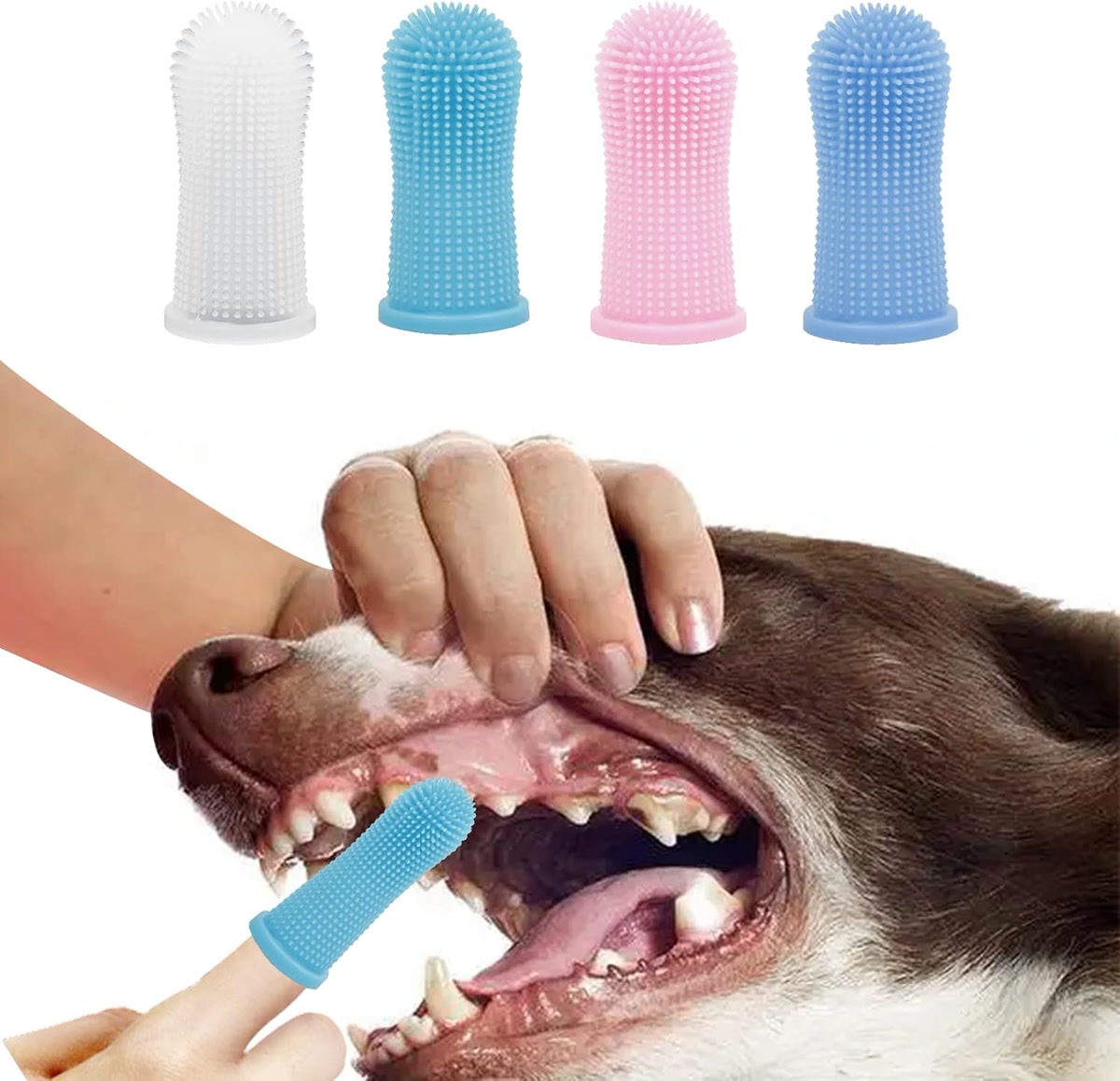
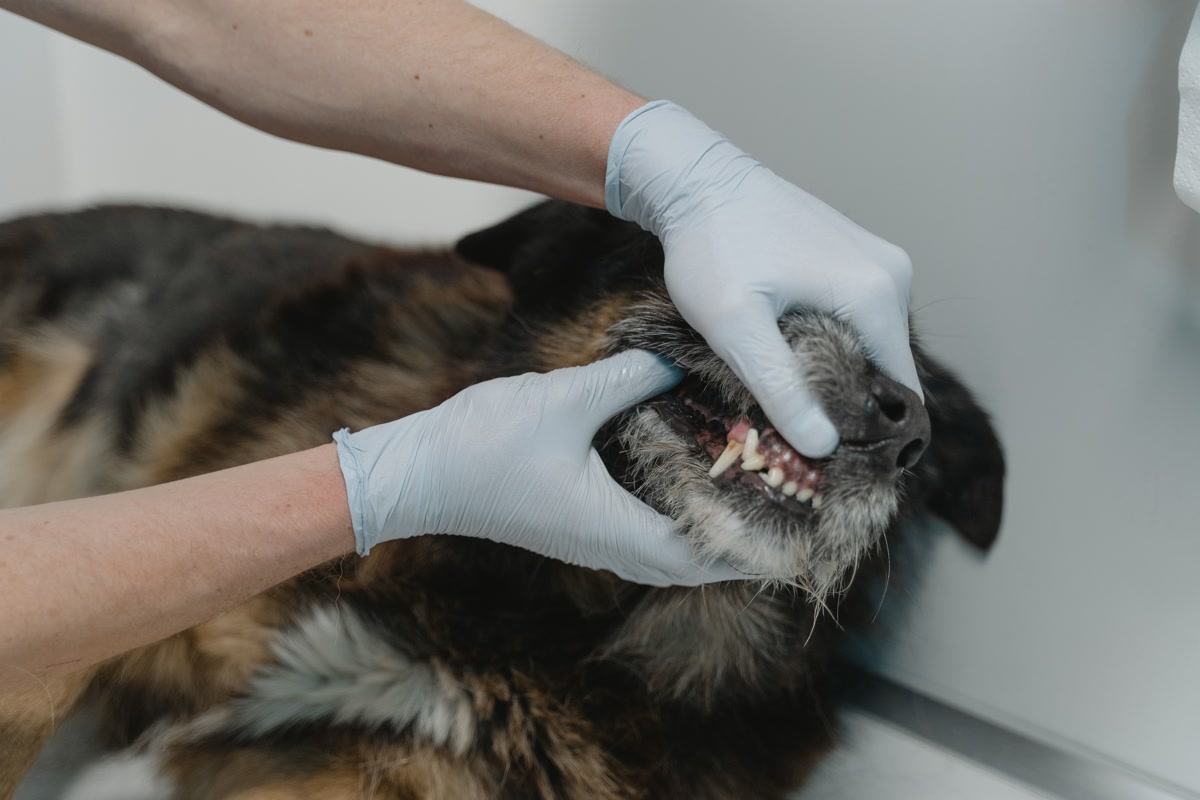
Dental disease is the most common health problem in dogs — by a lot. By age 3, over 80% of dogs have some form of periodontal disease. Left untreated, it leads to tooth loss, chronic pain, and bacteria entering the bloodstream, which can damage the heart, liver, and kidneys.
Professional dental cleanings at the vet cost 300 to 700 dollars. A toothbrush and two minutes a day costs about 8 dollars a year. This is not a hard math problem.
Here’s everything you need to know about dog dental care on a budget — what to buy, how to use it, and what to skip.
(Already tracking your dog’s total healthcare costs? Our monthly cost breakdown by breed puts dental care in context.)
Why Dog Dental Care Matters
Periodontal disease in dogs doesn’t just cause bad breath. The bacteria in infected gums enter the bloodstream through inflamed tissue and travel to major organs. Studies have shown links between periodontal disease and:
- Heart disease — Bacteria from dental infections can colonize heart valves
- Liver disease — The liver filters bacteria from the blood; chronic dental infections overload it
- Kidney disease — Same mechanism as the liver; kidneys filter damaged proteins from chronic inflammation
- Jaw fractures — Severe bone loss from chronic infection weakens the jaw, especially in small dogs
A professional dental cleaning at the vet costs 300–700 dollars (including anesthesia, which is required). Extractions add 50–200 dollars per tooth. A toothbrush costs 3–8 dollars.
The math speaks for itself.
The Best Dog Dental Care Products Under 20 Dollars
1. Vet’s Best Dog Toothbrush Kit — Best Starter Kit
Price: 7–10 dollars | Includes: Finger brush + long-handled brush + enzymatic toothpaste | ASIN: B0C2Z58N4S
If you’re starting from scratch, this kit has everything you need for under 10 dollars. The finger brush is better for small dogs and beginners (easier to control), the long-handled brush works for medium and large dogs, and the included toothpaste is poultry-flavored, which most dogs accept more readily than mint.
What works:
• Both brush types in one package — try both and see which your dog prefers
• Enzymatic toothpaste helps break down plaque between brushings
• Poultry flavor is palatable for most dogs
• Under 10 dollars for the full setup
What doesn’t:
• The toothpaste tube is small (2.5 oz) — you’ll need to replace it monthly with daily brushing
• The finger brush can be tricky if your dog is a chewer (they’ll try to chew your finger)
• The long-handled brush has somewhat soft bristles — fine for maintenance, not aggressive enough for heavy tartar
Bottom line: Best value starter kit. Buy this, use it daily, and you’ve solved 80% of your dog’s dental care needs for under 10 dollars.
2. Petrodex Enzymatic Dog Toothpaste — Best Toothpaste Value
Price: 5–8 dollars (3.5 oz tube) | Flavors: Poultry, beef, peanut | ASIN: B00025K0R6
The toothpaste you use matters more than the brush. Petrodex enzymatic toothpaste contains glucose oxidase and lactoperoxidase — enzymes that continue breaking down plaque between brushings, not just while you’re actively brushing. This means even a quick 30-second brushing does more than the mechanical scrubing alone.
What works:
• Enzymatic action continues working after brushing
• Poultry and beef flavors are well-accepted
• Large 3.5 oz tube lasts 2–3 months with daily brushing for a medium dog
• No foaming agents (dogs can’t spit, so human toothpaste is dangerous)
What doesn’t:
• Some dogs still resist having anything in their mouth — see the training section below
• The tube opening is large, making it easy to squeeze out too much
Important: Never use human toothpaste on a dog. Human toothpaste contains fluoride, xylitol (deadly to dogs), and foaming agents that cause GI upset if swallowed. Dog toothpaste is formulated to be swallowed safely.
3. Jasper Finger Brush for Dogs — Best for Small Dogs
Price: 8–10 dollars (2 pack) | Sizes: S/M, M/L | ASIN: B006T7NJ60
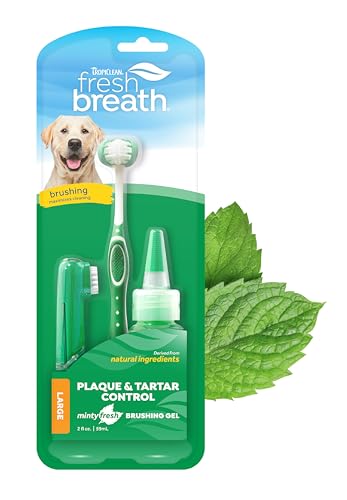
Finger brushes are the easiest way to brush a small dog’s teeth. The Jasper has soft silicone bristles on a flexible rubber thimble that fits over your index finger. You can feel exactly where you’re brushing and how much pressure you’re applying — which is critical for small mouths where you can’t see what you’re doing.
What works:
• Better control than any long-handled brush for dogs under 20 pounds
• Soft silicone bristles are gentler on inflamed gums than nylon
• Two-pack means you always have a clean one
• Dishwasher-safe for easy sanitizing
What doesn’t:
• Not suitable for dogs who bite — if your dog chomps on your fingers, use a long-handled brush instead
• Doesn’t reach the back molars as well as a long-handled brush on larger dogs
• Silicone bristles wear out faster than nylon (replace every 2–3 months)
Bottom line: If you have a small dog, start with a finger brush. It’s easier for both of you.
4. Arm & Hammer for Pets Dental Care Kit — Best for Large Dogs
Price: 8–12 dollars | Includes: Long-handled brush + finger brush + baking soda toothpaste | ASIN: B0002AQMZU
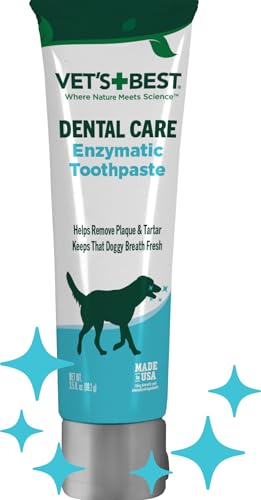
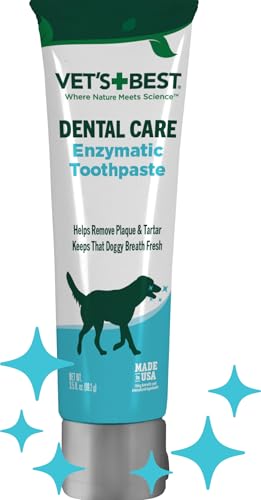
Arm & Hammer’s pet dental kit uses baking soda as the primary cleaning agent, which is effective at neutralizing odors and breaking down plaque. The long-handled brush has an angled head that reaches back molars on larger dogs — where most dental disease starts.
What works:
• Baking soda neutralizes odor and helps break down plaque
• Angled brush head reaches back teeth on large dogs
• Includes both brush types for flexibility
• Baking soda is a mild abrasive — effective without being harsh on gums
What doesn’t:
• Some dogs don’t like the taste of baking soda toothpaste (it’s slightly salty)
• The angled head takes getting used to — you may miss spots at first
• The finger brush in this kit is stiffer than the Jasper
Bottom line: Best kit for medium and large dogs who need to reach those back molars. See our guide to large breed grooming tools for more large-dog care tips.
5. Virbac C.E.T. Enzymatic Toothpaste — Vet-Recommended Premium Pick
Price: 10–15 dollars (2.5 oz tube) | Flavors: Poultry, beef, seafood, vanilla-mint, malt | ASIN: B0002AR18C
Virbac C.E.T. is what most veterinarians recommend. It uses a dual-enzyme system (glucose oxidase and lactoperoxidase) that’s more effective than single-enzyme formulations. It’s also the most palatable toothpaste for picky dogs, with 5 flavor options including a malt flavor that most dogs accept readily.
What works:
• Dual-enzyme system is more effective than single-enzyme formulations
• 5 flavor options — the widest selection available
• Malt flavor is well-accepted even by dogs who resist poultry or beef
• Most recommended by veterinarians
What doesn’t:
• More expensive per ounce than Petrodex (about 2x the price)
• 2.5 oz tube is smaller than the Petrodex 3.5 oz — costs more, lasts less
• Still requires daily brushing for maximum effectiveness
Bottom line: If your dog refuses other toothpaste, try the malt flavor. It’s the most palatable option available and worth the extra cost if it means you actually brush their teeth daily.
What to Skip (Products That Don’t Work)
Dental water additives: These claim to reduce plaque by adding enzymes to your dog’s drinking water. The concentration is so low that they have minimal effect — most of the active ingredients are destroyed by saliva and stomach acid before reaching the teeth. Save your money.
Dental sprays: Similar issue. Spraying enzymes on teeth for a few seconds doesn’t provide enough contact time to break down plaque. Brushing physically removes plaque; sprays just coat it briefly.
Rawhide “dental chews”: Rawhide doesn’t clean teeth. It softens into a gelatinous mass that dogs swallow without adequate chewing. The abrasive action needed to remove plaque requires sustained contact against the tooth surface, which rawhide doesn’t provide.
Bones and antlers: These can fracture teeth, especially in aggressive chewers. A fractured tooth costs 500–1,500 dollars to treat. A toothbrush costs 3 dollars.
Dental treats that are mostly carbs: Many “dental treats” are just regular treats shaped like a toothbrush. If the ingredient list is mostly wheat, corn, and rice, it’s not cleaning anything.
What Actually Works Besides Brushing
VOHC-Approved Dental Chews
The Veterinary Oral Health Council (VOHC) independently tests dental products and awards their seal to products that actually reduce plaque and tartar. This is the only reliable seal in the pet dental industry.
VOHC-approved products under 20 dollars:
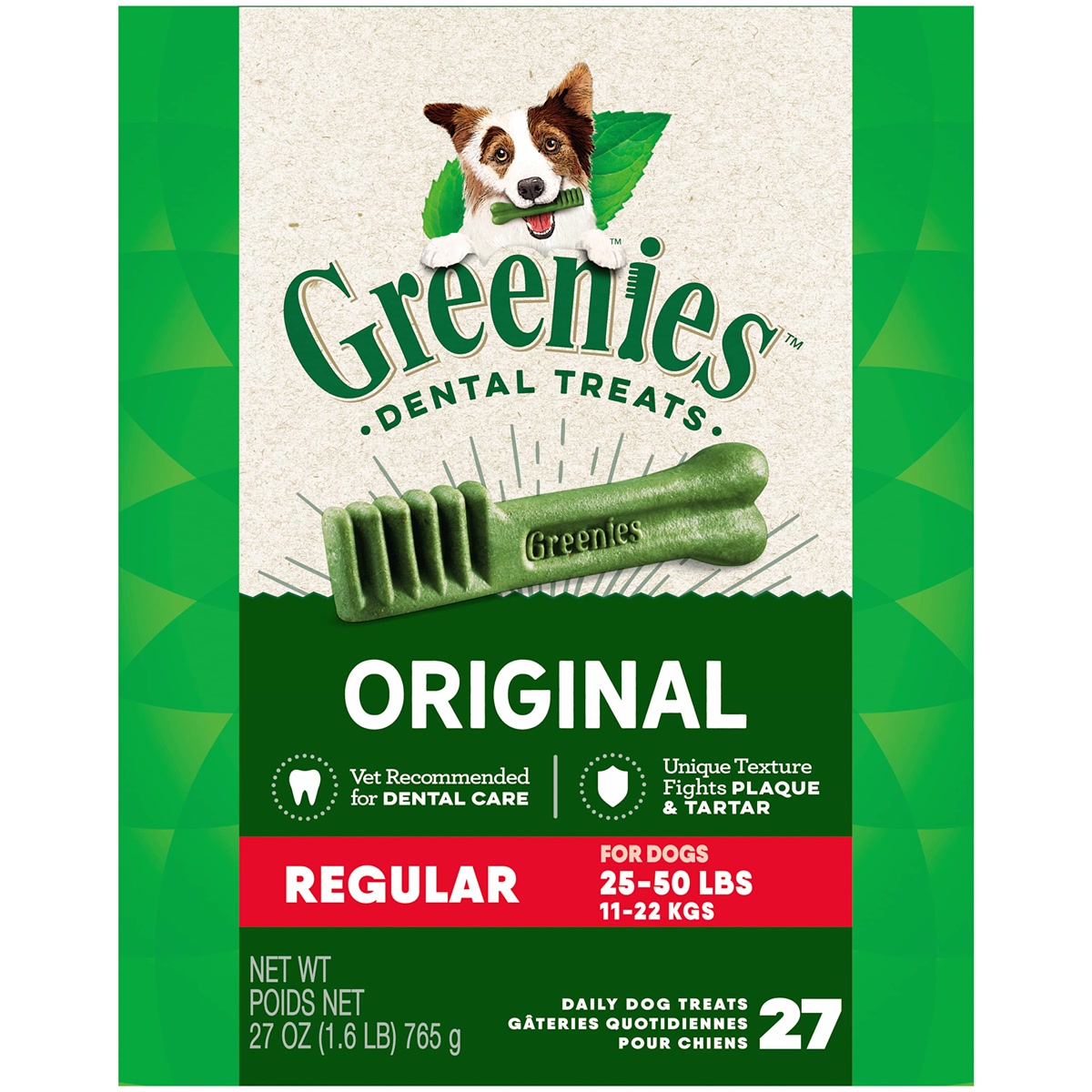
• Greenies — The most studied dental chew. VOHC-approved for tartar reduction. Cost: about 1–2 dollars per treat daily.
• Purina Dental Chewz — VOHC-approved for both plaque and tartar reduction. Cost: about 1 dollar per treat.
• Milk-Bone Brushing Chews — VOHC-approved for tartar reduction. Cost: about 0.50 dollars per treat daily.
These aren’t as effective as daily brushing, but they’re a legitimate supplement — and far better than nothing for dogs who absolutely won’t tolerate brushing.
Dental Diets
Hill’s t/d and Royal Canin Dental are prescription diets with oversized kibble and fibers that mechanically clean teeth as the dog chews. They’re VOHC-approved, but they cost 60–80 dollars per bag. For most dogs, brushing is cheaper and more effective.
How to Brush Your Dog’s Teeth (Without a Fight)
Most dogs resist teeth brushing at first. Here’s how to make it work:
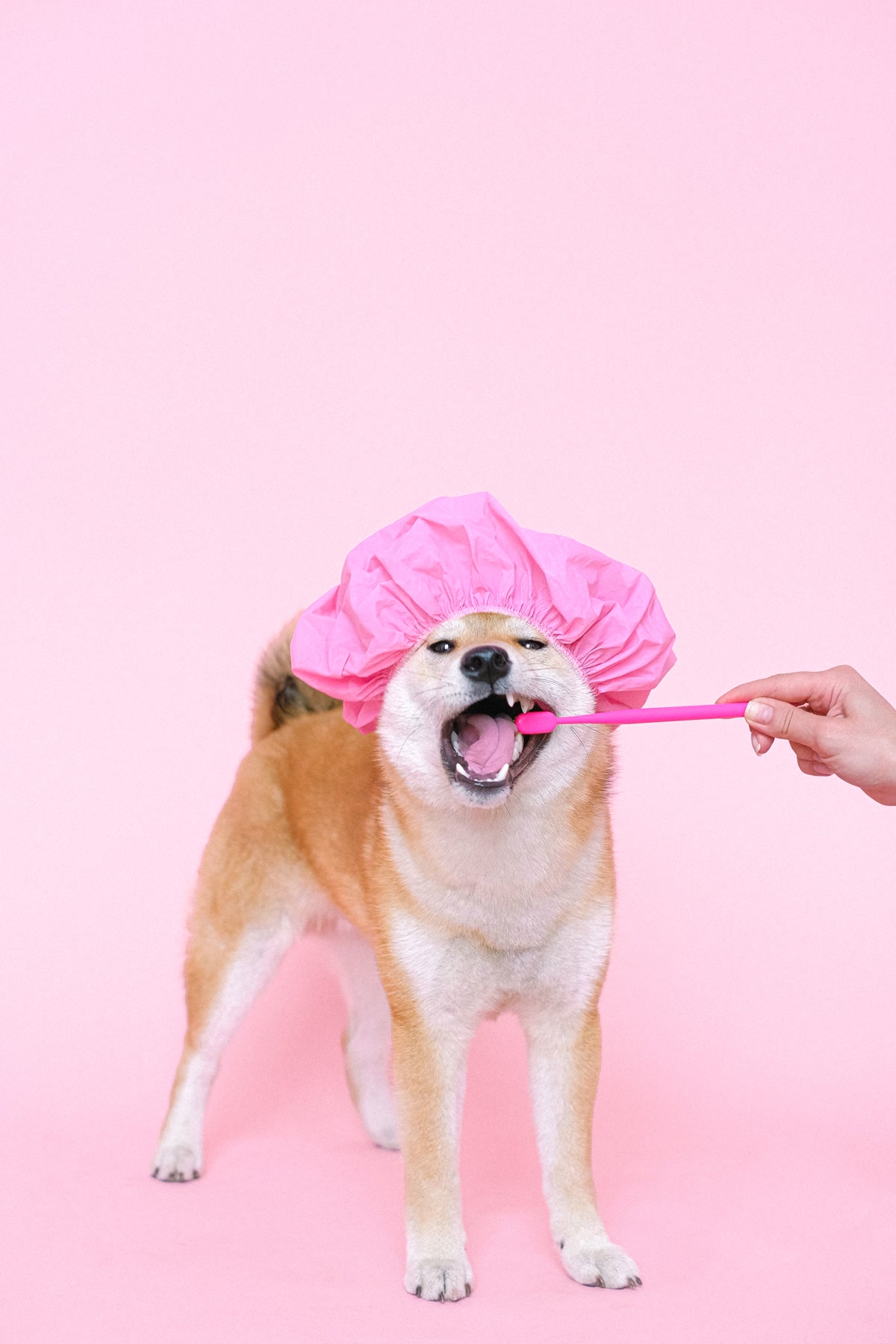
Week 1: Taste introduction. Put a dab of toothpaste on your finger and let your dog lick it off. Do this once a day for a week. Don’t try to brush yet — just make the toothpaste a positive thing.
Week 2: Touch the teeth. Put toothpaste on your finger and gently rub it on your dog’s front teeth and canines. 10 seconds is fine. Praise and treat afterward.
Week 3: Add the brush. Put toothpaste on the finger brush and brush the outside of the front teeth. 20 seconds. Don’t worry about the inside surfaces yet — most plaque accumulates on the outside.
Week 4: Full brushing. Work your way back to the premolars and molars. Aim for 60 seconds total. The outside surfaces are the most important — you don’t need to brush the inside of the teeth (your dog’s tongue keeps those relatively clean).
Key tips:
• Always brush before a meal or walk — not after (positive association with something they want)
• Keep sessions short — 30–60 seconds is enough
• Be consistent — daily brushing is 10x more effective than weekly brushing
• Don’t force it — if your dog is struggling, back up a step and try again tomorrow
For a more detailed guide on handling your dog’s mouth, see our guide to trimming dog nails at home — the same gradual desensitization approach works for both.
Quick Comparison
| Product | Price | Best For | Key Feature |
|---|---|---|---|
| Vet’s Best Starter Kit | 7–10 | Beginners | Everything you need in one package |
| Petrodex Toothpaste | 5–8 | Daily brushing | Best value enzymatic toothpaste |
| Jasper Finger Brush | 8–10 | Small dogs | Best control for tiny mouths |
| Arm & Hammer Kit | 8–12 | Large dogs | Angled brush reaches back molars |
| Virbac C.E.T. | 10–15 | Picky dogs | Most palatable, 5 flavors |
The Real Cost of Skipping Dental Care
A professional dental cleaning at the vet costs 300–700 dollars. Tooth extractions cost 50–200 dollars per tooth. Antibiotics for dental infections cost 30–80 dollars per course.
Brushing your dog’s teeth daily with a 7-dollar starter kit and 5-dollar toothpaste refills costs about 20 dollars per year.
That’s a 15–35x return on investment. There is no other area of pet care where a 20-dollar annual investment can prevent 700+ dollars in veterinary costs. Not insurance, not supplements, not anything.
Brush your dog’s teeth. It’s the best deal in pet care.
More budget dental and health guides from ThriftyPaw:
• How to Trim Your Dog’s Nails at Home Without Stress — Another easy DIY health task
• 5 Pet Medication Hacks That Save Real Money — Same meds, less money
• DIY Dog Grooming: What You Can Do at Home vs. the Pros — Grooming savings that include dental basics
• How Much Does a Dog Cost Per Month? — The full monthly breakdown
Affiliate Disclosure: ThriftyPaw may earn commissions from qualifying purchases through Amazon links above. We only recommend products we’d buy ourselves. Full disclosure →
n
My take: Brushing daily with a $10 kit against $300-700 cleanings plus 50-200 per extracted tooth is the most lopsided cost-benefit in dog care. Skip the dental chews that promise to replace brushing — the VOHC-approved ones are a supplement, not a substitute.
Related guides
- Dog Allergies on a Budget: Symptoms, Treatments, and Real Costs (2026)
- Dog Grooming Tools for Large Breeds That Actually Work (All Under $30)
- Dog Dental Care at Home: Complete Routine Under 8 Dollars Per Month
- Emergency Vet Costs — What to Expect and How to Prepare (2026)
- My Dog Itched Herself Raw Every August. These 3 Allergy Supplements Finally Gave Her Relief
🐾 Get Your Free Big Dog First Aid Kit Checklist
Join our newsletter and get this free printable plus weekly tips.
Frequently Asked Questions
How much does dog dental care cost at the vet?
Professional cleanings run 300-700 dollars, and extractions add 50-200 dollars per tooth. Compare that to a toothbrush and two minutes a day at about 8 dollars a year — the guide's framing is right, this is not a hard math problem.
Why does dental disease matter beyond bad breath?
Over 80% of dogs have periodontal disease by age 3, and the bacteria don't stay in the mouth — they enter the bloodstream and colonize heart valves and tax the liver and kidneys. The cheap preventive here protects organs, not just teeth.
What's the best budget dental care kit for dogs?
The Vet's Best starter kit at 7-10 dollars includes both a finger brush and long-handled brush plus enzymatic toothpaste — try both brush types and see which your dog accepts. Daily use of that one kit solves about 80% of the dental problem for under 10 dollars.
Liked this guide? Get the next one in your inbox — the pet budget checklist is free too.
✓ You're in — check your inbox.
No spam. Unsubscribe anytime. We never share your email.
Price Check
Prices verified via our product tracker. Updated Sep 27.
| YUEYUEJIA Dog Toothbrush Finger Toothbrush Dogs Tooth Brus | $1.75 | 4.4★ (2,651) |
| Petrodex Enzymatic Dog Toothpaste, Poultry Flavor, 6.2oz | | $9.94 | 4.5★ (27,586) |
| TropiClean Fresh Breath Dog Tooth Brushing Kit for Large D | $14.84 | 4.2★ (2,227) |
| Vet's Best Enzymatic Dog Toothpaste Dental Gel, Vet Formul | $9.53 | 4.5★ (31,232) |
As an Amazon Associate we earn from qualifying purchases.