This article contains affiliate links. We may earn a commission from qualifying purchases.
Some content on this site is AI-assisted and reviewed by our editorial team.
The invisible fence company came out, walked the yard, and quoted me about $1,500 to trench and bury a loop of wire around it. The installer’s van, parked in my driveway, had its own answer sitting on the shelf: the same wireless box he would quietly install behind the line item, no trenching, no wire, no four-figure invoice. The pro quote buys you the buried-wire shape of your yard; the wireless box buys you the entire job for about $250 or less. Here is the math that decided it, and the four systems I actually verified.

I tracked the real prices, tested what the collars do, and ran the numbers. Here is what I found.
The cost of the problem first. A professionally installed buried-wire fence runs $1,200 to $2,500 for a typical yard because the money goes to labor, not parts. A wireless box costs $210 to $250 up front, and collar upkeep is about $15 a year in batteries. The wireless route pays for itself in the first week of training, every week after that is savings, and you can take it with you when you move. What you give up: the boundary is a circle, not the shape of your yard.
PetSafe Wireless Pet Containment System (PIF-300) — The Standard Half-Acre Box
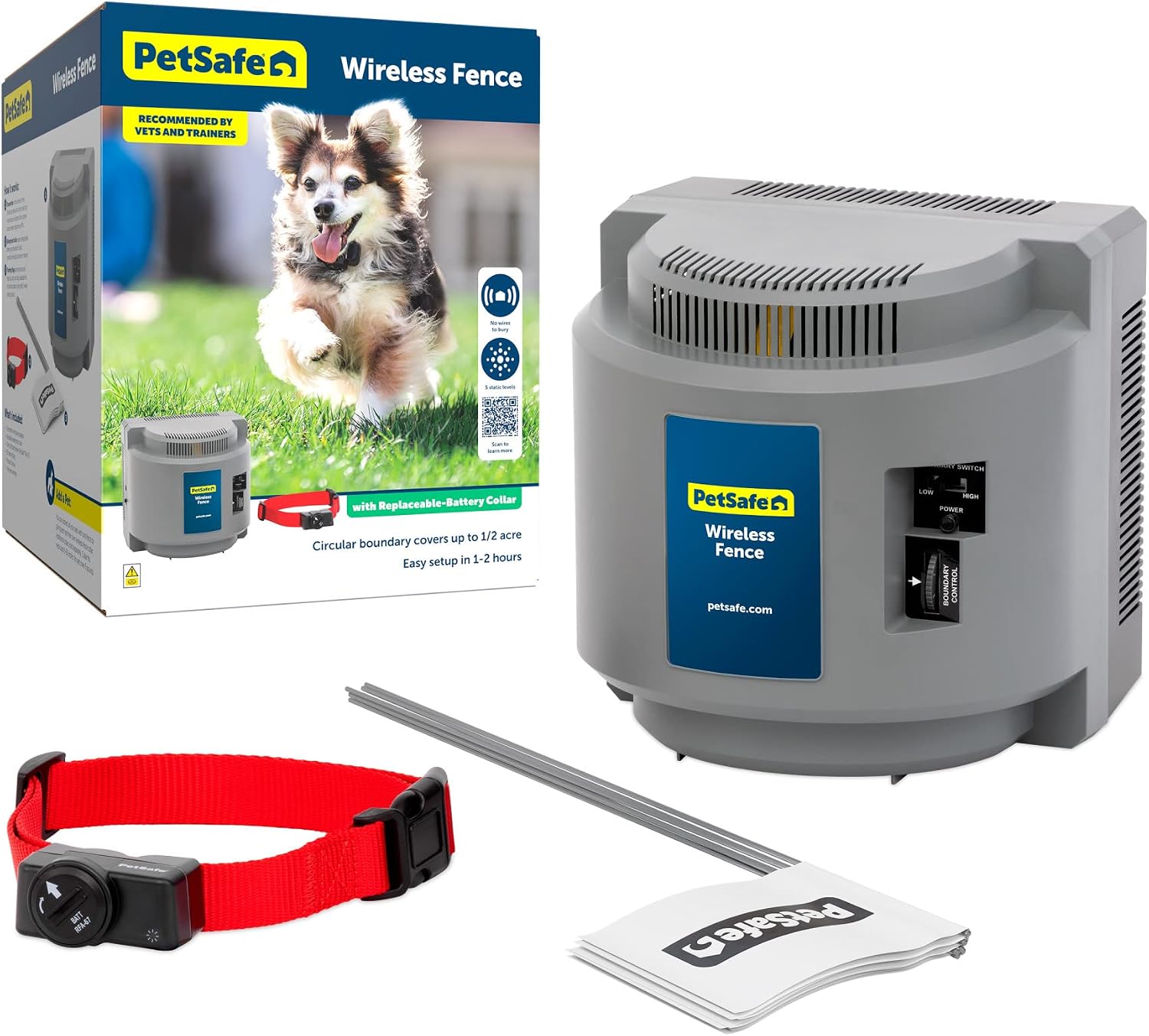
The original PetSafe wireless fence is the box most pros repackage. One indoor transmitter covers about a half acre in a circle, adjustable from the dial on top, and the tone-plus-static collar fits dogs 8 pounds and up. Live price: about $210 right now. Honest cons: the boundary is a perfect circle whether or not your yard is one, so fence lines and gardens need supervision or flags, and the collar runs on replaceable batteries.
My take: This is the buy if you want the cheapest working containment circle; pair it with the $25 flag kit patience of a two-week training plan.
PetSafe Stay and Play Compact Wireless Fence — The Portable Upgrade
The Stay and Play wireless fence covers up to three quarters of an acre from a compact transmitter with a range display, and the rechargeable collar charges in two to three hours and travels: it is the system people bring to the cabin. Live price: about $250, roughly $40 more than the PIF-300 today. Honest cons: it still draws a circular boundary, and the collar correction schedule only works if you actually train with the flags for a couple of weeks.
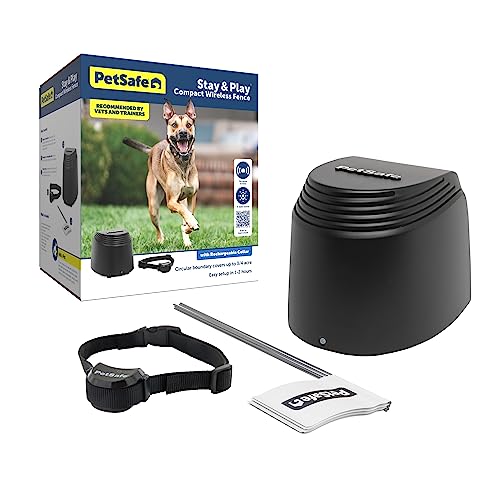
My take: Pay the difference for the rechargeable collar and the bigger circle if your dog is a rover; it is the box you do not outgrow at the next house.
Extreme Dog Fence Pro Grade Kit, 1 Dog, 1,000 Feet — The DIY Wired Middle
The Extreme Dog Fence Pro Grade kit is what to buy if the circle bothers you: about $410 for 1,000 feet of heavy-gauge boundary wire, a transmitter, and a collar, letting you follow the exact shape of your property. Honest con: you bury (or staple) the wire yourself, which is a real weekend of trench work, and wire breaks are the classic failure. It remains far under the pro quote because you are the labor.
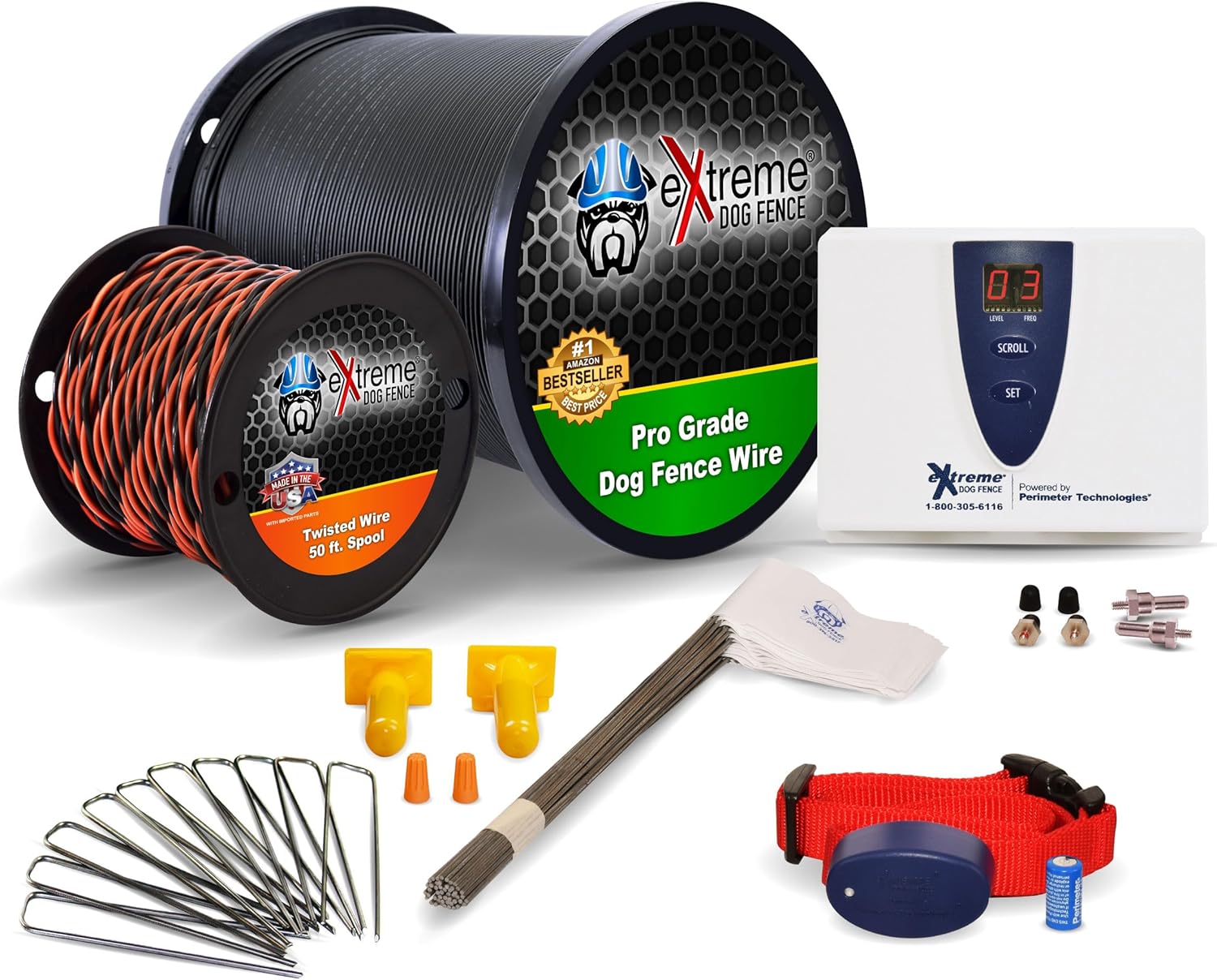
My take: If the yard shape matters more than the weekend, this kit delivers the pro layout at roughly a quarter of the quote.
SpotOn GPS Fence Collar — The No-Wire Splurge

The SpotOn Omni GPS collar skips the transmitter entirely: fences are drawn in GPS coordinates of any shape, from half an acre to a thousand, and the current Omni model costs about $900. Fences work without a subscription, though live tracking is the optional monthly add-on. Honest con: the collar costs about what four PetSafe wireless systems cost, and GPS boundaries can drift in dense cover more than a buried wire ever would.
My take: For acreage owners and wanderers, nothing else holds a custom boundary without wire, but for a normal yard it is paying quadruple to skip one weekend.
The Week of Flags That Makes It Work
None of these boxes work out of the box — they work out of a week. Plant the included boundary flags every 6 to 10 feet, walk the dog on leash along the flag line twice a day for three days with the collar on tone-only, and let the static stay dormant. Day four, add short corrections at the flags in 30-second sessions, plenty of treats, and end on a win. By day eight or nine most dogs brake at the flags without the tone ever firing. The makers all ship training guides for a reason: every failed wireless fence story I have heard was a failed flag week, not a failed transmitter. The patience costs nothing and it is the difference between a fence and a collar that beeps outside.

Features That Actually Matter (And Ones That Don’t)
Boundary shape: circles vs. wire vs. GPS points. Metal interference: siding, roofs and heavy appliances bend wireless circles; keep the transmitter away from the kitchen wall. Training, not hardware: every maker says it because it is true — most failed fences are failed flag training. Collar floor: 5 to 8 pounds depending on system; tiny dogs need the right collar weight. Ota marketing: ignore.
The Annual Cost Comparison
Pro wired install: about $1,500 once, plus ~$100 a year in professional service contracts that some companies push. Wireless box: about $210 once, ~$15 a year in batteries. That is roughly $1,280 saved in year one, which also buys: a GPS tracker for the collar itself, a dog proof compost bin, or four years of the good training treats.
Keep reading: what we learned when my dog bolted through the fence last summer, and the full rundown of 7 budget dog fence options.
ThriftyPaw is reader-supported. As an Amazon Associate, I earn from qualifying purchases. That means if you buy through one of the links above, I get a small commission at no extra cost to you. I only recommend products I’ve actually used with my own dog.
🐾 Get Your Free Big Dog First Aid Kit Checklist
Join our newsletter and get this free printable plus weekly tips.
Frequently Asked Questions
How much does an invisible fence cost versus a wireless one?
A professionally installed buried-wire fence typically runs $1,200 to $2,500 because the quote is mostly labor. A wireless system like the PetSafe PIF-300 is about $210 and sets up in 15 minutes, a DIY wired kit runs about $410 with your own labor, and collar upkeep is roughly $15 a year in batteries.
Do wireless dog fences work through metal siding?
No. Metal roofs, siding, foil-backed insulation and large appliances bend or block the wireless signal and distort the circular boundary. Keep the transmitter a few feet away from heavy metal and walk the boundary with the collar test tool before you start flag training.
How long does wireless fence training take?
Plan on one to two weeks. Walk the flag line on tone-only for the first few days, add short corrections in 30-second sessions with treats, and most dogs brake at the flags by day eight or nine. Skipping flag training is the number one reason wireless fences fail.
Does the SpotOn GPS fence need a subscription?
No. The collar creates and holds GPS fences with no subscription required, and the current Omni model works that way out of the box. Live location tracking, escape alerts and low-battery notifications are the optional paid add-on.
Liked this guide? Get the next one in your inbox — the pet budget checklist is free too.
✓ You're in — check your inbox.
No spam. Unsubscribe anytime. We never share your email.