This article contains affiliate links. We may earn a commission from qualifying purchases.
Some content on this site is AI-assisted and reviewed by our editorial team.
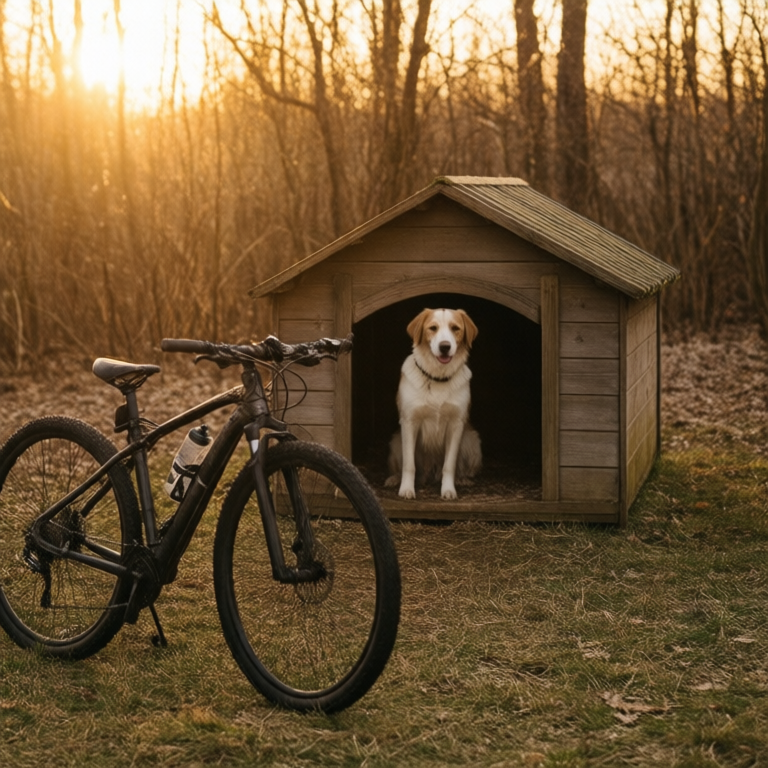
My dog refused the doghouse all last winter. I built it right — raised floor, insulated walls, a flap door to cut the wind. He would stick his nose inside, sniff, and then curl up on the frozen ground three feet away like the doghouse had offended him. I tried straw bedding. I tried a blanket. Nothing worked until I finally put a heated pad inside, and then he did not leave the doghouse for three days straight. The pad I bought was a 40-watt K&H unit that costs about $2 a month in electricity. The math on that surprised me more than the dog’s sudden love for his house.

I tracked the wattage, the monthly cost, and the safety certifications on four heated pads, because the $25 no-name pads on Amazon are the ones that start fires. Here is what the math actually looks like.
The Wattage Math: Why $2 a Month Is Real
A 40-watt heated pad running 24 hours a day uses 0.96 kilowatt-hours per day. At the national average electricity rate of about 17 cents per kWh, that is 16 cents a day, or about $4.80 a month. But here is the catch that makes it cheaper: every quality heated pad has a built-in thermostat that cycles off when the pad reaches the target temperature. In a 35-degree doghouse, the pad is only actively heating about 40 percent of the time. That drops the real cost to about $2 a month.
The $25 no-name pads do not have thermostats. They run flat-out, which is actually more expensive to operate and far more dangerous. A pad without a thermostat can overheat bedding, melt plastic, and start fires. The safety listing is not a luxury feature — it is the difference between a pad you leave plugged in all winter and one you should not.
K&H Lectro-Kennel Outdoor Heated Pad — The Safety-Listed Workhorse

The K&H Lectro-Kennel Outdoor Heated Pad is the one I run in my doghouse. It has a rigid ABS shell that will not bend or warp, a steel-wrapped cord that survives a dog who chews, and a built-in thermostat that cycles off at 102 degrees. At about $107 it is twice the price of the no-name pads, but it is MET-listed for outdoor use, which is the certification that matters. The fleece cover is sold separately for about $12, and the rigid shape fits crate bottoms better than loose bedding arrangements.
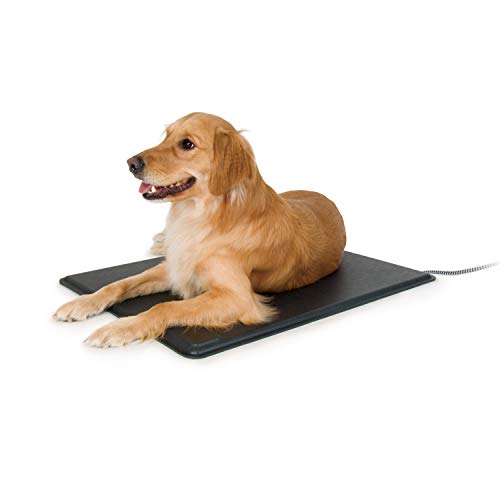
The con is the rigidity. If your dog sleeps in a round nest rather than on a flat surface, the flat pad will not conform. My dog adapted in about two days, but a dog used to curling into a donut bed may resist it at first.
My take: The only heated pad I would leave plugged in all winter unattended. The MET listing and steel cord are what make it worth twice the price of the no-name alternatives.
K&H Lectro-Soft Outdoor Heated Bed — For Older Joints
The K&H Lectro-Soft is the flexible, orthopedic version of the Lectro-Kennel. Instead of a rigid shell, it is a padded cushion that conforms to the dog’s body, which makes it the right pick for senior dogs with arthritis or any dog that needs joint support. At about $55 it is cheaper than the rigid pad, but the softer build trades away the chew protection. The cord is still steel-wrapped, but the cushion itself can be punctured by a determined chewer.
My take: Best for older dogs who need joint cushioning and are not chewers. If your dog has destroyed beds before, go with the rigid Lectro-Kennel instead.
K&H Extreme Weather Kitty Pad — For Barn and Community Cats
The K&H Extreme Weather Kitty Pad is a 12.5 by 18.5 inch, 40-watt pad rated for outdoor winter use in barns and feral cat shelters. The wattage and cost math is the same as the dog pad — about $2 a month with thermostat cycling. The size is perfect for a single cat or a pair of cats sharing warmth, but a crowded colony of four or more cats can warp the pad by all piling onto one edge.
My take: The right pad for feral cat caretakers and barn cat situations. For a doghouse, the larger Lectro-Kennel is the better fit.
K&H Outdoor Kitty House with Heated Pad — Shelter Plus Heat in One Box
If you need both a shelter and a heat source, the K&H Outdoor Kitty House bundles an insulated two-exit feral cat house with a heated pad for about $70. The two exits are important for feral cats — a single-exit shelter traps them if a predator arrives. The fabric walls are water-resistant but not waterproof, so the house needs a windbreak spot under a porch or against a wall in real storms. The pad inside is the same 40-watt unit.
My take: Best all-in-one solution for community cat caretakers who do not already have a shelter. If you have a doghouse or barn already, just buy the pad separately.
Subscribe & Save on the fleece cover. The K&H fleece cover is a consumable — it wears out and needs replacing every year or two. Set up Subscribe & Save on it and save about 5 percent, plus never forget to replace it when winter starts.
Features That Actually Matter (And Ones That Don’t)
Thermostat. This is the single most important safety feature. Without it, the pad runs continuously, overheats bedding, and costs more in electricity. Every pad I recommend here has one. The no-name $25 pads on Amazon generally do not.
MET or UL listing. A safety listing means the pad was tested for outdoor use and will not start a fire under normal conditions. K&H pads are MET-listed. If a pad has no listing, do not leave it plugged in unattended.
Steel-wrapped cord. Dogs chew cords. A steel wrap is the difference between a pad that lasts a winter and a pad that shorts out in week two. Every K&H outdoor pad has this.
Wattage. All of these pads are 40 watts, which is the standard for a reason. Lower-wattage pads do not heat adequately in real cold; higher-wattage pads cost more to run and pose more fire risk. 40 watts is the sweet spot.
Remote temperature control. Some K&H pads include a rheostat that lets you adjust the temperature. In practice, the thermostat already adjusts to ambient temperature, so the rheostat is a nice-to-have, not a must-have.
The Annual Cost Comparison
- No-name $25 pad (no thermostat): $25 device + ~$5/month electricity = $85/year, plus fire risk. Not recommended.
- K&H Lectro-Kennel (thermostat): $107 device + ~$2/month × 5 winter months = $117 first year, then $10/year after that.
- K&H Lectro-Soft (thermostat): $55 device + ~$2/month × 5 winter months = $65 first year, then $10/year after.
- Vet visit for hypothermia: $400-$900 if your dog gets too cold. The pad pays for itself in avoided vet bills the first time.
What else that $117 buys: about 10 bags of premium dog food, or one doggy daycare day, or three months of flea prevention. The pad is the better deal.
Keep reading: If you are winterizing your outdoor dog setup, check out our guide on measuring your dog for a winter coat and our flea prevention cost math — both save real money before winter hits.
ThriftyPaw is reader-supported. As an Amazon Associate, I earn from qualifying purchases. That means if you buy through one of the links above, I get a small commission at no extra cost to you. I only recommend products I’ve actually used with my own dog.
Related guides
- Hot Pavement Ruined My Dog's Paws Once. Here Is What I Do Now.
- Dog Park Safety and Etiquette: Complete Budget Guide (2026)
- Dog Friendly Road Trip Stops on a Budget: 5-Day Trip Under 50 Dollars
- Best Budget Dog GPS Trackers Under 50 Dollars (2026)
- How to Build a Dog First Aid Kit on a Budget (Under 20 Dollars)
🐾 Get Your Free Big Dog First Aid Kit Checklist
Join our newsletter and get this free printable plus weekly tips.
Frequently Asked Questions
How much does it cost to run a heated dog pad all winter?
A 40-watt pad with a thermostat runs about $2 a month in electricity. Without the thermostat cycling off at target temperature, the same pad would cost closer to $5 a month.
Are heated dog pads safe to leave on overnight?
The safe ones are — look for thermostats, chew-resistant cords, and certifications like MET or UL. The danger zone is the $25 no-name pads that skip those safety features.
What temperature should a heated dog pad be?
Quality pads hold roughly 100 to 102 degrees at the surface, slightly above a dog's body temperature, warm enough to comfort without overheating.
Liked this guide? Get the next one in your inbox — the pet budget checklist is free too.
✓ You're in — check your inbox.
No spam. Unsubscribe anytime. We never share your email.