This article contains affiliate links. We may earn a commission from qualifying purchases.
Some content on this site is AI-assisted and reviewed by our editorial team.
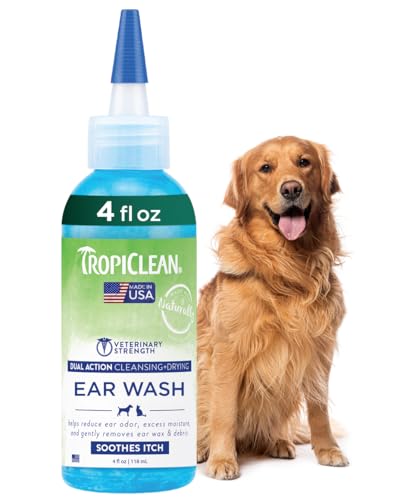
Floppy-eared dogs get ear infections. I didn’t know this was a thing until my Golden Retriever started shaking her head and pawing at her right ear one Saturday evening. By Sunday morning, the ear was red, swollen, and smelled like yeast bread. By Monday, I was at the vet.

The diagnosis: otitis externa, an inflammation of the outer ear canal. The cause: moisture trapped in the ear after swimming, creating a warm, dark environment where yeast and bacteria throw a party. The treatment: medicated ear drops, ear flush, and a follow-up visit. Total cost: 310 dollars.
The vet told me something that stuck: ear infections in floppy-eared dogs are almost always preventable with routine cleaning. You don’t wait for the infection. You clean the ears weekly, keep them dry, and most infections never happen.
So I started an ear care routine. I tried three different cleaners over two months. Here’s what I found.
Why Floppy Ears Are a Problem
Dogs with upright ears — German Shepherds, Huskies, Corgis — get fewer ear infections because air circulates freely through the ear canal, keeping it dry. Dogs with floppy ears — Goldens, Labs, Spaniels, Basset Hounds — have a flap of skin and fur covering the canal, trapping moisture and heat. It’s the perfect environment for yeast and bacterial growth.
If your dog swims, gets bathed regularly, or lives in a humid climate, the risk is even higher. The trick isn’t to keep them out of water — it’s to dry and clean the ears after water exposure and do a maintenance cleaning once a week.
VetWell Ear Cleaner — The One My Vet Recommended
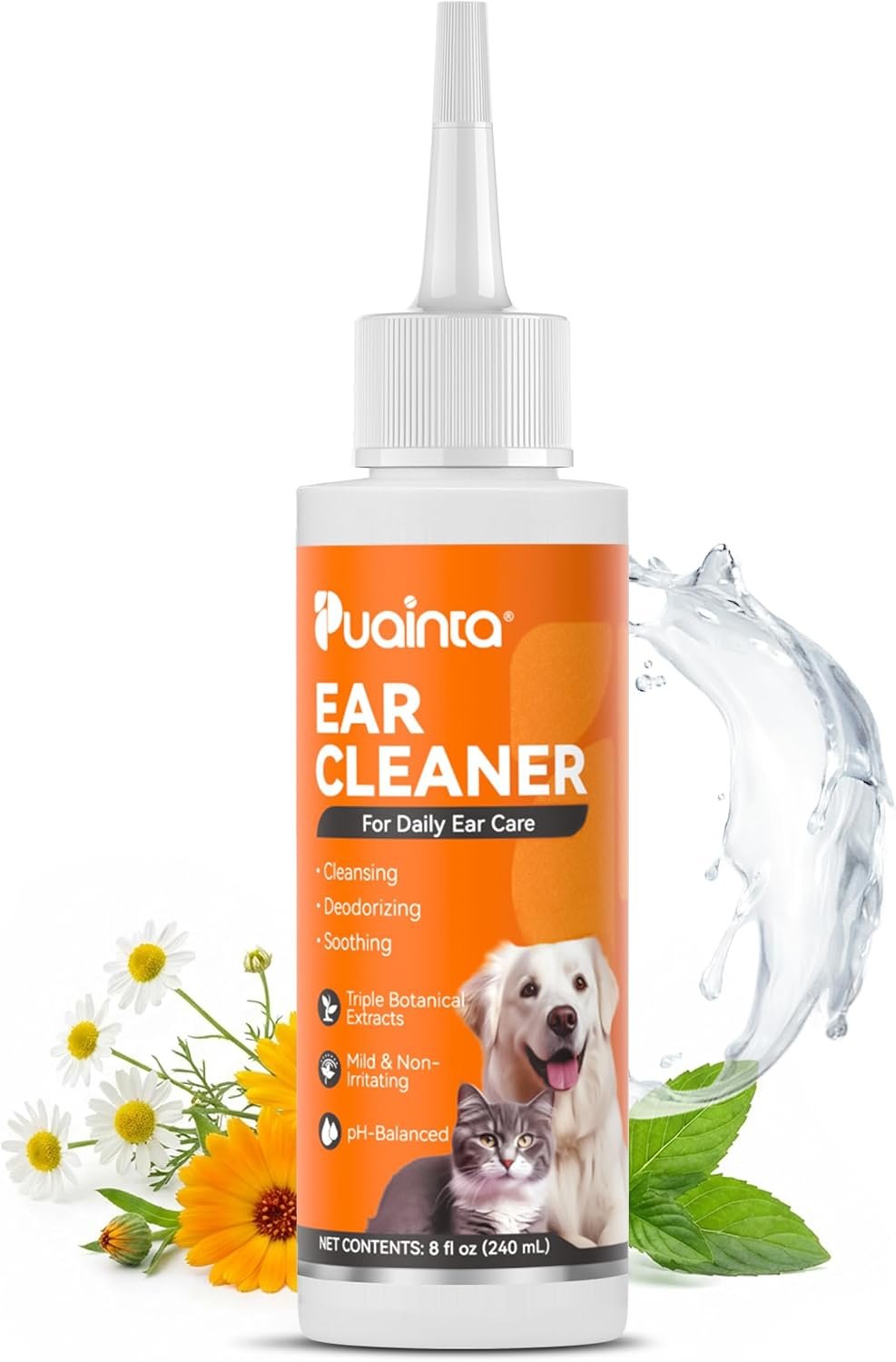
VetWell Ear Cleaner is what my vet specifically recommended when I asked about maintenance cleaning. It’s a gentle, pH-balanced solution that breaks up wax and debris without stinging. My dog doesn’t love having her ears cleaned (no dog does), but she doesn’t flinch or yelp when I use this one.
The routine: I fill the ear canal with a few drops of solution, gently massage the base of the ear for 30 seconds (you’ll hear a squishing sound — that’s the solution breaking up wax), then let her shake her head. I wipe away what comes out with a cotton pad. The whole process takes about 2 minutes per ear.
A 4-ounce bottle costs about 16 dollars and lasts about 3 months with weekly use. That’s roughly 1.30 dollars per cleaning. Compare that to a 310-dollar ear infection, and the math is obvious.
My take: This is my daily-driver ear cleaner. Gentle, effective, and vet-recommended. Start here.
PetMD Ear Wipes — The Convenient Option for Quick Cleanups
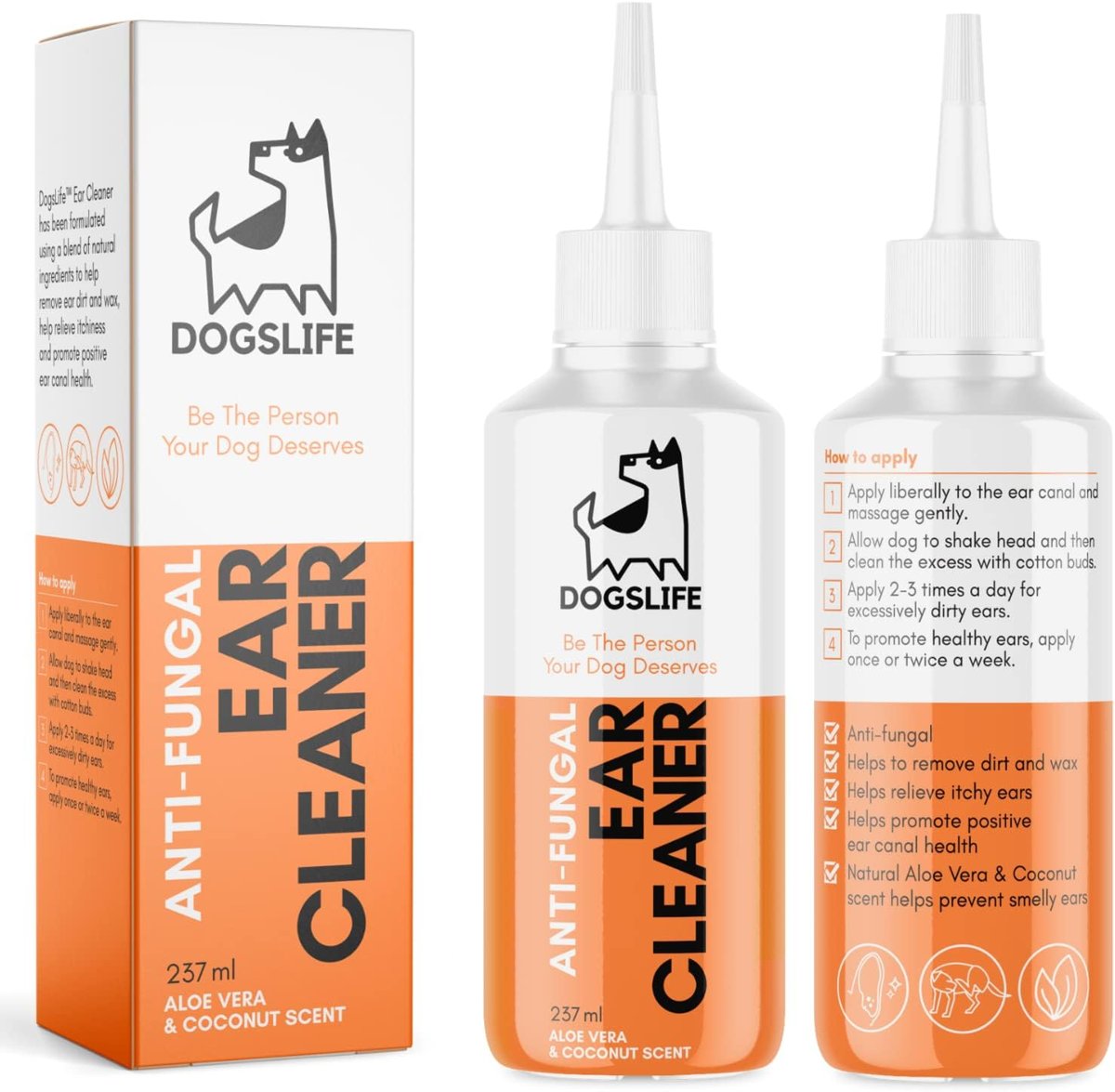
PetMD Ear Wipes are pre-moistened pads that you wipe around the outer ear. They’re not a replacement for a proper ear flush — they don’t reach deep into the canal — but they’re excellent for quick cleanups after walks or swimming.
I keep a container of these by the back door. When my dog comes inside from a rainy walk or a swim, I wipe her ears down before the moisture has a chance to sit. It takes 10 seconds per ear, and it’s become as automatic as wiping my own feet on the mat.
A 100-count container costs about 12 dollars. At one wipe per ear per use, that’s about 50 cleanup sessions for 12 dollars. Very affordable for what it does.
My take: Not a deep cleaner — use alongside a liquid ear flush, not instead of one. But for daily maintenance and post-swim cleanup, these are fast, easy, and cheap.
Vetericyn Ear Rinse — The Heavy-Duty Option
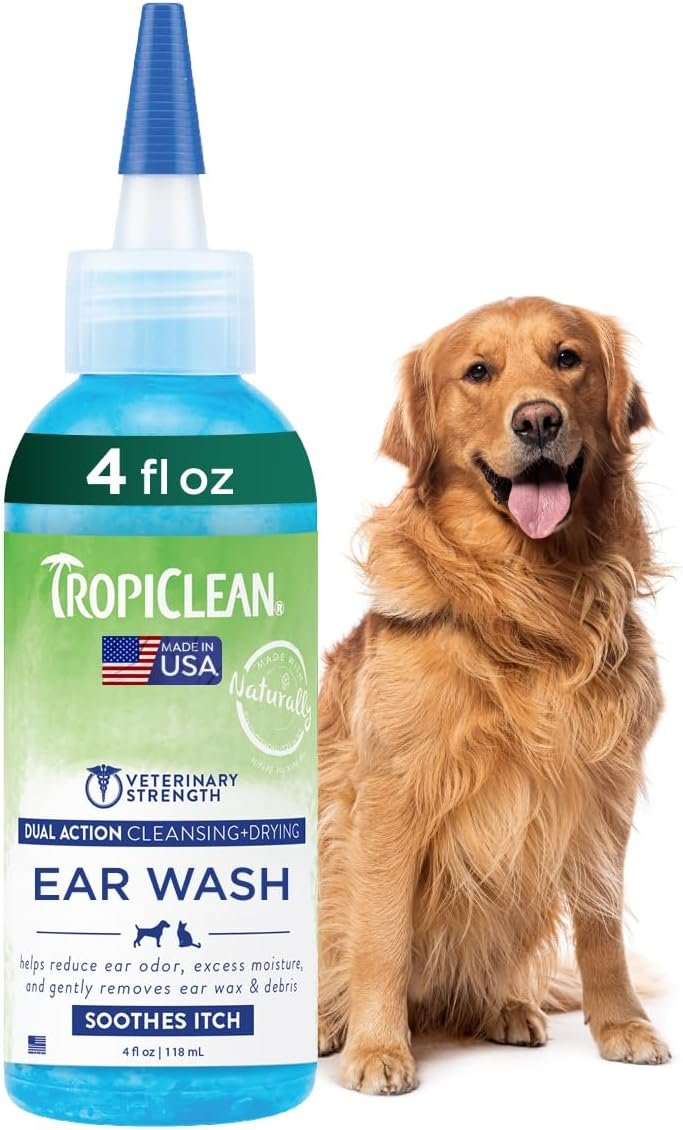
Vetericyn Ear Rinse is a stronger formulation designed for dogs prone to chronic infections. It contains hypochlorous acid, which is antimicrobial — it kills bacteria and yeast on contact. It’s the most medicated-feeling of the three, and my dog was less tolerant of it (more head-shaking, more squirming).
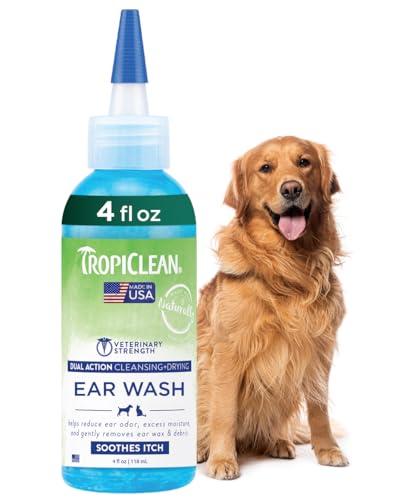
I use this one when my dog’s ears look slightly pink or when she’s been swimming in a lake (which has more bacteria than pool water). It’s my “things look a little off” cleaner, not my weekly maintenance one.
A 4-ounce bottle costs about 14 dollars. It lasts a long time because I only use it situationally, not weekly.
My take: Good to have on hand for high-risk situations — lake swimming, humid weather, post-grooming. Not necessary for routine weekly cleaning if your dog’s ears are healthy.
Get ear care supplies delivered fast. Start your 30-day Prime free trial for free 2-day shipping on ear cleaners, wipes, and more.
The Weekly Ear Care Routine That Saved Me 300 Dollars
Here’s what I do now, every week, to prevent another infection:
- Sunday: Full ear flush with VetWell cleaner — 2 minutes per ear
- After swimming or baths: Quick wipe with PetMD ear wipes — 10 seconds per ear
- After lake swimming: One application of Vetericyn ear rinse — 1 minute per ear
- Daily check: Quick sniff and visual check during brushing — if I smell yeast or see redness, I flush immediately
Total time invested: about 5 minutes per week. Total cost: about 20 dollars every 3 months. That’s a tiny fraction of what one ear infection costs to treat, and my dog hasn’t had one since I started this routine eight months ago.
The one thing I’d warn against: don’t use cotton swabs (Q-tips) in your dog’s ears. They push wax deeper into the canal and can damage the eardrum. Use cotton pads or balls to wipe the outer ear, and let the solution do the work inside the canal. Your dog’s head-shaking will bring the loosened wax out naturally.
If your dog’s ear is already infected — red, swollen, smelly, or painful — don’t try to clean it yourself. See your vet. Cleaning an infected ear can make it worse if the eardrum is ruptured. Cleaners are for prevention and maintenance, not treatment.
For more preventive care tips, check our guide to dental care on a budget and our review of dog shampoos for sensitive skin.
ThriftyPaw is reader-supported. As an Amazon Associate, I earn from qualifying purchases. That means if you buy through one of the links above, I get a small commission at no extra cost to you. I only recommend products I’ve actually used on my own dog’s ears.
Related guides
- Cat Eye Problems on a Budget: When to Treat at Home and When to See the Vet
- How to Dog-Proof Your Home on a Budget
- 10 Free and Cheap Ways to Exercise Your Dog (Most Cost Zero)
- Dog Vomiting: When to Go to the Vet and When to Treat at Home
- 26 Dollars a Month of Store Treats, Baked Down to a 9 Dollar Batch
🐾 Get Your Free Big Dog First Aid Kit Checklist
Join our newsletter and get this free printable plus weekly tips.
Frequently Asked Questions
How much does a dog ear infection cost?
The author's case: $310 for the vet visit, cytology, and medication — a floppy-eared swimmer's moisture-trapped otitis externa. The prevention comparison is the point: the weekly cleaning routine costs about $20 every three months, and the $16 VetWell bottle is $1.30 per cleaning against the four-figure-feel of the vet bill.
What's the best dog ear cleaner?
The vet-recommended VetWell at $16 for 4 ounces (lasting 3 months with weekly use — the author's default flush), the PetMD wipes at $12 for 100 (the quick-cleanup option, about 50 sessions), and the Vetericyn rinse at $14 for the heavy-duty cases. All three fit the weekly routine that prevents the recurrence.
How do I prevent ear infections in floppy-eared dogs?
The author's routine that saved the next $300: the Sunday full flush with the cleaner (2 minutes per ear), the after-swimming dry (the moisture-trap cause the vet diagnosed — ears need drying, not just cleaning), and the weekly inspection for the early smell-and-redness signs. Floppy ears trap what erect ears vent; the routine is the compensation.
Liked this guide? Get the next one in your inbox — the pet budget checklist is free too.
✓ You're in — check your inbox.
No spam. Unsubscribe anytime. We never share your email.