This article contains affiliate links. We may earn a commission from qualifying purchases.
Some content on this site is AI-assisted and reviewed by our editorial team.

I have spent more time staring at dog diarrhea than I care to admit.
My dog, Moose, has the stomach of a drama queen. One week he’s fine. The next week he’s refusing breakfast and leaving messes on the rug. Over the past two years I’ve gone through six different foods, two vet visits, and roughly four hundred paper towel rolls trying to figure out what works.
Here’s what I’ve learned: a lot of “sensitive stomach” dog food is marketing nonsense. Slap a label on the bag, charge ten dollars more, and hope you don’t notice the ingredient list looks identical to the regular formula. But a few of them actually do something different. And some of the ones that aren’t labeled “sensitive stomach” at all work better than the ones that are.
I’m going to walk you through four foods I’ve actually tried with Moose, what worked, what didn’t, and what I think is worth your money if you’re trying to keep things under forty dollars a bag. Because I know the feeling — you’re already stressed about your dog’s health, and then you see prescription diets going for seventy or eighty dollars and wonder if you’re a bad owner for not buying them. You’re not. Let’s figure this out.
First: Is It Actually a Sensitive Stomach?
Before you switch foods, make sure you’re treating the right problem. I wasted three months cycling through different kibble before realizing Moose had gotten into the cat food behind a closed door I thought was latched. Classic. Three months of thinking he had food allergies when he was just sneaking extra meals.
The signs that actually point to food sensitivity, not just a one-off upset:
- Loose stools that keep coming back even when nothing else has changed in your dog’s routine
- Vomiting within an hour of eating, fairly consistently — not just once after they ate too fast
- Gas that’s worse than usual for your dog (Moose could clear a room on his bad days, and I’m not exaggerating)
- Picking at food or walking away from the bowl mid-meal when they used to eat enthusiastically
- Lip smacking, swallowing a lot, or that hunched “I feel sick” posture after meals
Here’s what trips a lot of people up: these same symptoms can be caused by stress, eating something they found on a walk, a new treat, or even a change in water source. Before you blame the food, think about what else changed in the last week. Did you switch treat brands? Did someone else start feeding your dog table scraps? Did you move to a new neighborhood with different water?
If any of these symptoms have been going on for more than a few days consistently, go to the vet first. I know that’s the boring advice everyone gives, but food sensitivities and more serious conditions look identical from the outside. I had a friend whose “sensitive stomach” dog turned out to have a partial intestinal blockage from a stick he’d swallowed on a hike. Different problem, different solution entirely. The food changes she tried for months did nothing because the actual problem was a piece of wood stuck in his intestine.
So: rule out the obvious stuff, then rule out the medical stuff, and then start thinking about food. It’s not the most exciting sequence, but it’ll save you time and money.
The Four Foods I Tried, Ranked by What Actually Helped
1. Purina Pro Plan Sensitive Skin and Stomach (Around 38 Dollars for 30 lbs)
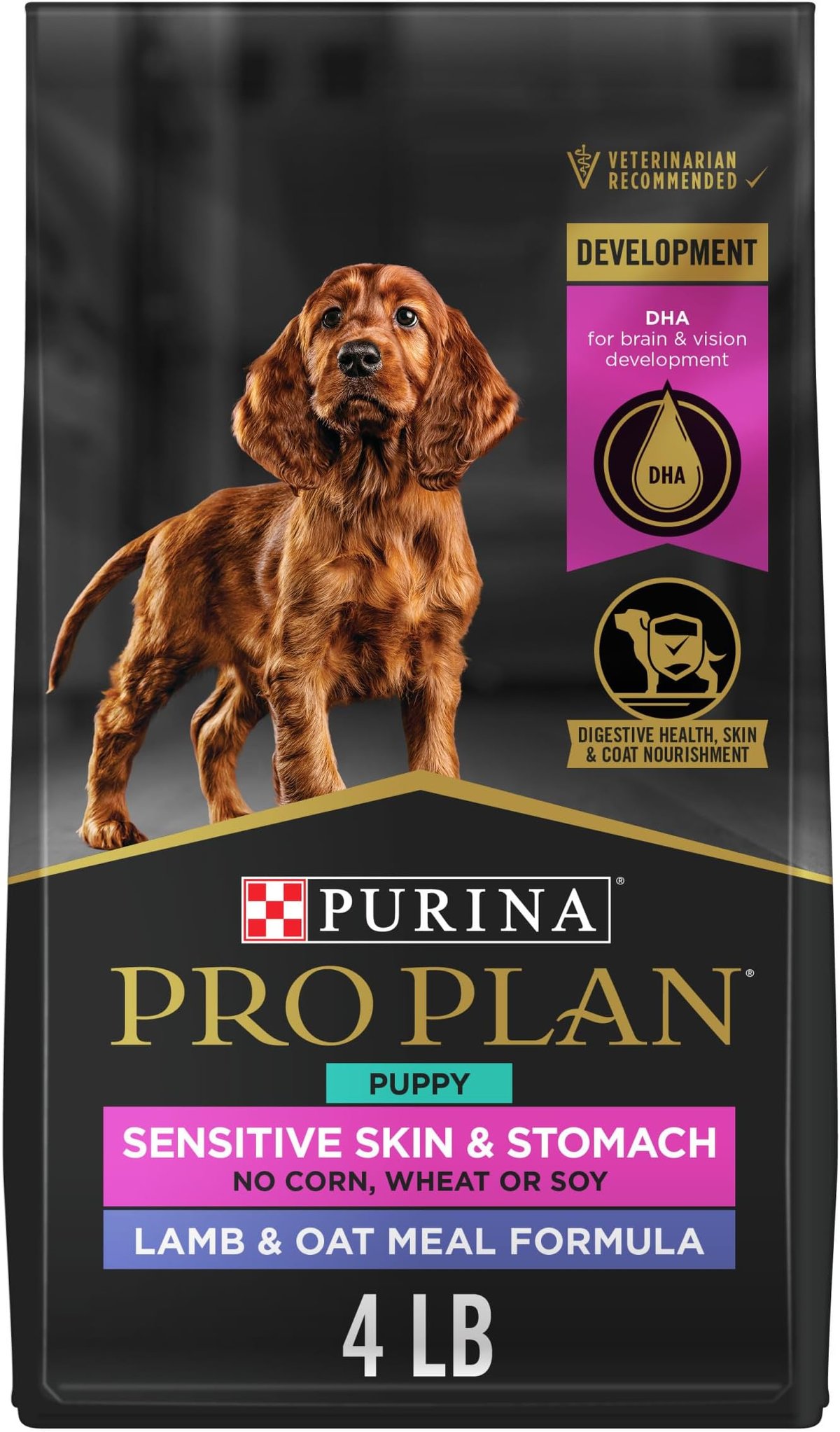
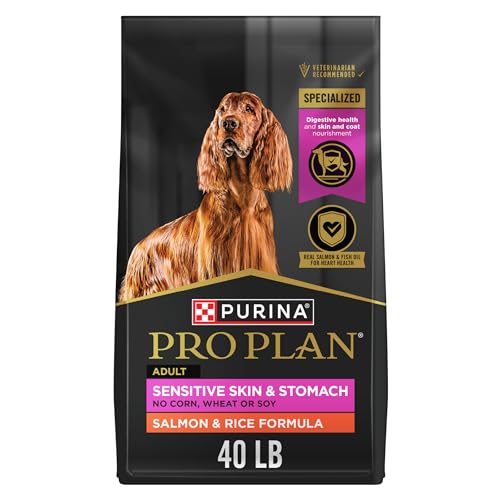
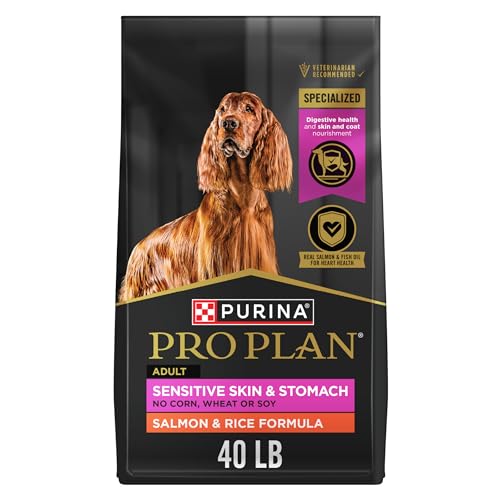
This is the one that actually worked for Moose. I’m not saying it’ll work for every dog, but after the third food I tried, this was the one where the diarrhea stopped within a week and his coat got noticeably softer within a month. I remember texting my partner a photo of a normal poop like it was some kind of achievement. When you’ve been dealing with stomach issues for months, that’s where you’re at.
The thing that makes this formula different is the protein source. It’s salmon-based, not chicken or beef. And here’s why that matters: a lot of dogs who have stomach issues are actually reacting to chicken, which is in almost every standard dog food. Go check your current bag right now — I’ll bet chicken or chicken meal is the first or second ingredient. It’s everywhere because it’s cheap. So switching to salmon removes the most common trigger without you having to play guessing games for weeks.
The oatmeal and rice in this formula are gentle on the gut too. Not because they’re “natural” or whatever marketing spin — they’re just genuinely easy to digest. Think about it like this: when you have an upset stomach, you eat plain rice. Same logic applies to dogs. Simple carbohydrates that don’t require much work from the digestive system.
One thing I appreciate: there are no artificial colors in this one. Some cheaper foods dye their kibble red and brown to make it look like little meat chunks, and those dyes can upset a sensitive dog’s stomach. It’s a pointless addition that exists purely for the human buying the food, not the dog eating it. Purina Pro Plan doesn’t bother with any of that.
The protein content sits around 26 percent, which is solid. Not the highest on this list, but high enough for most dogs. The omega-6 from sunflower oil is a bonus if your dog also has skin issues, because skin and stomach problems often show up together — they’re both signs of inflammation and the body reacting to something it doesn’t like.
I will say the smell is stronger than regular kibble. Salmon-based food has a fishy odor that hits you when you open the bag. Moose loved it. I didn’t. But that’s a me problem, not a dog problem.
Who it’s for: Dogs who might be reacting to chicken or beef. Also dogs with both digestive and skin issues. This was my winner and I’d recommend trying it first if your dog’s symptoms sound like Moose’s.
What to know:
- First ingredient is real salmon (not salmon meal or by-products)
- 26 percent protein minimum
- Grain-inclusive — oatmeal and rice, which are easy on the gut
- No artificial colors or flavors
- A 30 lb bag lasted me about two months for a 55-pound dog
Get it: Purina Pro Plan Sensitive Skin and Stomach on Amazon
2. IAMS Proactive Health Minichunks (Around 28 Dollars for 30 lbs)
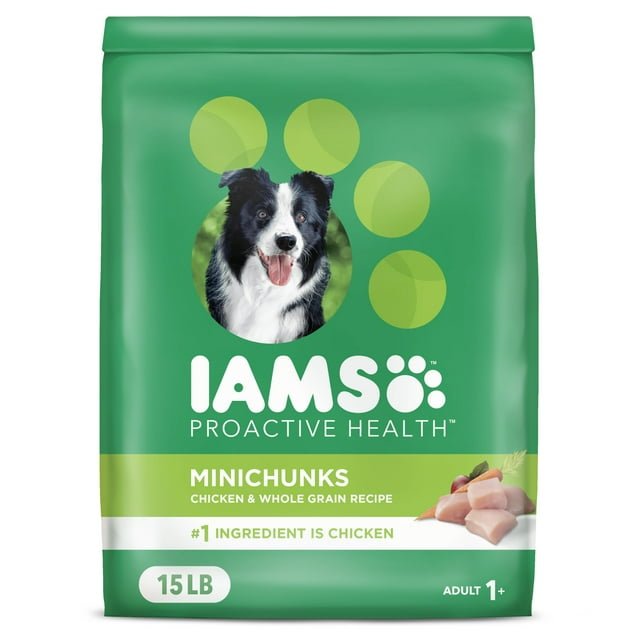
This is the cheapest option on my list, and I’ll be honest — I was skeptical. IAMS has a reputation as a “fine, I guess” brand, and for a while I turned my nose up at it because I thought I needed to buy something more premium for Moose’s sensitive stomach. But when Moose had a rough month and money was tight, I gave it a shot. And I was surprised.
It’s not labeled as a sensitive stomach formula. Let me be clear about that. IAMS doesn’t make that claim on the bag. But here’s the thing I realized: a lot of dogs with “sensitive stomachs” are actually just dogs who’ve been eating really low-quality grocery store kibble full of fillers, corn, and dyes. When you switch them to something with a real protein source as the first ingredient and some prebiotics thrown in, they get better. Not because the new food is magical, but because the old food was that bad.
IAMS has real chicken as the first ingredient. The formula includes a fiber blend that supports gut health. It’s not revolutionary, but it’s competent. And honestly, competent is underrated.
The minichunks format is smaller kibble, which I think matters more than people realize. Big kibble pieces can be hard for some dogs to break down properly, and if they’re gulping food without chewing — which a lot of dogs do — that’s going to cause problems no matter how good the ingredients are. The smaller pieces force them to actually chew, which means the food starts getting broken down before it hits the stomach. Basic mechanical digestion, but it counts.
Moose did okay on this one. Not great. His stools were better than on the old grocery store food, but not as solid as on the Purina Pro Plan. He had more gas too, though nothing catastrophic. I think if your dog has mild issues — occasional loose stool, some gas, nothing severe — this is a completely reasonable choice that’ll save you ten dollars a bag compared to the Purina.
If your dog has chronic issues or is clearly reacting to chicken specifically, skip this one and go to the salmon-based Purina above. Chicken is still the protein here, so if chicken is your dog’s trigger, this won’t help.
Who it’s for: Dogs with mild stomach issues who still tolerate chicken. This is the cheapest real option on the list and the best bang for your buck if the stomach problems aren’t severe.
What to know:
- First ingredient is real chicken
- 25 percent protein minimum
- Includes prebiotics for digestive health
- Smaller kibble pieces — easier to chew and digest
- At about 93 cents per pound, this is the most affordable option here
Get it: IAMS Proactive Health Minichunks on Amazon
3. Purina ONE True Instinct with Real Turkey (Around 35 Dollars for 30 lbs)
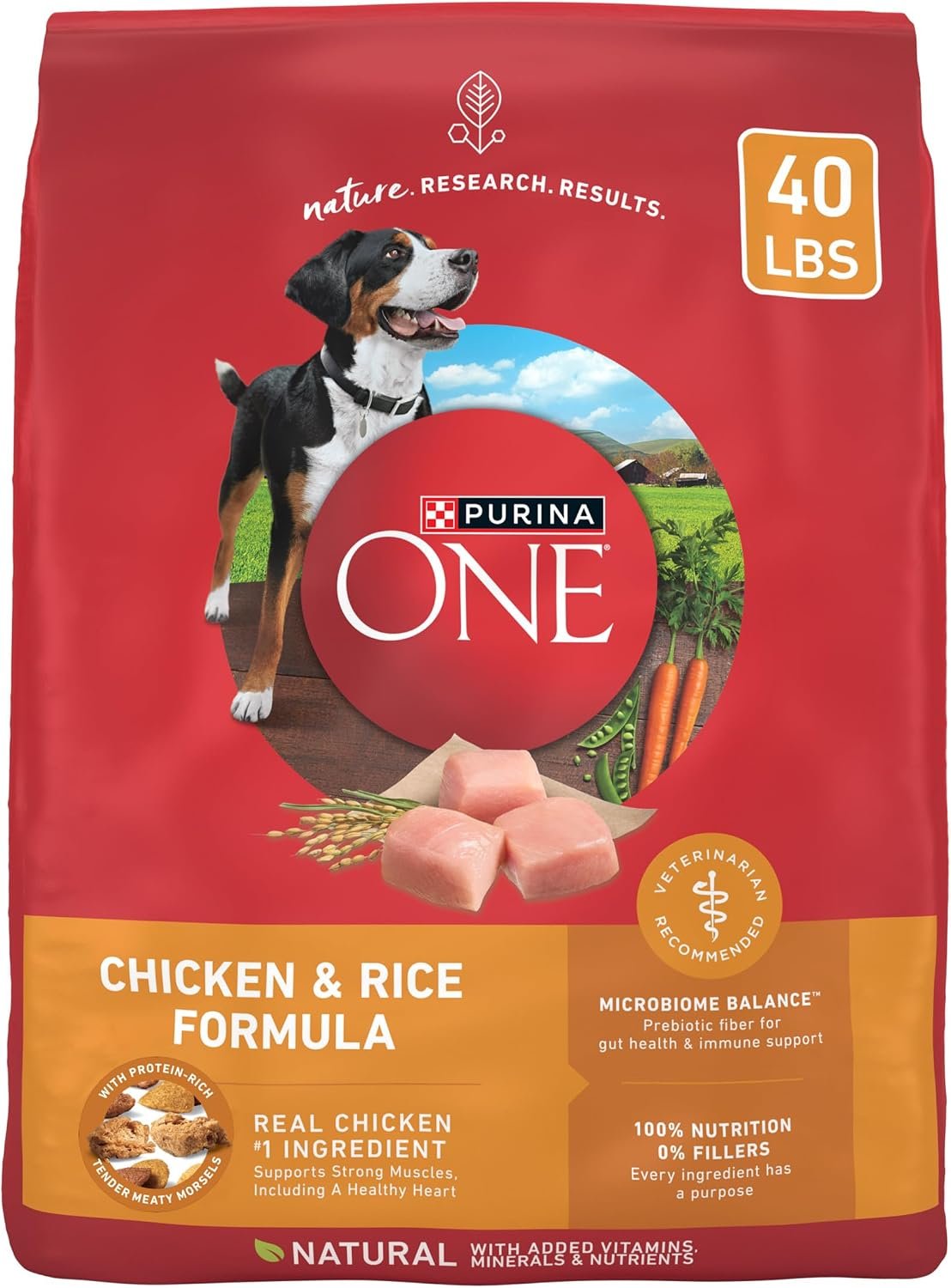
I tried this one as a middle step when I was trying to figure out if Moose had a chicken sensitivity. Here’s my thinking: turkey is closely related to chicken, so it’s not a true novel protein like venison or duck would be. But it’s different enough that some dogs who react to chicken do fine on turkey. It felt like a logical test before jumping to something completely different.
The protein content on this one is high — 30 percent. That’s more than the Purina Pro Plan Sensitive formula, which sits at 26 percent. For active dogs, that’s good. For a dog whose main activity is sleeping on the couch and occasionally barking at the mail carrier, it might be more than they need. Moose is somewhere in between — a daily walk and some fetch, nothing intense — and he did fine on it energy-wise. I didn’t notice him being more energetic or anything, but he also didn’t gain weight, which was my concern with the higher protein.
Here’s my honest take after feeding this for about six weeks: this food is good, but it didn’t solve Moose’s stomach issues the way the salmon-based Purina Pro Plan did. His stools were okay but not great. Not liquid, but not as firm as they got on the salmon formula. He did seem to enjoy the taste more, which matters if you’ve got a dog who’s been refusing food. The turkey flavor is different enough from chicken that picky eaters seem to respond to it.
I’d recommend this one if you’re in the process of elimination testing — trying to figure out whether chicken is the problem. Feed turkey for a few weeks, see if things improve. If they do, you know chicken was likely the trigger and you can either stick with turkey or try going further with a completely different protein like salmon or lamb. If things don’t improve on turkey, chicken probably isn’t your issue and you need to look elsewhere. Maybe it’s grains, maybe it’s a specific additive, maybe it’s something environmental.
This is what I mean about having opinions. Some review sites would tell you this food is “great for sensitive stomachs” because it has turkey in it. I’m telling you it’s a diagnostic tool more than a solution. There’s a difference.
Who it’s for: Dogs who might have a chicken sensitivity but you’re not sure yet. Good elimination diet step. Also good for picky eaters who are bored of chicken-flavored everything.
What to know:
- First ingredient is real turkey
- 30 percent protein — the highest on this list
- No artificial flavors or preservatives
- 30 lb bag, good value per pound
- Best used as a stepping stone if you suspect chicken is the problem
Get it: Purina ONE True Instinct on Amazon

4. Pedigree High Protein Grilled Steak Flavor (Around 32 Dollars for 27 lbs)
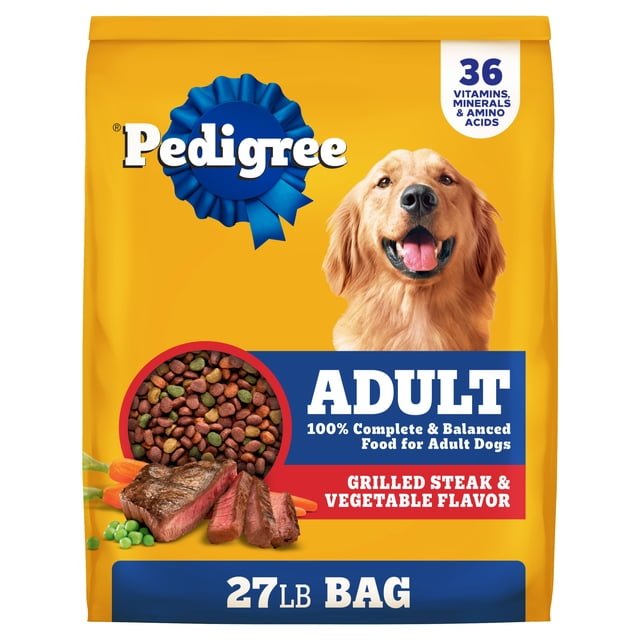
I’m including this one with a caveat, and I want to be upfront about it: I don’t think this is a sensitive stomach food at all. Pedigree doesn’t market it that way, and I wouldn’t recommend it if your dog has ongoing digestive problems. But I tried it for a few weeks when Moose was being picky about everything else, and I want to share what I found rather than just pretending I only ever feed my dog the “right” things.
The “grilled steak flavor” is exactly that — flavor. This isn’t a steak-based food. The protein comes from a blend of sources, and the flavoring is added to make it palatable. And honestly, it works on that front. Moose ate this food eagerly when he was turning his nose up at the IAMS and even at the Purina ONE. There’s something about the smell or the coating on the kibble that dogs really go for. I’ve talked to other owners who said the same thing — their picky dog ate this when nothing else worked.
The high protein content is nice on paper, but I didn’t notice any difference in Moose’s muscle tone or energy compared to the other foods. What I did notice was that his stools were looser on this than on any other food on this list. Not terrible, not liquid, but definitely softer and less consistent. After about three weeks, I switched him back to the Purina Pro Plan and things firmed up within days.
My take: if your dog is a picky eater and you’re trying to get them eating again after a stomach bug or a stressful move or whatever disrupted their routine, this might get them back to the bowl. The strong flavor seems to override whatever is making them cautious about food. But I wouldn’t keep them on it long-term if stomach sensitivity is your main concern. The ingredient profile isn’t as clean as the Purina options, and the results showed in Moose’s digestion.
Use it as a transition food — get them eating again, then gradually mix in something better. That’s a legitimate use case. Just don’t expect it to fix the stomach issue itself.
The 27 lb bag is slightly smaller than the others, which makes the per-pound price a bit higher than it looks at first glance. Thirty-two dollars for 27 pounds works out to about a dollar eighteen per pound, compared to IAMS at 93 cents per pound. Not a huge difference, but if you’re on a strict budget it adds up over a year.
Who it’s for: Picky eaters who’ve gone off their regular food. Active dogs who need higher protein. Not for dogs with serious ongoing digestive issues — use it to get them eating, then switch to something cleaner.
What to know:
- High protein formula
- Grilled steak flavor — very palatable, good for picky eaters
- Added vitamins and minerals
- 27 lb bag (slightly smaller than the others)
- Widely available, consistent pricing
Get it: Pedigree High Protein on Amazon
Switching Foods Without Making Things Worse
The first time I changed Moose’s food, I did it in one day. Cold turkey. Dumped out the old bag, filled the bowl with the new stuff, and figured he’d adapt. He had diarrhea for a week and I felt like a monster. That was the last time I did that.
Here’s the transition schedule I use now, and it works. It takes a week, which feels agonizingly slow when you just want your dog to feel better, but it’s worth it. The digestive system needs time to adjust to new protein sources and new fiber types. Rushing it causes the exact problem you’re trying to solve.
- Days 1-2: 75 percent old food, 25 percent new food
- Days 3-4: 50/50 split
- Days 5-6: 25 percent old food, 75 percent new food
- Day 7: Full switch to the new food
If your dog’s stool gets loose during this process, don’t panic. Just hang back at the current ratio for an extra day or two before moving forward. Moose needed an extra day at the 50/50 stage every single time I’ve switched foods. Some dogs just take longer to adjust. There’s no prize for finishing the transition on schedule.
One more tip: measure the food. Don’t eyeball it. When you’re mixing two kibbles at different ratios, guessing leads to way more of the new food than you intend, which defeats the whole point of a gradual transition. I use a simple measuring cup and it takes about ten extra seconds per meal. Worth it.
When You Should Stop Swapping Foods and Go to the Vet
I’m all for trying diet changes first. It’s cheaper than a vet visit, it’s less stressful for your dog, and honestly a lot of the time it does fix the problem. But there’s a line where you need to stop troubleshooting on your own and get professional help. I learned this the hard way.
These are the signs that made me pick up the phone:
- Blood in stool or vomit (this is an immediate vet visit, not a “let’s wait and see” situation)
- Diarrhea that lasts more than three days even with a gradual food change
- Vomiting more than twice in 24 hours
- Weight loss or refusing all food for more than two days
- Lethargy, hunched posture, or obvious abdominal pain — if your dog is standing with their back arched and doesn’t want to move, that’s pain
These symptoms can point to infections, blockages, parasites, or conditions that need actual treatment. Not a different bag of kibble. I waited too long once because I kept thinking “maybe the next food will fix it.” Moose had been dealing with loose stools for about three weeks before I finally took him in, and it turned out he had a mild bacterial overgrowth that needed antibiotics. Two weeks of pills and he was fine. Three weeks of food swapping before that did nothing.
Don’t be me. If something feels wrong beyond normal stomach upset, or if the timing feels off, or if your gut tells you this isn’t just food — get it checked. You know your dog. Trust that instinct.
What I’d Actually Buy
If I had to start over from scratch with Moose, here’s what I’d do. I’d buy the Purina Pro Plan Sensitive Skin and Stomach first. Not because it’s the most expensive or the most marketed — because it’s the one that actually has a different protein source and a formula designed for digestive gentleness rather than just a label that says “sensitive.” Salmon instead of chicken. Oatmeal instead of corn. Real ingredients that serve a purpose. It worked for us when nothing else did.
If money is the priority and your dog’s issues are mild — occasional loose stool, some gas, nothing that’s affecting their energy or weight — IAMS is a completely reasonable choice at under thirty dollars. It’s not fancy, but it has real ingredients and prebiotics, and sometimes that’s all you need. A step up from grocery store brands without the step up in price.
The Purina ONE turkey formula is worth trying if you’re in detective mode about chicken sensitivity. Use it as a tool to figure out what’s going on, not as a permanent solution. And the Pedigree — honestly, I’d only grab that if your dog is refusing to eat anything else and you just need to get calories into them for a few days. It’s a bridge, not a destination.
One more thing: don’t get discouraged if the first food you try doesn’t work. It took me three tries to find the right one for Moose. Each switch taught me something about what his body can and can’t handle. The process is frustrating, but when you finally find the food that makes your dog feel good — normal energy, normal stools, actually excited about mealtime — it’s worth every minute you spent staring at ingredient lists and cleaning up messes.
All four of these qualify for Amazon Prime shipping, which means you can have food at your door in two days. Try Prime free for 30 days and get free shipping on your order. When your dog’s current food runs out and you need the new one fast, this matters more than you’d think.
ThriftyPaw is reader-supported. As an Amazon Associate, I earn from qualifying purchases. This comes at no extra cost to you — I only recommend products I’ve actually tried and believe in for your pet.
Related guides
- DIY Dog Agility Equipment: Build a Backyard Course for Under 50 Dollars (2026)
- Heartworm Prevention on a Budget: Complete Guide Under 12 Dollars Per Month
- Budget Dog Probiotics: Complete Guide to Gut Health Under 20 Dollars Per Month
- Best Budget Dog Ear Cleaning Solutions (Under 15 Dollars — 2026)
- The Real Cost of Owning a Dog in 2026: Budget Breakdown by Size
🐾 Get Your Free Big Dog First Aid Kit Checklist
Join our newsletter and get this free printable plus weekly tips.
Frequently Asked Questions
Are sensitive stomach dog foods worth the extra money?
Often not — the author's finding after two years and six foods: the sensitive-stomach label frequently means the same ingredient list at $10 more per bag. What actually matters is the formulation (novel protein, prebiotic fiber) and your specific dog — the $38 Purina Pro Plan Sensitive worked where pricier boutique foods didn't.
What's the best budget dog food for sensitive stomachs?
The IAMS Proactive Health Minichunks at $28 for 30 pounds (93 cents a pound) for mild issues — occasional loose stool and gas; the honest pick for the price. The Purina Pro Plan Sensitive Skin and Stomach at $38 for 30 pounds is the one that worked for the author's genuinely difficult dog.
How do I switch dog foods without making the stomach worse?
The 7-10 day transition: 75/25 old-to-new for a few days, 50/50, then 25/75, then full — the gradual rotation is what lets the gut flora adapt. And the guide's discipline rule: stop swapping after you've transitioned; the perpetual-food-hopping dog never gets a baseline to judge by. If two foods fail properly, that's the vet visit, not food number three.
Liked this guide? Get the next one in your inbox — the pet budget checklist is free too.
✓ You're in — check your inbox.
No spam. Unsubscribe anytime. We never share your email.
Price Check
Prices verified via our product tracker. Updated Sep 27.
| Purina Pro Plan Sensitive Skin and Stomach Dog Food Dry, A | $94.98 | 4.6★ (8,217) |
| IAMS Proactive Health Adult Minichunks Dry Dog Food, Chick | $29.97 | 4.7★ (32,064) |
| Purina ONE True Instinct Dry Dog Food, Real Turkey & Venis | $16.68 | 4.6★ (18,068) |
| Pedigree Adult Complete Nutrition Dry Dog Food, Steak & Ve | $16.98 | 4.7★ (9,221) |
As an Amazon Associate we earn from qualifying purchases.