

This article contains affiliate links. We may earn a commission from qualifying purchases.
Some content on this site is AI-assisted and reviewed by our editorial team.
A lost dog is every owner’s nightmare. One in three pets will go missing in their lifetime, and the recovery rate for dogs without GPS trackers is around 70 percent — meaning 30 percent are never found. GPS trackers dramatically improve recovery odds, but commercial pet trackers cost 50-150 dollars upfront plus 10-15 dollars per month for cellular service. Over a dog’s lifetime, that is 300-500 dollars total. This guide covers whether GPS trackers are worth it, which features matter, the best budget options, and free alternatives that can help recover a lost dog.
How Dog GPS Trackers Work (And Why Most Need a Subscription)
Dog GPS trackers use three technologies to locate your dog:
- GPS (Global Positioning System) — receives signals from satellites to determine location. Works anywhere with a clear view of sky. Accuracy: 15-30 feet.
- Cellular (4G/LTE) — transmits the GPS location to your phone via cell towers. This is why most trackers require a monthly subscription — they contain a SIM card and use cellular data, just like a phone.
- Bluetooth — short-range connection (30-100 feet) for nearby tracking. Bluetooth-only trackers (like AirTags) are NOT GPS trackers and are not sufficient for lost dog recovery.
The subscription fee pays for the cellular data plan. Without it, the tracker knows where your dog is but cannot tell you. Some newer trackers offer WiFi for indoor location (GPS does not work well indoors), but cellular is essential for real-time tracking over distance.
Types of Trackers (Pros and Cons)
1. GPS + Cellular Trackers (The Standard)
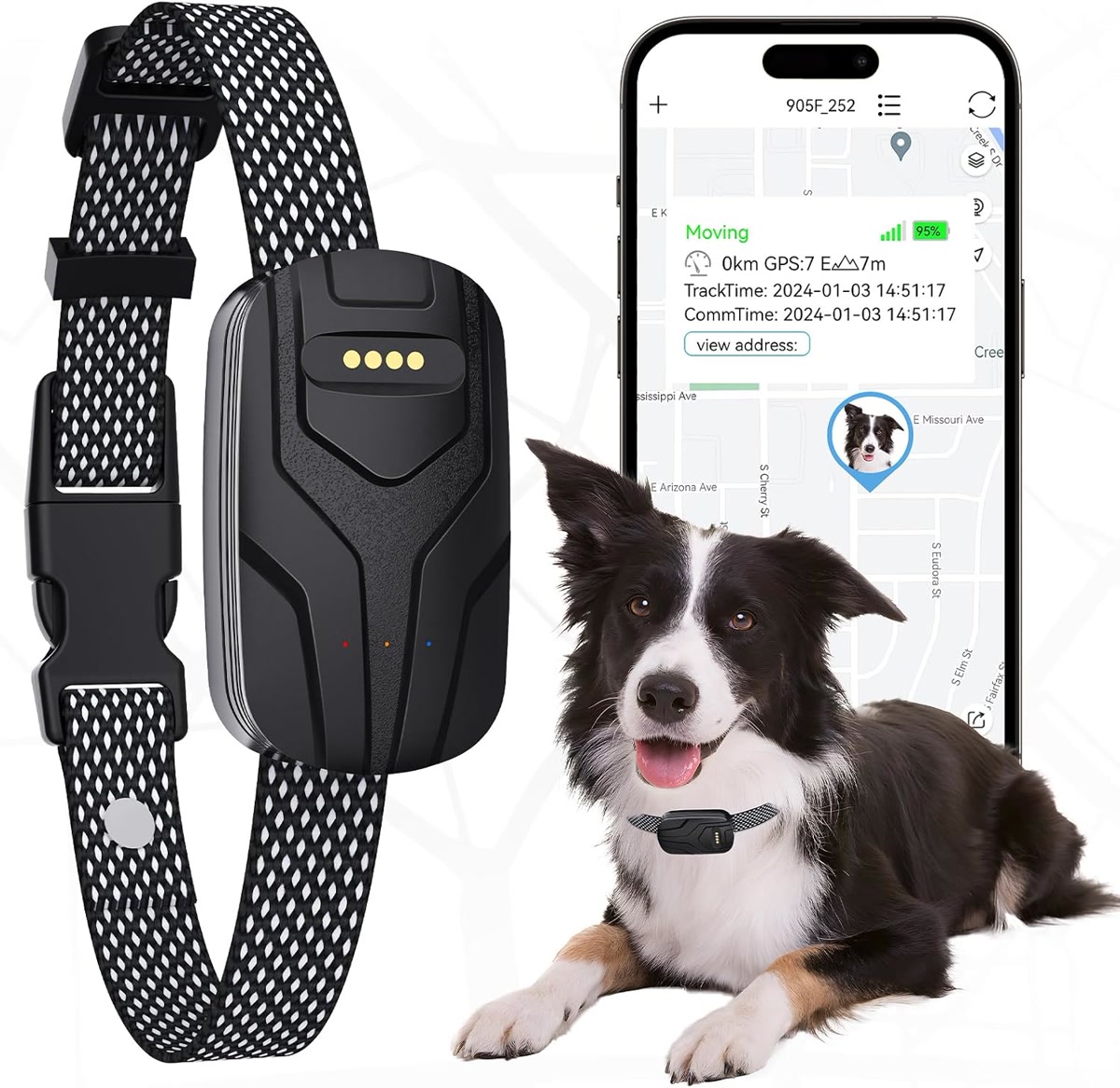
These are the most common dog trackers. They provide real-time location on your phone via an app. Your dog can be anywhere with cell coverage and you can find them.
| Tracker | Upfront | Monthly | Battery Life | Range |
|---|---|---|---|---|
| Fi Series 3 | 100-150 dollars | 10-15 dollars | 1-3 months | Unlimited (cellular) |
| Tractive GPS | 50-80 dollars | 5-12 dollars | 2-5 days | Unlimited (cellular) |
| Jiobit | 80-130 dollars | 9-17 dollars | 1-2 weeks | Unlimited (cellular) |
| Fi Series 2 (refurbished) | 50-80 dollars | 10-15 dollars | 1-3 months | Unlimited (cellular) |
Best budget option: Tractive GPS — lowest upfront cost (50-80 dollars, frequently on sale) and the most affordable subscription (5 dollars per month if paid annually). The drawback is battery life: 2-5 days between charges. If your dog is a backyard escape artist, you charge it every 2-3 days. For most dogs, this is manageable.
Best battery life: Fi Series 3 — 1-3 months per charge. This is a huge advantage — if your dog goes missing, a dead tracker is useless. The Fi also has the largest community network (other Fi users help locate your dog if they come within Bluetooth range). But the upfront cost (100-150 dollars) and subscription (10-15 dollars per month) are higher.
2. Bluetooth-Only Trackers (AirTag, Tile) — Limited
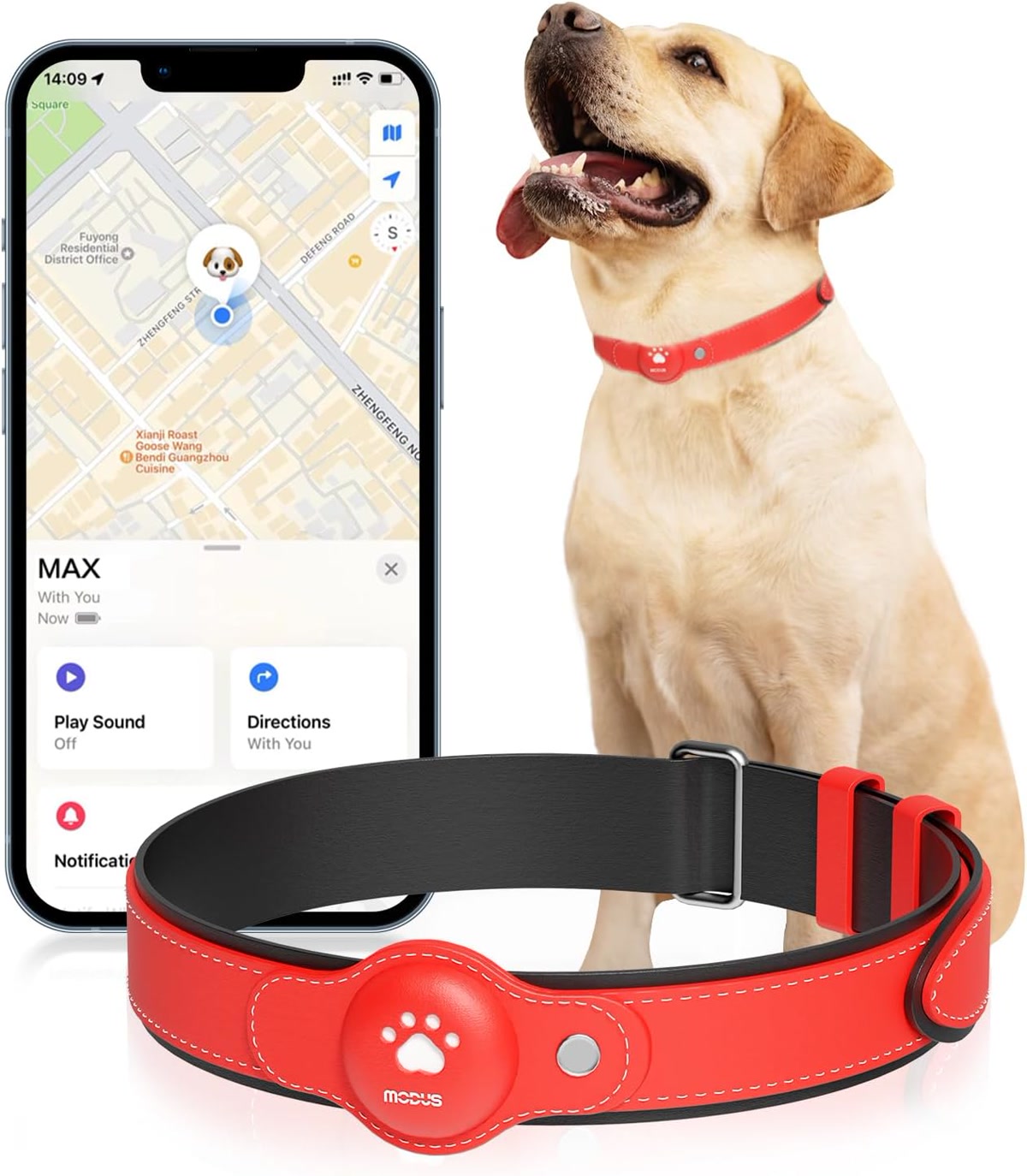
Apple AirTags and Tile trackers do NOT have GPS. They use Bluetooth to connect to nearby phones (Apple’s Find My network for AirTags, Tile network for Tile). If your lost dog comes within 30-100 feet of someone’s phone, the location is reported to you.

Pros:
- No monthly subscription
- AirTag: 25-30 dollars each
- Tile: 20-35 dollars each
- Small and lightweight
- Long battery life (AirTag: 1 year, Tile: 1 year)
Cons:
- No real-time GPS tracking — you can only see the last location where a phone was near your dog
- Useless in rural areas with few phones nearby
- Useless if your dog is hiding (they often hide where no one walks by)
- AirTag beeps after 3 days away from owner — may scare a hiding dog
Verdict: Bluetooth trackers are a cheap backup but should not be your primary lost-dog strategy. They work in dense urban areas where many phones are around. They fail in suburbs, rural areas, and when dogs hide. An AirTag attached to your dog’s collar as a secondary tracker alongside a GPS tracker gives the best of both worlds.
3. Radio Frequency (RF) Trackers — No Subscription, Limited Range
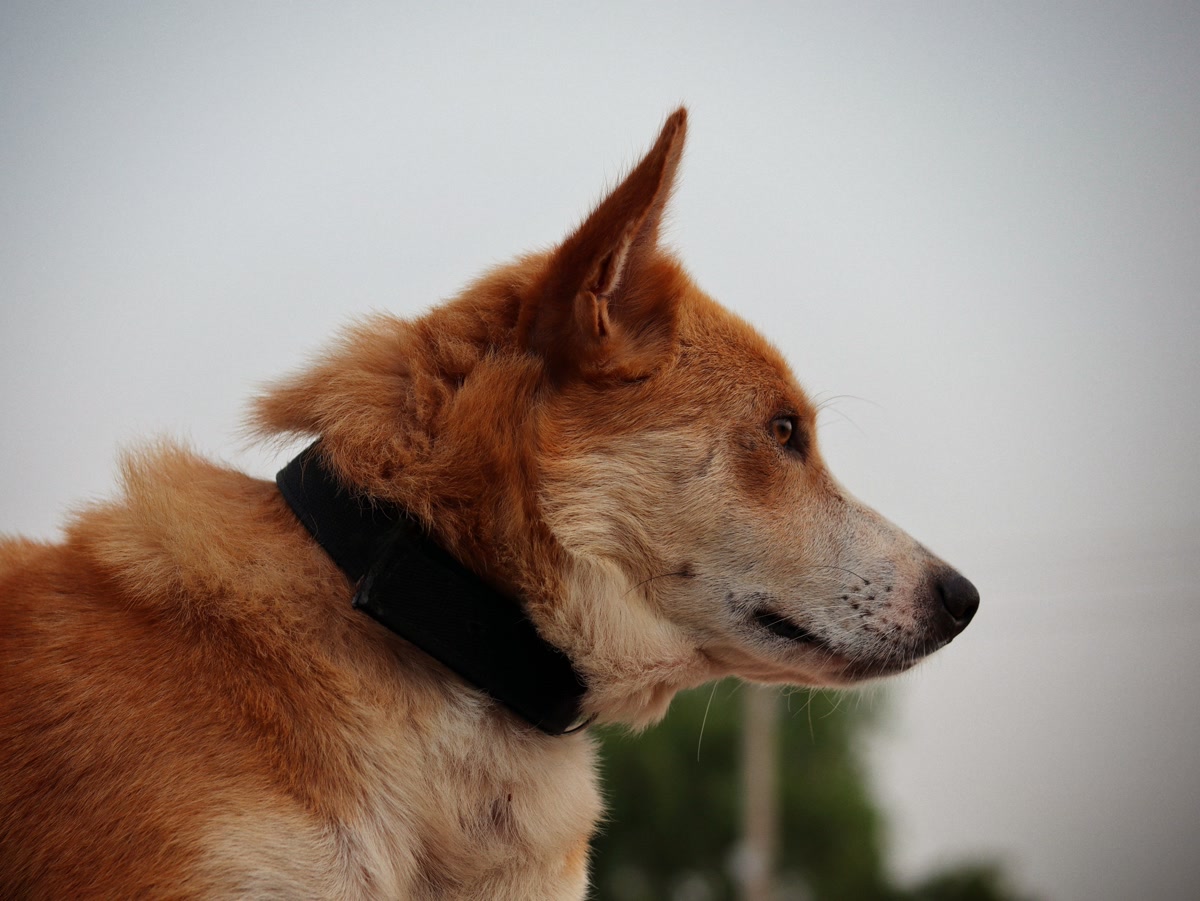
RF trackers use radio signals between a handheld receiver and a collar tag. No cellular, no subscription. Range is typically 400 feet to 3 miles depending on terrain.
| Tracker | Cost | Range | Subscription |
|---|---|---|---|
| Marco Polo | 200-250 dollars | 2 miles | None |
| Garmin Astro (hunting) | 300-500 dollars | 5-9 miles | None |
These are popular with hunters and rural dog owners. The high upfront cost is offset by no monthly fees. For a dog that lives 10 years, a Marco Polo at 225 dollars with no subscription is cheaper than Tractive at 50 dollars plus 5 dollars/month for 10 years (650 dollars total).
Limitations: you must be within range with the receiver to locate your dog. If your dog is stolen or travels far, RF will not help unless you follow and get within range. Not ideal for urban areas with interference.
Features That Matter (And Which Are Marketing Fluff)
Essential Features
- Real-time GPS tracking — see your dog’s current location on a map. This is the entire point.
- Geofence alerts — you set a safe area (your yard, your neighborhood). If your dog leaves the area, you get an immediate notification. This is the feature that prevents lost dogs — you know within seconds that your dog has escaped.
- Waterproof rating — dogs swim, roll in mud, and get caught in rain. IP67 or IP68 rating (submersible) is essential.
- Collar attachment — the tracker must attach securely to your dog’s collar. Trackers that clip on can fall off. Look for ones that thread through the collar or have a secure metal attachment.
- Battery life — a dead tracker is a piece of plastic. Longer battery life means fewer chances of the tracker dying when your dog escapes.
Nice-to-Have Features
- Activity tracking — steps, sleep, calories. Interesting but not the reason you bought a tracker.
- Community finding — other users of the same brand help locate your dog if they come within Bluetooth range. Fi has the largest community.
- Light reflection — a reflective strip on the tracker helps at night.
Marketing Fluff (Do Not Pay Extra For These)
- “AI escape detection” — this is just the geofence alert with a fancy name.
- “Health monitoring” — step counting is not a substitute for veterinary care.
- “Unlimited range” — all cellular trackers have unlimited range. This is not a premium feature.
- Color options — your dog does not care what color the tracker is.
How to Choose the Right Tracker for Your Budget
Scenario 1: Urban/Suburban Dog, Budget-Conscious
Choose: Tractive GPS
- Upfront: 50-80 dollars (watch for sales — frequently 30-40 percent off)
- Subscription: 5 dollars/month (annual plan) or 12 dollars/month (monthly)
- Total first year: 110-140 dollars
- Trade-off: charge every 2-5 days
Scenario 2: Rural Dog, No Cell Coverage Concerns
Choose: Marco Polo RF Tracker
- Upfront: 225 dollars
- Subscription: 0 dollars
- Total 5-year cost: 225 dollars (vs 550+ dollars for Tractive over 5 years)
- Trade-off: must be within 2 miles with the receiver; no remote tracking
Scenario 3: Escape Artist, Need Maximum Battery
Choose: Fi Series 3
- Upfront: 100-150 dollars (look for refurbished Series 2 at 50-80 dollars)
- Subscription: 10-15 dollars/month
- Total first year: 220-330 dollars
- Trade-off: higher cost, but 3-month battery life means the tracker is always ready
Scenario 4: Cheap Backup Only
Choose: Apple AirTag + collar holder
- AirTag: 25-30 dollars
- Collar holder (third-party silicone mount): 5-15 dollars
- Total: 30-45 dollars, no subscription
- Trade-off: no real-time GPS, relies on nearby phones, not sufficient as primary tracker
Free Alternatives That Improve Recovery Odds
Even without a GPS tracker, these free measures significantly improve your chances of recovering a lost dog:
1. Microchip (Not Free but Essential — 25-50 Dollars One-Time)
A microchip is the permanent identification that cannot fall off. Shelters and vets scan every found dog. If your dog is found and taken to a shelter, the microchip is how they contact you. It is not a tracker — it is an ID tag that cannot be lost. Cost: 25-50 dollars one-time at your vet, or watch for free microchip clinics at pet stores and shelters.
2. Visible ID Tag (5-10 Dollars)
A tag on the collar with your phone number is the fastest way for a finder to contact you. Most people who find a dog check the tag and call immediately — they do not take the dog to a shelter to be scanned. Use a metal tag with deep engraving (not surface printing, which wears off). Include your dog’s name, your phone number, and “REWARD” (offering a reward increases return rate).
3. Bright Collar (10-15 Dollars)
A bright orange, yellow, or reflective collar makes your dog visible from a distance. If someone sees a loose dog at dusk, a reflective collar catches headlights and helps them identify it as a pet rather than wildlife. Reflective stitching on the collar adds night visibility.
4. Recent Photo (Free)
Keep a clear, full-body photo of your dog on your phone. If your dog goes missing, you can immediately post it on neighborhood apps (Nextdoor, Ring Neighbors), social media, and lost pet websites. Time is critical — dogs can travel miles within hours.
5. Lost Pet Notifications (Free)
- Nextdoor — post in your neighborhood. Most lost dogs are found within 1 mile of home.
- Ring Neighbors app — free lost pet posts visible to all Ring users in your area.
- Finding Rover — free facial recognition database for lost pets.
- PawBoost — free lost pet alerts to local Facebook pages and email lists.
- Local animal control and shelters — file a lost pet report immediately. Visit in person every 2-3 days — descriptions do not always match.
The Bottom Line
A GPS tracker is insurance against the worst day of your dog ownership life. The best budget option is Tractive GPS at 50-80 dollars upfront and 5 dollars per month (annual plan) — total first-year cost of 110-140 dollars. For rural areas without cell coverage, the Marco Polo RF tracker at 225 dollars with no subscription is the better long-term investment. For a cheap backup, an Apple AirTag in a collar mount (30-45 dollars, no subscription) works alongside any primary tracker. Whatever you choose, combine it with a microchip (25-50 dollars one-time), a visible ID tag (5-10 dollars), and a bright reflective collar (10-15 dollars). The 30 percent of dogs that are never found are overwhelmingly those without identification. Spend 50 dollars on prevention to avoid spending weeks searching and thousands in reward money.
Last updated: July 2026 | By ThriftyPaw | Prices and availability subject to change
Check Current Prices on Amazon
ThriftyPaw is reader-supported. As an Amazon Associate, we earn from qualifying purchases. This means we may earn a small commission when you buy through links on this site at no additional cost to you. We only recommend products we genuinely believe in. Thank you for supporting ThriftyPaw.
🐾 Get Your Free Big Dog First Aid Kit Checklist
Join our newsletter and get this free printable plus weekly tips.
Price Check
Prices verified via our product tracker. Updated Sep 27.
| SPY SPOT GPS Tracker Pouch - Compatible with GL320MG, AirT | $13.95 | 3.8★ (267) |
| Tractive 3G GPS Dog Tracker – Dog Tracking Device with Unl | $100.00 | 3.5★ (1,301) |
As an Amazon Associate we earn from qualifying purchases.