
This article contains affiliate links. We may earn a commission from qualifying purchases.
Some content on this site is AI-assisted and reviewed by our editorial team.
When you are choosing a dog, you probably think about size, temperament, and how much they will shed. But the biggest factor in long-term dog expenses is breed — and it varies more than you might expect. A Chihuahua costs about 730 dollars per year to own. A Saint Bernard costs over 3,100 dollars. Over a 12-year lifespan, that is a difference of more than 28,000 dollars. The breed you choose today will determine your budget for the next decade.
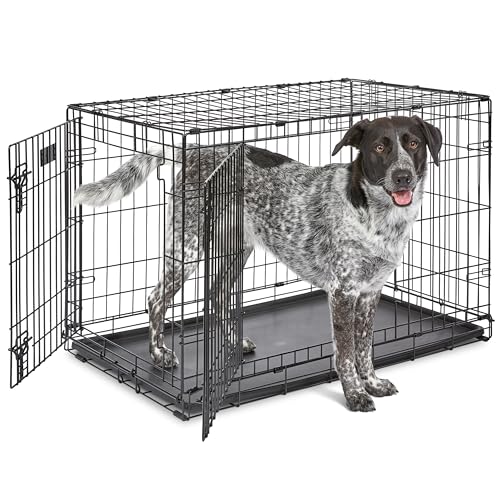
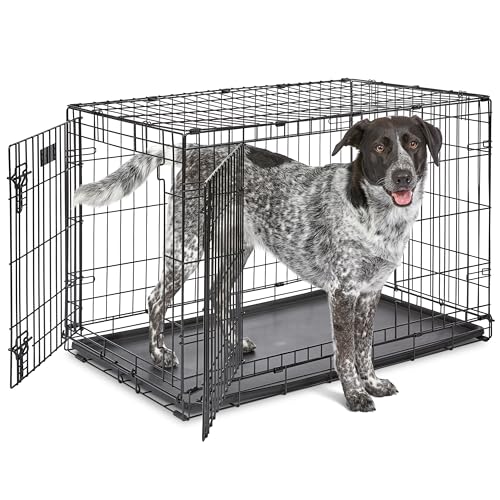
This is not about buying a cheap dog. It is about understanding which breeds cost less to feed, groom, and keep healthy over their entire lifetime. If you are on a budget — and most ThriftyPaw readers are — choosing a naturally affordable breed is the single biggest money-saving decision you can make as a dog owner. Once you pick your breed, a MidWest foldable crate and washable pee pads are the only essentials you need on day one — under 60 dollars total. Here are the 10 cheapest dog breeds to own, what makes them affordable, and what to watch out for with each.


How We Calculated Annual Costs
The annual costs in this guide include three main expense categories: food, veterinary care, and grooming. These are the recurring costs that every owner pays regardless of where they live. We excluded one-time costs like the purchase price, spay/neuter surgery, and initial supplies, since those vary widely and are paid once.
- Food: Calculated based on breed weight and average daily intake. Small breeds eat 0.3 to 0.5 cups per day. Large breeds eat 2 to 4 cups per day.
- Veterinary care: Annual checkups, vaccinations, flea and tick prevention, and typical breed-specific health costs.
- Grooming: Professional grooming costs for breeds that require it. Short-coated breeds need only occasional bathing at home.
These figures are based on 2026 averages from veterinary and pet industry data. Your actual costs will vary based on your location, the specific dog’s health, and your own choices (see our retailer comparison guide for where to buy supplies cheapest).
The 10 Cheapest Dog Breeds to Own
1. Chihuahua — About 730 Dollars Per Year
The Chihuahua is the cheapest dog breed to own by a wide margin. At just 2 to 6 pounds, they eat remarkably little — monthly food costs are about 15 to 20 dollars. Their short coat needs minimal grooming (50 to 75 dollars per year for occasional bathing and nail trims), and they tend to be healthy dogs with lower-than-average vet bills (350 to 400 dollars per year).
Chihuahuas are also perfect for apartments, scoring 5 out of 5 for apartment suitability. They do not need a yard, just daily walks and indoor play. The main cost watch-out is dental care — Chihuahuas are prone to dental disease, so budget for annual cleanings. See our budget dental care guide for keeping those costs down.
- Annual cost: ~730 dollars
- Lifespan: 14-16 years
- Lifetime cost: ~10,950 dollars
2. Dachshund — About 790 Dollars Per Year
Dachshunds are small, lovable, and inexpensive to feed. The smooth-coat variety needs almost no professional grooming. They are playful and stubborn, which makes them entertaining companions. Annual food costs are about 240 dollars, grooming 75 to 100 dollars, and vet care 450 to 500 dollars.
The one health cost to be aware of: their long back. Dachshunds are prone to intervertebral disc disease (IVDD), which can require expensive surgery (5,000 to 10,000 dollars). Prevent this by never letting your dachshund jump off furniture, using ramps (see our budget ramp guide), and keeping them at a healthy weight. A 15-dollar ramp prevents a 10,000-dollar surgery.
- Annual cost: ~790 dollars
- Lifespan: 12-16 years
- Lifetime cost: ~11,060 dollars
3. Maltese — About 810 Dollars Per Year
Despite their elegant appearance, Maltese are surprisingly affordable. At 4 to 7 pounds, their food costs are minimal — about 180 dollars per year. They are also one of the longest-living breeds at 12 to 15 years, giving you more years of companionship per dollar.
The grooming cost is the trade-off. Their long silky coat requires regular brushing and professional trims every 4 to 6 weeks (about 300 to 400 dollars per year). However, many owners keep their Maltese in a short “puppy cut” that reduces grooming to 2 to 3 times per year. Learn to do basic trims at home with our DIY grooming guide and cut that cost in half.
- Annual cost: ~810 dollars
- Lifespan: 12-15 years
- Lifetime cost: ~11,340 dollars
4. Yorkshire Terrier — About 830 Dollars Per Year
Yorkies are tiny dogs with tiny appetites. Monthly food costs run about 20 to 25 dollars, and they are generally healthy. At under 7 pounds, even grooming costs less than for larger breeds — their small size means grooming takes less time and product.
Like the Maltese, their silky coat needs regular care. Keep them in a short cut to minimize grooming expenses. Yorkies are prone to dental issues and patellar luxation (kneecap dislocation), so budget for annual dental cleanings and watch for limping.
- Annual cost: ~830 dollars
- Lifespan: 11-15 years
- Lifetime cost: ~10,790 dollars
5. Pug — About 890 Dollars Per Year
Pugs are one of the most popular small breeds and one of the most affordable. Their short coat eliminates professional grooming costs almost entirely — a weekly brush and occasional bath at home is all they need. Food costs stay low thanks to their small frame (14 to 18 pounds).
The health caveat is significant: pugs are brachycephalic (flat-faced), which means they can have breathing problems, eye issues, and heat sensitivity. Choose a reputable breeder who health-tests their dogs, and keep your pug at a lean weight to minimize respiratory stress. Budget an extra 200 to 400 dollars per year for potential breathing-related vet visits.
- Annual cost: ~890 dollars
- Lifespan: 12-15 years
- Lifetime cost: ~12,010 dollars
6. Beagle — About 950 Dollars Per Year
Beagles are sturdy, healthy dogs with low grooming needs and moderate food costs. Their short, weather-resistant coat is virtually self-maintaining — a weekly brush is all they need. Beagles are friendly, great with kids, and make wonderful family dogs on a budget.
The main cost watch-out is food. Beagles are notorious food lovers and will overeat if given the chance. Obesity leads to joint problems, heart disease, and higher vet bills. Measure their food carefully and avoid the temptation to give table scraps. See our money-saving dog food tips for keeping food costs under control.
- Annual cost: ~950 dollars
- Lifespan: 10-15 years
- Lifetime cost: ~11,875 dollars
7. French Bulldog — About 970 Dollars Per Year
French Bulldogs have become America’s most popular breed, and their ongoing costs are surprisingly reasonable. No grooming salon visits needed — their short coat requires just a weekly brush. Food costs are moderate at their 16 to 28 pound size.
Like pugs, Frenchies are brachycephalic and can have respiratory issues. They are also sensitive to heat and cannot be left outside in summer. Budget for potential breathing-related care and consider cooling products for summer. The purchase price is also high (2,000 to 4,000 dollars), but ongoing costs are manageable.
- Annual cost: ~970 dollars
- Lifespan: 10-12 years
- Lifetime cost: ~10,670 dollars
8. Boston Terrier — About 980 Dollars Per Year
Boston Terriers are compact, friendly, and low-maintenance. Their tuxedo coat needs minimal grooming, and they are generally healthy dogs. At 12 to 25 pounds, food bills stay modest at about 300 dollars per year.
Bostons are also among the easiest breeds to train, which means fewer behavioral issues and lower training costs. They are adaptable to apartments and small homes. Like other flat-faced breeds, watch for breathing issues in hot weather.
- Annual cost: ~980 dollars
- Lifespan: 11-13 years
- Lifetime cost: ~11,760 dollars
9. Havanese — About 1,010 Dollars Per Year
The Havanese sneaks onto this list despite needing regular grooming. Their small size (7 to 13 pounds) keeps food costs very low, and they are a generally healthy breed with lower-than-average vet costs. Many owners keep them in a short clip to reduce grooming frequency.
Havanese are outstanding family dogs — scoring 5 out of 5 with kids and 5 out of 5 for apartment living. If you can learn basic grooming at home, this breed’s annual cost drops closer to 900 dollars.
- Annual cost: ~1,010 dollars
- Lifespan: 14-16 years
- Lifetime cost: ~15,150 dollars
10. Bichon Frise — About 1,040 Dollars Per Year
The Bichon Frise rounds out our list. Their fluffy white coat does require professional grooming every 4 to 6 weeks, but their tiny size keeps food costs minimal and they are generally robust dogs with few health problems.
Bichons are cheerful, non-shedding, and easy to train. If you are willing to learn home grooming (the short “puppy cut” is easy to maintain yourself), the annual cost drops significantly. The breed’s low shedding also means less cleaning and fewer allergy issues in your home.
- Annual cost: ~1,040 dollars
- Lifespan: 14-15 years
- Lifetime cost: ~15,080 dollars
Cost Comparison: Cheap vs Expensive Breeds
To put these numbers in perspective, here is how the cheapest and most expensive breeds compare over a typical lifetime:
| Breed | Annual Cost | Lifespan | Lifetime Cost |
|---|---|---|---|
| Chihuahua | 730 dollars | 15 years | 10,950 dollars |
| Dachshund | 790 dollars | 14 years | 11,060 dollars |
| Beagle | 950 dollars | 13 years | 11,875 dollars |
| Labrador Retriever | 1,680 dollars | 12 years | 20,160 dollars |
| German Shepherd | 1,850 dollars | 11 years | 20,350 dollars |
| Golden Retriever | 1,790 dollars | 11 years | 19,690 dollars |
| Bernese Mountain Dog | 2,400 dollars | 8 years | 19,200 dollars |
| Saint Bernard | 3,140 dollars | 9 years | 28,260 dollars |
The Chihuahua costs 17,310 dollars less over a lifetime than a Saint Bernard. That is the price of a used car. The difference is driven by three factors: food (a Saint Bernard eats 4 to 6 cups per day versus 0.3 cups for a Chihuahua), grooming (larger dogs cost more to groom), and health (larger breeds have more joint and heart issues).
Beyond the Breed: 3 Ways to Cut Any Dog’s Annual Cost
Choosing an affordable breed is the biggest single factor, but whatever breed you have, these three strategies will cut your annual costs significantly:
1. Buy Food in Bulk and Use Autoship
Buying dog food through Amazon Subscribe and Save or Chewy Autoship saves 10 to 15 percent on every order. For a medium breed eating 2 cups per day, that saves about 50 to 75 dollars per year. See our full retailer price comparison for the best strategy.
2. Learn Basic Grooming at Home
Professional grooming costs 40 to 80 dollars per session. If you learn to bathe, brush, trim nails, and do basic coat maintenance at home, you save 200 to 500 dollars per year. Our DIY grooming guide walks you through what you can do yourself versus what to leave to professionals.
3. Invest in Preventive Care
The cheapest vet visit is the one you never need. Annual checkups (100 to 150 dollars), dental care (see our under-20-dollar dental guide), and flea and tick prevention prevent expensive treatments down the road. A 15-dollar monthly heartworm preventative prevents a 1,500-dollar heartworm treatment.
Bottom Line
If you are choosing a dog and budget matters — and it should — look at small, short-coated breeds with good health records. A Chihuahua, Dachshund, or Beagle will cost you 730 to 950 dollars per year, compared to 1,700 to 3,100 dollars for popular large breeds. Over a lifetime, that is a 10,000 to 17,000 dollar difference for the same amount of love and companionship.
The breed is not the only factor — your choices about food, grooming, and preventive care matter enormously — but it is the factor you cannot change after you bring your dog home. Choose wisely, and your wallet will thank you for the next 12 to 15 years.
Last updated: June 2026 | By ThriftyPaw | Annual costs based on 2026 industry data and will vary by location and individual dog healthn
n
ThriftyPaw is reader-supported. As an Amazon Associate, we earn from qualifying purchases. This means we may earn a small commission when you buy through links on this site at no additional cost to you. We only recommend products we genuinely believe in. Thank you for supporting ThriftyPaw.
My take: Breed choice is the $28,000 decision — pick from the healthy small end (Chihuahua, Maltese, Beagle) and the annual math stays under $950. Two traps on the cheap list: the Dachshund’s back (buy the $15 ramp) and the flat-faced breeds’ airways, which quietly add vet years.
Related guides
- Best Budget Dog Food for Large Breeds (Under 50 Dollars Per Bag — 2026)
- Cat Kidney Disease on a Budget: Management Guide Under 60 Dollars Per Month
- Puppy Vaccination Schedule and Real Costs (2026)
- Cat Dental Care on a Budget: Complete Guide Under 18 Dollars Per Month
- Budget Dog Hydration: Summer Water Guide Under 20 Dollars (2026)
🐾 Get Your Free Big Dog First Aid Kit Checklist
Join our newsletter and get this free printable plus weekly tips.
Frequently Asked Questions
What's the cheapest dog breed to own?
The Chihuahua at about $730 a year — 2-6 pounds means $15-20 a month in food, minimal grooming ($50-75 a year), and lower-than-average vet bills ($350-400). Over a 12-year lifespan that's roughly $10,950, against a Saint Bernard's $3,100+ a year and $28,000+ lifetime gap.
Are small dogs always cheaper than big dogs?
Mostly, but with exceptions: the Dachshund ($790/year) carries IVDD risk — spinal surgery runs $5,000-10,000, which a $15 ramp helps prevent — and the French Bulldog ($970) and Pug ($890) carry brachycephalic airway costs. The cheap list is cheap because of health and food math, not size alone.
How much does dog breed affect lifetime cost?
More than any other single choice: the guide's range runs from $730 a year (Chihuahua) to $3,100+ (Saint Bernard), a $28,000+ difference over a 12-year life. Picking from the healthy-cheap end of the list is the biggest budget decision a future dog owner makes.
Liked this guide? Get the next one in your inbox — the pet budget checklist is free too.
✓ You're in — check your inbox.
No spam. Unsubscribe anytime. We never share your email.
Price Check
Prices verified via our product tracker. Updated Sep 27.
| Midwest 36-Inch Double Door iCrate, for Medium-Large Breed | $65.99 | 4.7★ (70,169) |
| Amazon Basics Leak-Proof Dog and Puppy Potty Training Pee | $22.39 | 4.4★ (220,828) |
As an Amazon Associate we earn from qualifying purchases.