This article contains affiliate links. We may earn a commission from qualifying purchases.
Some content on this site is AI-assisted and reviewed by our editorial team.
My cat turned thirteen this spring, and in October she started peeing on the bath mat — two feet from her litter box. My first instinct was the expensive one: book a urinalysis. Then I did something better first. I sat on the bathroom floor and watched her try to use the box. She put both front paws on the rim, hesitated, and walked away to the mat. Her box had a ten-inch wall. Her hips, at thirteen, do not do ten-inch walls.
One week later, with a $49.95 low-entry pan and a $10.99 pouch of litter attractant, the accidents stopped. Total: $60.94. Here is the part most senior-cat owners skip: the fix is usually a height problem, not a behavior problem — but you rule out the medical stuff first, because “behavior” is just what we call problems we haven’t diagnosed yet. If your old cat suddenly stops using the box, that’s a vet visit, full stop. What follows is everything I tested after ours came back clean.
I measured, priced, and lived with four boxes over a month of cold mornings. Here’s what actually fixed it.
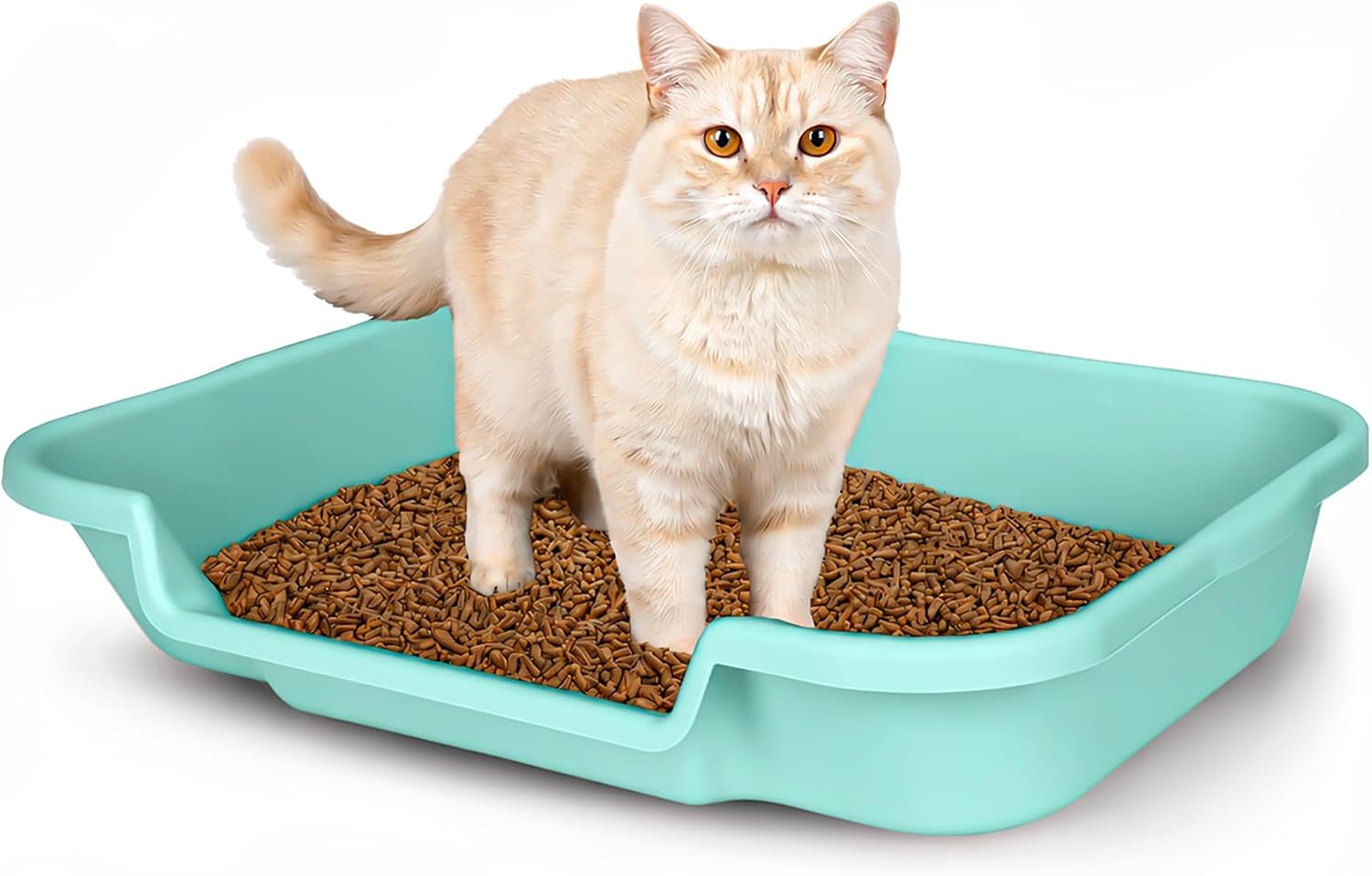
KittyGoHere Senior Cat Litter Pan (Large) — The 3-Inch-Threshold Design
The KittyGoHere Senior Cat Litter Pan (Large) is the box that ended the accidents at our house. It is purpose-built for exactly this problem: a front entry about three inches high, a shallow ramped approach, an open top, and extra floor room so a stiff cat can turn around without stepping in yesterday’s business. It is the box veterinarians point to for arthritic cats, and it is the one my cat walked into on the first try after a year of hesitation at the tall box.
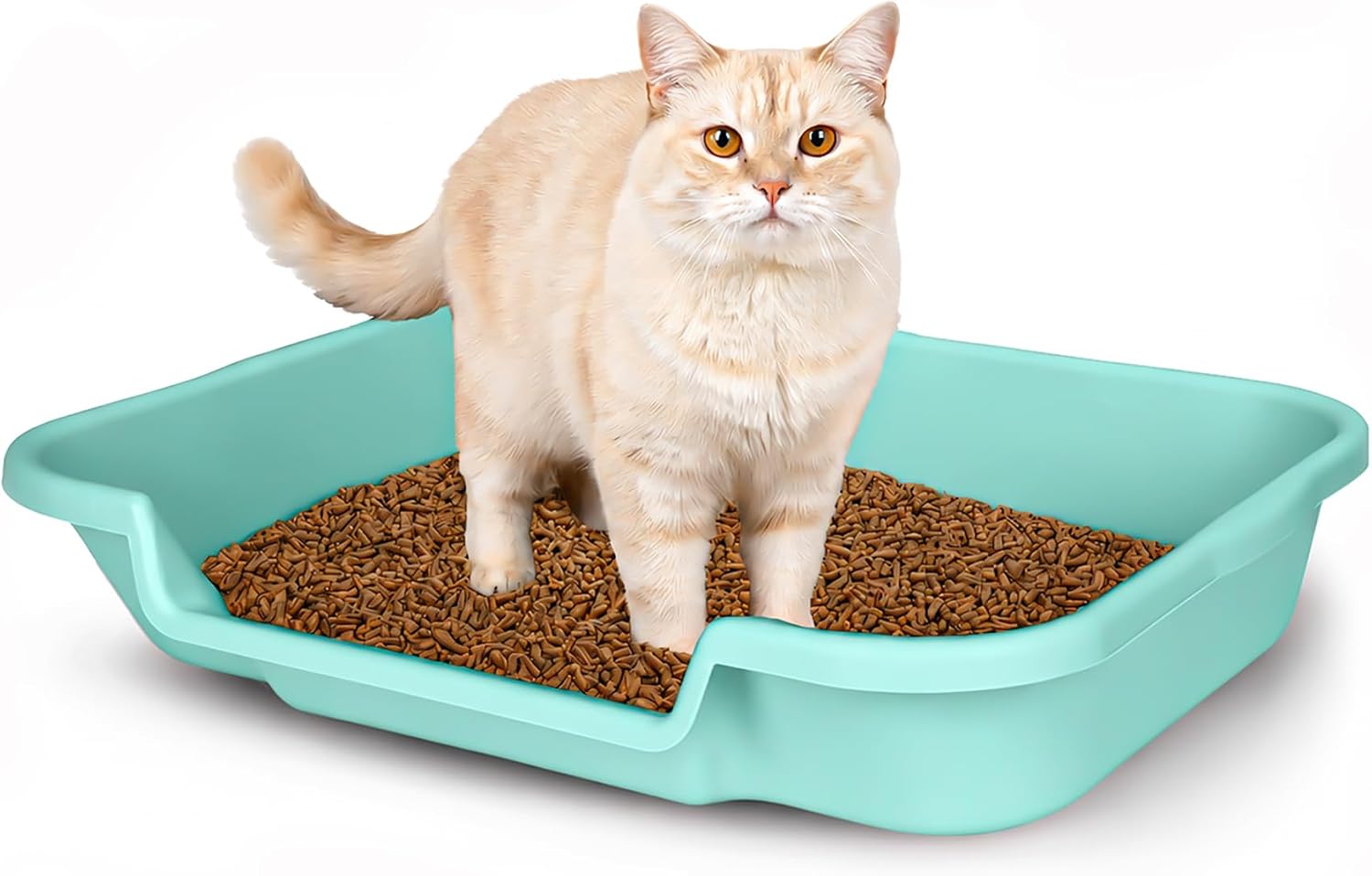
Honest cons: at about $50 it is the priciest plastic pan I have ever bought, and it looks like a planter tray — the low front also throws litter wide, so pair it with a mat or accept a daily broom pass.
My take: if your senior cat is missing the box and the vet has cleared her, this is the single highest-probability $50 in senior-cat care.
Dr. Elsey’s Ultra Litter Attractant (20 oz) — The 11-Dollar Re-Training Pouch
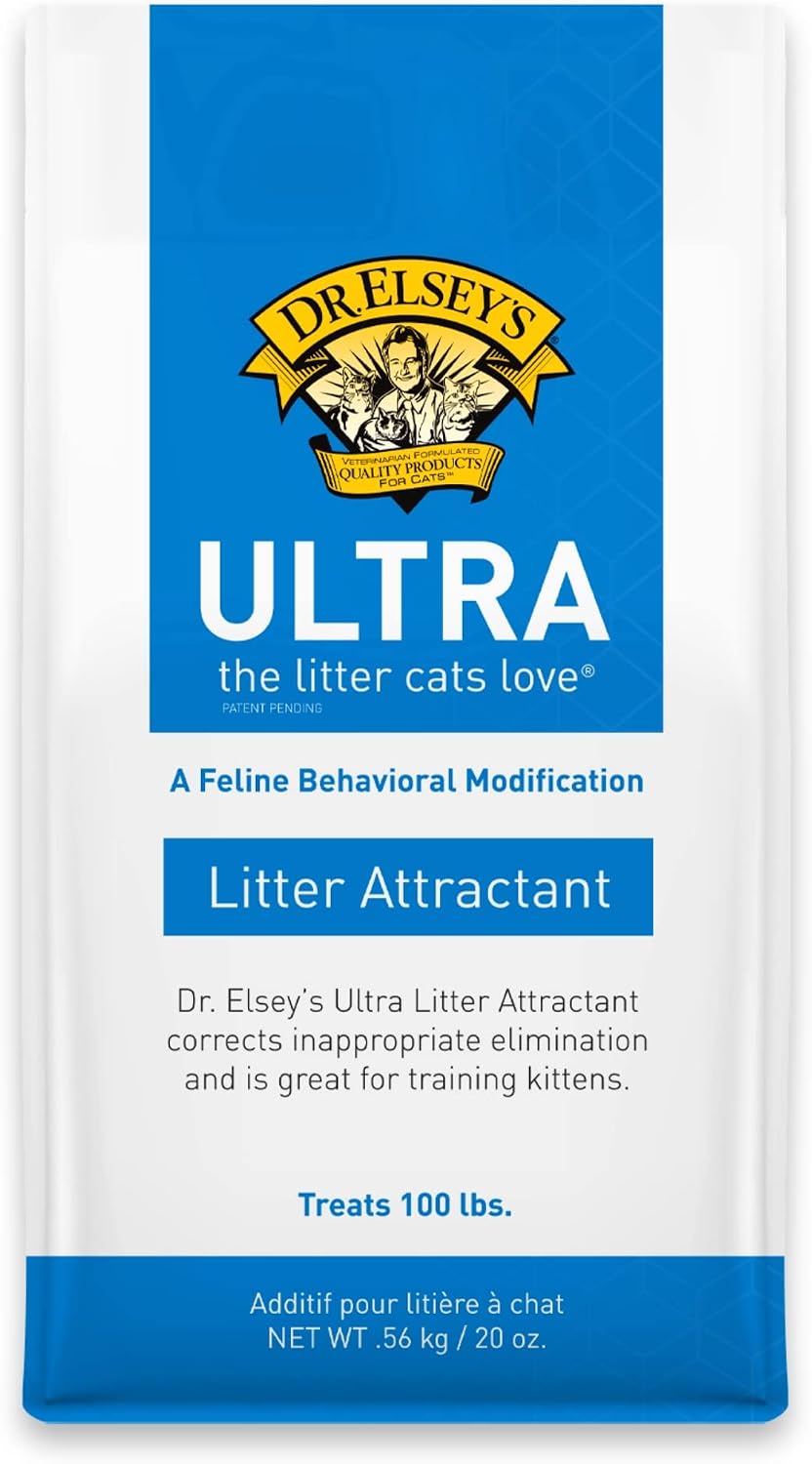
Dr. Elsey’s Ultra Litter Attractant is the finishing move. It is an all-natural herbal blend you sprinkle over the litter; the scent draws cats back to the box while you re-train the habit after a change — new box, new location, new litter. One 20-ounce pouch runs about $11, treats up to 100 pounds of unscented clumping litter, and lasts about three months, which is several re-training cycles’ worth.
Two honest notes. First, it works on habit, not pain — if the cat is avoiding the box because it hurts to get in, no herb on earth fixes that, and delaying the vet visit makes it worse. Second, it is a consumable: set it up on Subscribe & Save (around 5 percent off) so the pouch is there when a habit slips, not two days later.
My take: cheap insurance while the new box becomes the normal box — just never let it substitute for the vet visit.
Qiuma Stainless Steel Low-Entry Litter Box — The Forever Box
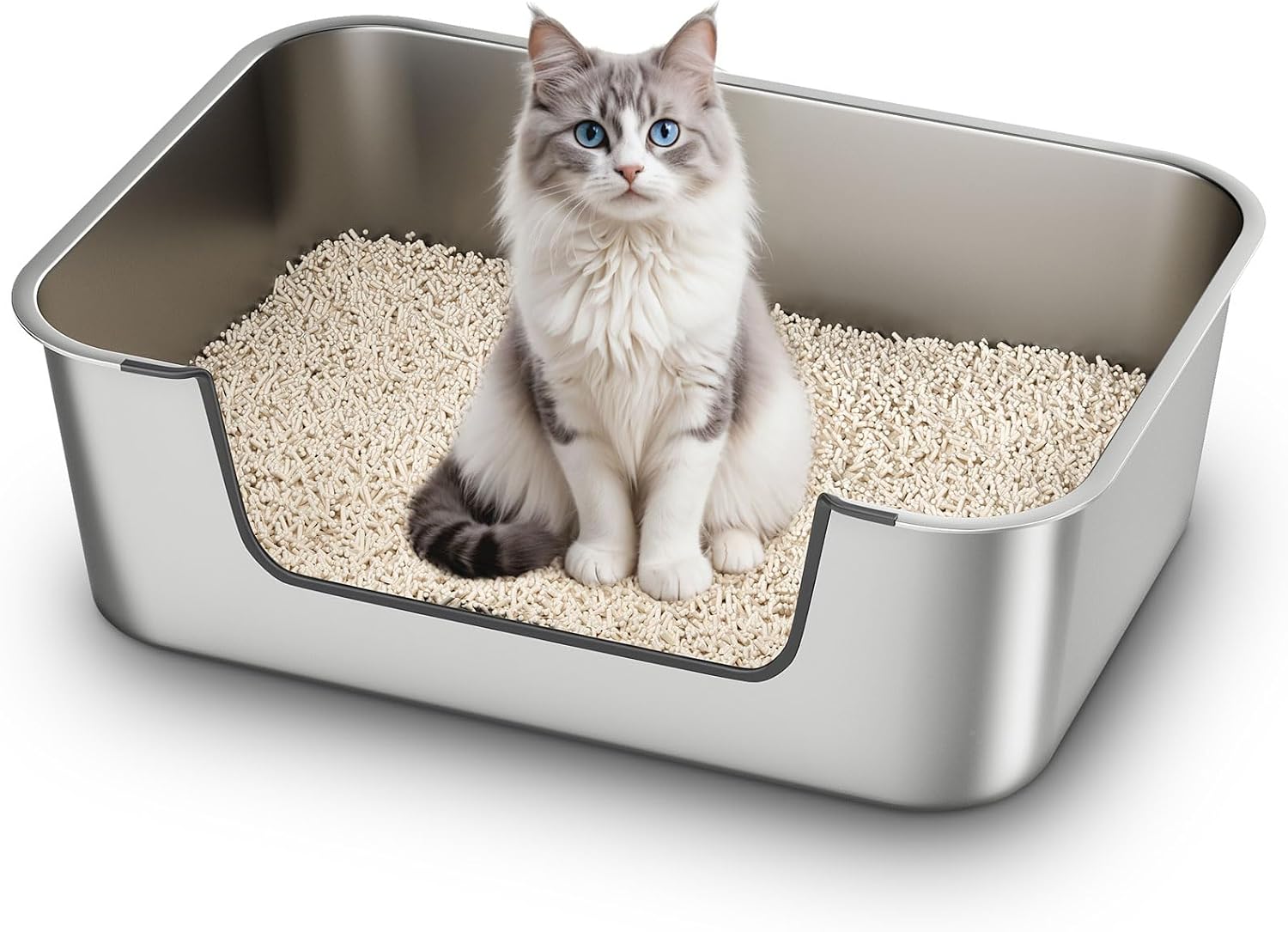
The Qiuma Stainless Steel Low-Entry Litter Box is the box you buy once. Its front entry is about 3.15 inches, the raised back blocks urine splash, and stainless steel never absorbs odor the way scratched-up plastic does — five years in, you can still clean it with a hose and it looks new. For a senior-cat household planning to keep boxes around for another cat or two, the $49.99 price stops feeling steep when you divide it by a decade.
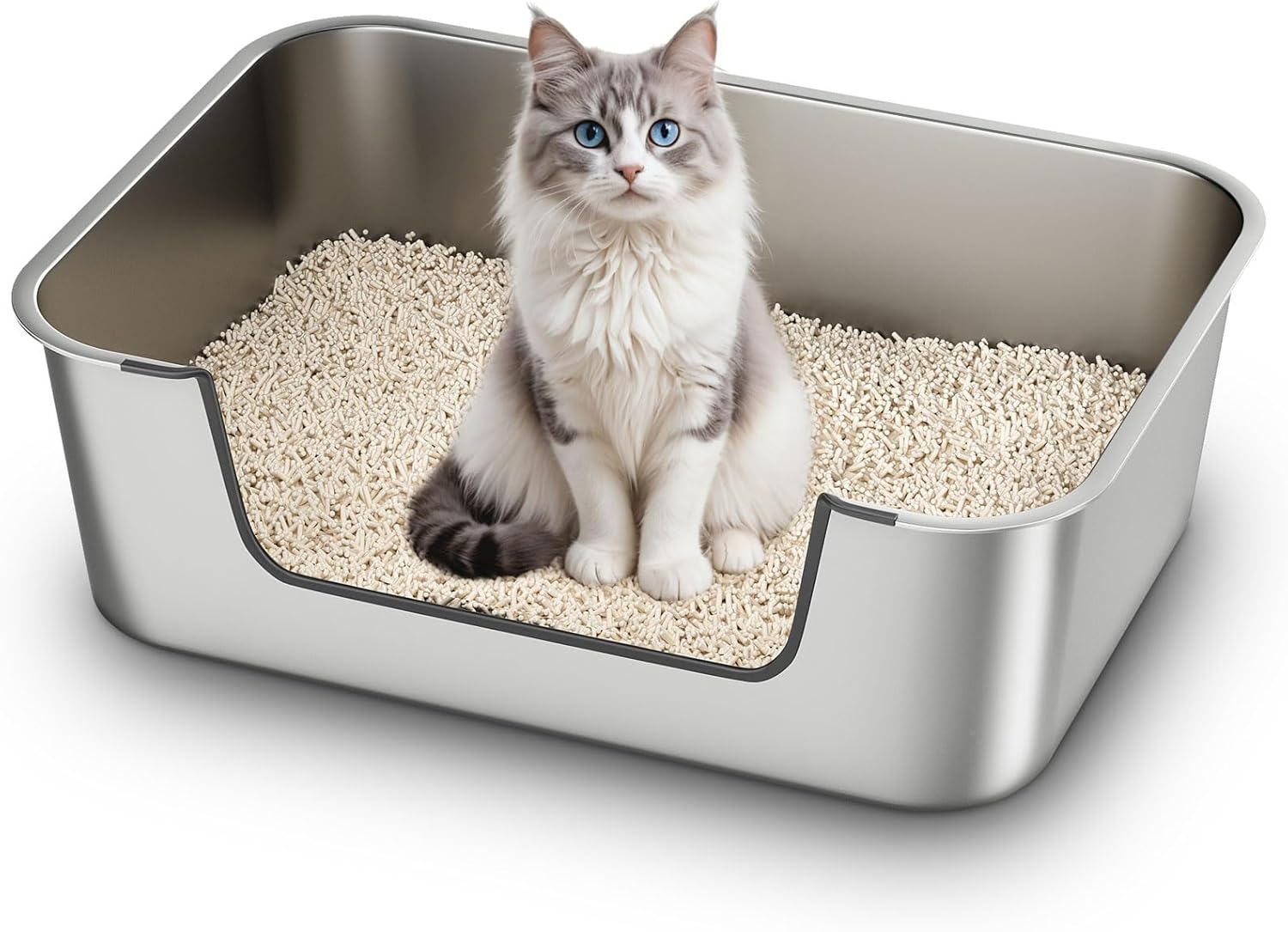
Honest cons: it is $50 up front, and stainless steel is loud. A cat that digs with enthusiasm at 5 a.m. sounds like a tiny construction crew, which is why ours lives in the bathroom and not outside a bedroom door.
My take: the buy-it-once upgrade — pick this one if you’d rather never think about litter boxes again.
TAILRYTHM Extra-Large Low-Entry Pan — The 34-Dollar XL
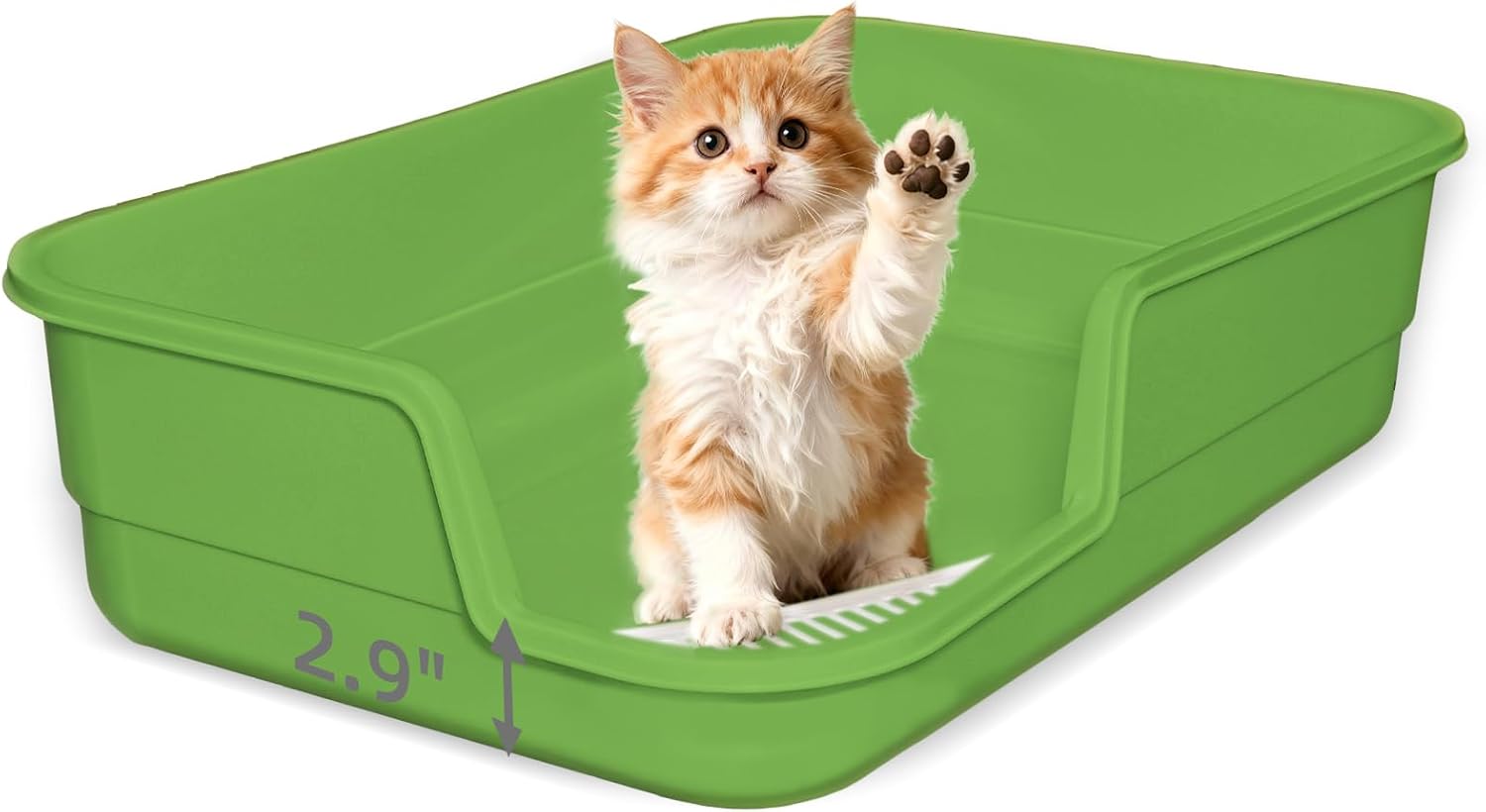
The TAILRYTHM Extra-Large Low-Entry Pan is the floor-space play for senior cats that stopped squatting neatly — a jumbo open floor with a corner entrance about 2.9 inches high, angled so a wobbly cat walks in instead of hopping. At about $34 (it lists around $40 and dips on sale) it is the cheapest real low-entry box I found that is actually sized for a full-grown cat.
Honest cons: the plastic is thinner than the Qiuma’s steel or the KittyGoHere’s rim, and a full pan flexes when you carry it — lift it, don’t scoop-walk it across the house, or you will meet the litter on the floor.
My take: the budget XL — right answer when the cat is large and the wallet isn’t.
Fix the box, not the cat. Cold-weather pet supply runs are exactly what a free 30-day Prime trial is built for — the low-entry pan and the attractant pouch land at the door before the next accident does.
Features That Actually Matter (And Ones That Don’t)
Entry height is the whole game. Every box that worked has a front under about 3.5 inches. The ten-inch “high-sided” boxes that stop scatter are the same boxes my senior cat refused.
Floor space beats wall height. Stiff cats stop squatting neatly; a jumbo floor catches the misses that a tall wall would have blocked — at the cost of your bathroom mat.
Open top, always. Hooded boxes ask an arthritic cat to enter a dark tunnel. Every low-entry design here is open on top, and that is not a coincidence.
What doesn’t matter: self-cleaning mechanisms (a scared senior cat won’t use them), deodorized liners, and any “senior” label on a box with a six-inch entry. Read the entry height, not the marketing.
What’s the Best Litter Box for an Arthritic Senior Cat?
Any open pan with a front entry at or under about three inches — the KittyGoHere is the purpose-built pick, and the stainless Qiuma is the same idea built to last a decade. Under $35, the TAILRYTHM XL does the job while the sale lasts.
The Annual Cost Comparison
- Before the fix: enzyme cleaner at about $8 a bottle, a bath-mat laundering habit, and one $60-to-$150 urinalysis to rule out the medical stuff — plus the quiet fear every new spot on the floor.
- After the fix: about $61 one time (pan plus attractant pouch) and roughly $11 every three months if you keep the attractant on subscription. That’s under $20 a month to have a thirteen-year-old cat who acts like a two-year-old at dinner time.
- What else that money buys: the same $61 is about a month of premium litter — the difference is the box you buy once versus the litter you buy forever.
Keep reading: if the carrier ride to that vet visit is its own battle, the carrier my cat hates least made our trips survivable, and the priced-by-the-math habit continues in cat treats priced by the purr.
ThriftyPaw is reader-supported. As an Amazon Associate, I earn from qualifying purchases. That means if you buy through one of the links above, I get a small commission at no extra cost to you. I only recommend products I’ve actually used with my own pets.
🐾 Get Your Free Big Dog First Aid Kit Checklist
Join our newsletter and get this free printable plus weekly tips.
Frequently Asked Questions
Why is my old cat suddenly missing the litter box?
In a senior cat, the first suspect is medical — arthritis, urinary trouble, and kidney issues all show up as accidents first. Get the vet visit before buying anything. If the cat is healthy and hesitates at the rim, the wall is usually too high for stiff hips to clear.
What litter box is easiest for an arthritic cat?
An open-top pan with a front entry at or under about 3 inches. The KittyGoHere Senior pan is purpose-built for arthritic cats, and stainless low-entry boxes like the Qiuma last a decade without holding odor.
Do litter attractants like Dr. Elsey's really work?
They work on habit, not pain. The herbal scent pulls a cat back to the box during retraining after a change — new box, new litter, new spot. If the cat is avoiding the box because climbing in hurts, no pouch fixes that; that is a vet problem.
How much should fixing a senior cat's litter setup cost?
The working fix at our house cost about $61 — a $49.95 low-entry pan plus an $11 pouch of attractant. That is less than most single vet visits, and far less than the enzyme-cleaner-and-replacement-mat treadmill of not fixing it.
Liked this guide? Get the next one in your inbox — the pet budget checklist is free too.
✓ You're in — check your inbox.
No spam. Unsubscribe anytime. We never share your email.