This article contains affiliate links. We may earn a commission from qualifying purchases.
Some content on this site is AI-assisted and reviewed by our editorial team.
The first freeze hits my neighborhood in about four weeks, and the colony of three feral cats behind my garage knows it before the weather app does. Last November I paid $150 for a “heated outdoor shelter” from a boutique pet catalog. This year I ran the numbers on five outdoor cat houses and learned two things: a 20-watt heated pad that thermostat-cycles costs about $4 in electricity for an entire winter, and the safety certification matters more than the price tag.

I tracked wattage, safety listings, weatherproofing, and real assembly time across five shelters. Here is what I found.
The Heating Math Nobody Runs
Before the product picks, here is the calculation that surprised me. A 20-watt heated pad running 12 hours a night for roughly 120 winter nights uses about 28.8 kilowatt-hours. At the national average of $0.15 per kWh, that is $4.32 for the entire season. The pad does not run continuously — it thermostat-cycles, so actual usage is lower. Heating an outdoor cat house is cheaper than feeding one cat for a week.
The real money decisions are not the power bill. They are: does the heated pad have a published safety listing (MET, UL), and does the shelter have two exits so a cat never gets cornered by a predator?
K&H Thermo Outdoor Kitty House — The Heated Benchmark
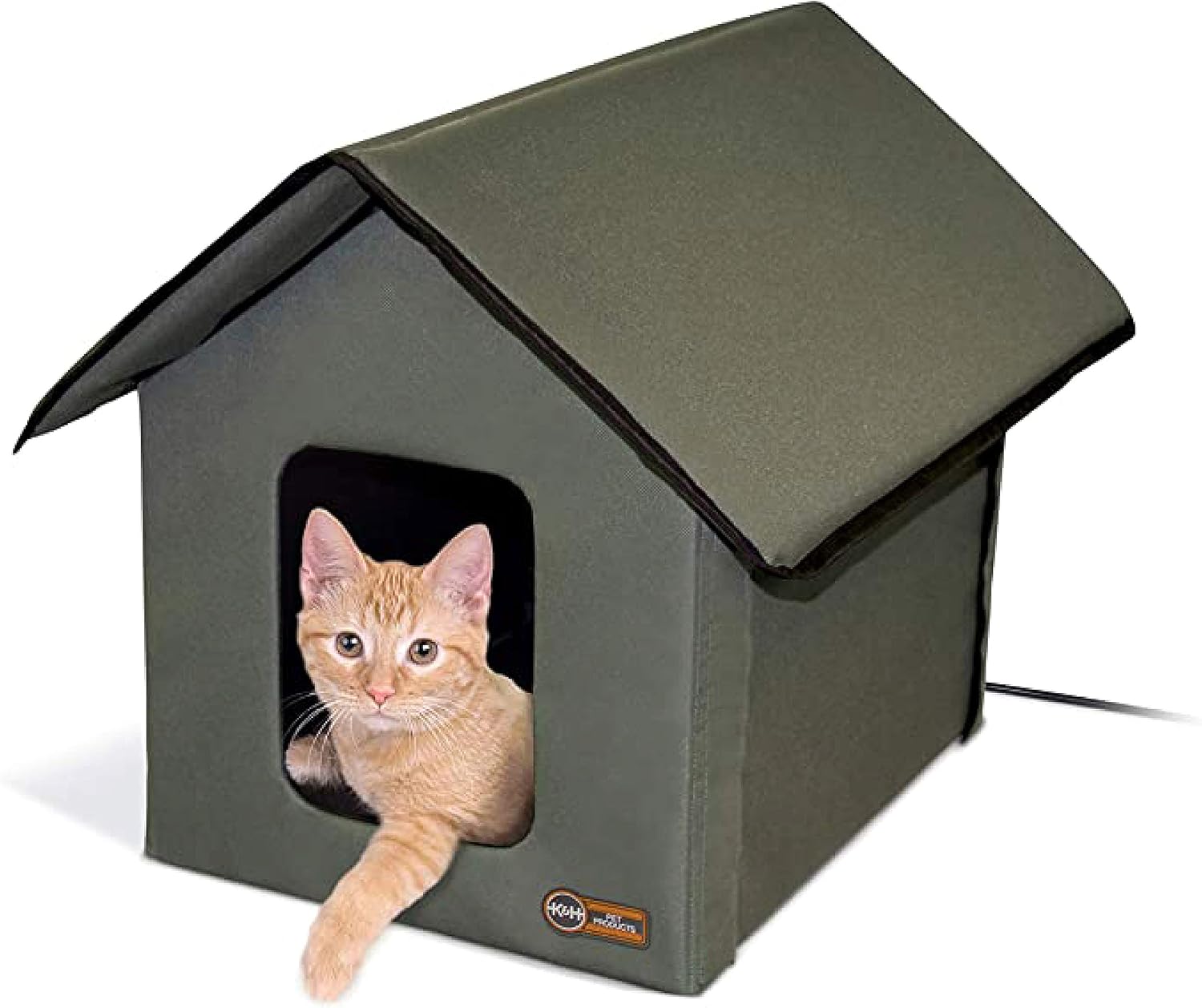
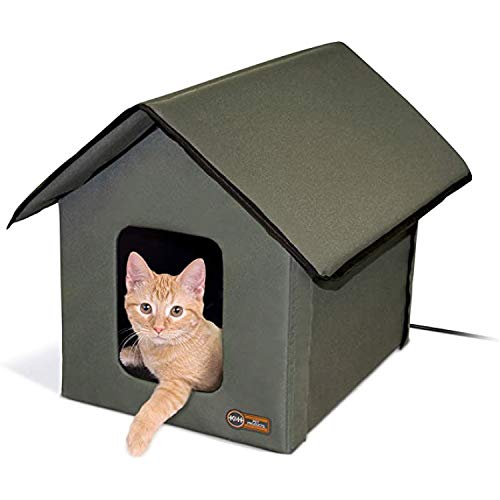
K&H Thermo Outdoor Kitty House — about $95. This is the shelter every other heated house gets compared to, and for good reason. The 20-watt heated bed is MET Safety Listed (the gold standard for electrical pet products), and the house has two exits with removable door flaps so a cat can escape if a raccoon or coyote comes in one door. The insulated polyester walls hold body heat, and the roof overhangs both doors to shed rain. Assembly is tool-free with hook-and-loop fasteners.
The tradeoff: the fabric walls need a windbreak spot in real storms. Put it against a wall, behind a hedge, or inside a shed — not in the open. And at $95, it is the priciest option here.
My take: If you are heating a shelter, this is the one with the safety listing. Skip the uncertified alternatives and spend the extra money — a fire in a cat shelter is a catastrophe.
Heated Cat House with Pad and Escape Door — The Budget Heated Option
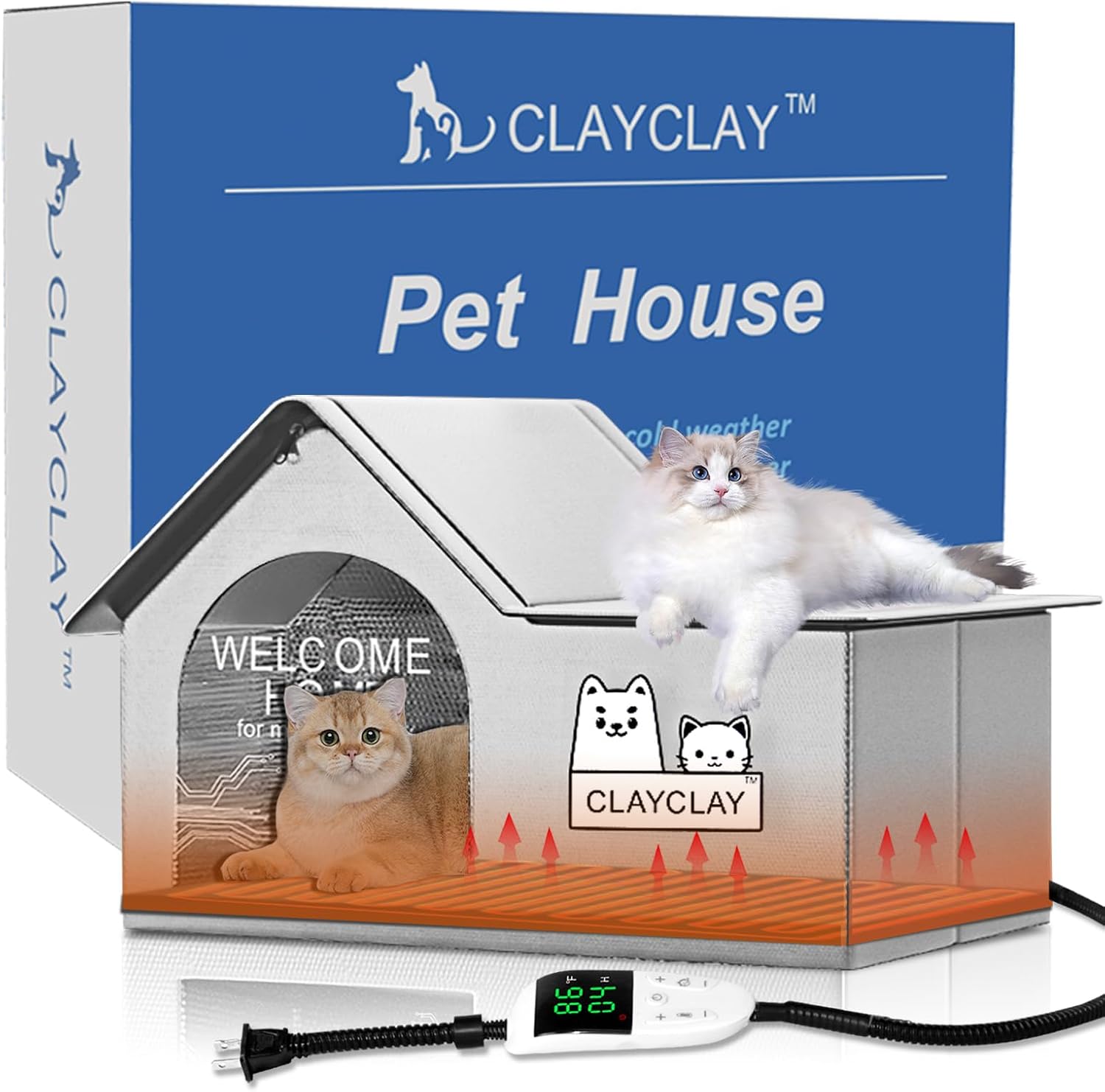
Heated Cat House with Pad and Escape Door — about $60. This comes with an included heating pad, insulated walls, and an escape door, which makes it the cheapest heated option by $35. The structure is solid enough for a sheltered spot.
The honest concern: there is no published safety listing on the heating pad. That means you must plug it into a GFCI outlet (the kind with the test/reset buttons), check the cord for chewing damage weekly, and avoid using extension cords rated for indoor lighting only. The pad works, but you are the safety inspector.
My take: The price is tempting, but the lack of a safety certification means you are accepting real responsibility. GFCI outlet, regular cord checks, and do not leave it running when you are away for the weekend.
Petsfit Outdoor Cat House — Best Unheated Weatherproof Box
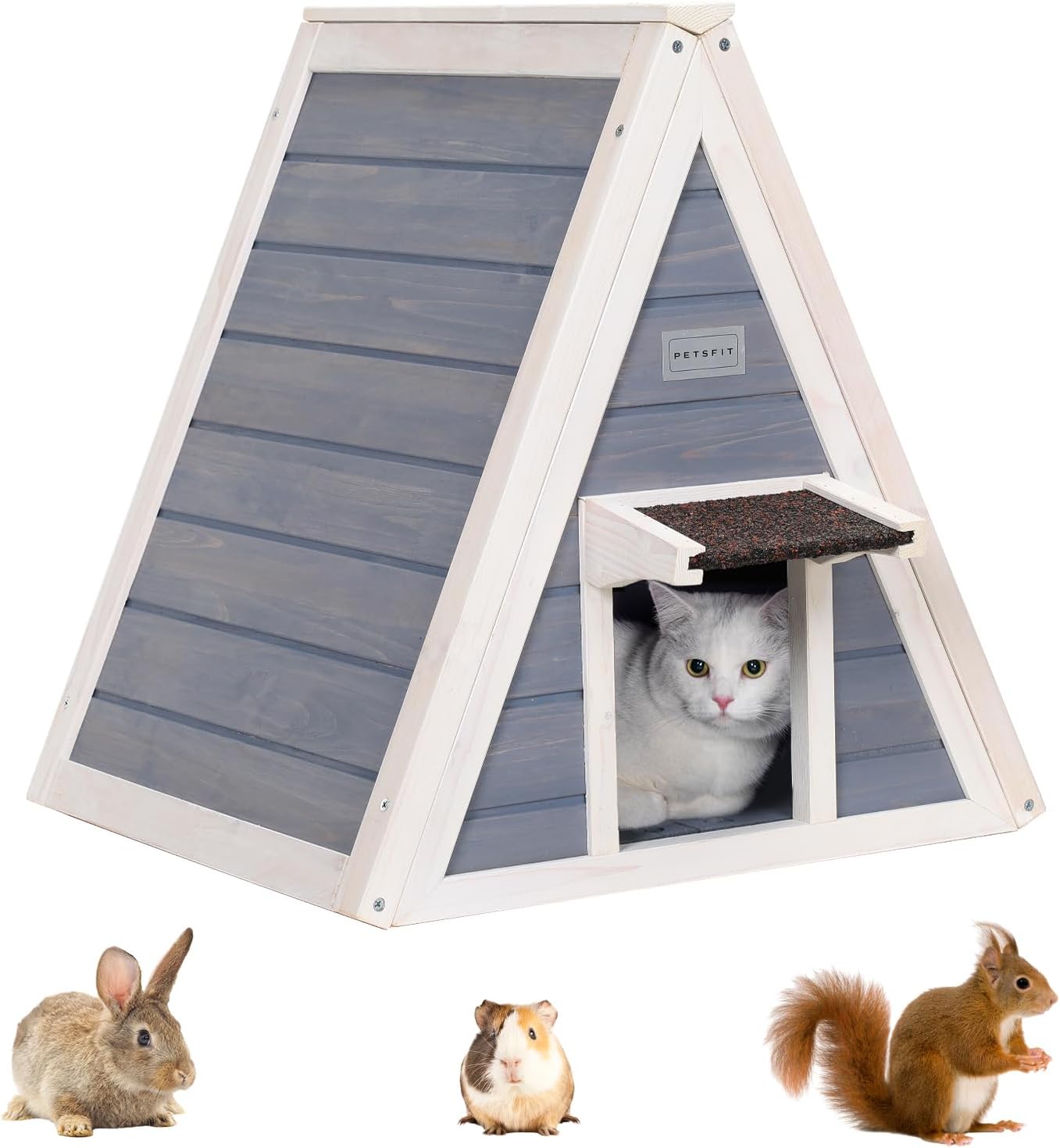
Petsfit Outdoor Cat House — about $45. A wooden shelter with waterproof eaves, an elevated floor, and a pitched roof that sheds rain and snow. The raised floor keeps body heat in and ground moisture out, and the design traps warmth once you pack it with straw — not hay, not blankets, straw. Straw is hollow, resists moisture, and traps air. Blankets freeze solid and can chill a cat faster than bare wood.
Assembly takes two people and patience. The pre-drilled holes do not always line up, and the instructions assume you have done this before. Budget an hour, not fifteen minutes.
My take: The best unheated option for a budget, and straw-packed it holds warmth better than any fabric shelter. Just bring a friend for assembly.
K&H Outdoor Unheated Kitty House — The Modular Option
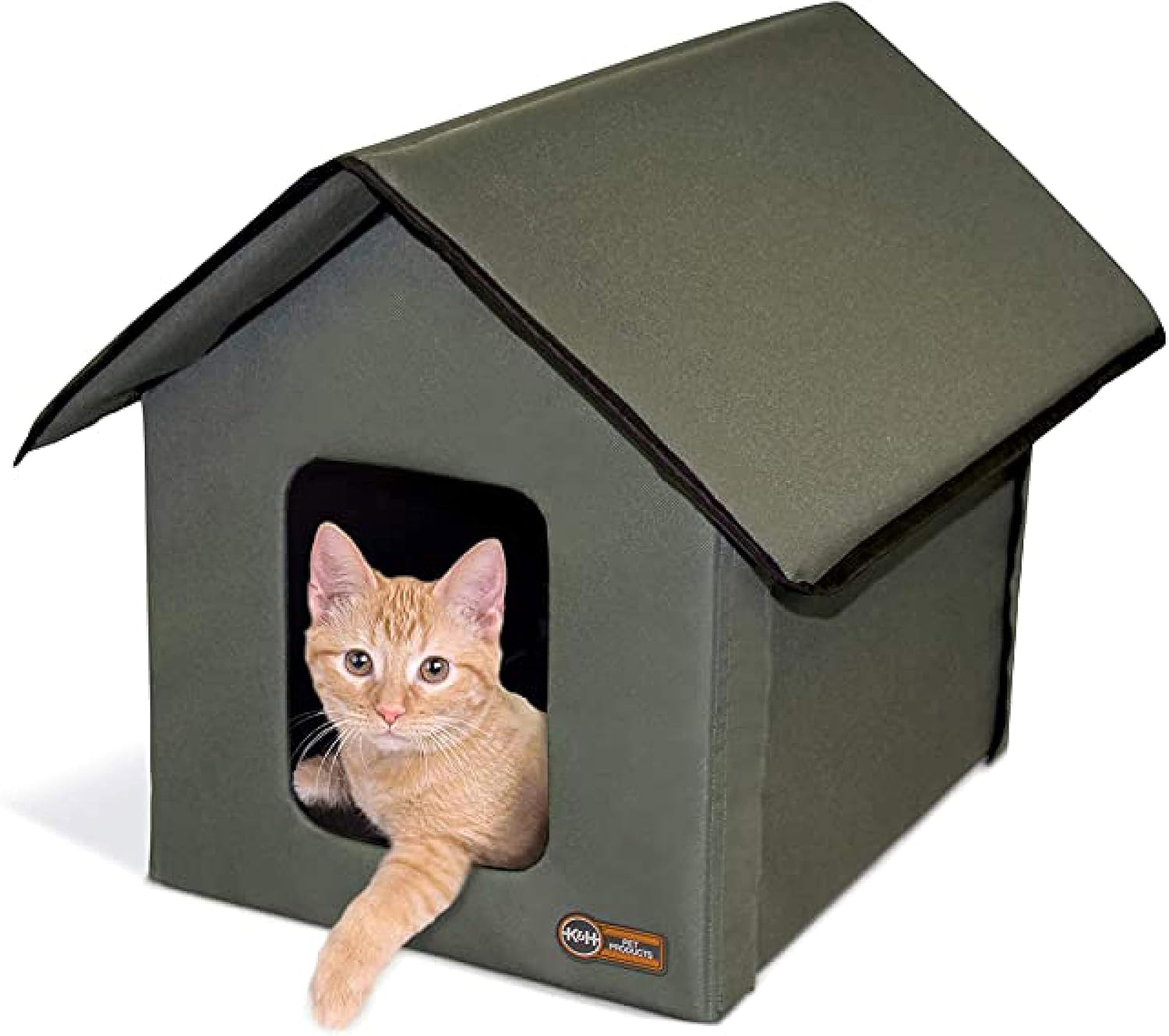
K&H Outdoor Unheated Kitty House — about $60. The same K&H structure as the heated version, minus the pad. Removable door flaps, washable floor, and tool-free hook-and-loop assembly. The advantage is modularity: buy it unheated now, add the K&H Lectro-Soft heated pad later if your climate demands it. Two exits, insulated walls, weather-resistant polyester.
The nylon shell flaps can crack in hard freezing rain after a season or two of UV exposure. Spraying the fabric with a water repellent extends the life.
My take: The best pick if you want to start unheated and upgrade later without buying a whole new shelter. Same K&H build quality as the heated benchmark.
Aivituvin Outdoor Wooden Cat House — The Insulated Wooden Upgrade
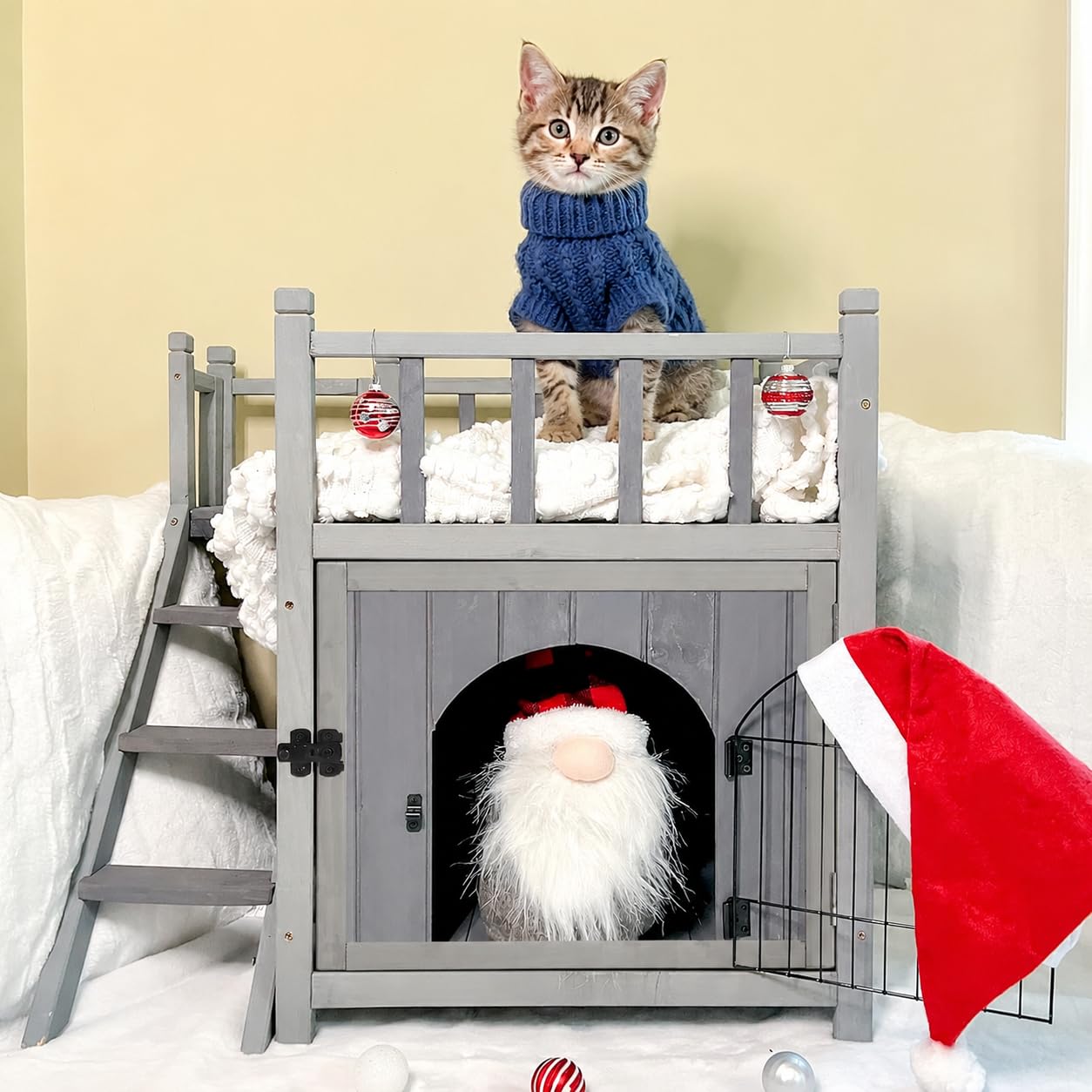
Aivituvin Outdoor Cat House — about $70. A two-story fir and asphalt-roofed wooden house with an escape door and elevated design. Wood traps heat better than fabric once you add straw bedding, and the asphalt roof sheds snow. The second level gives a cat a dry perch above any moisture that gets in.
Wooden houses need annual waterproofing — a coat of pet-safe wood sealer each fall. Without it, the fir absorbs moisture, warps, and rots within two seasons. Assembly is more involved than the fabric options; expect 45 minutes with a screwdriver.
My take: The warmest unheated option if you are willing to maintain it. Wood plus straw plus a windbreak spot is a genuine winter shelter, not just a windbreak.
Free shipping on the K&H heated shelter before the first freeze. Start a 30-day Prime free trial and have it set up by next weekend.
Features That Actually Matter (And Ones That Don’t)
Two exits are non-negotiable: A single-door shelter is a trap. Predators — raccoons, coyotes, loose dogs — can corner a cat in a one-door box. Every shelter here has two exits or can be modified to add one.
Safety listing on heated pads: MET or UL certification means the pad has been tested for fire and electrical safety. The K&H pad has it. The budget heated house does not. If you buy uncertified, you must manage the risk — GFCI outlet, cord protection, regular checks.
Straw, not blankets: Blankets and towels absorb moisture and freeze. Straw is hollow, repels water, and traps insulating air. Pack the shelter half-full of straw and replace it monthly. This is the single cheapest upgrade to any unheated shelter.
Elevation matters: A shelter on the ground loses heat to frozen soil and absorbs moisture. Even six inches of elevation — a pallet, bricks, or the built-in legs on the Aivituvin — makes a measurable difference.
Windbreak placement: No shelter works in an open wind. Place it against a wall, behind a hedge, or inside a shed. The heated pad does not need wind protection for safety, but the cat needs it for comfort.
The Annual Cost Comparison
- Heated (K&H, MET-listed): $95 shelter + $4.32 electricity = $99.32 for year one. Years 2+ cost about $4 per winter.
- Heated (budget, uncertified): $60 shelter + $4.32 electricity + GFCI outlet (~$12) = $76.32. You save $23 but carry the safety risk.
- Unheated (Petsfit + straw): $45 shelter + $8 straw bale = $53. Add a K&H Lectro-Soft pad ($35) in year two if needed, and you are at $88 total with a certified pad.
- Wooden (Aivituvin + straw): $70 shelter + $8 straw + $12 wood sealer = $90. Warmest unheated option, requires annual maintenance.
For context, $4 in heating electricity is less than one can of cat food per month. The power bill fear is the wrong fear — safety certification and weatherproofing are what actually matter.
Keep reading: Our outdoor dog and the $45 heated pad that runs on $2 a month · Dog Christmas photo props for $30
ThriftyPaw is reader-supported. As an Amazon Associate, I earn from qualifying purchases. That means if you buy through one of the links above, I get a small commission at no extra cost to you. I only recommend products I’ve actually used with my own dog.
Related guides
- Dog Diarrhea Home Treatment: Complete Guide Under 8 Dollars
- Summer Dog Safety on a Budget: Heatstroke Prevention Under 15 Dollars
- Dog Constipation Home Remedies: Treatment Under 5 Dollars
- Best Budget Dog Ear Cleaning Solutions (Under 15 Dollars — 2026)
- 4 Dog Travel Water Bottles I Actually Carry on Walks (All Under 25 Dollars)
🐾 Get Your Free Big Dog First Aid Kit Checklist
Join our newsletter and get this free printable plus weekly tips.
Frequently Asked Questions
How much does it cost to heat an outdoor cat house?
About $4 a season — the 20-watt thermostatic pad cycling on demand at the national-average electricity rate is $4.32 for the entire winter. The author's discovery is the point: everyone runs the fear-math on heated shelters and nobody runs the wattage math, and the $150 boutique catalog price is paying for brand, not heat.
What's the best outdoor cat house for winter?
The K&H Thermo Outdoor Kitty House at $95 — the heated benchmark with the MET safety listing (the certification that matters more than price). The budget heated option at $60 includes the pad, insulation, and an escape door (the feral-colony feature); the unheated Petsfit at $45 and the Aivituvin wooden house at $70 are the dry-shelter tiers for milder climates.
Is a heated cat house safe?
With the certification, yes — the MET-listed K&H tier is the distinction between the $95 shelter that runs safely for years and the $15-25 knockoffs that short in the first rainstorm. The author's lesson: check for the safety listing before the price tag; the electrical safety is the one spec this category actually has.
Liked this guide? Get the next one in your inbox — the pet budget checklist is free too.
✓ You're in — check your inbox.
No spam. Unsubscribe anytime. We never share your email.