This article contains affiliate links. We may earn a commission from qualifying purchases.
Some content on this site is AI-assisted and reviewed by our editorial team.
Last updated: May 2026 | By ThriftyPaw
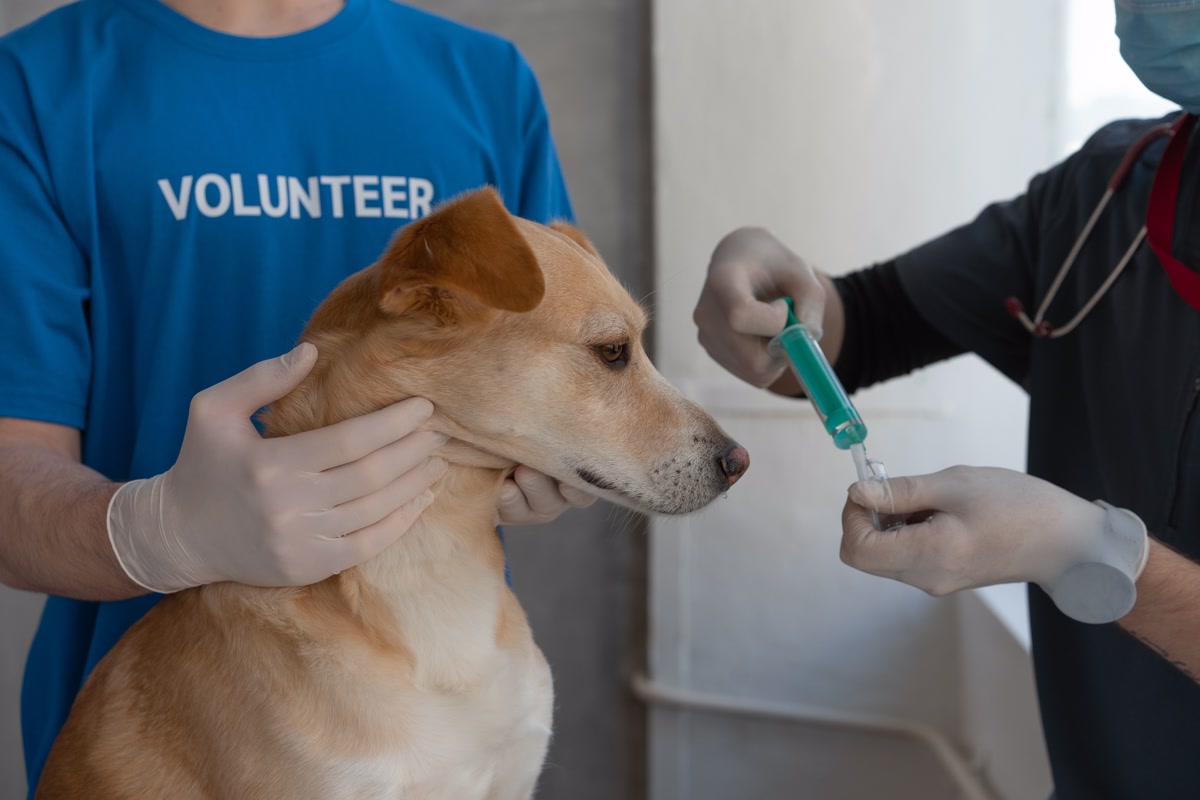
Dog vaccinations cost between $75 and $200 per year depending on where you live. That is a wide range, and most pet owners have no idea whether they are paying a fair price or getting overcharged. The same rabies shot that costs $15 at a low-cost clinic in Alabama can run $45 at a full-service vet in California.
This guide breaks down what each vaccine costs, what you actually need versus what you might be upsold, and how to save money without cutting corners on your dog’s health.
(Already tracking your dog’s overall costs? Our monthly cost breakdown by breed shows where vaccinations fit in the big picture.)
Core Vaccines: What Every Dog Needs
Core vaccines are the ones every dog should get regardless of lifestyle. Here is what they cost individually and as a package.
Rabies — $15 to $45
Required by law in all 50 states. Most vets charge $20-35 for the 1-year vaccine. The 3-year rabies vaccine costs $25-45 but saves money over time. Low-cost clinics and pet stores often offer rabies clinics at $10-15.
DHPP (Distemper, Hepatitis, Parainfluenza, Parvovirus) — $25 to $55
The core combination vaccine. Puppies need a series of 3-4 doses; adults need a booster every 1-3 years depending on the vet’s protocol. Most practices bundle DHPP with the exam, which makes it hard to see the standalone cost. Expect $30-50 per dose.
Core package total (rabies + DHPP): $40 to $100 per year for an adult dog.
That is the baseline. If your vet is charging more than $100 for annual core vaccines on an adult dog, you are likely paying for unnecessary extras or a markup on the office visit.
Non-Core Vaccines: What You Might Need
Non-core vaccines depend on your dog’s lifestyle and where you live. Vets often recommend all of them. You do not necessarily need all of them.
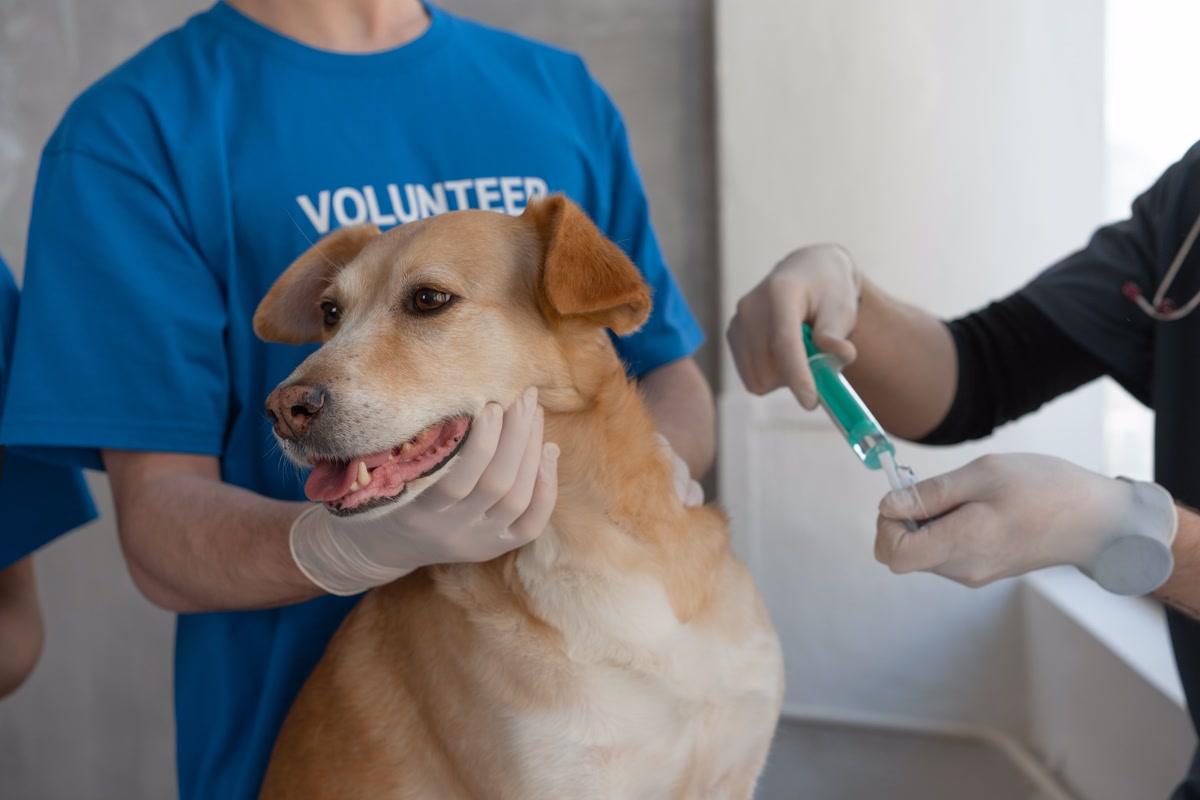
Bordetella (kennel cough) — $15 to $30
Worth getting if your dog goes to boarding, daycare, groomers, or dog parks. Not necessary for dogs that stay home. Many boarding facilities require it.
Leptospirosis — $20 to $40
Recommended if your dog is around wildlife, standing water, or livestock. More common in rural and suburban areas. Not critical for dogs in urban high-rises.
Lyme disease — $25 to $45
Only worth considering if you live in or travel to the Northeast, Upper Midwest, or Pacific coast where Lyme-carrying ticks are endemic. Most of the country does not need this.
Canine influenza — $25 to $45
Recommended if your dog is frequently around other dogs (daycare, shows, boarding). Similar to Bordetella — skip it if your dog’s social calendar is empty.
Non-core total (if you need all four): $85 to $160 per year.
Most dogs need one or two of these at most. Do not let a vet talk you into all four unless your dog’s lifestyle actually justifies them.
(Our puppy vaccination schedule guide covers the full series for puppies, which is a different cost structure.)
Vaccination Costs by State (2026)
Vaccination costs vary significantly by state. Here is what you can expect to pay for the annual core package (rabies + DHPP) at a standard veterinary practice.
Lowest-cost states (around $80): Alabama, Arkansas, West Virginia, Mississippi, Oklahoma
Average-cost states (around $90-100): Texas, Florida, Ohio, Michigan, North Carolina, Georgia, and most of the Midwest and South
Highest-cost states (around $120-140): California, New York, Massachusetts, Connecticut, New Jersey, Hawaii
The $60 spread between the cheapest and most expensive states is real. Veterinary overhead costs (staff wages, clinic rent, insurance) track local cost of living. A vet in rural Alabama and a vet in San Francisco both deliver the same rabies vaccine, but the Alabama practice has half the overhead.
Within any state, urban vets typically charge 15-25% more than rural practices. If you live near a state border, it can be worth driving 30 minutes to save $20-40 on the annual package.
Puppy vs. Adult Dog: The Cost Difference
Puppy vaccination series (first year): $150 to $350
Puppies need 3-4 rounds of DHPP plus rabies. Each visit includes an exam fee ($40-75) on top of the vaccine cost. The total first-year vaccine bill is often $200-300 because of exam fees stacking up.
Adult annual boosters: $75 to $200
Adult dogs only need annual boosters. Many practices bundle the exam with vaccines, which means you are paying for the visit whether you need it or not. If your dog is healthy, low-cost vaccine clinics can cut this cost in half.
3-year protocols: $100 to $150 every three years
Some vets offer 3-year DHPP and rabies vaccines instead of annual. This is the same vaccine, just labeled differently. If your vet offers 3-year protocols, take it. You save roughly $100-200 over three years compared to annual shots.
How to Save Money on Vaccinations
Low-cost vaccine clinics — 40-60% off.
Petco, PetSmart, Tractor Supply, and many local shelters host walk-in vaccine clinics. Prices are typically $10-20 per shot with no exam fee. The tradeoff: no exam, no health discussion, just the vaccine. If your dog is healthy, this is the best deal available.
Nonprofit spay/neuter clinics — 30-50% off.
Many nonprofit clinics offer vaccines at reduced rates alongside spay/neuter services. They are not just for low-income pet owners. Anyone can use them. Search “low cost vet clinic near me” or check the Humane Society’s veterinary care directory.
Pharmacy vaccine programs — varying.
Some pharmacies (CVS, Walgreens) offer pet vaccination events. Call ahead to ask about scheduling. Prices are similar to low-cost clinics.
Bundling saves money.
If you need Bordetella, Lepto, and Lyme along with core vaccines, getting them all at one visit is cheaper than separate visits. Each visit has an exam fee. One visit with multiple vaccines is one exam fee.

Titer testing instead of over-vaccinating.
A titer test ($50-80) measures your dog’s existing immunity levels. If your dog still has adequate antibodies from a previous vaccine, you can skip that year’s booster. This is most useful for DHPP, where 3-year protocols are already common. The titer costs about the same as one vaccine, so it only saves money if you would otherwise get two or more boosters.
What to Skip (And What Not To)
Skip: Non-core vaccines your dog does not need. If your dog never goes to daycare or boarding, skip Bordetella. If you live in Arizona, skip Lyme. Ask your vet which ones are actually relevant to your area and lifestyle.
Skip: The exam fee if you are only there for vaccines. Low-cost clinics skip the exam and pass the savings to you. Your dog should get a wellness exam annually, but you can separate that visit from the vaccine visit to save money.
Do not skip: Core vaccines. Rabies is legally required and a public health issue. DHPP prevents diseases (especially parvovirus) that are expensive to treat and often fatal. The cost of treating parvo ($1,000-3,000) versus preventing it ($30) is not a close call.
Do not skip: Puppy series. The initial vaccination series is critical for building immunity. Adult boosters can sometimes be extended with titers, but puppies need the full series on schedule.
(Need help finding affordable vet care? Our guide to finding a vet that will not break the bank covers low-cost clinics, payment plans, and more.)
The Bottom Line
Annual core vaccinations cost $40-100 for an adult dog in most of the country. If you are paying more than $150 total per year for core vaccines on a healthy adult dog, you are either over-vaccinating or overpaying for the office visit. Low-cost clinics cut that to $20-60 for the same products. The vaccines are identical. The difference is the exam fee and the clinic overhead.
Get core vaccines every year (or every three years if your vet supports it). Add non-core vaccines only if your dog’s lifestyle justifies them. And use low-cost clinics whenever your dog does not need a full exam.
n
ThriftyPaw is reader-supported. As an Amazon Associate, we earn from qualifying purchases. This means we may earn a small commission when you buy through links on this site at no additional cost to you. We only recommend products we genuinely believe in. Thank you for supporting ThriftyPaw.
My take: Vaccination is where the low-cost clinic shines: the same rabies and DHPP for $10-40 instead of $75-200. Take the 3-year rabies when offered, and resist the non-core upsell unless your dog’s actual exposure justifies it. Never skip core vaccines to save — that trade never works out.
Related guides
- 7 Budget Dog Fence Options That Cost Less Than You Think
- Best Budget Dog Joint Supplements: Glucosamine and Chondroitin Under 35 Dollars a Month
- Best Budget Dog Ear Cleaning Solutions (Under 15 Dollars — 2026)
- Pet Adoption Fees and Hidden Costs: What You Actually Pay (2026)
- Is Pet Insurance Worth It? An Honest Cost Breakdown (2026)
🐾 Get Your Free Big Dog First Aid Kit Checklist
Join our newsletter and get this free printable plus weekly tips.
Frequently Asked Questions
How much do dog vaccinations cost per year?
Between $75 and $200 depending on where you live — the same rabies shot runs $15 at a low-cost clinic in Alabama and $45 at a full-service California vet. For an adult dog, the core package (rabies plus DHPP) should total $40-100; more than $100 usually means markup or unnecessary extras.
Which dog vaccines are required by law?
Rabies only — it's required in all 50 states, running $20-35 at a vet for the 1-year or $25-45 for the 3-year (which saves money over time). DHPP is the other core vaccine medically, but it's rabies that the law mandates.
How can I save money on dog vaccinations?
Low-cost clinics and pet-store vaccine clinics offer rabies at $10-15 — the same vaccine. The 3-year rabies is cheaper than three 1-year doses. What to skip: being upsold on non-core vaccines your dog's lifestyle doesn't justify, like Leptospirosis ($20-40) for a dog that never touches wildlife or standing water.
Liked this guide? Get the next one in your inbox — the pet budget checklist is free too.
✓ You're in — check your inbox.
No spam. Unsubscribe anytime. We never share your email.