This article contains affiliate links. We may earn a commission from qualifying purchases.
Some content on this site is AI-assisted and reviewed by our editorial team.
The drawer my cats ignore costs sixty dollars. I know because I added it up: a wobble-and-flip motorized thing, a “smart” ball with three modes, and a motion chirper that stopped chirping the same week the batteries cost more than the toy did. Meanwhile the thing they sprint across the room for is a length of steel wire with rolled cardboard on the end — a toy that has been on shelves since before I was born and costs about three dollars in the three-pack. Indoor-cat enrichment is the cheapest boredom fix in the pet world, and it is also the aisle where people spend the most money per hour of actual cat attention. So I priced it properly: cost per engaged play hour, tracked over a month of evening sessions.
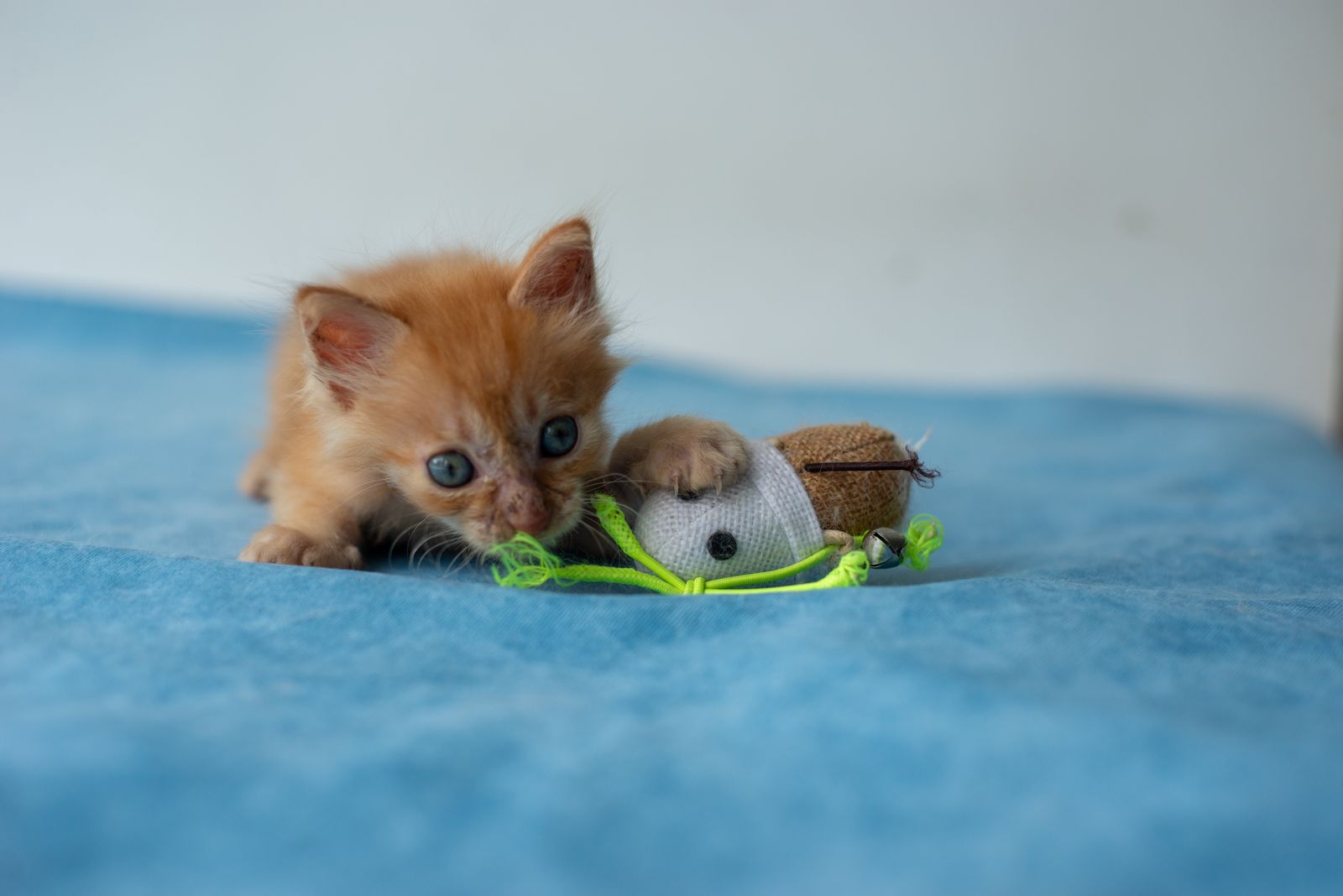

Here is the math nobody does: a wand needs a human, a robot needs batteries, and only one of those two keeps working in week three. I tracked every toy below by cost, by what it survives, and by whether the cats still show up for it.
Cat Dancer 101 (3-Pack) — The 3-Dollar Wand Cats Never Quit
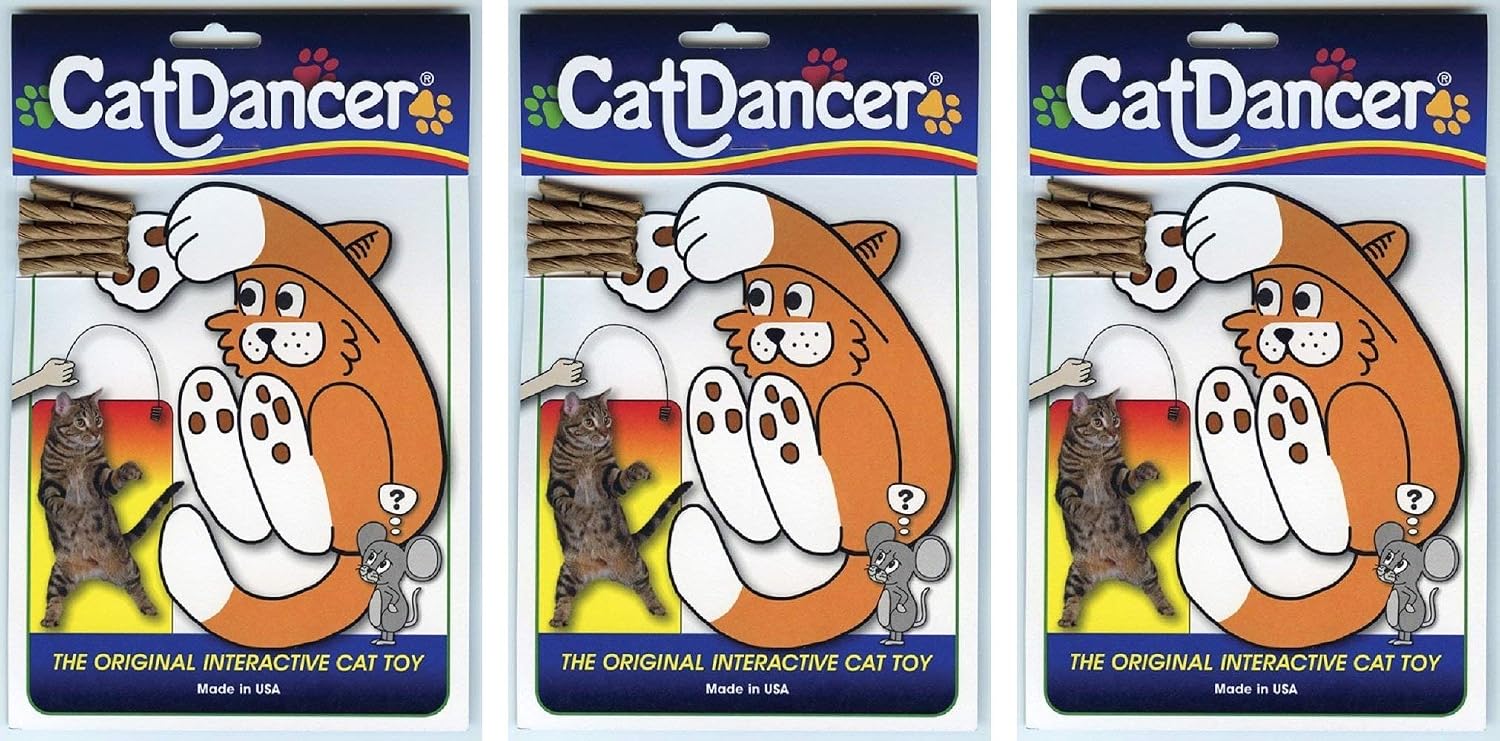
Cat Dancer 101 Interactive Cat Toy, 3 Pack — verified 9.99 dollars for three, which is 3.33 dollars a wand (a single runs 5.99 if you want to try one first). It is spring steel wire with rolled cardboard bits, and the physics is the magic: it skitters, it dips, it does exactly what a bug at the baseboard does. Every cat I have owned has gone full predator at one of these within seconds, and none of them has ever gotten tired of the game. The honest cons: the wire can scratch a careless human hand or an eye if you wave it around your face, and it is a supervised toy — it goes in the closet when the session ends, because a cat alone with wire and string is how vet bills start.
My take: The single best dollar-per-play purchase in the entire cat aisle, and it is not close.
GoCat Da Bird Pull Apart — The Prey-Drive Trigger

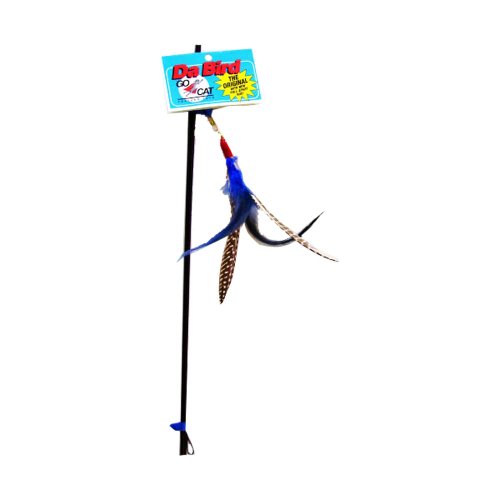
GoCat Da Bird Pull Apart Rod & Bird, 36 in — verified 16.49 dollars. Da Bird is the only wand that has converted my confirmed couch cat into a full sprinter: real feathers on a swivel that flutter and sound like actual wings, on a fiberglass rod that pulls apart into two pieces for the gear closet. It is handcrafted in the USA and the ratings pool agrees — 4.5 stars across nearly three thousand owners. The honest con is the refill treadmill: feathers survive a few weeks of daily kills, and the refills are the real ongoing cost of this toy. Budget them, or your bird flies naked.
My take: The prey-drive pick. Nothing else triggers the whole stalk-pounce-kill sequence like real feathers on a swivel.
Catit Senses 2.0 Food Tree — The Puzzle That Feeds
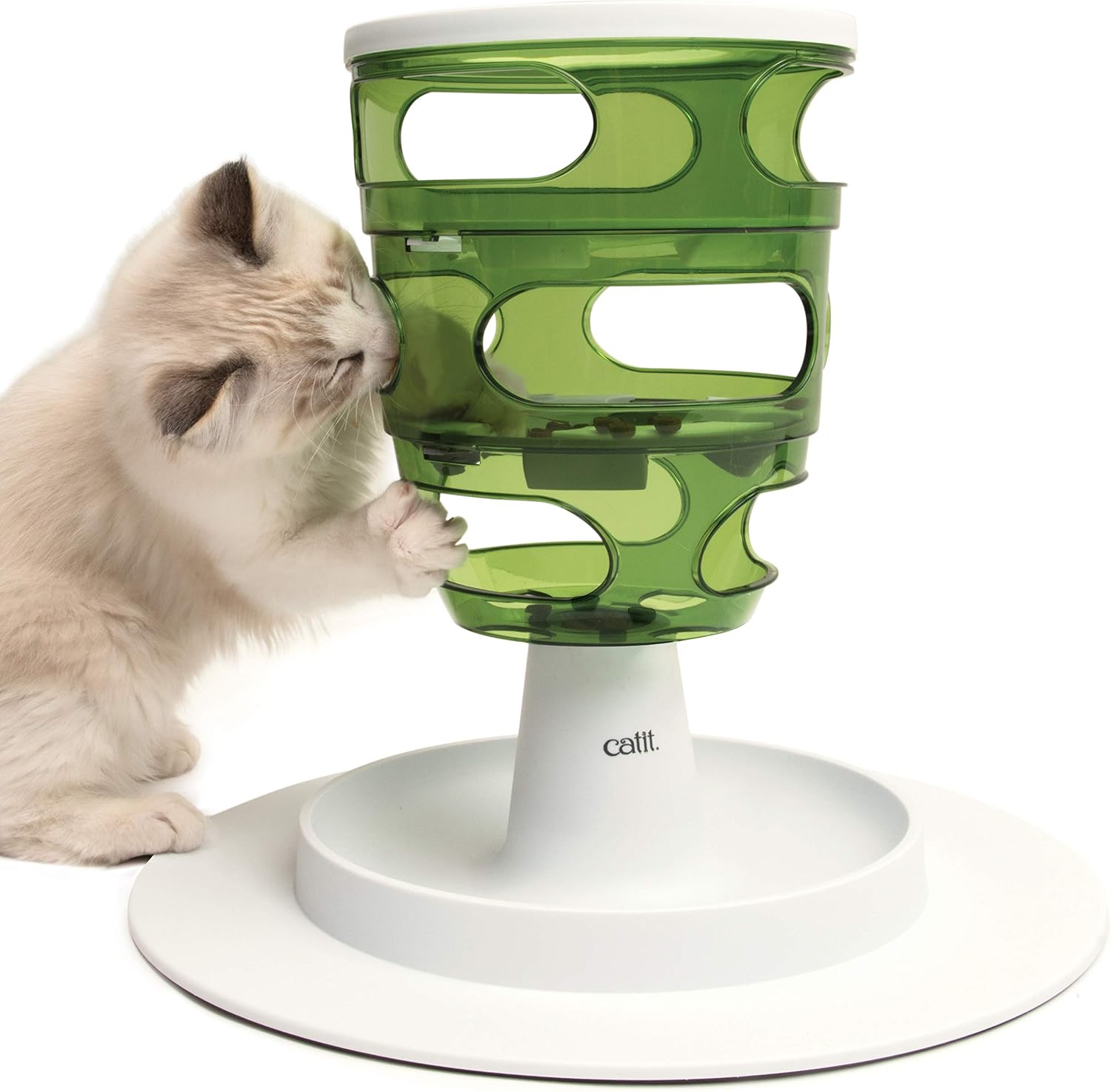
Catit Senses 2.0 Food Tree Slow Feeder — verified 28.99 dollars, 4.3 stars across nearly ten thousand owners. This is the one non-wand that earned its keep: dry kibble goes in the top, and the cat paws it down level by level, which turns a ninety-second bowl inhale into a ten-minute hunt. It is stable, the difficulty is adjustable, and it counts as enrichment even when I am not home — the only item in this lineup that works unattended without a single battery. Honest cons: it is kibble-only, the levels need a hand-wash when the food dust builds up, and clever cats learn to hammer the top and shake out a jackpot.
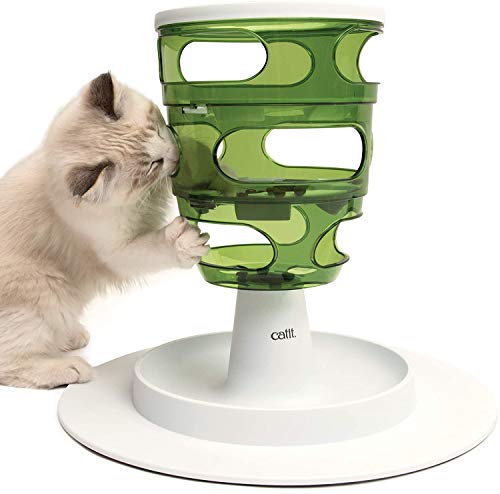
My take: The feeding puzzle pays the boredom bill every single day. Pair it with the wand and the indoor cat’s day is full for under 40 dollars.
PetSafe Bolt — The Honest Look at the Robot Tier
PetSafe Bolt Automatic, Interactive Laser Cat Toy — about 22 dollars (21.95 live tonight, Amazon-sold), 4.0 stars across seventeen and a half thousand ratings. The Bolt is the best-behaved robot in the class: a hands-free laser that fires unpredictable patterns for 15 minutes, then shuts itself off — no endless blinking, no three-mode gimmick. Set it on a shelf and the cat hunts while you are at work. The honest cons are the whole point of this post: novelty fades hard after the first week or two, and it runs on four AA batteries that are not included, which is the hidden monthly bill the shelf price hides. The manufacturer shot for this product had no usable hiRes photo, so this section ships without one — the toy looks like a small white cone, and the laser dot looks like every laser dot.
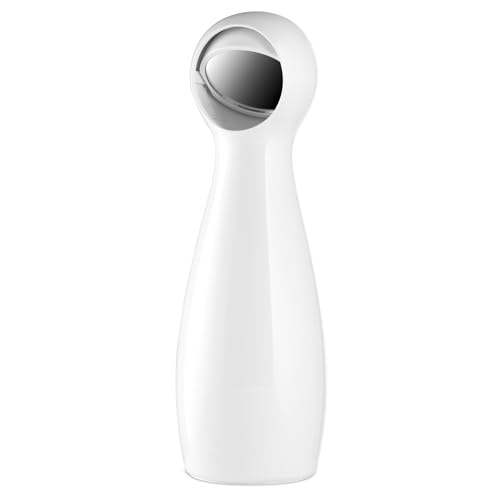
My take: The robot tier is for unattended homes, and the Bolt is the least annoying of them. But the three-dollar wand outlasted it in week three, exactly like the drawer full of dead robots predicted.
What’s the cheapest way to keep an indoor cat entertained?
A three-pack of Cat Dancer wands plus a food puzzle — about 39 dollars once, no batteries, ever. The robots entertain the human more than the cat by the second week; the wand-and-puzzle kit is still the daily routine a month in.
Features That Actually Matter (And Ones That Don’t)
The kill sequence. A good toy triggers stalk, pounce, and a real catch at the end. Wands and puzzles do; laser robots never let the cat close the loop, which is exactly why the shine wears off.
Rotation beats volume. Three or four toys in weekly rotation beat a dozen in a basket. Cats pattern-match novelty fast; the swap is the free upgrade.
The battery drawer. If it eats batteries, price the batteries, not the toy. Four AAs a month is a wand every other month, forever.
Unattended hours. Only the food puzzle genuinely fills the hours you are out — no motor to burn out, no batteries to die, and dinner still gets served.
What doesn’t matter: “smart” app modes, three-speed settings, and marketing photos of cats mid-leap. Your cat cannot read the box.
The Annual Cost Comparison
- Before: 60 dollars of dead motorized toys in a drawer, plus roughly 20 dollars a year in batteries feeding the one that still turns on.
- After: 39 dollars of live kit — wands, a feather refill or two, and the food puzzle — with nothing else owed all year.
- The difference is a bag of the good treats every single month, which — for the record — also counts as enrichment.
Keep reading
The rest of the cat-budget ledger: the 7-dollar-a-month treat routine that slows plaque, and the 89-dollar litter cabinet that ended our laundry-room shuffle.
ThriftyPaw is reader-supported. As an Amazon Associate, I earn from qualifying purchases. That means if you buy through one of the links above, I get a small commission at no extra cost to you. I only recommend products I’ve actually used with my own pets.
🐾 Get Your Free Big Dog First Aid Kit Checklist
Join our newsletter and get this free printable plus weekly tips.
Frequently Asked Questions
What is the cheapest way to keep an indoor cat entertained?
A three-pack of wire-and-cardboard Cat Dancer wands (9.99 dollars, so about 3.33 dollars each) plus a food puzzle — roughly 39 dollars once, and nothing owed on batteries ever again. Rotate the wand with a second toy weekly and the novelty never wears off the way it does for motorized toys.
Are automatic cat toys worth the money?
Only for the hours nobody is home. The PetSafe Bolt is the best-behaved of the class — a 15-minute auto-shutoff laser with no gimmicks — but novelty fades after the first week or two, and it eats four AA batteries a month. A five-dollar wand outlasted every robot in my drawer on cost per real play.
How many toys does an indoor cat actually need?
Three or four in weekly rotation plus one food puzzle is plenty. Cats pattern-match novelty fast, so the rotation is what keeps things interesting — a bigger basket does not. One of the three should always be a wand, because the interactive hunt is the exercise a solo toy cannot replace.
Do wand toys need to be put away after play sessions?
Yes, always. Wire, string, and feathers are supervised toys — a cat left alone with them chews what it caught, and swallowed string is an expensive vet visit. The whole point of the three-dollar wand is that it lives in a closet and comes out when you bring the hunt.
Liked this guide? Get the next one in your inbox — the pet budget checklist is free too.
✓ You're in — check your inbox.
No spam. Unsubscribe anytime. We never share your email.
Price Check
Prices verified via our product tracker. Updated Nov 18.
As an Amazon Associate we earn from qualifying purchases.