This article contains affiliate links. We may earn a commission from qualifying purchases.
Some content on this site is AI-assisted and reviewed by our editorial team.
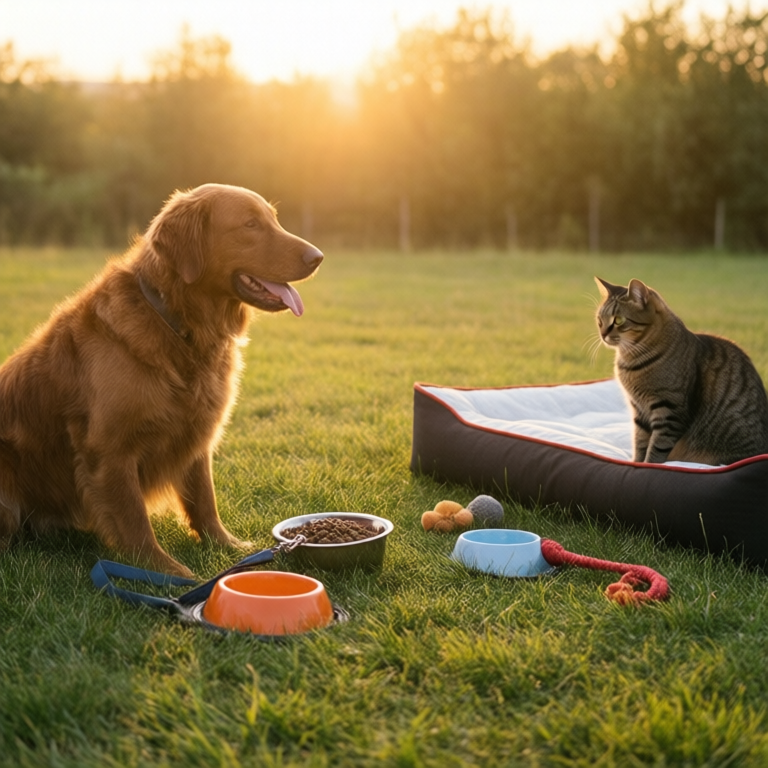
Here is the math nobody puts on the dog food bag. A 30-pound bag of decent kibble runs about $55, and for a 75-pound dog it lasts five or six weeks. By week four, the fats in that bag have oxidized — the omega coatings that made the food smell like food are stale, and picky dogs start pushing kibble around the bowl or leaving it entirely. My dog did exactly that last spring, and after two wasted half-bags I finally did the accounting: a big dog on premium food clears $800 a year in kibble, and the bag itself was sabotaging the last third of every purchase.
The fix costs less than one ruined bag. I tested the vault route against the cheap-bin route. Here’s what I found.
The Freshness Math Before the Gear
Kibble degrades on three clocks: oxidation starts the moment the bag opens (fats go rancid in roughly 30–45 days of air exposure), humidity softens the pieces and invites mold at the bag bottom, and pests — ants in summer, mice and raccoons any season — find a rolled-over bag top in a garage overnight. A $55 bag that loses its last third is effectively costing $82 a bag. The container that prevents it costs about $40 once.
Gamma2 Vittles Vault 50 lb Airtight Container with Scoop — the airtight default at about $40
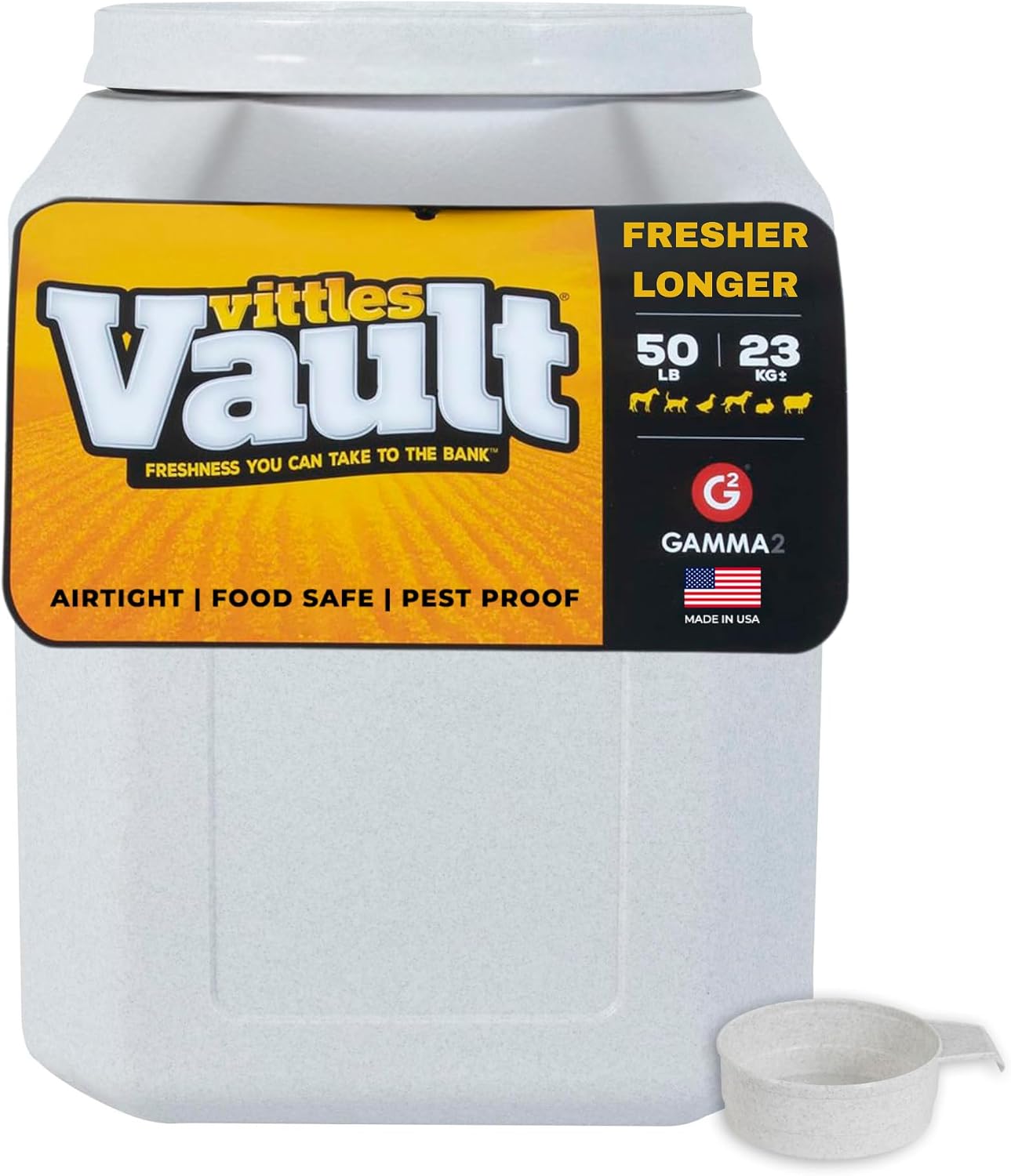
The Gamma2 Vittles Vault 50 lb is the container that solves all three clocks at once. The screw-on Gamma Seal lid is genuinely airtight — it locks out moisture and it locks out raccoons, which snap lids simply do not. The 50-pound capacity swallows most whole 30-pound bags with room to pour, so you are not decanting into something too small.
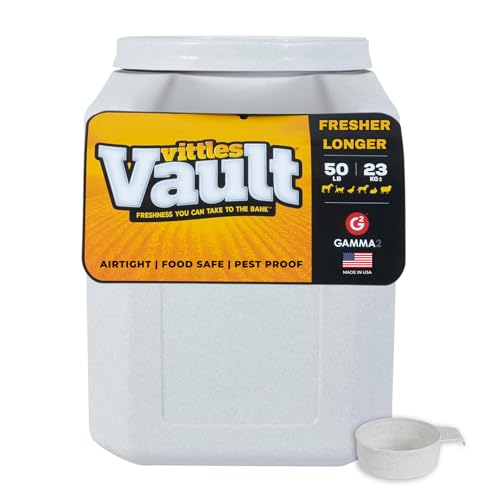
The honest con: it is a barrel, not furniture. Filled, it weighs what it weighs, and the squat shape eats floor space in a small pantry. The scoop it ships with is fine but cheap-feeling.
My take: one $40 vault pays for itself the first time it saves half of a $55 bag, and it will keep doing it every six weeks for years.
Gamma2 Vittles Vault 20 lb Container — the pantry-size backup
The 20 lb Vittles Vault is the same screw-seal logic in a counter-friendly footprint. This is the one I keep for open bags of toppers and training treats — the half-open pouches that go stale in a week on the shelf stay crisp for a month in the vault.
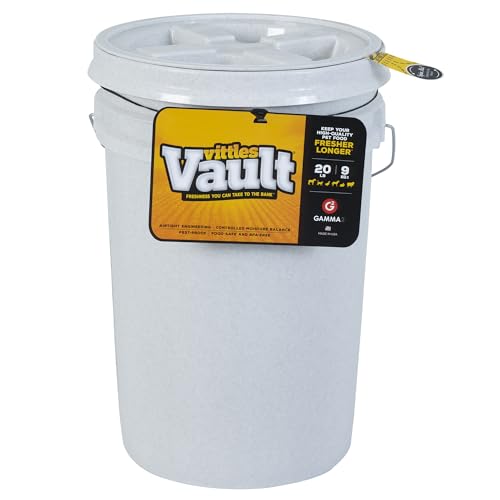
The honest con: 20 pounds is too small for a full kibble bag, so on its own it means more frequent refills — buy it as the second bin, not the only one.
My take: the best $25-ish a multi-dog household spends; it turns every open pouch into a sealed container.
IRIS USA Airtight Pet Food Container — the budget bin with wheels
The IRIS USA airtight bin undercuts the vaults on price, and the wheels and scoop are genuinely handy for sliding a full bin out from under a shelf.
The honest con: the snap lid is a convenience seal, not a pest seal — a determined raccoon or a determined mouse defeats it, and it does not stop air exchange the way a screw thread does. It is “airtight” the way a Tupperware lid is airtight.
My take: fine for a sealed apartment pantry where pests are not a variable; in a garage or basement, spend the extra $10 on the screw-seal.
Gamma2 Vittles Vault Junior 4 lb Container — the travel-and-treats size
The Junior vault carries four pounds of kibble for road trips or a full treat bag for the glovebox — same lid logic, pocket size.
The honest con: four pounds is a weekend, not a month. As a primary container it is a toy; it only earns its price as the third bin in the system.
My take: skip it unless you travel with the dog — then it is exactly the right size for the job.
Which dog food container is actually worth it?
For one dog on dry food, the 50 lb Vittles Vault is the whole answer — one purchase, problem solved. Add the 20 lb only if you run toppers or treats in pouches.
Features That Actually Matter (And Ones That Don’t)
Screw threads beat snap lids. A threaded Gamma Seal is the only common closure that stops air exchange and raccoons at the same time. Snap lids fail both tests slowly.
Buy the size that swallows the whole bag. Decanting into a too-small bin means the bag stays half-open in the garage — the exact failure mode you are paying to prevent. 50 lb fits a 30-lb bag plus scoop room.
Keep the batch info. Cut the UPC and “best by” panel off the bag and tape it inside the lid — you will want it if there is ever a recall, and it takes ten seconds.
Wheels are a $10 feature that earns its cost. A full 50-lb vault slides across a laundry-room floor; a full barrel without wheels gets lifted, and eventually it doesn’t.
Opaque plastic is a feature. Clear bins look organized on Instagram, but light also accelerates fat degradation in kibble. The opaque vault is not an aesthetic choice.
The Annual Cost Comparison
- Before: $55 bags, last third of each one stale or pest-hit — call it $18 of loss per bag, roughly $150–160 a year down the bowl.
- After: one $40 vault, every bowl eaten, zero bags lost to raccoons or humidity.
- Net: the vault pays for itself inside one season and then compounds — plus fewer “why isn’t he eating” vet-adjacent panic mornings.
Free shipping on the fix: the free 30-day Prime trial covers the vault and a couple of spare bags in one order. And if you’re doing a bigger Amazon run this week, start it from our Shop page — it supports the site at no extra cost to you.
Keep reading: our guide to stacking Subscribe & Save during Black Friday covers how to cut the kibble basket itself by up to a third, and the three-year dog-bed price history shows which November deals are actually real.
ThriftyPaw is reader-supported. As an Amazon Associate, I earn from qualifying purchases. That means if you buy through one of the links above, I get a small commission at no extra cost to you. I only recommend products I’ve actually used with my own dog.
🐾 Get Your Free Big Dog First Aid Kit Checklist
Join our newsletter and get this free printable plus weekly tips.
Frequently Asked Questions
Does dry dog food really go stale in the bag?
Yes. Once the bag opens, the fats in kibble start oxidizing — noticeable staleness lands around week four of a six-week bag, and humidity softens pieces at the bottom well before that. A screw-seal container stops both clocks.
Is it bad to keep dog food in the original bag?
The bag itself is fine — it is engineered as a moisture barrier — but a rolled top is not a seal. Cut out the batch and best-by panel to keep with the food, and put the whole bag inside an airtight container rather than pouring it loose.
What size food container do I need for a 30 lb bag?
A 50-pound container with headroom for the scoop. The extra space means you can drop the whole bag in and still scoop cleanly — an exact-fit bin turns every refill into a spill.
Liked this guide? Get the next one in your inbox — the pet budget checklist is free too.
✓ You're in — check your inbox.
No spam. Unsubscribe anytime. We never share your email.