
This article contains affiliate links. We may earn a commission from qualifying purchases.
Some content on this site is AI-assisted and reviewed by our editorial team.
Before You Start: Is Your Dog Ready?
Not every dog should be a running partner. Here’s a quick checklist:
Age: Puppies shouldn’t run sustained distances until their growth plates close — usually 12-18 months depending on breed. Ask your vet if you’re not sure. Running a puppy too young can cause permanent joint damage.
Breed: Brachycephalic breeds (French Bulldogs, Pugs, Boston Terriers) should not run. Their airways can’t handle sustained exertion. Bulldogs have literally died on runs. Short-nosed dogs walk, not run.
Health: Any dog starting a running routine should be cleared by a vet, especially if they’re overweight, senior, or have a history of joint issues.
Temperature: Dogs can’t cool themselves as efficiently as humans. If it’s over 70°F, go early morning or late evening. If it’s over 80°F, skip the run entirely. Asphalt temperature can be 40-60 degrees hotter than air temperature — if you can’t hold your hand on the pavement for 7 seconds, it’s too hot for your dog’s paws.
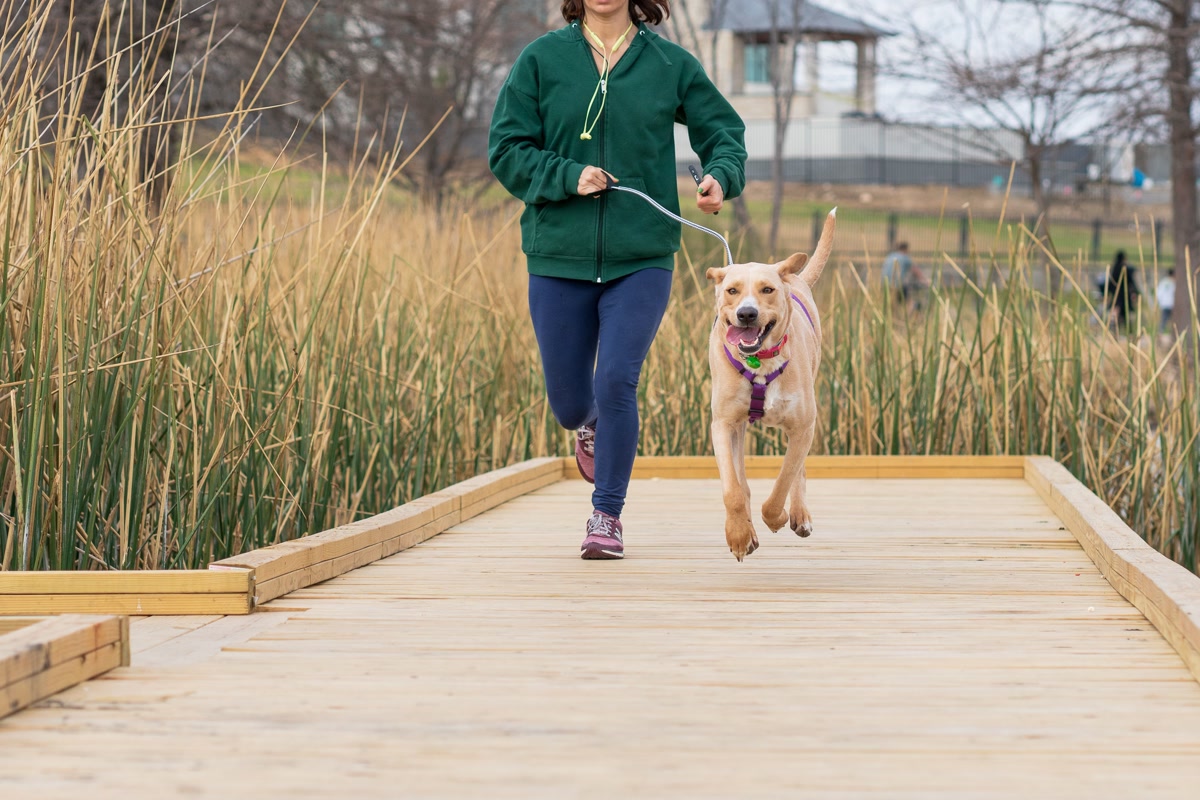
The Only Gear You Actually Need (35 to 50 Dollars Total)
1. A Hands-Free Leash (15 to 25 Dollars)
This is the single piece of gear that makes running with a dog actually enjoyable. Holding a leash while running messes up your arm swing, tangles your stride, and is honestly miserable. A waist-mounted hands-free leash solves all of that.
Look for one with:
- A bungee section (absorbs pulling and sudden stops)
- A waist belt that adjusts to your size
- A quick-release buckle in case of emergency
Budget pick: Tuff Mutt Hands-Free Dog Leash ( Compare prices on Amazon) — around 18 dollars on Amazon. Solid bungee, comfortable belt, and it holds up to daily use.
2. A No-Pull Harness (15 to 25 Dollars)
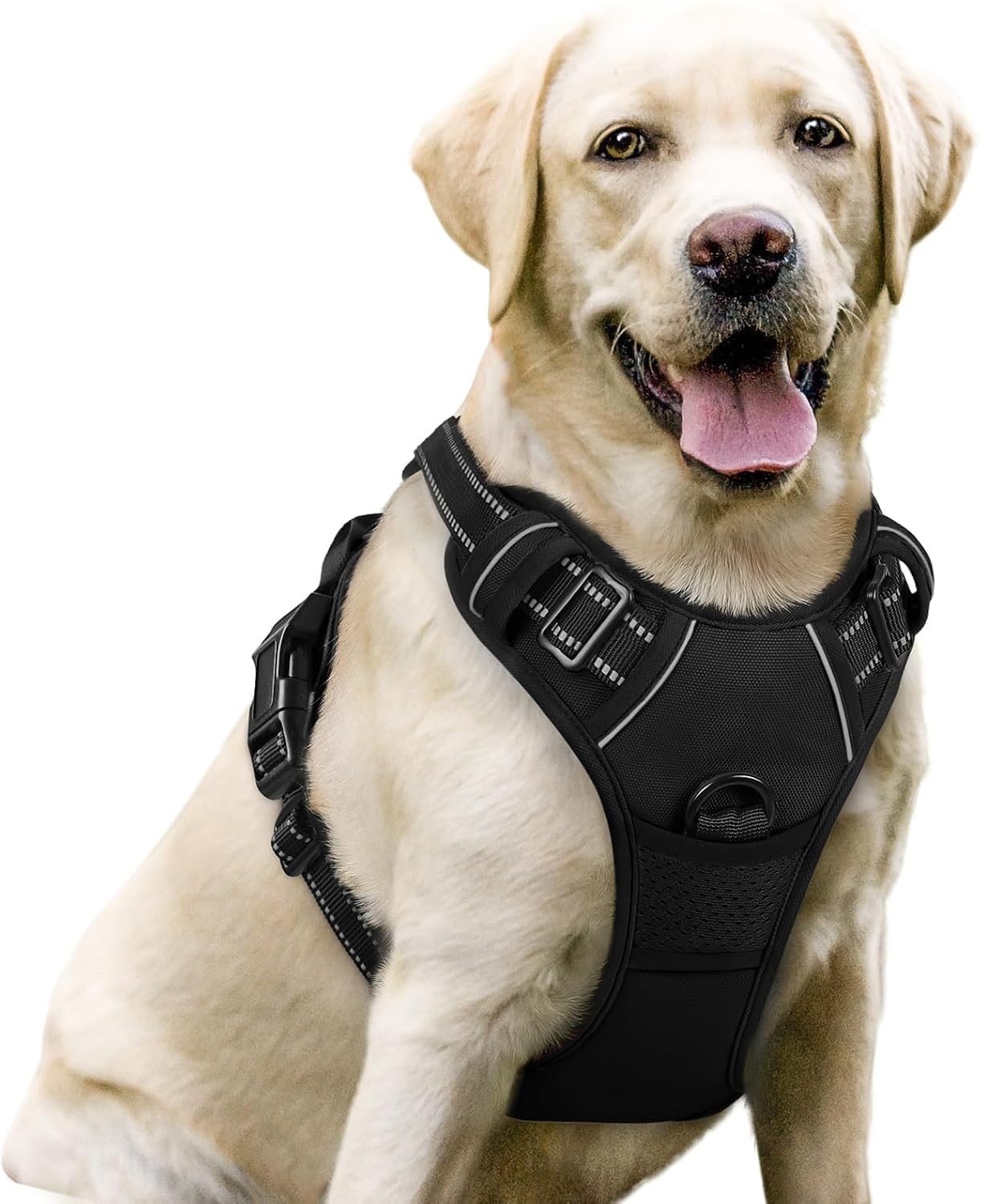
If your dog pulls on walks, they’ll pull twice as hard on a run. A no-pull harness with a front clip redirects their momentum and makes the whole experience safer for both of you.
Budget pick: Rabbitgoo No-Pull Dog Harness ( Compare prices on Amazon) — around 20 dollars on Amazon. Front clip, good padding, and it comes in enough sizes to fit most dogs.
For more detailed harness picks, check out our full no-pull harness guide.
That’s it. That’s all you need to start. A hands-free leash and a front-clip harness. Total: 35 to 45 dollars.
Nice-to-Have Gear (Buy Later, If Ever)
Reflective Vest (10 to 15 Dollars)
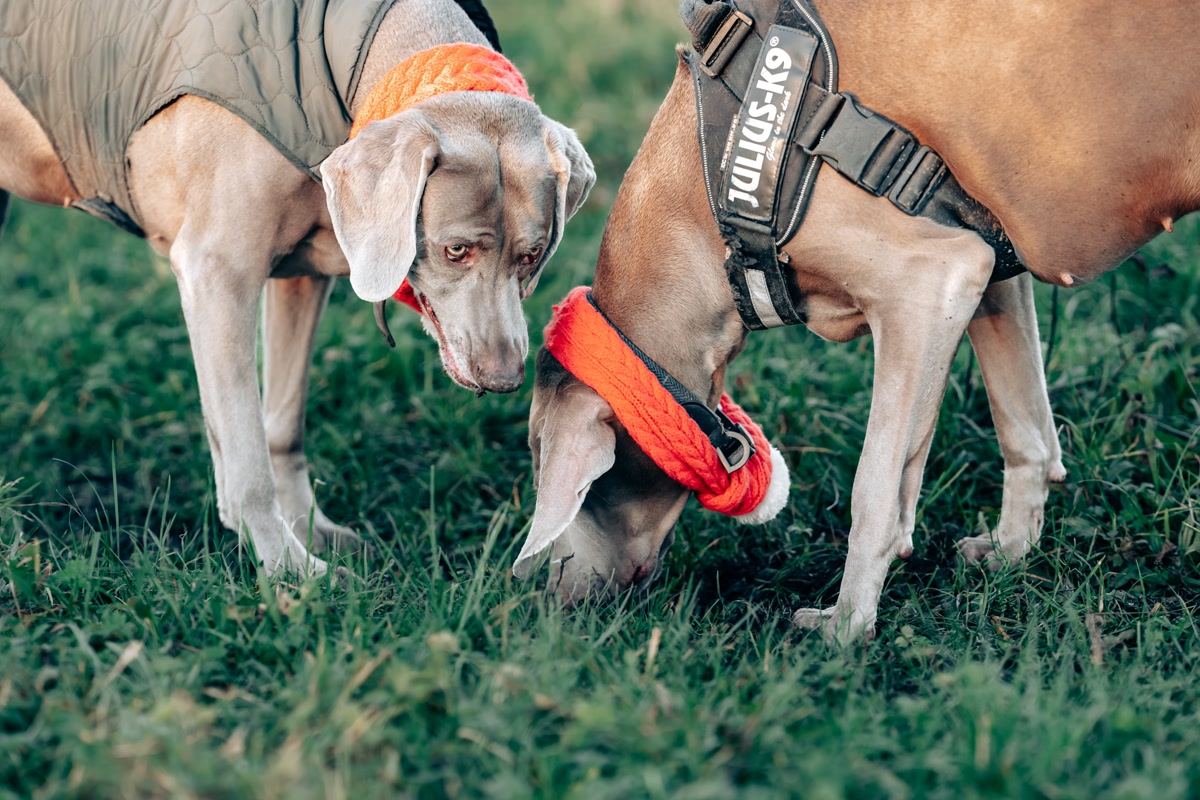
Essential if you run in low light, but skip it if you’re a daytime runner. A basic reflective running vest for you and a reflective strip or light-up collar for your dog will keep you both visible.
Amazon: Reflective Running Vests
Dog Booties (15 to 30 Dollars)
Only necessary if you run on rough terrain (trails with sharp rocks, hot pavement, salted roads in winter). Most dogs don’t need booties on normal sidewalks and grass. If you do get them, introduce them slowly — most dogs hate boots at first and need a week of wearing them around the house before running.
Amazon: Dog Booties for Running
Portable Water Bottle (10 to 15 Dollars)
A dog-specific water bottle with an attached bowl is convenient, but a regular water bottle and a collapsible bowl (5 dollars) works just as well. For runs under 3 miles, most dogs don’t need water breaks unless it’s hot.
Amazon: Dog Water Bottles for Running
Cooling Vest (20 to 30 Dollars)
If you live somewhere hot and want to run in warmer weather, a cooling vest can help. You soak it in water, wring it out, and the evaporation keeps your dog cooler. It extends your running window by maybe 5-10 degrees, but it’s not magic — if it’s genuinely hot, skip the run.
Amazon: Dog Cooling Vests
How to Start: A 4-Week Program
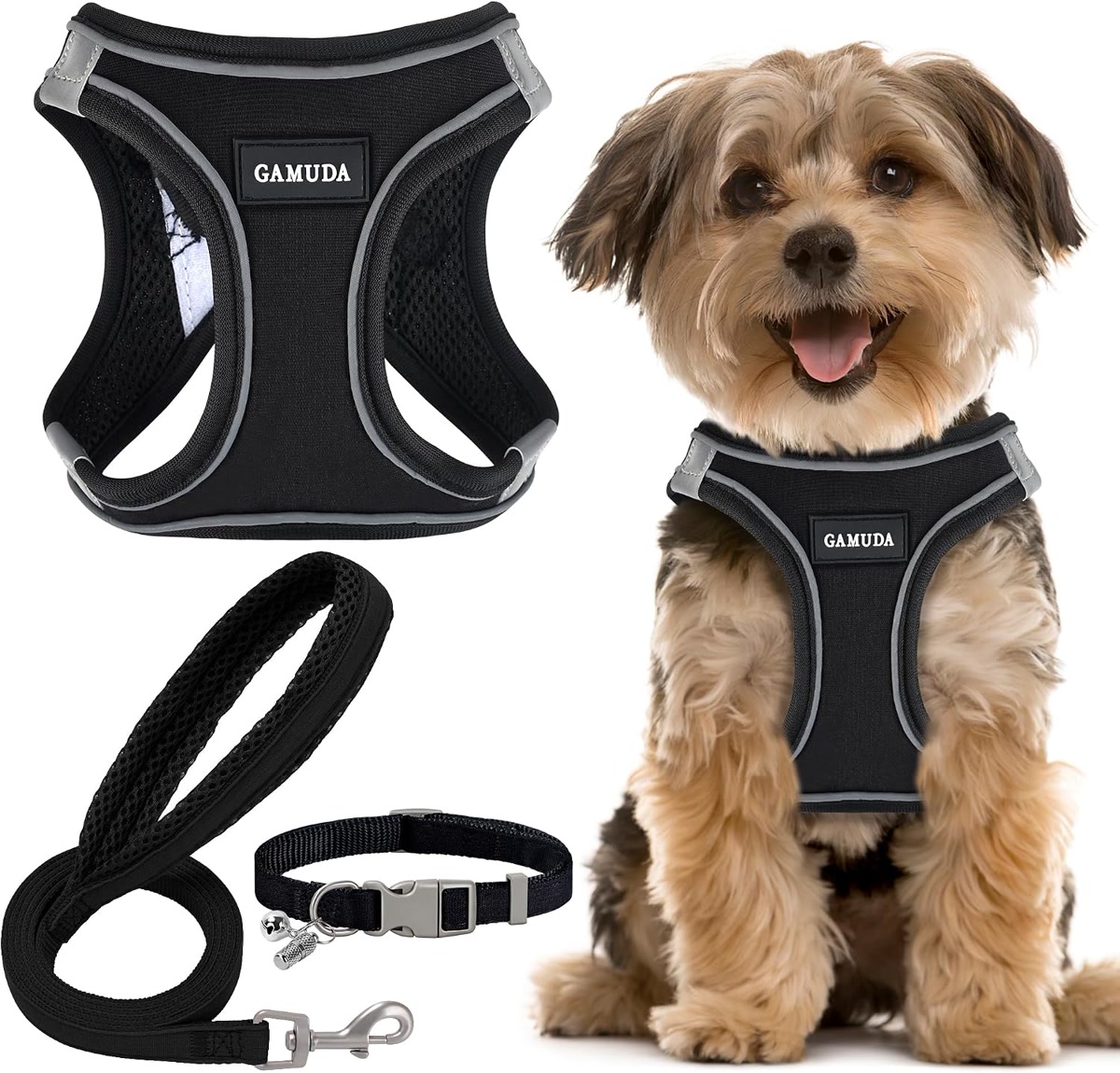
Don’t just take your dog out for a 3-miler on day one. They need to build up just like you did.
Week 1: Walk-Run Intervals (1-2 miles total)
- 5-minute walking warmup
- Alternate 1 minute jogging, 2 minutes walking
- Repeat 5-6 times
- 5-minute walking cooldown
- Do this 3 times in the week
Week 2: Longer Running Intervals (1.5-2.5 miles)
- 5-minute walking warmup
- Alternate 2 minutes jogging, 1 minute walking
- Repeat 6-8 times
- 5-minute walking cooldown
- 3 times in the week
Week 3: Sustained Running (2-3 miles)
- 5-minute walking warmup
- Jog continuously for 10-15 minutes
- 1-minute walking break
- Jog another 10-15 minutes
- 5-minute walking cooldown
- 3 times in the week
Week 4: Full Runs (3+ miles)
- 5-minute walking warmup
- Run at a conversational pace
- Walk when your dog needs a break (watch for excessive panting)
- 5-minute walking cooldown
- 3-4 times in the week
Key rule: Always let your dog set the pace. You’re running together, not dragging them. If they’re lagging, stop. If they’re panting excessively, walk. If they stop to sniff something, let them — it’s their run too.
Signs You Need to Stop Running Immediately
- Excessive panting that doesn’t improve after 30 seconds of walking
- Drooling thick ropes of saliva (sign of heat stress)
- Stumbling or wobbling
- Refusing to continue (sitting down, pulling toward home)
- Vomiting or dry heaving
If any of these happen, stop, find shade, offer small amounts of water, and cool your dog down by wetting their belly and paws. If symptoms don’t improve within 10 minutes, call a vet.
Running Safety Rules
Always leash your dog on runs. Even if they have perfect recall. You’re both moving fast, and an off-leash dog can spook other runners, dogs, or wildlife in seconds. The hands-free leash keeps your dog close and controlled without tying up your hands.
Run against traffic. If you’re on a road without sidewalks, run facing oncoming cars. Stay as far right as possible, and keep your dog on your left (away from traffic).
Check paws after every run. Look for cracks, cuts, or worn pads. Paw pads toughen up over time, but in the first few weeks, they’re soft and vulnerable. If you see redness or limping, take a few days off.
Carry your phone. Not for music — for emergencies. If your dog gets hurt or overheats, you need to be able to call for help or look up the nearest vet.
Be extra careful in humidity. Dogs cool themselves by panting, which relies on evaporation. When humidity is high, evaporation doesn’t work well, and dogs overheat much faster than in dry heat at the same temperature.
Seasonal Considerations
Summer
- Run before 8 AM or after 7 PM
- Always check pavement temperature
- Bring water for runs over 2 miles
- Watch for heat exhaustion signs
- Consider a cooling mat for post-run recovery
Winter
- Watch for ice and salt on roads
- Wipe paws after runs to remove salt and chemicals
- Short-haired dogs may need a jacket below 35°F
- Warm up longer (5-10 minutes walking before running)
Spring and Fall
- Perfect running weather — take advantage of it
- Watch for allergens if your dog has seasonal allergies
- Mud is slippery — slow down on wet trails
Common Mistakes That Cost Money
Going too far, too fast. The number one reason dogs get injured running is overexertion in the first week. Vet bills for soft tissue injuries run 500 to 2,000 dollars. Build up slowly and you’ll avoid this entirely.
Running right after meals. Wait at least 2 hours after a full meal, 1 hour after a light snack. Bloat (GDV) is a life-threatening emergency that costs 1,500 to 5,000 dollars to treat. Deep-chested breeds (German Shepherds, Great Danes, Dobermans) are especially at risk.
Skipping the warmup. Dogs need 5 minutes of walking before running, same as humans. Cold muscles tear. Cold starts also mean cold joints, which can lead to long-term problems.
Not checking paw pads. A 15 dollar pair of booties is way cheaper than a 300+ dollar vet visit for a torn pad. Check your dog’s feet after every run, especially in the first few weeks.
Budget vs. Premium: What’s Worth Paying For
| Item | Budget Option | Premium Option | Worth Upgrading? |
|---|---|---|---|
| Hands-free leash | Tuff Mutt (18 dollars) | J&J Dog (40 dollars) | Only if you run 20+ miles/week |
| No-pull harness | Rabbitgoo (20 dollars) | Ruffwear (35-60 dollars) | Yes for trail running |
| Reflective vest | Generic (10 dollars) | Nox Gear (30 dollars) | Yes if you run in dark regularly |
| Dog boots | Generic (15 dollars) | Ruffwear Grip Trex (50 dollars) | Yes for rocky trails |
| Water bottle | Any bottle + collapsible bowl (8 dollars) | MalsiPree (15 dollars) | No — both work fine |
The pattern is consistent: budget gear is fine for getting started. Upgrade only when you’re consistently running enough to wear through the cheap stuff — which usually means you’ve been at it for 3+ months.
Bottom Line
Running with your dog doesn’t require a shopping spree. A hands-free leash and a front-clip harness will get you out the door for under 50 dollars. Everything else is optional and can be added later based on your actual needs.
Start slow, watch your dog’s signals, and build up gradually. The money you save on gear is nothing compared to the vet bills you’ll avoid by being patient. And the bond you’ll build running together? That’s free.
Looking for more budget dog gear? Check out our picks for best no-pull harnesses, rain gear for large breeds, and ways to save on pet food.
n
ThriftyPaw is reader-supported. As an Amazon Associate, we earn from qualifying purchases. This means we may earn a small commission when you buy through links on this site at no additional cost to you. We only recommend products we genuinely believe in. Thank you for supporting ThriftyPaw.
My take: Two purchases — a hands-free bungee leash and the $20 no-pull harness — get you on the road for under $50; everything else is terrain-dependent. Respect the two real exclusions: no sustained running for puppies under 12-18 months, none ever for flat-faced breeds. The 4-week ramp-up in the guide is the difference between a running partner and a vet bill.
Related guides
- My Dog Was Borderline Dehydrated Until I Bought a Water Fountain. These 4 Were Worth Every Penny.
- Budget Pet Cameras with Treat Dispensers: Best Picks Under 80 Dollars
- My Senior Dog Climbs Into the SUV Himself Now. The Ramp Did It.
- DIY Dog Agility Equipment: Build a Complete Course Under 50 Dollars
- Best Leashes for Big Dogs That Pull (Under 25 Each)
🐾 Get Your Free Big Dog First Aid Kit Checklist
Join our newsletter and get this free printable plus weekly tips.
Frequently Asked Questions
Can any dog be a running partner?
No — two hard limits. Puppies shouldn't run sustained distances until growth plates close at 12-18 months (early running causes permanent joint damage), and brachycephalic breeds — French Bulldogs, Pugs, Boston Terriers — shouldn't run at all; their airways can't handle sustained exertion.
What gear do I need to start running with my dog?
Just two items, 35-45 dollars total: a hands-free leash with a bungee section and quick-release buckle (15-25 dollars) and a no-pull harness — the Rabbitgoo at around 20 dollars is the budget pick. Everything else, from reflective vests to booties, is situational.
Is running bad for a dog's joints?
Built-up running on a mature, healthy dog is fine — the vet-bill risks in the guide (soft tissue injuries at 500-2,000 dollars, bloat at 1,500-5,000) come from doing too much too soon and from running in heat. Ramp distance gradually and skip hot pavement entirely.
Liked this guide? Get the next one in your inbox — the pet budget checklist is free too.
✓ You're in — check your inbox.
No spam. Unsubscribe anytime. We never share your email.
Price Check
Prices verified via our product tracker. Updated Sep 27.
| XSY&G Dog Shoes for Hot Pavement, Dog Snow Booties for Med | $22.99 | 4.1★ (15,458) |
| Pet Supplies : Kalimdor Dog Water Bottle, Leak Proof Porta | $16.99 | 4.4★ (8,366) |
As an Amazon Associate we earn from qualifying purchases.