This article contains affiliate links. We may earn a commission from qualifying purchases.
Some content on this site is AI-assisted and reviewed by our editorial team.
You don’t have to feed your dog garbage to save money. That’s the biggest myth in pet ownership — that budget means cheap kibble from the discount bin.
The truth? Most dog owners overspend on food by 20-40% without realizing it. Not because they’re buying premium brands (those are often worth it), but because they’re buying the wrong size, from the wrong store, at the wrong time.
Pet food prices hit a record high in early 2026. Dog food prices are up across the board — not one product category saw a decrease last year. But you can still feed your dog well without going broke. Here are seven ways that actually work.
1. Buy the Biggest Bag That Makes Sense
This is the single easiest save, and most people skip it.
A 5-pound bag of Purina Pro Plan costs about $1.47 per pound. The 30-pound bag? $0.93 per pound. Same food, same brand — you’re paying 58% more per pound just for smaller packaging.
The math:
- 5 lb bag at $7.35 = $1.47/lb
- 15 lb bag at $16.99 = $1.13/lb
- 30 lb bag at $27.99 = $0.93/lb
For a 60-pound dog eating 2.5 cups per day, a 30-pound bag lasts about 6 weeks. That’s fine — dry kibble stays fresh for 6-8 weeks after opening if you store it right (see tip #6).
When bigger isn’t better: Don’t buy bulk if your dog is a picky eater, has food allergies you’re still diagnosing, or weighs under 20 pounds (small dogs take 3-4 months to go through a 30-lb bag, and that’s pushing freshness).
The save: $150-300/year just by buying the right size.
2. Stack Autoship Discounts (Yes, You Can Game This)
Chewy’s Autoship gives you 35% off your first order and 5-10% off ongoing deliveries. Amazon’s Subscribe & Save gives 5% base, scaling to 15% if you have 5+ subscriptions in a month. Here’s how to use both:
Chewy’s first-order hack: Set up Autoship, get 35% off your first order, then cancel the recurring delivery immediately after it ships. Place a new order with Autoship next time. Yes, this works. No, they don’t block you. You’ll get 35% off every order this way if you’re willing to spend 2 minutes canceling each time.
If you don’t want to game it, the ongoing 5-10% Autoship discount is still the best recurring deal on pet food. Over a year on a $55/month food bill, that’s $33-66 back in your pocket.
Amazon’s 5+ trick: If you subscribe to 5 or more items in the same delivery month, Amazon bumps your discount to 15%. For a $55 bag of food, that’s $8.25 off vs. $2.75 at the base rate. Pair it with household items you’re already buying — detergent, trash bags, paper towels — and you hit 5 items easily.
Which one wins? We compared Chewy, Petco, and Amazon head-to-head — short answer: Chewy for food, Amazon for everything else.
The save: $66-132/year with Autoship stacking alone.
3. Mix, Don’t Switch
This one comes straight from r/Frugal and it works: instead of dropping from a $65/bag premium food to a $25/bag budget brand, mix them.
Start with 75% premium / 25% budget. Your dog gets most of the nutritional quality at a fraction of the cost. Over time, you can adjust the ratio based on how your dog does.
The math (for a 30-lb bag, 2.5 cups/day, large dog):
- Premium only: $65/bag × ~8 bags/year = $520
- 75/25 mix: $52.50/bag equivalent × 8 = $420
- 50/50 mix: $45/bag equivalent × 8 = $360
The key rules:
- Both foods should be from reputable brands with AAFCO certification
- Transition gradually over 7-10 days (same as any food switch)
- Watch for digestive upset — not all dogs tolerate mixed diets
- Stick to similar protein sources (chicken+chicken, not chicken+beef)
What not to do: Don’t mix a grain-free food with a grain-inclusive food. Don’t mix puppy food with adult food. Don’t mix prescription diets with anything without talking to your vet first.
The save: $100-160/year depending on your mix ratio.
4. Time Your Purchases Around Sales (Yes, Pet Food Goes on Sale)
Pet food follows a sale cycle. Here’s when to buy:
Chewy sale calendar:
- January: New Year sale (10-15% off select brands)
- March: Birthday sale (usually 15% off site-wide)
- May: Spring sale (10% off + free treats with food orders)
- July: Summer sale (often the best deals of the year — 15-20% off)
- October: Fall sale (10-15% off)
- November/December: Black Friday + Holiday (15-20% off, best for stocking up)
Amazon deals:
- Prime Day (usually July and October): 20-30% off pet food brands
- Black Friday/Cyber Monday: Major pet food discounts
- Monthly coupons: Check the “coupon” box on product pages — saves an extra $2-5
Petco/Petsmart:
- Buy 50 Get 10 off (runs every 6-8 weeks)
- Seasonal clearance: Watch for discontinued formulas at 30-50% off
The strategy: Buy 2-3 months of food during major sales (July and Black Friday especially). If you have storage space, this alone can save you 15-25% annually.
The save: $75-150/year with strategic timing.
5. Use Store Brands Strategically (Not as Your Main Food)
This is controversial, so let me be clear: I’m not telling you to feed your dog Ol’ Roy. But there are decent mid-tier brands that cost 30-40% less than premium and still meet AAFCO standards.
Brands worth considering as mix-ins or budget alternatives:
- Purina One — Not to be confused with Purina Pro Plan. One is their mid-tier line. $35-40 for a 30-lb bag vs. $55 for Pro Plan. Solid AAFCO nutrition, just fewer “premium” ingredients.
- Iams — Owned by Mars, decent nutritional profile. $30-35 for a 28-lb bag. Good as a mix-in.
- Diamond Naturals — Grain-inclusive line with real meat. $40-45 for a 30-lb bag. Better than you’d expect for the price.
What to avoid at any price:
- Anything with “meat by-products” as the first ingredient
- Foods with artificial colors (dogs don’t care what the kibble looks like)
- Generic grocery store brands that don’t list AAFCO certification
- Anything from a brand with multiple recalls in the last 3 years
The save: $60-120/year using mid-tier strategically.
6. Store It Right (Bad Storage Wastes Food)
This is the silent budget killer. Open bags of dog food lose freshness, flavor, and nutritional value. Dogs eat less of stale food (meaning you throw it away), and degraded nutrients mean you’re not getting what you paid for.
How to store dog food properly:
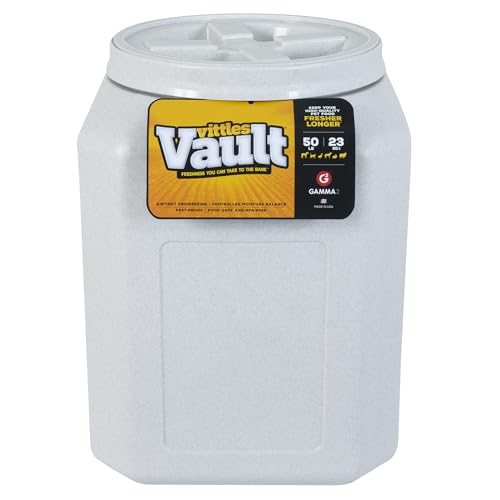
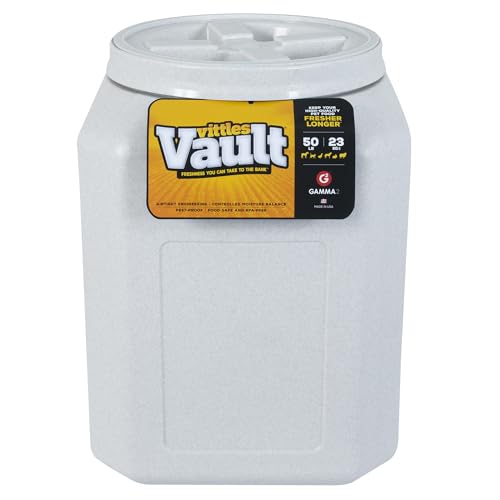
- Keep it in the original bag inside an airtight container — the bag has a fat barrier that plastic bins don’t
- Don’t dump kibble directly into plastic bins (fat goes rancid on plastic over time)
- Store in a cool, dry place — heat and humidity accelerate nutrient loss
- Use food within 6 weeks of opening (check the “best by” date on unopened bags)
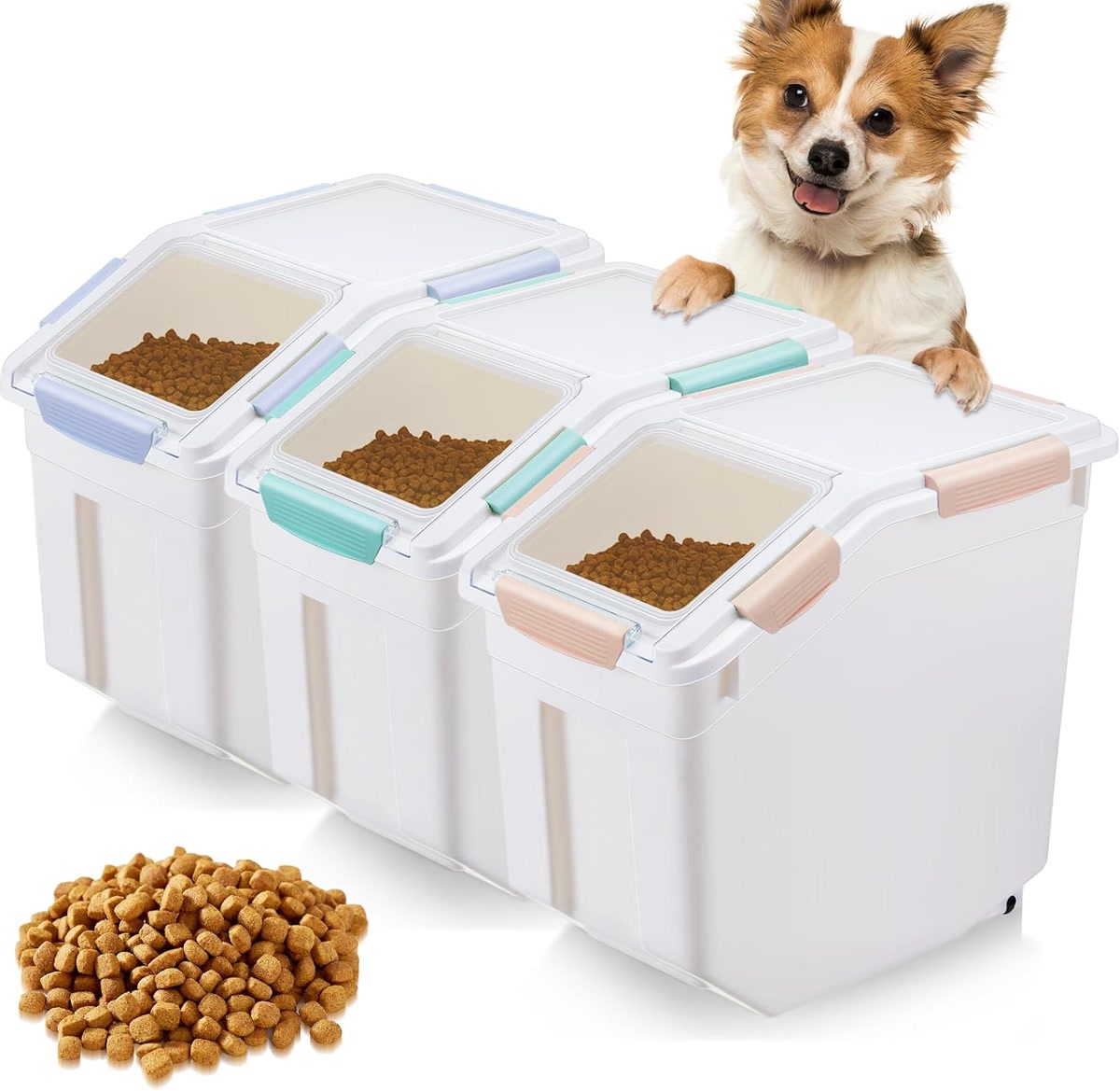
- If you’re buying bulk, consider a food-safe storage container with a seal
Signs your food has gone bad:
- Smells rancid or “off” (should smell like mild meat/grain, not paint or chemicals)
- Kibble is oily or sticky to the touch
- Your dog suddenly refuses to eat it
- Visible mold or moisture in the bag
The save: $50-100/year in wasted food you don’t have to throw away.
7. Feed the Right Amount (Most Dogs Are Overfed)
This sounds obvious, but stay with me. According to veterinary nutritionists, roughly 40-60% of pet dogs are overweight, and most owners are feeding 20-30% more than their dog needs.
Why this costs you money:
- A 60-pound dog eating 3 cups per day when they only need 2.5 cups is wasting 17% of their food budget — that’s $85-100/year thrown in the bowl
- Overweight dogs develop health problems (joint issues, diabetes, heart disease) that cost $500-5,000+ in vet bills
- “Senior” or “weight management” foods cost more than the regular formula you should’ve been feeding correctly in the first place
How to get the portion right:
- Start with the bag’s recommendation, then subtract 10-15% (pet food companies overstate portions)
- Use a measuring cup, not a “scoop” — they’re different volumes
- Do the rib test monthly: you should be able to feel your dog’s ribs easily without pressing hard, but not see them
- Adjust based on activity level, not the label — a couch potato Lab doesn’t need “active dog” portions
The save: $85-100/year in reduced portions, plus potentially thousands in avoided vet bills.
The Total Savings
If you apply all seven strategies:
That’s $49-88/month back in your pocket — without feeding your dog anything you’d feel guilty about.
The Bottom Line
You don’t need to switch to budget kibble to save money on dog food. You need to buy smarter — right sizes, right timing, right portions, right storage.
Start with the easy wins: buy bigger bags and set up Autoship. Those two alone save most dog owners $200-400/year. Then add in the others over time.
The best food for your dog is the one you can afford to feed consistently. Consistency matters more than premium labels. Find a quality food at a price that works, buy it smart, and feed the right amount.
ThriftyPaw helps pet owners give their dogs the best care without going broke. More budget guides and price comparisons coming soon.
Related reads:
- Chewy vs. Petco vs. Amazon: Where Pet Supplies Are Actually Cheapest
- How Much Does a Dog Really Cost Per Month? (2026 Breed Breakdown)
- Flea & Tick Prevention: What Actually Works and What’s a Waste of Money
- 10 Things Every New Big Dog Owner Needs (That Won’t Break the Bank)
Affiliate Disclosure: ThriftyPaw may earn commissions from qualifying purchases through Amazon and other affiliate links on this page. This does not affect our recommendations — we only recommend products we genuinely believe in. Learn more about how we keep the lights on without selling out.
n
My take: None of these seven tricks involve feeding your dog anything worse — it’s all packaging, timing, and portions. The single biggest win is buying the biggest bag that makes sense; do that first and everything else is a bonus.
Related guides
- Cost of Owning a Puppy First Year: Complete Budget Breakdown (2026)
- Dog Diarrhea Home Treatment: Complete Guide Under 5 Dollars
- Dog Friendly Road Trip Stops on a Budget: 5-Day Trip Under 50 Dollars
- Cat Kidney Disease on a Budget: Management Guide Under 60 Dollars Per Month
- Budget-Friendly Pet Insurance Comparison (Under $30/Month Options)
🐾 Get Your Free Big Dog First Aid Kit Checklist
Join our newsletter and get this free printable plus weekly tips.
Frequently Asked Questions
How much can I really save on dog food without downgrading brands?
The math in this guide adds up to several hundred dollars a year. Buying the 30-lb bag instead of the 5-lb cuts the per-pound cost of the same food from $1.47 to $0.93 — $150-300 a year on its own — and stacking autoship discounts adds another $66-132.
Does mixing premium and budget food actually work?
Yes. A 75/25 or 50/50 blend cuts a $520-a-year premium habit to $420 or $360 while keeping the premium nutrition as the base. Transition gradually over a week so a sensitive stomach doesn't notice the change.
Is autoship worth locking into?
For a food you already buy monthly, yes — subscription discounts stack on top of sale prices and there's no commitment to keep. Time big purchases to the January, March, and May sale windows and the discount compounds.
Liked this guide? Get the next one in your inbox — the pet budget checklist is free too.
✓ You're in — check your inbox.
No spam. Unsubscribe anytime. We never share your email.
Price Check
Prices verified via our product tracker. Updated Sep 27.
| Tru Earth Dry Laundry Detergent Sheets, Unscented, 128 Loa | $25.65 | 4.5★ (33,118) |
| Tasker 55 Gallon Trash Bags Heavy Duty, Extra Large Lawn & | $29.97 | 4.3★ (5,489) |
| Bounty Quick Size Paper Towels, White, 8 Family Rolls : He | $24.42 | 4.8★ (236,879) |
| HINMAY Pet Food Scoops Plastic Measuring Cups Set for Dog | $6.49 | 4.8★ (2,887) |
As an Amazon Associate we earn from qualifying purchases.