This article contains affiliate links. We may earn a commission from qualifying purchases.
Some content on this site is AI-assisted and reviewed by our editorial team.
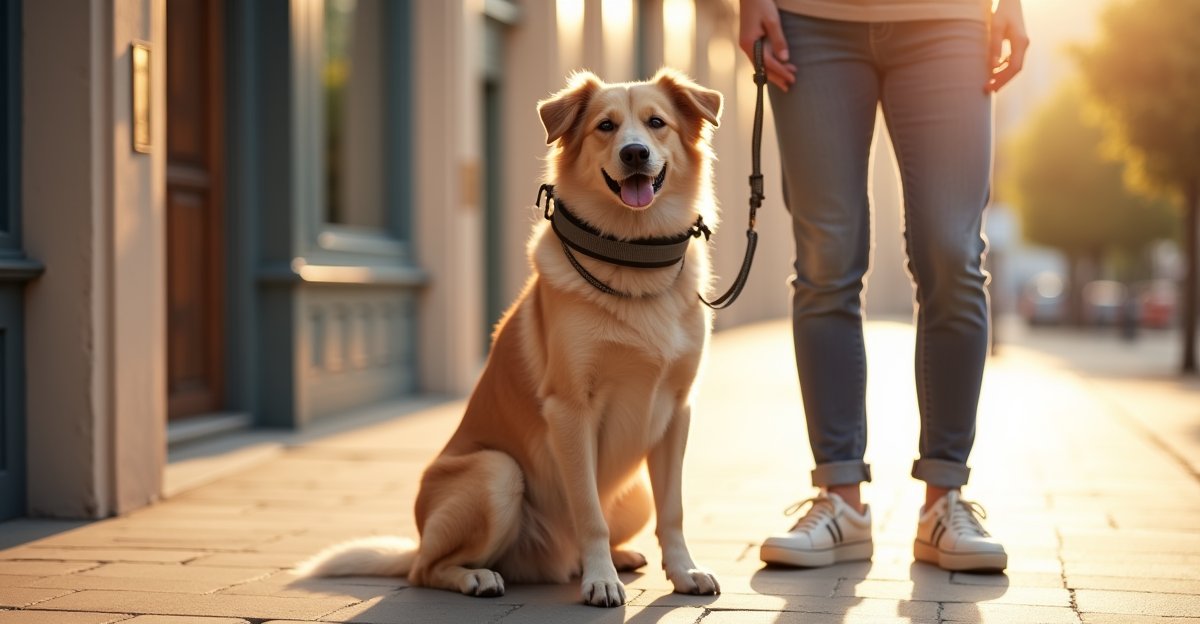
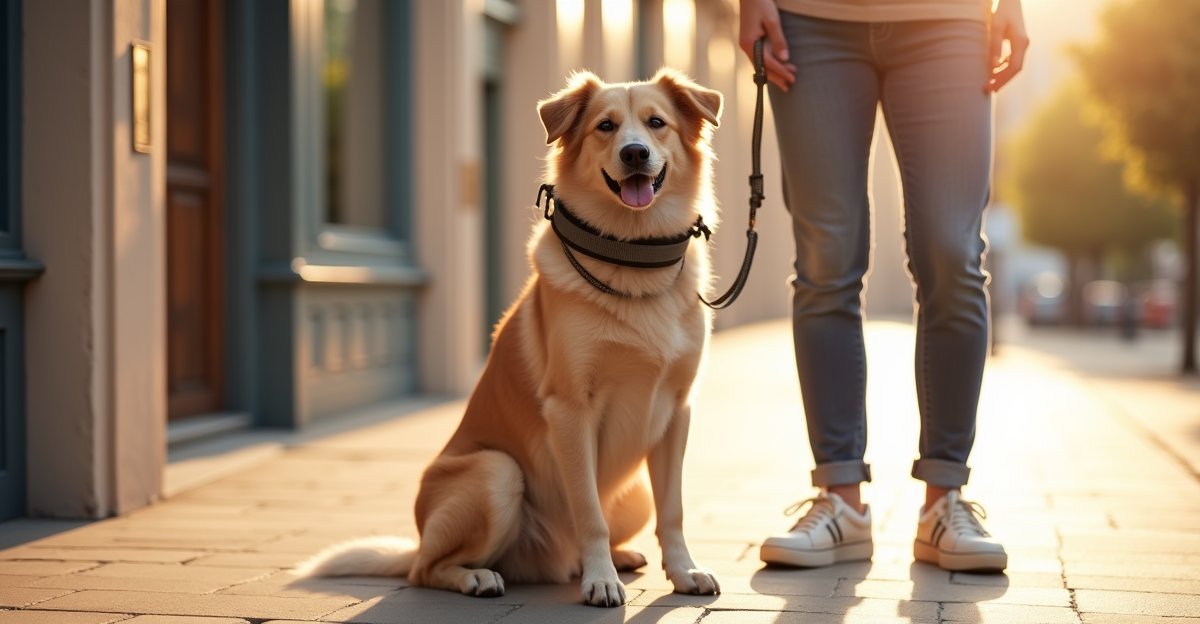
The first time I put a head collar on my dog, a woman at the park asked if it was a muzzle. My dog was panting happily, tongue out, clearly not muzzled. I explained that no, he could still breathe, drink, eat treats, and lick my hand — it just stopped him from dragging me into traffic. She nodded politely and walked away. I’m pretty sure she still thought it was a muzzle.
That’s the thing about head collars. They look a little strange. People who’ve never seen one assume the worst. But if you’ve ever had a 70-pound dog lock eyes on a squirrel and decide it’s go-time, you know that a flat collar is not going to cut it. Your arm gets yanked, your shoulder screams, and your dog is gagging against the leash pressure — which, by the way, can do real damage to their throat over time.
Head collars changed walks for me. The principle is simple: where the nose goes, the body follows. It’s the same concept as a horse halter — you don’t see people dragging horses by the neck, because a halter on the head gives you control without a fight. Same logic applies here. You’re not overpowering your dog, you’re redirecting their head. No throat pressure, no gagging, no arms-out-of-socket pulling matches.
But here’s what nobody tells you before you buy one: the first week is rough. Your dog will paw at it. Strangers will ask questions. You’ll second-guess whether it’s worth the hassle. It is. Once you get through the adjustment period — and it really does only take a few days — walks become something you actually look forward to instead of something you dread.
I’ve tried four of the most popular options under 30 dollars, and honestly, some are great and some are just okay. Here’s what I found.
The PetSafe Gentle Leader: The One Everyone Knows
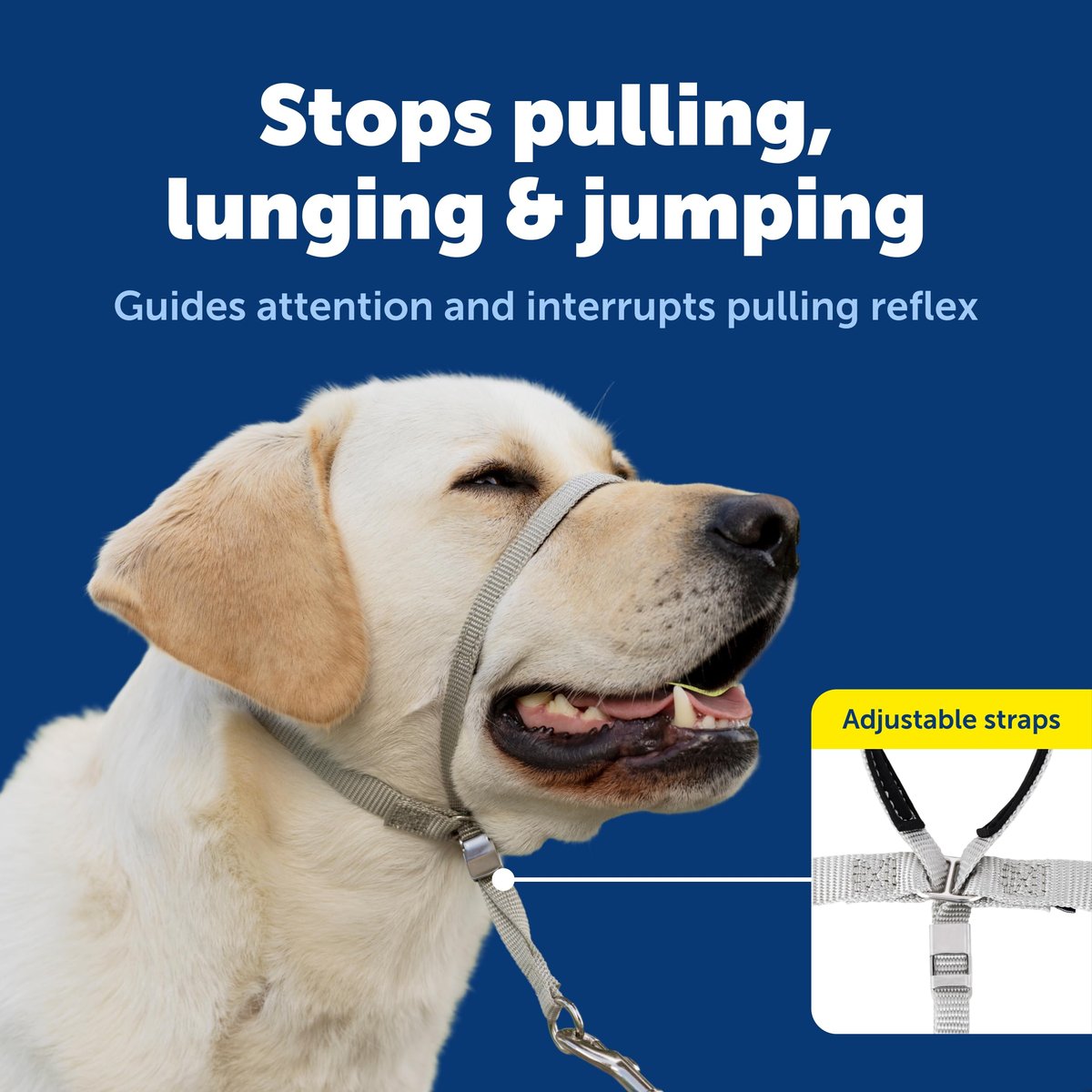
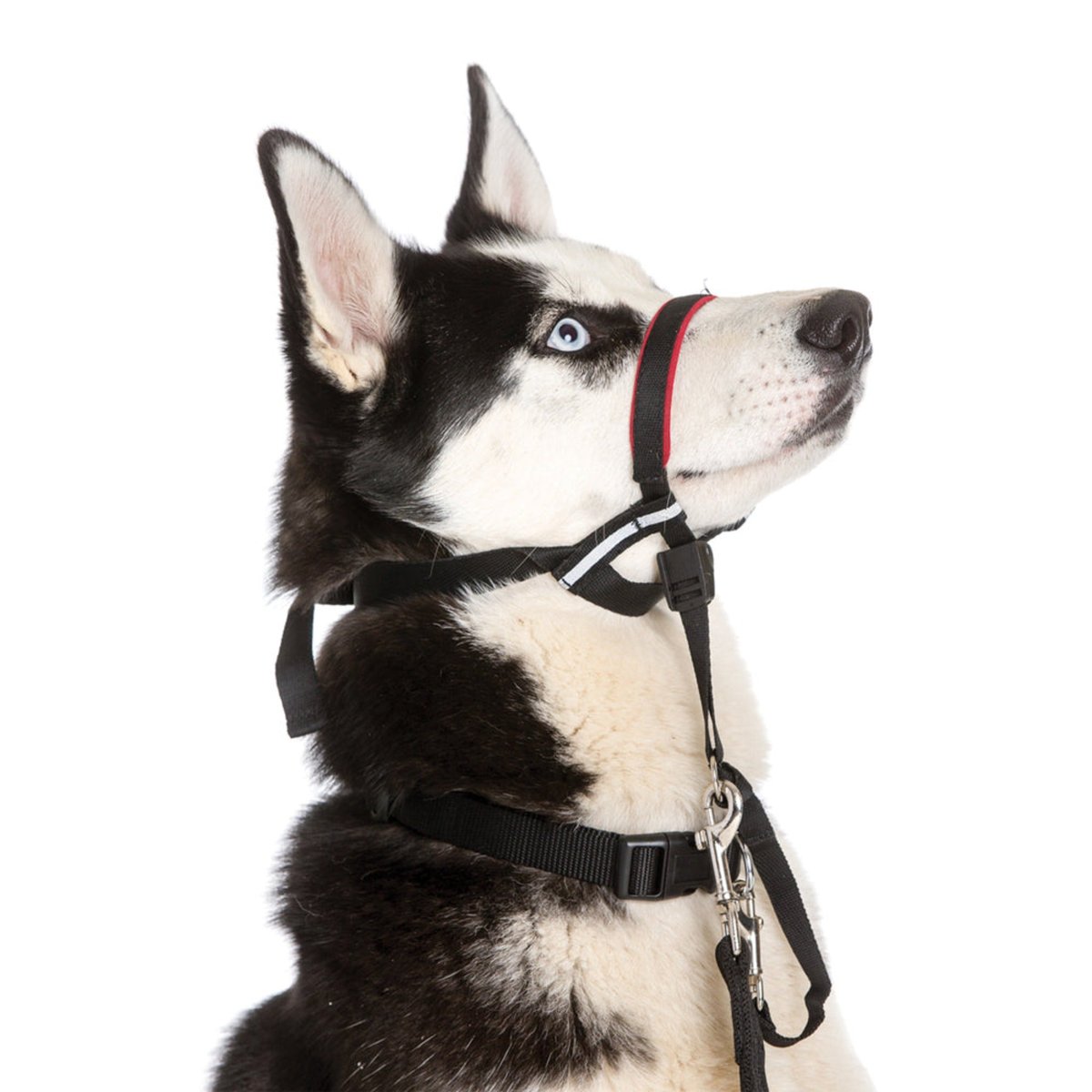
This is the one your vet probably recommended. The PetSafe Gentle Leader has been around for over 20 years, and it’s the head collar most trainers default to. There’s a reason for that — it works, it’s consistent, and the design hasn’t changed much because it didn’t need to.
The nose loop sits high on the snout, which matters more than you’d think. Lower placement can crowd the nostrils and irritate skin. High placement gives you clean redirect leverage without blocking airflow. The neck strap goes high too, right behind the ears, which is where you get the most control with the least force.
Fit-wise, it’s the most adjustable of the bunch. The nose loop and neck strap adjust independently, so I got a clean fit on my dog’s weird head shape (he’s a mix — nobody knows what, but he’s got a narrow snout and a thick neck). It comes in five sizes. Large fits most dogs in the 60 to 120 pound range. If you’ve got a giant breed, go Extra Large.
Now the honest part. The first time I put it on my dog, he hated it. Pawed at his face, rolled on the ground, acted like I’d put a medieval device on him. This is normal. PetSafe includes a fitting guide and desensitization tips, and the advice actually works: put it on, give treats, take it off, repeat. By day three, my dog stopped fighting it. By day five, he saw me pick it up and came over — because he knew the collar meant a walk.
- Padded nose loop for comfort
- Available in 5 sizes and multiple colors
- Includes a training guide and fitting DVD
- Quick-snap buckle for easy on/off
The one thing I don’t love: there’s no safety link. If your dog somehow slips the nose loop, they’re loose. It hasn’t happened to me, but if you’ve got a dog that backs out of gear, keep that in mind.
My take: PetSafe Gentle Leader Headcollar (Compare prices on Amazon) — around 16 dollars. the one I’d buy first, vet-recommended, fits most large breeds. Start here.
Check price on Amazon — as tested
The Halti: Better Padding, Slightly Different Fit
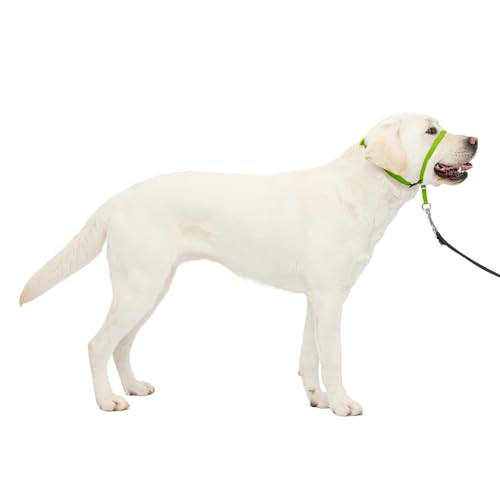
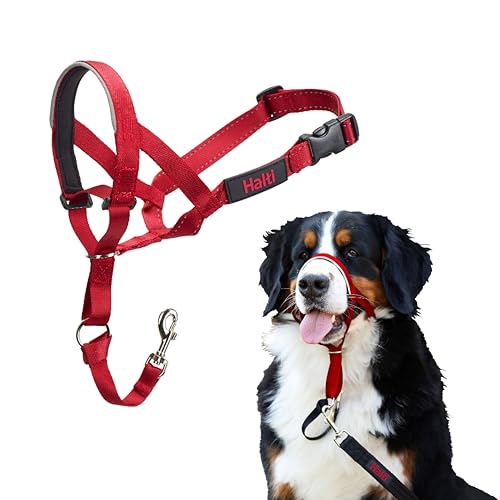
The Halti is the Gentle Leader’s main rival, and depending on your dog, it might actually be the better pick. Designed by Dr. Roger Mugford (a British animal behaviorist who’s been working with dogs longer than some of us have been alive), the Halti has a different fit philosophy: lower on the snout, thicker padding, more contact area.
For dogs with sensitive noses, this is a real advantage. My dog doesn’t have skin issues, but I’ve seen dogs who rub raw under a Gentle Leader’s thinner strap. The Halti distributes pressure across a wider area, which helps. The padding is noticeably thicker, especially on the nose bridge — and if your dog has a short coat where straps sit right on skin, that matters.
The Halti’s killer feature is the safety link. It’s a short strap that connects the nose loop to your dog’s regular collar, so if they somehow back out of the nose loop, they’re still attached to the leash. The Gentle Leader doesn’t have this. If you’ve got a dog that’s an escape artist — and some dogs are, especially the sleek, narrow-headed breeds — the safety link alone might be reason enough to choose the Halti. I’ve never had a dog slip a head collar, but I’ve heard enough stories from people at the dog park to take it seriously.
It also has reflective stitching on the nose loop and collar. I walk my dog early mornings and late evenings, so anything that catches headlights is a plus.
- Reflective stitching for nighttime visibility
- Safety link prevents full escape if nose loop slips
- Thick padding on nose bridge
- Available in 6 sizes
The tradeoff with the Halti is the lower nose loop position. On dogs with very tapered snouts — Greyhounds, Collies, that sort of shape — the loop can slide down toward the nostrils during a walk. I found myself readjusting it a couple times on longer outings. Not a dealbreaker, but annoying. On a blocky-headed dog like a Pit Bull or Mastiff mix, it stays put fine.
My take: Halti Headcollar (Compare prices on Amazon) — about 18 dollars. Best if your dog has a sensitive nose, or you want the safety link feature. Worth the extra two dollars over the Gentle Leader if either of those things applies to you.
Check price on Amazon — as tested
The BARKLESS: Cheap, Functional, Not Pretend-Premium
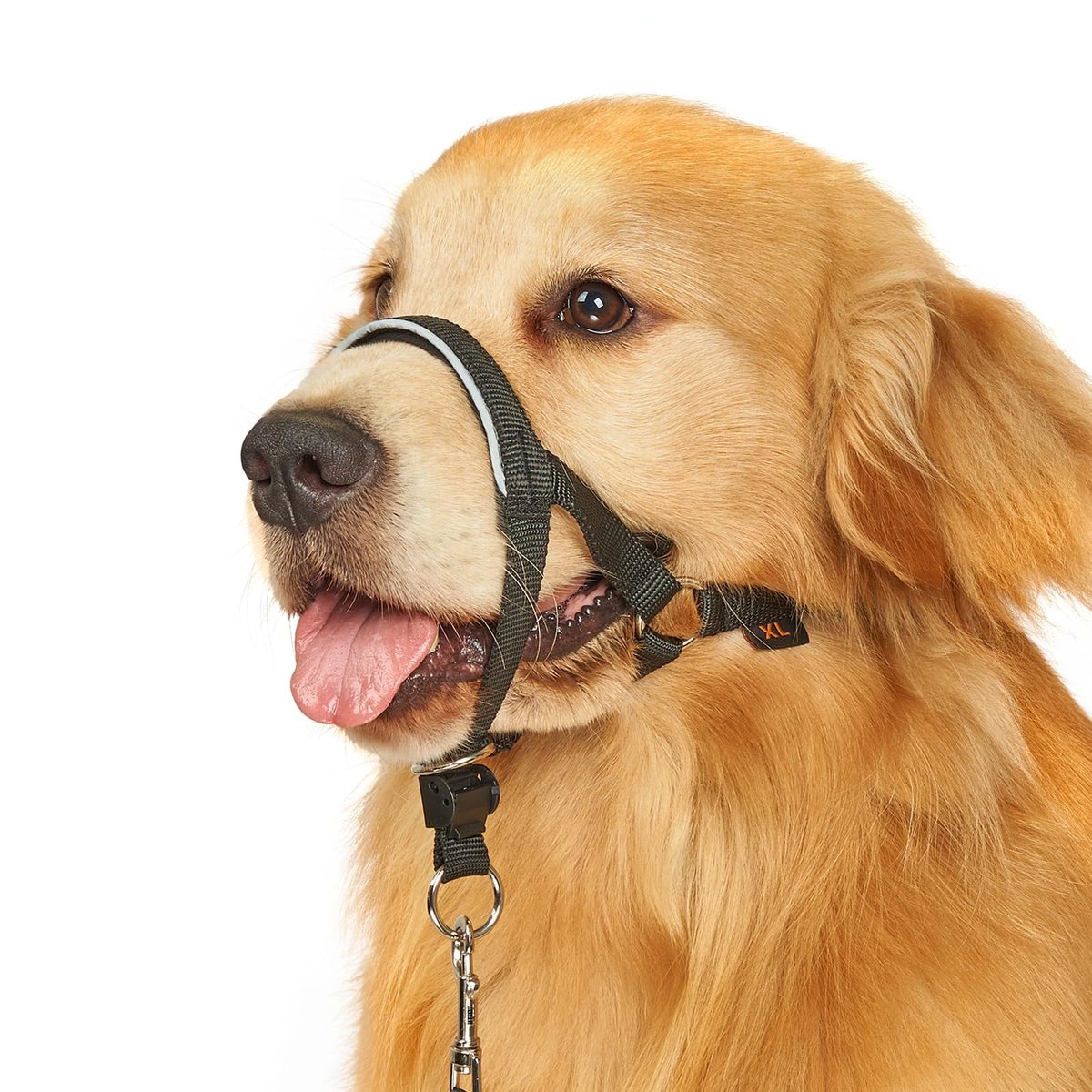
I’ll be straight with you: the BARKLESS is not as nice as the Gentle Leader or the Halti. But it costs twelve dollars, and it works. If your budget is tight, or you want to try a head collar before committing to the pricier options, this is a legitimate choice.
The design is straightforward: adjustable neck strap, separate nose loop, same basic principle as the Gentle Leader. The differences are in the details. The padding is thinner. The hardware is plastic instead of metal. The nose loop material feels less soft against skin. None of these are dealbreakers for short walks or training sessions under 30 minutes.
For all-day wear, I’d be cautious. If your dog pulls constantly and puts sustained pressure on the collar, the thinner padding could cause chafing. I used the BARKLESS for a week of neighborhood walks (20-30 minutes each) and had no issues. But I wouldn’t use it for a three-hour hike.
One thing that genuinely surprised me: the included training guide. It walks through fitting and desensitization step by step, and it’s more thorough than I expected at this price point. The BARKLESS clearly isn’t trying to be premium — it’s trying to be accessible, and it succeeds at that.
- Lowest price in this roundup
- Includes fitting and training guide
- Available in 4 sizes
- Lightweight design
The honest tradeoff: the plastic buckle and minimal padding mean this won’t last as long as the Gentle Leader if your dog is a serious puller. The metal hardware on the PetSafe and Halti options holds up better over months of daily use. For a light or moderate puller, or as a starter collar to see if the concept works for your dog, the BARKLESS is solid.
My take: BARKLESS No Pull Dog Head Collar (Compare prices on Amazon) — around 12 dollars. Best budget option. Good for light to moderate pullers, or as a trial run before spending more.
Check price on Amazon — as tested
The PetSafe Easy Walk Harness: For Dogs Who Won’t Tolerate a Head Collar
Some dogs will not accept a nose loop. Period. I got lucky — my dog gave up fighting it after a few days. But I’ve talked to owners whose dogs pawed at it for weeks, rubbed their faces raw against the couch, and generally made it clear that a head collar wasn’t happening. One friend of mine tried for a full month before giving up. If that’s your dog, don’t force it. You’ll both be miserable. There’s another option.
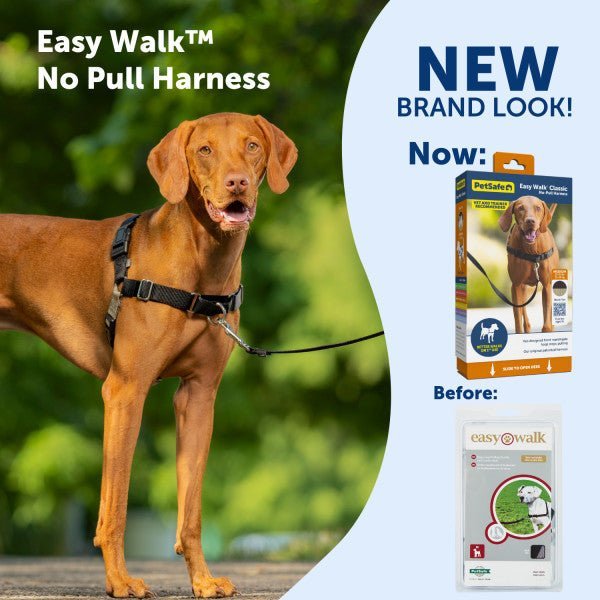
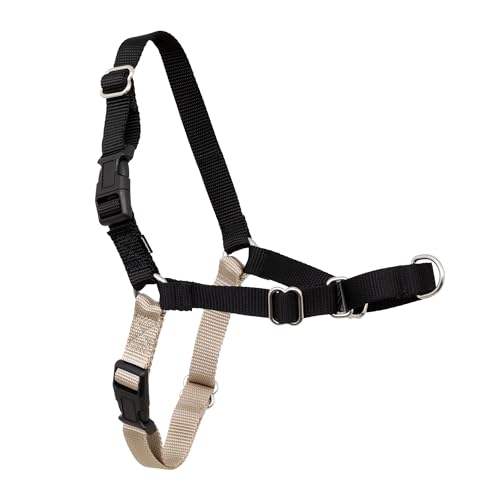
The PetSafe Easy Walk Harness isn’t a head collar — it’s a front-clip harness that solves the same problem differently. Instead of controlling the head, it controls the chest. The leash attaches at the sternum, and when the dog pulls, the front attachment point redirects their momentum sideways. It’s less direct than nose control, but for a lot of dogs, it’s enough.
The Easy Walk has a martingale loop at the chest that tightens slightly under pull pressure, which stops dogs from backing out of the harness. The belly strap is padded and sits low on the chest, which I found more comfortable for the dog than harnesses that cinch around the ribs. The fit is straightforward — two snap buckles, shoulder and belly, done.
How does it compare to a head collar? Less effective for serious pullers. A head collar gives you nose leverage — the dog physically can’t pull hard because their head gets turned. The Easy Walk doesn’t have that. It reduces pulling, sometimes significantly, but a determined 90-pound dog can still drag you if they want to badly enough. For moderate pullers, though, it’s excellent.
- Front-clip design redirects pulling force
- Martingale loop prevents escape
- Padded belly strap
- Quick-snap buckles on both shoulder and belly straps
If your dog is a dedicated paw-scratcher who refuses anything on their face, this is your answer. It costs about 20 dollars, which is the most expensive option here, but still well under what you’d pay for a premium harness at a pet store.
My take: PetSafe Easy Walk Harness (Compare prices on Amazon) — about 20 dollars. Best alternative if your dog won’t wear a head collar. Front-clip design, solid construction, comfortable fit.
Check price on Amazon — as tested
Fitting a Head Collar: Getting It Right Matters More Than Which One You Buy
I messed up the fit on my first head collar. The nose loop was too loose and it slipped off mid-walk. My dog looked at me like I was an idiot. He wasn’t wrong. I were standing at an intersection, he shook his head, the loop dropped over his nose and dangled there, and for a brief moment I had zero control over a 70-pound dog standing two feet from traffic. That was a bad moment.
Here’s what I learned the hard way. The neck strap goes high, right behind the ears. You should be able to fit one finger between the strap and your dog’s neck — one, not two. Two means it’s too loose and the whole thing shifts around.
The nose loop sits about halfway between the eyes and the nostrils. You want one finger of space between the loop and the underside of the jaw. The loop should move freely — it’s not clamping the mouth shut, it’s redirecting the head. If your dog can’t open their mouth, something’s wrong.
Put the neck strap on first. Get it snug. Then slide the nose loop over the snout and clip it. Treat immediately. Do this for a few days before you even attach a leash. Your dog needs to learn: collar on means good things, not restriction. Rush this step and you’ll have a dog who fights the collar every single time. I learned that one the hard way too.
Head Collar or Front-Clip Harness: Which One Makes Sense
Both reduce pulling. They just do it differently.
Get a head collar if your dog is a strong, persistent puller. If you want real control in crowded or distracting environments. And if your dog has enough snout to hold the nose loop — flat-faced breeds like Pugs and French Bulldogs can’t wear head collars safely. Their snouts are too short.
Get a front-clip harness if your dog won’t tolerate a nose loop. If you want something they can wear for long stretches without chafing. If your dog is a moderate puller rather than an extreme one.
And avoid both if your dog has neck or spinal issues. Talk to your vet about a back-clip harness instead. One more thing: never pair a head collar with a retractable leash. The sudden jerk when the leash hits its limit can cause serious neck injury. I’ve seen it happen. It’s not pretty.
Where I Landed
If you’re wondering about the BARKLESS at this point — I keep it as a backup. It lives in my car’s glovebox for when I forget the main collar. For twelve dollars, having a spare head collar that works well enough for a quick neighborhood loop is worth it. But it’s not the one I reach for first.
After testing all four, the PetSafe Gentle Leader is what I keep on my dog’s hook by the door. It’s 16 dollars, it works, and the fit is reliable. If my dog had a more sensitive nose, I’d switch to the Halti for the extra padding and safety link. If he’d refused a head collar entirely, the Easy Walk Harness would be my fallback. The BARKLESS is the one I’d recommend to a friend who’s not sure their dog will tolerate a head collar at all and doesn’t want to spend 16 dollars to find out.
The most expensive option here is 20 dollars. The cheapest is 12. All of them cost less than a single obedience class, and every one of them made a real difference on the leash. Don’t overthink it — pick one, be patient through the first few walks, and you’ll feel the change within a week. Your shoulder will thank you.
And if you’re still on the fence about whether a head collar is right for your dog, try this: spend one more walk with a flat collar and pay attention to what happens when your dog pulls. Watch the pressure on their throat. Feel the strain in your arm. Then order the Gentle Leader, spend three days on desensitization, and take the same route. The difference is not subtle.
Disclosure: ThriftyPaw is an Amazon Associate and earns commissions from qualifying purchases. Prices listed are approximate and subject to change.
Related guides
- How to Start Running With Your Dog on a Budget (2026)
- DIY Dog Grooming Complete Guide: Save 500 Dollars Per Year at Home (2026)
- Best Dog Bowls and Feeders for Large Breeds Under 25
- Best Dog Toys Under $10 That Actually Last (2026)
- Best Budget Dog Paw and Nose Balms Under 15 Dollars (2026)
🐾 Get Your Free Big Dog First Aid Kit Checklist
Join our newsletter and get this free printable plus weekly tips.
Frequently Asked Questions
Are head collars cruel for dogs?
No — and they're not muzzles: the dog can pant, drink, eat treats, and lick your hand (the guide opens with exactly this confusion). The head collar works like a horse's halter — it steers from the nose, removing the neck leverage a pulling dog uses. The adjustment period is real but short.
What's the best head collar for a pulling dog?
The PetSafe Gentle Leader at $16 — the one everyone knows, the reliable fit, and the author's landing spot. The Halti at $18 adds better padding for dogs that rub ($2 more), and the BARKLESS at $12 is the functional budget pick — the test-to-see-if-your-dog-tolerates-it option before committing $16.
Head collar or front-clip harness — which is better?
For strong pullers, the head collar has more leverage: the Easy Walk harness ($20) is the alternative for dogs that won't tolerate nose control. The fitting matters more than the model — a badly fitted Gentle Leader fails where a well-fitted budget collar works, which is the guide's actual lesson.
Liked this guide? Get the next one in your inbox — the pet budget checklist is free too.
✓ You're in — check your inbox.
No spam. Unsubscribe anytime. We never share your email.
Price Check
Prices verified via our product tracker. Updated Sep 27.
| PetSafe Gentle Leader No Pull Dog Headcollar, Apple Green, | $19.93 | 4.3★ (71,001) |
| Halti Headcollar | Size 4, Red | Training Collar for Large | $16.40 | 4.3★ (41,965) |
| BARKLESS No Pull Dog Head Collar for Gentle Training Walki | $14.99 | 4.2★ |
| PetSafe Easy Walk Harness, No Pull Dog Harness, Black, Sma | $21.99 | 4.3★ (49,255) |
As an Amazon Associate we earn from qualifying purchases.