
This article contains affiliate links. We may earn a commission from qualifying purchases.
Some content on this site is AI-assisted and reviewed by our editorial team.
Dog tick-borne diseases cost 500-3,000 dollars to treat and can cause permanent kidney damage, chronic joint pain, and death. Lyme disease, ehrlichiosis, anaplasmosis, and Rocky Mountain spotted fever are all transmitted by ticks, and tick populations are expanding into new regions due to climate change. But tick prevention costs 5-15 dollars per month, and a 2-minute tick check after every walk is free. This guide covers the 4 major tick-borne diseases, how to choose the cheapest effective tick prevention, how to do a proper tick check, how to remove a tick safely, and when to see the vet after a tick bite.
The 4 Major Tick-Borne Diseases in Dogs
1. Lyme Disease (Borrelia burgdorferi)
Transmitted by the black-legged tick (deer tick). Most common in the Northeast, Upper Midwest, and Mid-Atlantic. 90 percent of infected dogs show no symptoms — but the 10 percent that do develop fever, lethargy, lameness (shifting leg lameness that moves from one leg to another), swollen joints, and loss of appetite. Untreated Lyme disease causes kidney damage (Lyme nephritis), which is fatal in 30-40 percent of affected dogs.

Incubation: 2-5 months from tick bite to symptoms. A tick must be attached for 24-48 hours to transmit Lyme disease — daily tick checks prevent transmission.
Treatment: Doxycycline antibiotic, 20-40 dollars for a 30-day course. Most dogs recover fully if treated early.
2. Ehrlichiosis (Ehrlichia canis, E. ewingii)
Transmitted by the brown dog tick. Common in the Southeast, Southwest, and Gulf Coast. Causes fever, lethargy, weight loss, bleeding disorders (nosebleeds, bruising), and low blood cell counts. Chronic ehrlichiosis causes bone marrow suppression, which is fatal if untreated.
Incubation: 1-3 weeks. A tick must be attached for 3-6 hours to transmit — shorter than Lyme, so daily checks may not be enough. Tick prevention medication is essential.
Treatment: Doxycycline, 20-40 dollars for 28 days. Most dogs recover with early treatment.
3. Anaplasmosis (Anaplasma phagocytophilum)
Transmitted by the black-legged tick (same as Lyme). Common in the Northeast and Upper Midwest. Causes fever, lethargy, joint pain, and low platelet counts (bleeding tendency). Often co-infects with Lyme disease (same tick carries both).
Incubation: 1-2 weeks. Treatment: Doxycycline, 20-40 dollars for 14-21 days.
4. Rocky Mountain Spotted Fever (Rickettsia rickettsii)
Transmitted by the American dog tick and the Rocky Mountain wood tick. Despite the name, it is most common in the Southeast and South Central states. Causes fever, lethargy, joint pain, and a characteristic rash (small red spots on gums and skin). Untreated, it causes blood vessel damage, organ failure, and death in 1-5 percent of dogs.
Incubation: 2-14 days. A tick needs only 5-20 hours of attachment to transmit — prevention medication is critical. Treatment: Doxycycline, 20-40 dollars for 14-21 days. Rapid improvement within 24-48 hours of starting antibiotics.
The Cost of Tick-Borne Disease
| Expense | Cost |
|---|---|
| Vet exam and diagnosis | 50-80 dollars |
| Tick-borne disease blood test ( SNAP 4Dx) | 40-80 dollars |
| Follow-up blood work (organ function, blood counts) | 80-150 dollars |
| Antibiotics (doxycycline, 14-30 days) | 20-40 dollars |
| Hospitalization (severe cases) | 500-1,500 dollars/day |
| Kidney treatment (Lyme nephritis) | 500-3,000 dollars |
| Total for mild case | 110-350 dollars |
| Total for severe case (kidney damage, hospitalization) | 1,000-5,000+ dollars |
Compare this to prevention: 5-15 dollars per month for tick preventive medication.
Tick Prevention Options (Ranked by Cost)
1. Generic Fipronil (Topical) — 5-10 Dollars Per Month
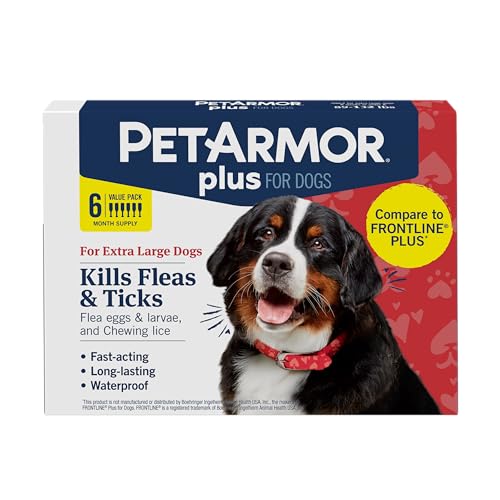
Same active ingredient as Frontline. Applied between the shoulder blades once per month. Kills ticks and fleas for 30 days. Available over-the-counter as PetArmor and Sentry Fiproguard, and other generics. The cheapest effective tick prevention.
Effectiveness: Kills ticks within 24-48 hours of contact. Does not repel ticks — they must crawl onto the dog and contact the medication before dying. This means ticks can attach briefly before dying, but transmission of most diseases requires 24+ hours of attachment, so the tick is killed before it can transmit.
2. Oral Tick Preventives (NexGard, Simparica, Bravecto) — 10-18 Dollars Per Month
Prescription-only chewable tablets. Kill ticks within 8-12 hours — faster than topicals. No risk of washing off (swimming, bathing). Also kill fleas. Requires vet prescription.
- NexGard (afoxolaner) — 10-18 dollars/month. 30-day protection.
- Simparica (sarolaner) — 10-18 dollars/month. 30-day protection.
- Bravecto (fluralaner) — 15-25 dollars per dose, lasts 12 weeks. The longest-lasting option — 4 doses per year instead of 12.

Oral preventives are more effective than topicals because they cannot wash off, rub off, or be groomed off. For dogs that swim or are bathed frequently, oral is the better choice.
3. Tick Collars (Seresto) — 15-25 Dollars Upfront, 8 Months of Protection
The Seresto collar contains imidacloprid and flumethrin. Provides 8 months of continuous tick (and flea) protection. The collar releases low doses of medication onto the dog’s skin and fur. Cost per month: 2-3 dollars — the cheapest long-term option.
Effectiveness: Repels and kills ticks. Unlike topicals and orals, the Seresto collar REPELS ticks before they attach — this is a significant advantage for disease prevention because ticks are deterred before they can bite.
Downsides: Some dogs develop skin irritation at the collar site. The collar must fit snugly for medication to transfer. Not recommended for dogs that chew collars or for multi-dog households where dogs chew each other’s collars.
4. Natural/Herbal Tick Prevention — NOT PROVEN EFFECTIVE
Essential oils (geranium, lavender, eucalyptus), garlic, apple cider vinegar, and diatomaceous earth have no scientific evidence of preventing tick bites or tick-borne disease. Some essential oils are toxic to dogs and cats. Do not rely on natural methods for tick prevention — the risk of tick-borne disease is too high.
The Tick Check: 2 Minutes After Every Walk (Free)
No preventive is 100 percent effective. A tick check after every outdoor excursion is your second line of defense. Ticks crawl upward — they start on the legs and move toward the head, ears, and neck. Check in this order:
- Run your hands through the fur from tail to head, feeling for small bumps. Ticks feel like a small pea or sesame seed.
- Check the legs and paws — especially between the toes and in the armpits (where legs meet the body). Ticks love these warm, protected areas.
- Check the belly and groin — Ticks prefer thin skin and warm areas.
- Check the neck and ears — Look inside the ears (ticks love ear canals), behind the ears, and under the collar.
- Check the face — Around the eyes, on the muzzle, and in the folds of the lips.
- Check the tail base and anus — Ticks sometimes attach here.
Tick size guide: Adult ticks are the size of a sesame seed or apple seed. Nymphs (young ticks) are the size of a poppy seed — very difficult to see but they can still transmit disease. Larvae are the size of a grain of sand and rarely transmit disease.
If you find a tick, remove it immediately (see below). The longer a tick is attached, the higher the risk of disease transmission.
How to Remove a Tick Safely (Free)
What You Need
- Tick removal tool — 3-5 dollars. The Tick Twister or tick key is the safest tool. It slides under the tick and lifts it out without squeezing.
- Fine-tipped tweezers — 2-3 dollars. If you do not have a tick tool, use fine-tipped tweezers (not the wide kind).
Removal Steps
- Part the fur to expose the tick clearly.
- Grasp the tick as close to the skin as possible — grip the head and mouthparts, not the body. Squeezing the body can push bacteria into the dog.
- Pull straight up with steady, even pressure — Do not twist, jerk, or yank. Twisting can break the mouthparts off in the skin.
- Do not use heat, alcohol, Vaseline, or nail polish — These “remedies” cause the tick to regurgitate stomach contents into the wound, increasing disease transmission risk.
- Check that the entire tick was removed — If the head or mouthparts are still in the skin, they will work out on their own in a few days. Do not dig for them with a needle.
- Dispose of the tick — Put it in a sealed container with rubbing alcohol or flush it. Do not crush it with your fingers.
- Wash the bite site with soap and water or antiseptic.
- Wash your hands with soap and water.
- Mark the date and location of the bite on a calendar — if symptoms develop in 2-4 weeks, you will know when and where the tick attached.
After a Tick Bite: What to Watch For
Most tick bites do not cause disease — even in endemic areas, only 5-10 percent of tick bites transmit disease. But you must monitor your dog for 4 weeks after any tick bite:
Symptoms to Watch For (2-4 Weeks After Bite)
- Fever (rectal temperature above 103 degrees F)
- Lethargy or reluctance to move
- Loss of appetite
- Lameness or shifting leg lameness (Lyme disease)
- Swollen joints
- Swollen lymph nodes (especially under the jaw)
- Nosebleeds, bruising on gums or belly (ehrlichiosis)
- Dark, coffee-ground urine (kidney damage)
- Vomiting or diarrhea
If any of these symptoms appear, take your dog to the vet and mention the tick bite. The vet will run a tick-borne disease test (SNAP 4Dx, 40-80 dollars) and start antibiotics if positive.
The Tick Season Timeline
| Season | Tick Activity | Prevention Needed? |
|---|---|---|
| Spring (Mar-May) | High — nymphs emerge, very active | Yes — start before tick season |
| Summer (Jun-Aug) | Peak — adults and nymphs active | Yes — peak season |
| Fall (Sep-Nov) | High — adults seek last meals before winter | Yes |
| Winter (Dec-Feb) | Low but not zero — ticks survive above freezing | Yes in mild climates, optional in deep-freeze regions |
The American Veterinary Medical Association recommends year-round tick prevention for all dogs. Ticks survive winter by hiding in leaf litter and under snow. On any day when the temperature is above freezing, ticks can be active.
The Bottom Line
Tick-borne diseases cost 110-5,000 dollars to treat and can cause permanent kidney damage, chronic joint pain, and death. Prevention costs 5-15 dollars per month: generic fipronil (PetArmor, 5-10 dollars/month, over-the-counter topical), oral preventives (NexGard or Simparica, 10-18 dollars/month, prescription chewable that kills ticks in 8-12 hours), or the Seresto collar (15-25 dollars for 8 months of protection — 2-3 dollars/month and repels ticks before they bite). Do a 2-minute tick check after every walk: run hands through fur from tail to head, check legs, paws, armpits, belly, neck, ears, and face. Remove ticks immediately with a tick tool (3-5 dollars) or fine-tipped tweezers — grasp close to the skin, pull straight up, never twist, never use heat or Vaseline. Mark the bite date on a calendar and watch for symptoms for 4 weeks: fever, lethargy, lameness, swollen joints, nosebleeds, or dark urine. If symptoms appear, see the vet for a SNAP 4Dx test (40-80 dollars) and doxycycline antibiotics (20-40 dollars). Use prevention year-round — ticks are active whenever temperatures are above freezing. The 5-dollar monthly preventive and 2-minute tick check prevent the 110-5,000 dollar treatment and protect your dog from permanent organ damage.
Last updated: July 2026 | By ThriftyPaw | Prices and availability subject to change
ThriftyPaw is reader-supported. As an Amazon Associate, we earn from qualifying purchases. This means we may earn a small commission when you buy through links on this site at no additional cost to you. We only recommend products we genuinely believe in. Thank you for supporting ThriftyPaw.
🐾 Get Your Free Big Dog First Aid Kit Checklist
Join our newsletter and get this free printable plus weekly tips.
Price Check
Prices verified via our product tracker. Updated Sep 27.
| PetArmor Plus Flea & Tick Topical Dogs 89-132 lbs, 6-Month | $39.74 | 4.2★ (62,945) |
| Sentry Fiproguard for Dogs, Flea and Tick Prevention for D | $19.16 | 4.2★ (9,058) |
| NexGard® (afoxolaner) Flea and Tick Protection for Dogs Or | $167.89 | 4.8★ (233) |
| Bravecto for Dogs - 12-week dose (Rx) | Prescription Medic | $79.99 | 4.8★ |
| Tick Twister Tick Remover for Dogs and Human - Made in Fra | $7.99 | 4.5★ (188) |
As an Amazon Associate we earn from qualifying purchases.