This article contains affiliate links. We may earn a commission from qualifying purchases.
Some content on this site is AI-assisted and reviewed by our editorial team.
My dog food receipt used to be the same every month: one 8-pound bag of Purina ONE, about $16 and change, grabbed off the shelf because it fits in the cart. Then I actually divided. That 8-pound bag works out to about $2.04 a pound. The 30-pound bag of IAMS Minichunks two shelves down — the same grocery-store brand, the same chicken-and-rice class of food — was about $47, which is $1.57 a pound. Same store, same day, same shelf. The small bag charges 47 cents more per pound for the privilege of being small.
Forty-seven cents a pound does not sound like a headline until you multiply it by what a real dog actually eats. My 60-pound dog goes through roughly three-quarters of a pound of kibble a day — about 270 pounds a year. At 47 cents a pound, the 8-pound-bag habit costs about $125 a year more than the same brands bought 30 pounds at a time. I tracked the per-pound math across the popular 30-pounders, the storage reality that makes or breaks the savings, and the Subscribe and Save nudge on the recurring buy. Here is what I found.
The Per-Pound Math, On the Same Shelf
Two bags, same brand family, same shopping trip. The 8-pound bag is $16.28, or $2.04 a pound. The 30-pound bag is $46.97, or $1.57 a pound. That is 47 cents a pound — about 23 percent — and the gap repeats across every major grocery-brand line, because small bags are priced for convenience and big bags are priced per pound. The only question left after that is whether you can keep 30 pounds of kibble fresh, and that is a storage question, not a brand question.
IAMS Proactive Health Adult Minichunks, 30 Pounds — The Per-Pound Winner
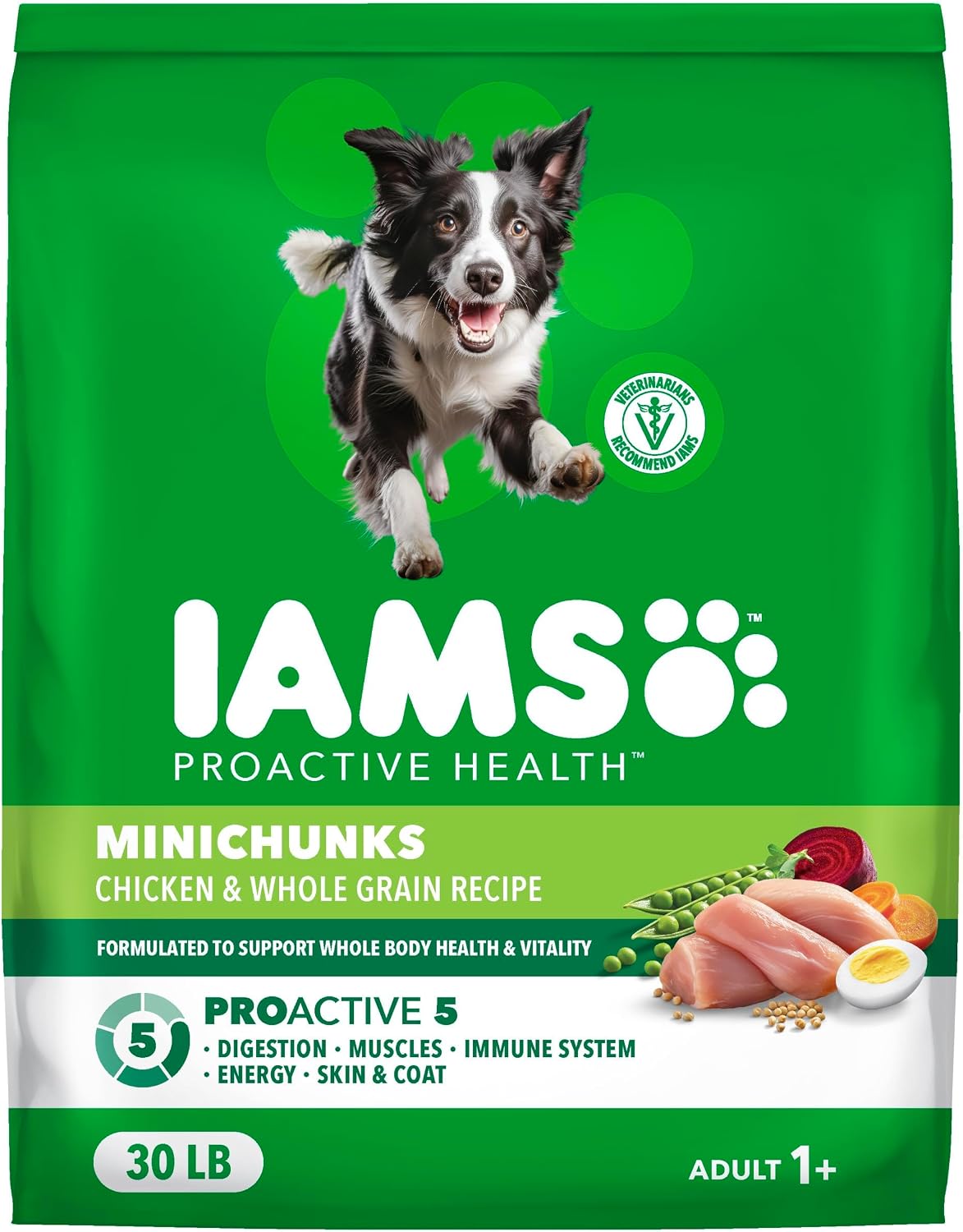
The IAMS Proactive Health Adult Minichunks 30-pound bag is the bag I run the whole comparison against: about $47, or $1.57 a pound, with a 4.5-star record across thousands of ratings. The minichunk size suits older teeth and fast eaters, and the price per pound is what every other bag in this post gets measured against.
- What it does well: the math. Thirty pounds at about $1.57 a pound undercuts the small-bag version of the same brand by a quarter, and the smaller chunk size is easier on a senior dog’s mouth.
- Honest cons: the bag itself is not resealable, and 30 pounds of kibble goes stale faster than most people expect once opened — without a bin, the savings start leaking out as wasted food.
My take: the per-pound winner and the default buy — just budget a storage bin into the first month or the math quietly unwinds.
Purina ONE Chicken and Rice, 8 Pounds — The Small-Bag Trap
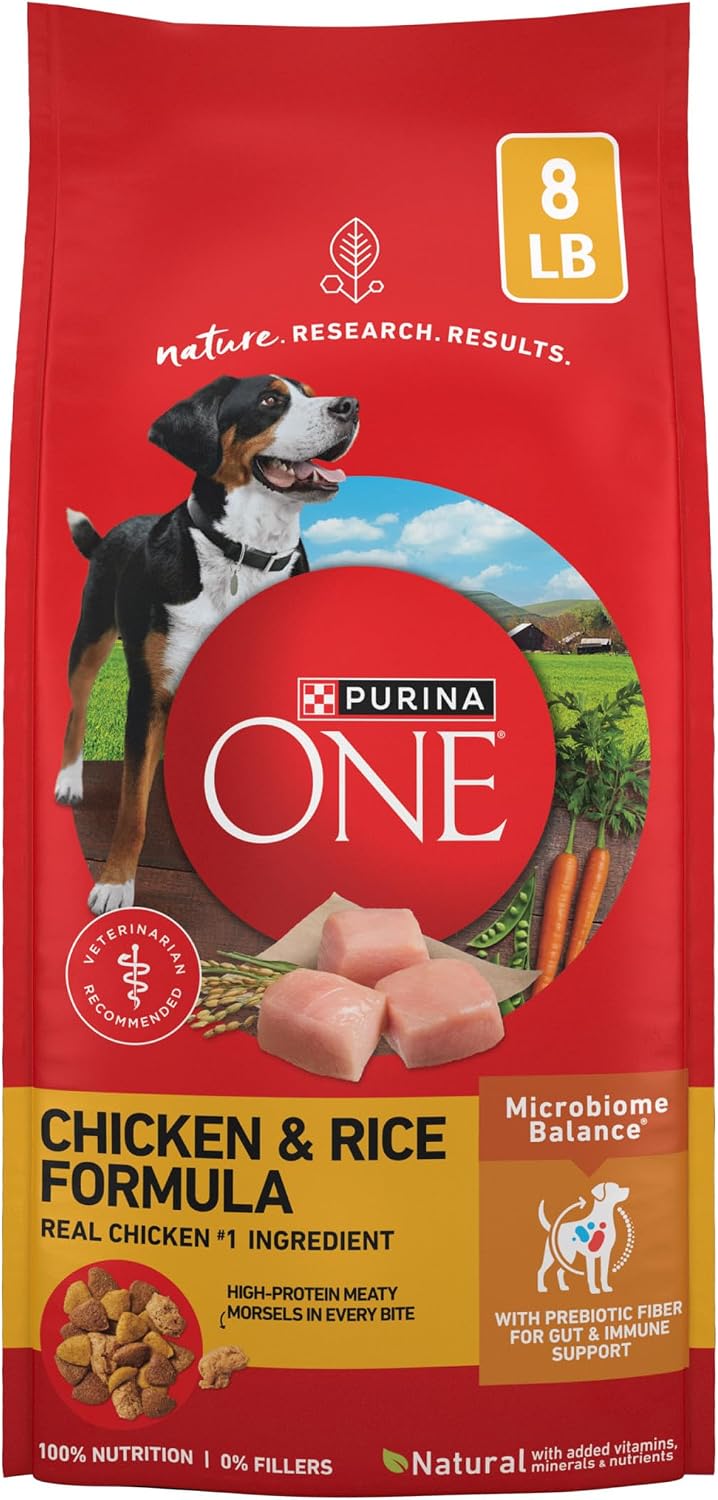
The Purina ONE Chicken and Rice 8-pound bag is not a bad food — it is bad math, and it is in this post because it was my own habit. At about $16, it works out to $2.04 a pound, roughly 30 percent more per pound than the big bag sitting next to it in this comparison.
- What it does well: it fits in a tote, it fits in a small apartment, and an 8-pound bag is genuinely the right size for a toy dog that eats a cup a day — for them it IS the bulk buy.
- Honest cons: for any dog over about 25 pounds, this bag size is a subscription to the most expensive version of the same food, and the price per pound never appears anywhere on the shelf tag.
My take: keep it as the control in the math, not the purchase — once you have seen the 47-cent gap, the 8-pound bag only makes sense for very small dogs.
IAMS Proactive Health Large Breed, 30 Pounds — The Big-Dog Bulk Slot
For the large-breed house, the IAMS Proactive Health Large Breed 30-pound bag runs the same per-pound story one size class up, with glucosamine for the joints that need it. I link it by search rather than a fixed listing because the large-breed SKU pricing swings week to week — check the live price against the regular Minichunks bag before you commit, and take whichever 30-pounder is cheaper that week.
- What it does well: the big-dog version of the per-pound win, with the joint supplement built in rather than bought separately.
- Honest cons: large-breed bag prices move more than the small-bag prices do, so the win is real but not locked — verify before you buy.
My take: for a 70-plus-pound dog, this or the Purina equivalent — whichever 30-pounder the shelf is discounting that week.
Purina ONE Large Breed Adult, 31.1 Pounds — The Near-Identical Alternative
The Purina ONE Large Breed Adult 31.1-pound bag is functionally the same buy as the IAMS slot: a 30-plus-pound bag of a grocery-store large-breed formula at a per-pound price that beats the small bags by the same margin. When both are in stock, the honest advice is boring: buy whichever of the two is on the shelf at the better price that week. Food-loyalty arguments cost more than they save.
- What it does well: gives the large-breed math a second brand option, which is all the price competition you need to keep the per-pound win honest.
- Honest cons: the 31.1-pound size is heavier than it sounds when you live upstairs, and like every big bag it needs the same storage answer as the IAMS.
My take: the interchangeable twin of the big-dog slot — the per-pound math is the product, the logo on the bag is not.
Prime for the heavy bag: 30 pounds of kibble is exactly the delivery you do not want to carry up three flights. A free 30-day Prime trial puts the big bag on the doorstep and keeps the small-bag math from winning by default.
Features That Actually Matter (And Ones That Don’t)
- Storage — matters more than brand. A 30-pound bag needs an airtight bin the day it opens; the bag’s zip is decorative. Our kibble vault post runs the freshness math.
- Price per pound — the only number that counts. Divide shelf price by pounds before any brand decision; the per-pound gap inside one brand is bigger than the gap between brands.
- Subscribe and Save — matters on the recurring buy. Set the 30-pound bag up on Subscribe and Save and it lands about 5 percent cheaper, on schedule, and the “out of food” emergency drive to the store disappears.
- Bag size versus dog size — matters at the small end. An 8-pound bag IS the bulk buy for a toy dog; the trap only opens for medium and large dogs.
- Brand loyalty — does not matter. Within the same grocery-tier quality band, the shelf’s weekly price should make the decision, not the label.
The Annual Cost Comparison
- The 8-pound habit (before): 270 pounds a year at $2.04 a pound — about $550 a year for a 60-pound dog.
- The 30-pound habit (after): the same 270 pounds at $1.57 a pound — about $425 a year.
- The difference: about $125 a year stays in my pocket — that is the annual nail-trim budget plus a bag of high-value training treats, from one shelf decision.
- With Subscribe and Save: about 5 percent off the recurring big bag trims the $425 closer to $405, and the store trips stop being an errand at all.
Do the division once on your own receipt and the shelf stops hiding the math: the big bag wins by roughly a quarter per pound, and a $20 storage bin is what keeps the win from going stale.
Keep reading: our under-2-dollars-per-pound dog food comparison ranks the brands that clear the bar, and the kibble storage vault math covers the bin that protects the whole plan.
ThriftyPaw is reader-supported. As an Amazon Associate, I earn from qualifying purchases. That means if you buy through one of the links above, I get a small commission at no extra cost to you. I only recommend products I’ve actually used with my own dog.
🐾 Get Your Free Big Dog First Aid Kit Checklist
Join our newsletter and get this free printable plus weekly tips.
Frequently Asked Questions
Is it cheaper to buy big bags of dog food?
Almost always, per pound. The 30-pound IAMS bag in this comparison runs about $1.57 a pound against $2.04 for the 8-pound bag of the same-tier food — 47 cents a pound, roughly 23 percent less, before any sale or coupon.
How much should dog food cost per pound?
Grocery-tier kibble bought in 30-pound bags sits around $1.50 to $2 per pound; the same brands in small bags run $2 to $2.50. Premium and prescription foods cost more, but the big-bag discount works the same way inside any single brand.
How do I keep a 30-pound bag of kibble fresh?
Move it into an airtight bin the day it opens — the bag's own seal is decorative. Stored cool, dry and sealed, kibble holds quality for about six weeks; left open to air it starts losing palatability within weeks, which is how the big-bag savings quietly leak away.
Does Subscribe and Save save money on dog food?
It stacks about 5 percent on the recurring price and deletes the store trip. On a 30-pound bag that is roughly $2.35 a bag plus the emergency food runs it prevents — and any month you do not need it, you skip or cancel in two clicks.
Liked this guide? Get the next one in your inbox — the pet budget checklist is free too.
✓ You're in — check your inbox.
No spam. Unsubscribe anytime. We never share your email.