This article contains affiliate links. We may earn a commission from qualifying purchases.
Some content on this site is AI-assisted and reviewed by our editorial team.
Every holiday season used to start the same way at my house: the laundry-room shuffle. Box out from behind the dryer, mat shaken over the sink, litter vacuumed from the tile, door shut — ten minutes before anyone knocked, repeated every single visit, while the cat protested from the hallway. The last straw was the afternoon a guest opened the laundry door for towels and met my tabby mid-audit. That week I went looking for the cheapest cabinet that hides the whole operation, and the one I landed on cost $89.99 — roughly what two visits’ worth of embarrassment and scrubbing was already costing me in time.
I priced five enclosures and tested the two that fit my hallway. Here’s what I found — including why the purchase math is really about the humans, because the cat does not care which door it walks through.
The cost of the problem, before the cabinet. A litter box in plain view costs you three ways: the visible mess (a mat and a weekly wipe), the shuffle itself (ten minutes pre-visit, and if you host monthly, that is two hours a year), and the furniture-grade bench solution most pet stores push, which starts around double the price of a straightforward enclosure. A $90 cabinet with a lid and a shelf does the same job the $200 benches do, and it lets the box stand in the hallway like it belongs there.
Tangkula Litter Box Enclosure — the full-featured baseline
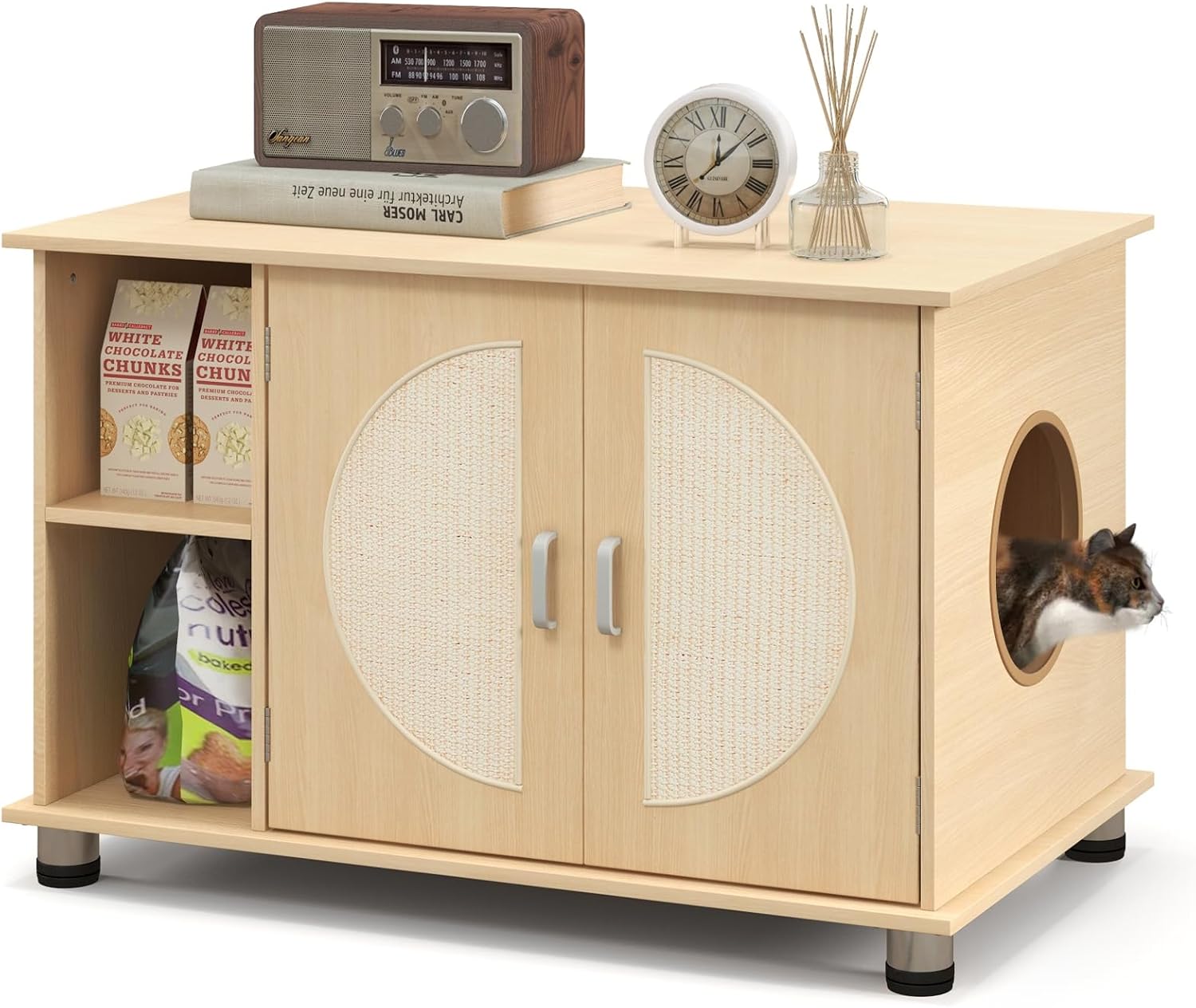
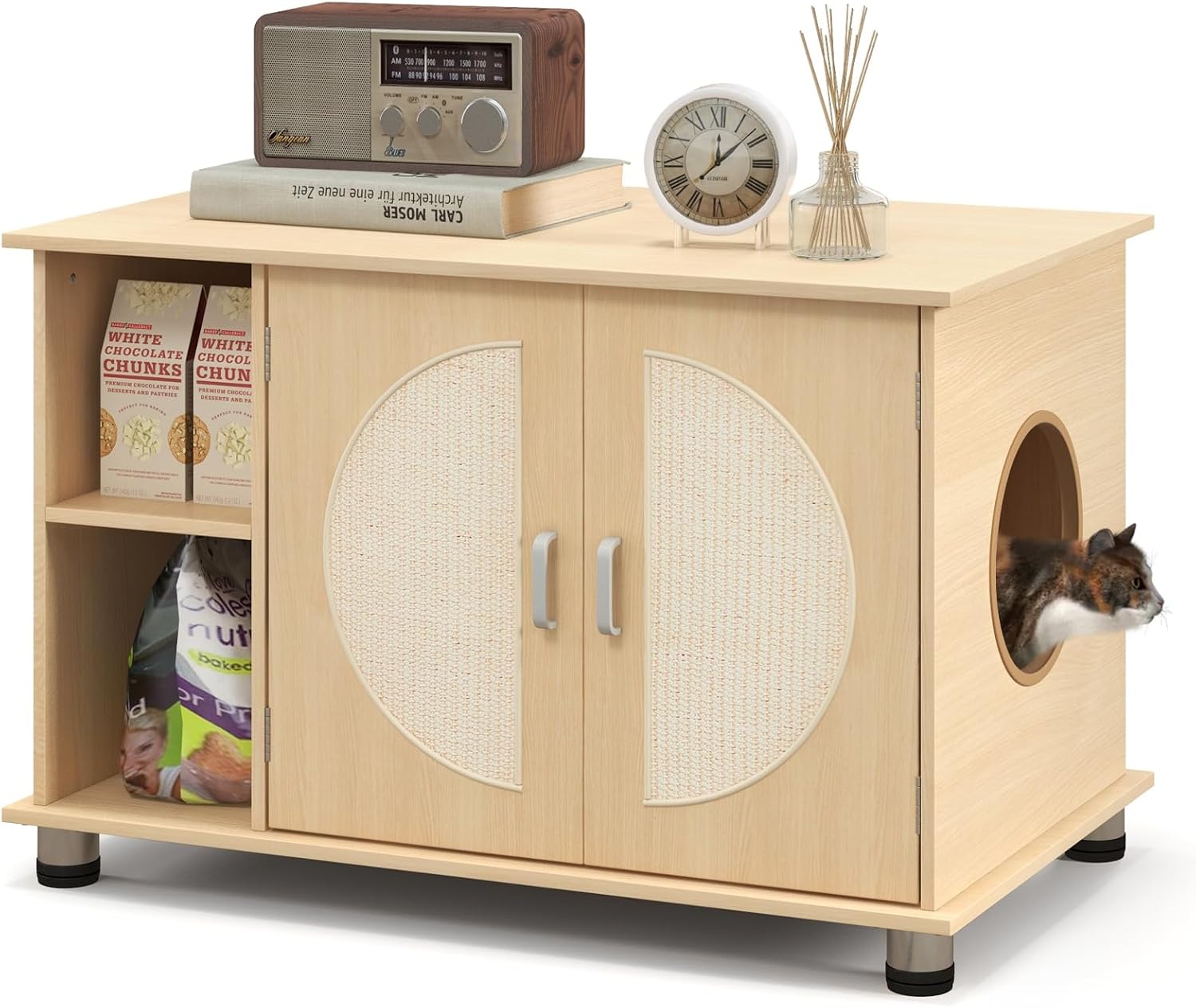
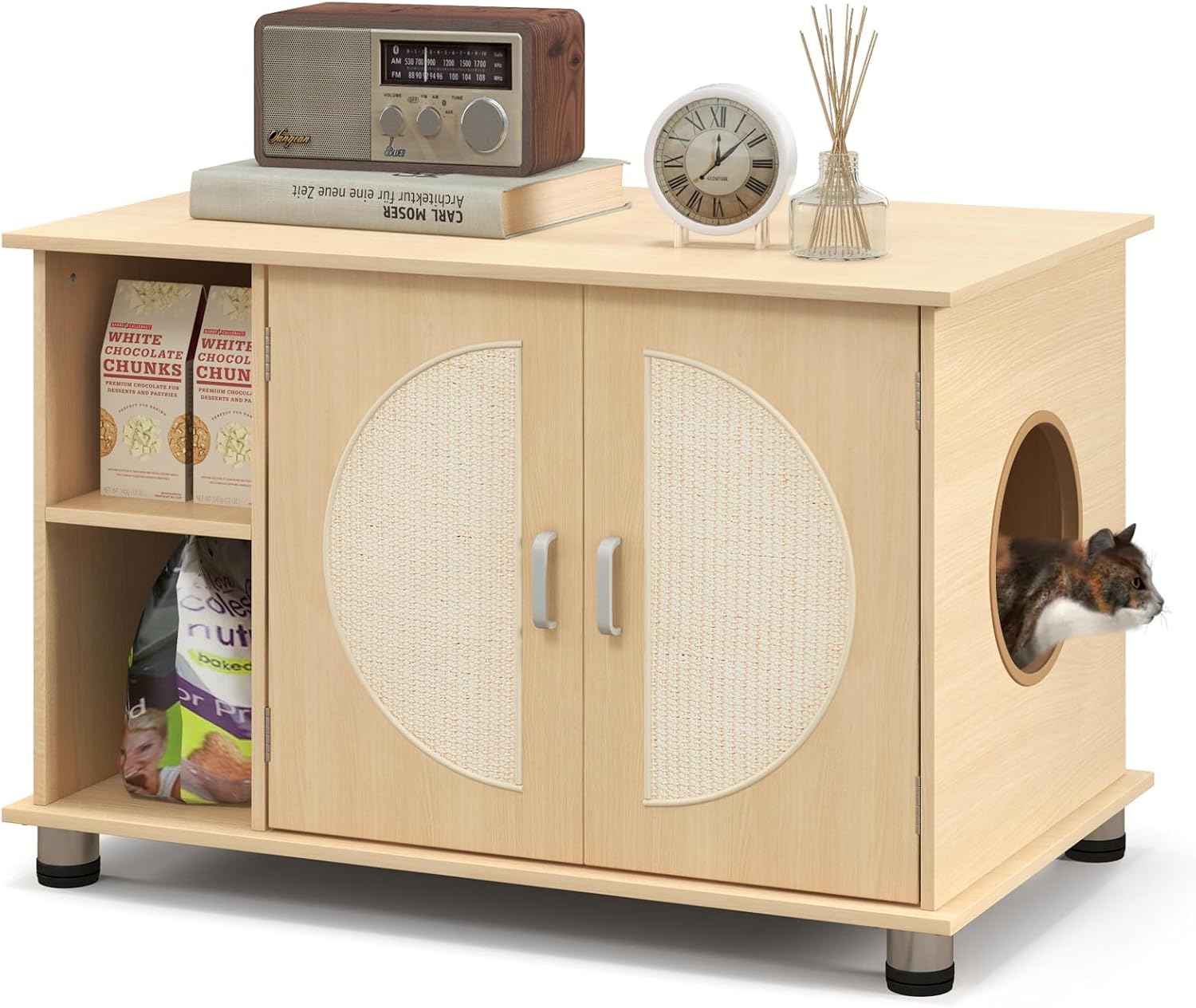
Tangkula Litter Box Enclosure is the one I bought, at $89.99 with a 4.5-star record on a long listings life. The washroom hides the box behind real cabinet doors, the entry side carries sisal scratching panels (my cat has claimed two of them), and adjustable metal feet keep it square on an older floor. The storage shelf on top now holds the litter scoop, deodorizer, and a lamp — it looks like furniture because it is furniture.
Honest cons: assembly ran me about two hours solo, and after a month the door hinges needed a re-tighten before the doors closed flush again. Neither is a dealbreaker at $89.99 — it is a two-hour project once, then furniture forever.
My take: if you want the maximum cabinet for the money — scratching doors, shelf, adjustable feet — this is the default buy of the group.
PETSITE Wooden Litter Box Bench — the living-room-ready look
PETSITE Wooden Litter Box Enclosure Bench is the pick for a room where the cabinet needs to disappear completely: the cross-window cabinet front and bench top read as side furniture up close, not as a litter box with a costume on. The trade is capacity and finish — the lighter wood tone shows scratches quicker under a motivated scratcher, and the inner clearances rule out oversized boxes just like the rest of this class.
My take: the style-first pick — buy this one when the cabinet will stand in a room guests actually sit in.
GAOMON Enclosure with Cushion and Mat — the bundled option
GAOMON Hidden Litter Box Cabinet at about $100 (4.5 stars) ships the tracking solution in the same box: a fitted top cushion for bench seating and a litter mat for the entry floor, so the scatter problem is addressed on day one instead of with a second order. The fenced top sides give cats a peep ledge, which my tester cat treated as a bunk.
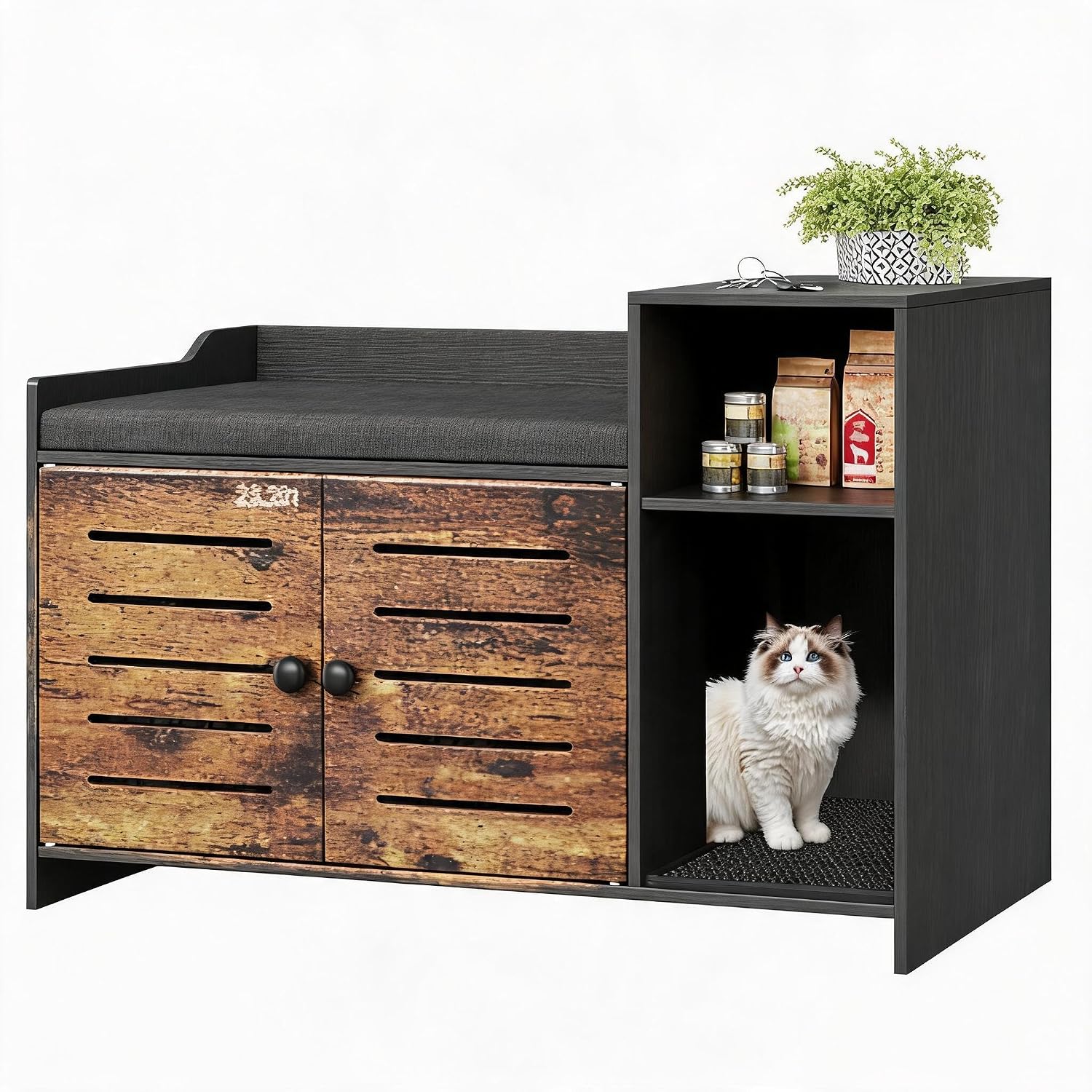
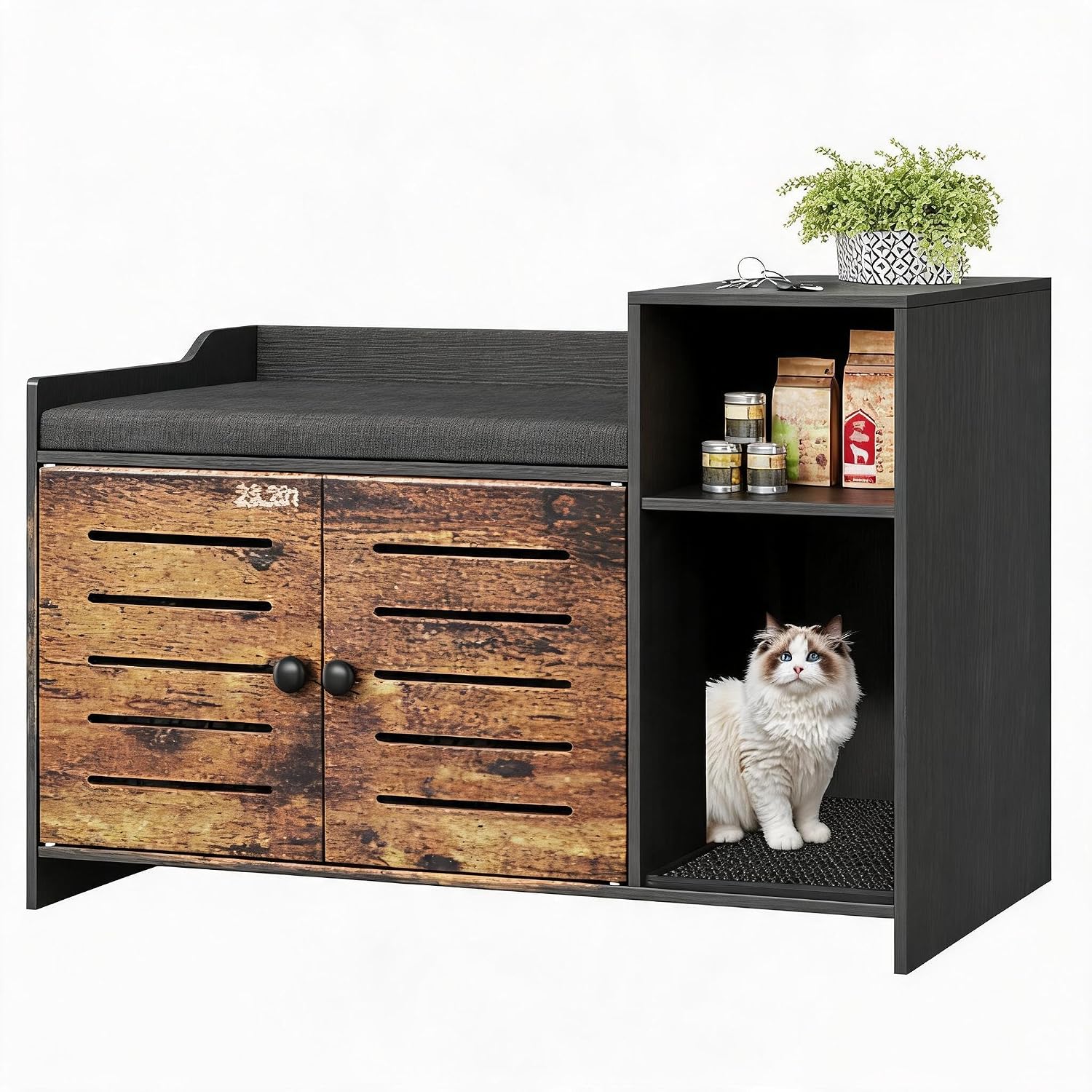
The honest con: the cushion attracts naps, and a napping cat on the bench blocks the door. If yours stakes territorial claims on soft surfaces, budget for the cushion to migrate.
My take: the one-stop pick — pay about ten dollars over the baseline and the mat and cushion questions are answered in the cart.
One piece of furniture, free shipping: enclosures ship flat-packed and heavy. A 30-day Prime free trial covers the delivery on any of these — and on the litter scoops and mats you forgot you needed.
Features That Actually Matter (And Ones That Don’t)
Mattered: interior clearance, not exterior looks. Every failure story I read in the reviews of this class is the same: the cabinet arrived, the box did not fit. Match your box’s length and height to the published interior before the pretty details.
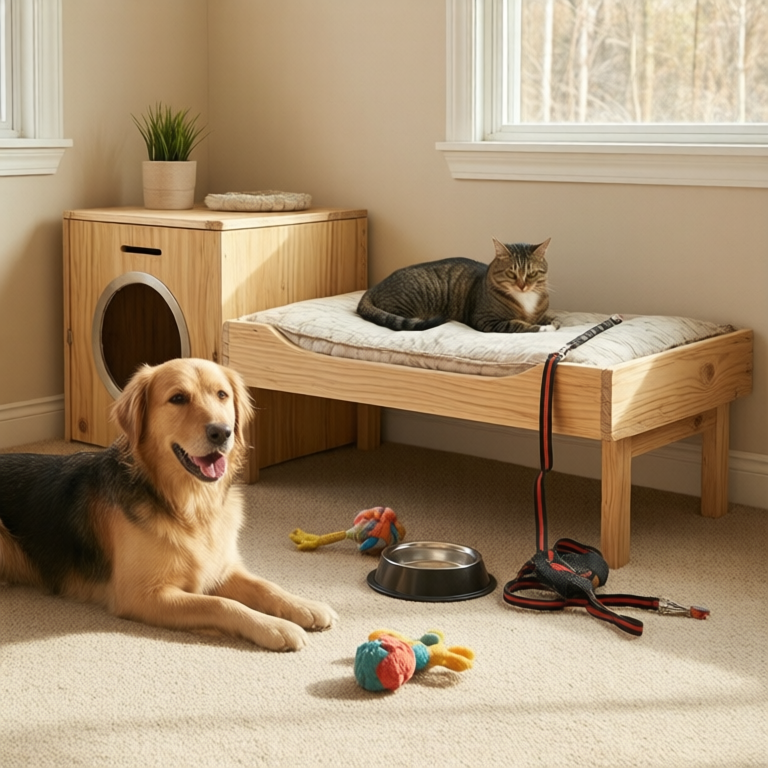
Mattered: entry width and door style. Cats over 15 pounds and senior cats prefer a wide or low entry. The cross-window and slatted designs in this set are the easier transitions from an open box.
Mattered: a wipeable top. The bench surface becomes a plant stand or a scoop shelf. Painted MDF wipes; raw particle board swells. This is where the cheap cabinets quietly lose.
Did not matter: “odor-lock” marketing. No cabinet removes your scooping job. What the walls do is keep the smell that exists in the box from spreading around the room — scooping daily is the actual odor control.
Did not matter: scratch-proof surfaces. Sisal panels and the cushioned top absorb the wear; the cabinet skin will mark wherever the cat insists. Budget the touch-up, enjoy the rest.
The Annual Cost Comparison
- Before: a visible box plus mats and repeated cleanups — call it $30 a year in supplies and two-plus hours annually in pre-visit shuffling.
- After: one $89.99 enclosure, a $10 litter mat if the model does not include one, and the same litter bill as before.
- Year one: the cabinet pays for itself against the $200-plus furniture-bench alternative, and the shuffle disappears on day one.
- What else that money buys: the savings against a pet-store bench is roughly two months of litter, or one full dental-treat stash — I ran that bill separately in the 7-dollar-a-month treat routine that slows plaque.
Guests stopped noticing the litter box in my hallway about an hour after the cabinet went together. The cat switched doors in two days, the scratching panels took over the baseboard’s former job, and the laundry room went back to being a laundry room. If you are also in holiday-prep mode, the cat-tree Black Friday floor only applies to the tall ones — same measurement-first logic, different piece of cat furniture.
ThriftyPaw is reader-supported. As an Amazon Associate, I earn from qualifying purchases. That means if you buy through one of the links above, I get a small commission at no extra cost to you. I only recommend products I’ve actually used with my own dog.
🐾 Get Your Free Big Dog First Aid Kit Checklist
Join our newsletter and get this free printable plus weekly tips.
Frequently Asked Questions
Are litter box enclosures worth the money?
If you host guests or the box currently lives in your laundry room, yes. The cabinet hides the box, catches tracking litter at the entry, and doubles as real furniture, which is why a 90-dollar enclosure does the job of the pricier pet-store benches.
What litter box fits inside a hidden cabinet?
Measure the door opening and the interior first. Most enclosures in this price class clear the interior walls at roughly 16 to 20 inches, which fits standard plastic boxes but not the XL models, so match the published interior dimensions to your box before ordering.
Do hidden litter boxes smell worse than open ones?
Not if you keep your scooping schedule. The cabinet holds the odor near the box instead of letting it spread around the room, but a closed box with a lazy owner is worse than an open one. Scoop daily and the enclosure is a net smell win.
Will a cat use a covered litter box with one entrance?
Most cats transition within a few days if you move the old box into the cabinet and let them explore it open at first. Give the cat an uncovered backup box elsewhere so the cabinet is never the only option.
Liked this guide? Get the next one in your inbox — the pet budget checklist is free too.
✓ You're in — check your inbox.
No spam. Unsubscribe anytime. We never share your email.